
Quincunx Aspect: Navigating Uncomfortable Growth in Your Chart | StarPluto
In the intricate tapestry of a birth chart, planetary aspects reveal the dynamic relationships between celestial bodies, shaping our personality, experiences, and destiny. Among these, the Quincunx, also known as the Inconjunct, stands out as a particularly intriguing and often challenging aspect. Representing a 150-degree angle between two planets, it signifies an area of uncomfortable growth, constant adjustment, and the need for integration between seemingly disparate parts of our psyche.
Unlike harmonious aspects like trines and sextiles, or challenging ones like squares and oppositions that demand direct confrontation, the Quincunx operates subtly, creating a sense of awkwardness or disconnect. It highlights areas where two planetary energies, often from incompatible signs and elements, struggle to find common ground. This article delves deep into the Quincunx aspect, exploring its characteristics, interpretation, and how to navigate its unique demands for personal evolution.

The Quincunx aspect highlights the need to integrate seemingly incompatible energies within the Tarot Quantum Mechanics Intersecting Divination Reality.
Understanding the Quincunx (Inconjunct) Aspect
The Quincunx, or Inconjunct, is an astrological aspect formed when two planets are approximately 150 degrees apart. This specific angular relationship is unique because the signs involved typically share no common ground in terms of element (fire, earth, air, water) or modality (cardinal, fixed, mutable). For example, a planet in Aries (fire, cardinal) and a planet in Virgo (earth, mutable) form a Quincunx. There's no natural flow or obvious tension; instead, there's a peculiar sense of awkwardness or a lack of understanding between the energies.
Astrologically, the Quincunx is often associated with the 6th and 8th houses, which govern areas of service, health, daily routines, crisis, transformation, and shared resources. This connection underscores the aspect's themes of adjustment, healing, and the need to adapt to circumstances that feel out of sync. It's not an aspect that demands direct action or creates overt conflict, but rather one that requires continuous fine-tuning and a conscious effort to reconcile conflicting drives.
- 150-Degree Angle: The precise measurement that defines this aspect.
- Lack of Commonality: Planets in Quincunx often reside in signs that have no shared element or modality, leading to inherent friction.
- Houses 6 and 8: Symbolically linked to areas of daily adjustment, health, and transformation.
- Constant Adjustment: The core theme of the Quincunx, requiring ongoing effort to harmonize energies.
Key Characteristics of the Quincunx
The Quincunx is characterized by a feeling of unease or a subtle irritation that demands attention. It's like having two gears that don't quite fit together, causing a grinding sensation rather than a smooth rotation. This can manifest as an internal struggle where different parts of your being pull in contradictory directions, or as external situations that require constant adaptation.
One of the most notable characteristics is the need for conscious awareness and compromise. The energies involved don't naturally understand each other, so a deliberate bridge must be built. This often involves trial and error, learning what works and what doesn't, and developing unique strategies to manage the conflicting drives. It can lead to a feeling of being perpetually "out of sync" or having to overcompensate in certain areas of life.
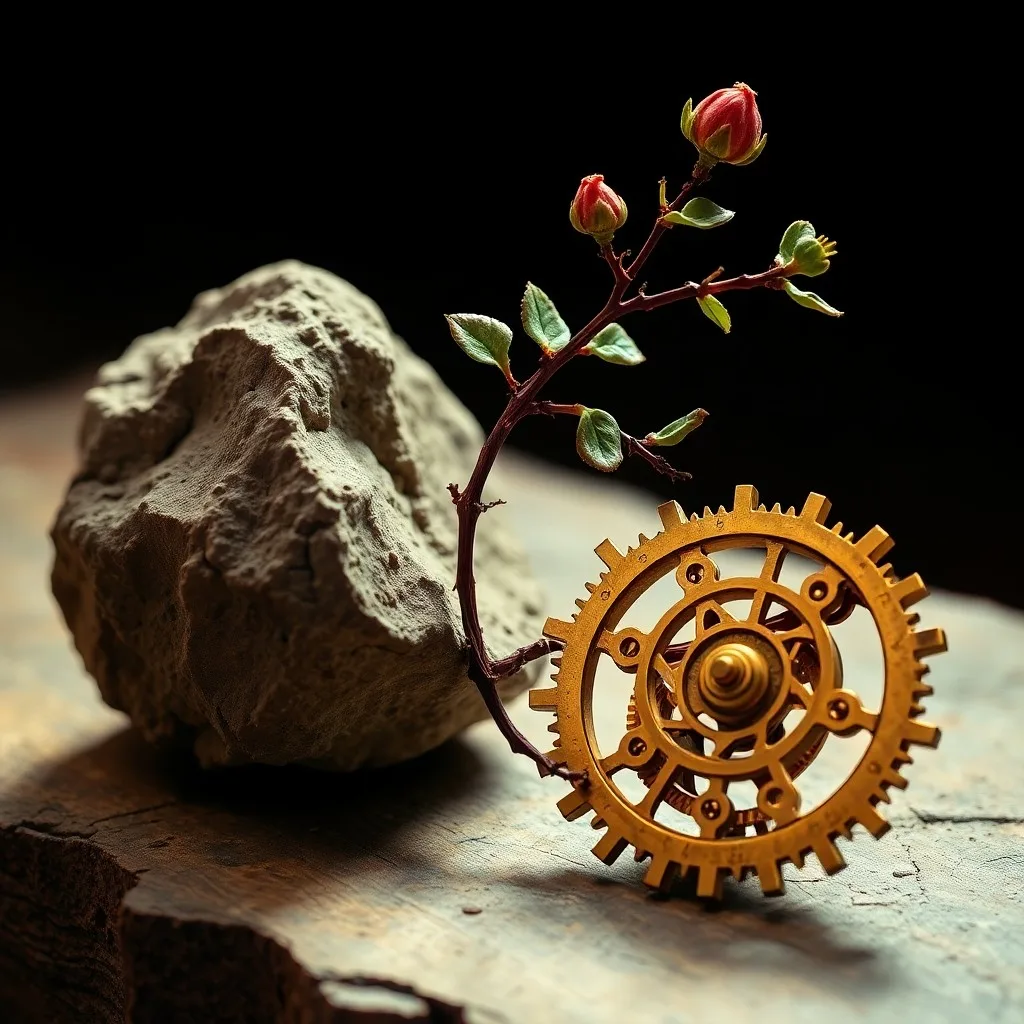
The Quincunx demands a delicate Sound Alchemy: Cellular Regeneration, Manifestation Frequencies and continuous fine-tuning between opposing forces.
Health implications are also frequently associated with the Quincunx. The constant internal friction can manifest as psychosomatic symptoms or a general feeling of being unwell, as the body tries to process the unintegrated energies. This makes self-care and holistic approaches particularly important for individuals with prominent Quincunxes in their charts. It's a call to listen to the body's signals and address underlying imbalances.
- Awkwardness & Discomfort: A persistent feeling that something isn't quite right.
- Need for Integration: Two planetary functions require conscious effort to work together.
- Psychosomatic Manifestations: Unresolved Quincunxes can lead to physical symptoms.
- Skill Development: Over time, individuals develop unique abilities to bridge the gap between these energies.
Interpreting Quincunx Aspects in Your Chart
To interpret a Quincunx, it's crucial to analyze several factors: the planets involved, the signs they occupy, and the houses they rule or are placed in. Each of these elements adds layers of meaning to the specific area of life where the adjustment is needed. For instance, a Quincunx between the Sun and Mars would indicate a struggle between one's core identity and their assertive drive, requiring constant self-recalibration.
Consider the nature of the planets: are they personal planets (Sun, Moon, Mercury, Venus, Mars) or outer planets (Jupiter, Saturn, Uranus, Neptune, Pluto)? Personal planet Quincunxes often manifest as daily, conscious struggles, while outer planet Quincunxes might point to deeper, more subconscious patterns or generational themes that require long-term integration. The signs further define the "how" of the struggle, indicating the inherent qualities that clash.
- Planets: Identify the core functions or drives that are in conflict.
- Signs: Understand the inherent qualities and expressions of these energies.
- Houses: Pinpoint the specific life areas where these adjustments are most felt.
- Aspect Strength: The closer to exact 150 degrees, the more potent the Quincunx.
Common Quincunx Pairings and Their Dynamics
Understanding how different signs interact via the Quincunx can illuminate the specific nature of the discomfort. Here are some common pairings and their typical dynamics:
- Aries (Fire/Cardinal) - Virgo (Earth/Mutable): The impulsive, direct energy of Aries clashes with Virgo's need for perfection and analysis. Aries wants to act; Virgo wants to plan every detail. This requires Aries to learn patience and Virgo to embrace spontaneity.
- Taurus (Earth/Fixed) - Libra (Air/Cardinal): Taurus seeks stability and material comfort, while Libra desires harmony and intellectual connection. Taurus might see Libra as indecisive, and Libra might find Taurus too stubborn. Compromise involves finding beauty in practicality and stability in relationships.
- Gemini (Air/Mutable) - Scorpio (Water/Fixed): Gemini is light, communicative, and curious; Scorpio is deep, intense, and secretive. Gemini might find Scorpio too heavy, while Scorpio might see Gemini as superficial. This pairing requires Gemini to delve deeper and Scorpio to lighten up and communicate more openly.
- Cancer (Water/Cardinal) - Sagittarius (Fire/Mutable): Cancer values home, family, and emotional security; Sagittarius craves freedom, adventure, and philosophical truth. Cancer might feel abandoned by Sagittarius, who might feel stifled by Cancer's emotional needs. Finding a balance means creating a secure base from which to explore.
- Leo (Fire/Fixed) - Capricorn (Earth/Cardinal): Leo seeks recognition and self-expression; Capricorn is ambitious, disciplined, and values tradition. Leo might find Capricorn too serious, and Capricorn might see Leo as overly dramatic. This Quincunx demands integrating creative expression with practical achievement and responsibility.
- Virgo (Earth/Mutable) - Aquarius (Air/Fixed): Virgo focuses on details, efficiency, and practical service; Aquarius is concerned with humanitarian ideals and innovative ideas. Virgo might find Aquarius too abstract, and Aquarius might see Virgo as too nitpicky. This pairing requires finding practical applications for visionary ideas and making details serve a larger purpose.
Navigating Quincunx Energy: Strategies for Growth
Working with a Quincunx is less about resolving conflict and more about continuous adjustment and finding a "third way" that honors both planetary energies without fully merging them. It's an ongoing process of integration that strengthens over time.
- Conscious Awareness: Recognize when the Quincunx is active. Pay attention to feelings of awkwardness, frustration, or subtle imbalance in the areas of life indicated by the houses and planets involved.
- Embrace Adjustment: Understand that there's no perfect solution. The goal is not to eliminate the tension but to learn how to adapt and fine-tune your approach constantly. This is a skill that develops with practice.
- Find a "Third Way": Instead of choosing one energy over the other, seek creative solutions that blend or mediate between them. This often requires thinking outside the box and developing unique coping mechanisms.
- Prioritize Self-Care: Given the potential for psychosomatic stress, prioritize physical and mental well-being. Practices like mindfulness, meditation, or regular exercise can help manage the underlying tension.
- Seek External Feedback: Sometimes, an outside perspective can help you see the blind spots created by the Quincunx. A trusted friend, mentor, or therapist can offer valuable insights.
- Accept the Discomfort: The Quincunx is inherently uncomfortable. Accepting this discomfort as a catalyst for growth, rather than resisting it, can transform your experience.

Embracing the challenges of a Quincunx can lead to profound personal Tarot Quantum Mechanics Intersecting Divination Reality and unique skills.
The Quincunx in Synastry: Relationship Dynamics
When a Quincunx appears in synastry (the comparison of two birth charts), it indicates an area where two individuals may find each other confusing or difficult to understand. There’s no natural resonance, but also no direct conflict. Instead, it suggests a relationship that requires significant adjustment and compromise, often leading to a feeling of being "lost in translation."
For example, if Person A's Moon (emotional needs) Quincunxes Person B's Venus (values, affection), Person A might struggle to understand Person B's emotional expression or vice versa. This doesn't mean the relationship is doomed, but it highlights a specific area where both parties must consciously adapt to each other's unique way of operating. It can be a source of constant irritation or, with effort, a pathway to profound mutual understanding and growth, as each person learns to stretch beyond their comfort zone to meet the other.
The Transformative Potential of the Quincunx
Despite its reputation for awkwardness and discomfort, the Quincunx holds immense transformative potential. The constant need for adjustment forces individuals to develop unique skills, creativity, and resilience. Those with prominent Quincunxes often become masters of adaptation, capable of seeing multiple perspectives and finding innovative solutions to complex problems.
The very friction it creates can lead to a deeper understanding of oneself and others. It encourages a holistic approach to life, where one learns to integrate seemingly contradictory parts of their being into a cohesive whole. The "uncomfortable growth" it signifies is ultimately a path to greater self-awareness, flexibility, and a highly nuanced approach to life's challenges. It teaches us that true strength often comes from adapting to what doesn't fit perfectly.
In conclusion, the Quincunx aspect in a birth chart is not a curse but a profound teacher. It challenges us to move beyond our habitual patterns, to consciously adjust, and to integrate disparate energies. By embracing its demands, we unlock unique capacities for adaptation, problem-solving, and a deeper, more integrated sense of self. It is through navigating these uncomfortable growths that we truly evolve.
Fuente: Contenido híbrido asistido por IAs y supervisión editorial humana.


Comments
Post a Comment