
Elemental Compatibility Chinese Zodiac: Beyond Basic Pairings | StarPluto
The Chinese Zodiac, with its twelve animal signs, offers a fascinating lens through which to understand personality traits and interpersonal dynamics. While basic compatibility charts provide an initial overview, a truly profound analysis requires delving deeper into the intricate system of the Five Elements. This advanced approach moves beyond simple animal pairings, revealing the subtle energetic interplay that shapes relationships and individual destinies.
Understanding elemental compatibility allows for a more nuanced interpretation of how two individuals interact, highlighting areas of natural synergy, potential friction, and opportunities for growth. It transforms a superficial reading into a comprehensive guide for navigating complex human connections. This article will explore the foundational principles of the Five Elements and their application in advanced Chinese Zodiac compatibility analysis, providing a framework for deeper insights.
Table of Contents
- Introduction to the Five Elements in Chinese Metaphysics
- Understanding the Elemental Interaction Cycles
- Applying Elemental Theory to Chinese Zodiac Animals
- Advanced Elemental Compatibility Analysis
- Case Studies: Elemental Pairings in Action
- Beyond Compatibility: Elemental Knowledge for Personal Growth
- Conclusion: Mastering Elemental Compatibility
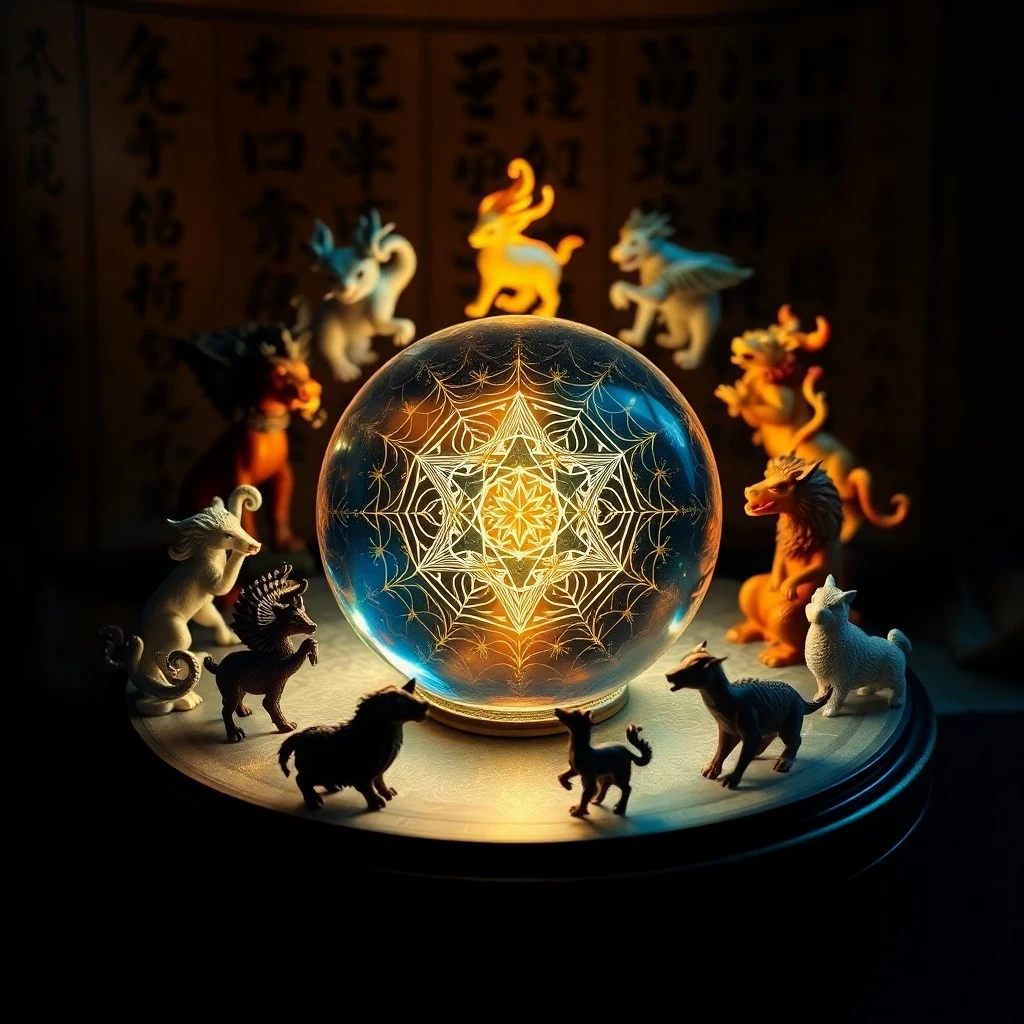
The Five Elements are fundamental forces shaping personality and interactions in Chinese metaphysics.
Introduction to the Five Elements in Chinese Metaphysics
The Five Elements (Wu Xing) – Wood, Fire, Earth, Metal, and Water – are not merely literal substances but rather dynamic phases of energy, representing different qualities, movements, and transformations within the universe and human experience. Each element embodies a unique set of characteristics that influence personality, behavior, and interaction patterns.
In Chinese astrology, every birth year is associated with an animal sign and one of these five elements, creating a 60-year cycle. This elemental overlay adds significant depth to the basic animal characteristics, making each Rat, for example, distinct depending on whether it's a Wood Rat, Fire Rat, Earth Rat, Metal Rat, or Water Rat. Understanding these elemental nuances is crucial for a comprehensive compatibility assessment.
| Element | Characteristics | Direction | Season | Color |
|---|---|---|---|---|
| Wood | Growth, creativity, flexibility, ambition, compassion, stubbornness. | East | Spring | Green |
| Fire | Passion, energy, leadership, enthusiasm, impulsiveness, aggression. | South | Summer | Red |
| Earth | Stability, practicality, reliability, nurturing, stubbornness, worry. | Center | Late Summer | Yellow |
| Metal | Structure, discipline, integrity, justice, rigidity, aloofness. | West | Autumn | White/Gold |
| Water | Adaptability, intuition, introspection, empathy, fear, secrecy. | North | Winter | Black/Blue |
Understanding the Elemental Interaction Cycles
The Five Elements are in constant motion, interacting through two primary cycles: the Generating (Sheng) Cycle and the Controlling (Ke) Cycle. These cycles are crucial for understanding how different elemental energies support or challenge each other, providing the foundation for advanced compatibility analysis.
The Generating Cycle describes a harmonious, supportive relationship where one element nourishes and strengthens the next. This cycle represents positive, constructive interactions, fostering growth and mutual benefit in relationships. When two individuals' elements align with this cycle, their connection tends to be fluid and supportive.
- Wood generates Fire: Wood serves as fuel for fire, symbolizing creativity and passion igniting new ideas.
- Fire generates Earth: Fire turns wood into ash, which enriches the earth, representing transformation and stability.
- Earth generates Metal: Metal is extracted from the earth, signifying cultivation and refinement.
- Metal generates Water: Metal, when cooled, condenses water (or is melted into liquid), symbolizing clarity and flow.
- Water generates Wood: Water nourishes trees and plants, representing growth and vitality.

Ancient tools and symbols illustrate the interconnectedness of the Five Elements in Chinese metaphysics.
Conversely, the Controlling Cycle describes a relationship where one element restricts or weakens another. This cycle represents challenging, potentially destructive interactions, but it can also signify balance and necessary boundaries. In relationships, these interactions can lead to friction, but also to necessary checks and balances if managed consciously.
- Wood controls Earth: Tree roots penetrate and hold the earth, symbolizing discipline and structure over chaos.
- Earth controls Water: Earth can absorb or dam water, representing stability containing fluidity.
- Water controls Fire: Water extinguishes fire, symbolizing calm overcoming passion or destruction.
- Fire controls Metal: Fire melts metal, representing transformation and breaking down rigid structures.
- Metal controls Wood: Metal (like an axe) cuts wood, symbolizing decisive action and setting limits.
Beyond these two main cycles, there are also the "Weakening" or "Exhausting" Cycle (where an element is drained by generating another, e.g., Fire exhausts Wood) and the "Over-Controlling" or "Insulting" Cycle (where an element is controlled too strongly or rebels against its controller). These more complex interactions add further layers of detail to compatibility analysis, revealing subtle power dynamics and potential imbalances.
Applying Elemental Theory to Chinese Zodiac Animals
Each of the twelve Chinese Zodiac animals possesses an inherent, or "fixed," element that defines its fundamental nature. This fixed element is constant for all individuals born under that sign, regardless of their birth year's specific element. For instance, the Rat's fixed element is Water, the Tiger's is Wood, and the Horse's is Fire.
However, the annual element of the birth year (e.g., Wood Rat, Fire Rat) adds a secondary layer of influence, coloring the animal's inherent traits. This means a Wood Rat will exhibit the Rat's Water characteristics with a strong emphasis on Wood's growth and flexibility, while a Fire Rat might be more passionate and dynamic. This combination creates a unique elemental signature for each person.
| Zodiac Animal | Fixed Element | Key Trait Influence |
|---|---|---|
| Rat | Water | Intelligence, adaptability, resourcefulness. |
| Ox | Earth | Diligence, reliability, stubbornness. |
| Tiger | Wood | Courage, leadership, impulsiveness. |
| Rabbit | Wood | Gentleness, diplomacy, cautiousness. |
| Dragon | Earth | Charisma, power, arrogance. |
| Snake | Fire | Wisdom, intuition, possessiveness. |
| Horse | Fire | Energetic, independent, impatient. |
| Goat | Earth | Creativity, empathy, indecisiveness. |
| Monkey | Metal | Cleverness, curiosity, mischievousness. |
| Rooster | Metal | Confidence, meticulousness, bluntness. |
| Dog | Earth | Loyalty, honesty, anxiety. |
| Pig | Water | Generosity, optimism, naivety. |
When assessing compatibility, one must consider both the fixed element of the animal sign and the specific annual element. This creates a complex matrix of interactions that goes far beyond simple "good" or "bad" pairings, revealing the subtle dynamics at play in any relationship. For example, a Water Rat (fixed Water, annual Water) will have different compatibility dynamics than a Metal Rat (fixed Water, annual Metal).
Advanced Elemental Compatibility Analysis
Advanced elemental compatibility involves assessing the interplay of both the fixed and annual elements of two individuals. This multi-layered approach provides a more comprehensive understanding of a relationship's potential strengths, weaknesses, and areas for mutual development. It moves beyond the simplistic notion of "good" or "bad" matches to explore the energetic exchange between partners.
The first step is to identify the fixed elements of both individuals' zodiac animals. These represent their core energetic blueprint. Then, consider their annual elements, which add a layer of personality and behavioral tendencies. The interaction between these four elements (fixed A, annual A, fixed B, annual B) using the Generating and Controlling cycles reveals the true nature of their compatibility.
- Harmonious Interactions (Generating Cycle): When one person's element generates another's, it indicates a supportive and nurturing dynamic. For example, a Wood person generating a Fire person suggests the Wood individual provides inspiration and fuel for the Fire person's passion and energy. This fosters mutual growth and understanding.
- Challenging Interactions (Controlling Cycle): If one person's element controls another's, it can lead to friction, power struggles, or a sense of being stifled. For instance, a Metal person controlling a Wood person might mean the Metal individual's discipline and rigidity can cut down the Wood person's flexibility and growth. However, this can also provide necessary structure if balanced.
- Balanced Dynamics: The ideal relationship often isn't one where all elements are "generating" each other, but rather one where there's a healthy balance of both generating and controlling cycles. Controlling cycles, when understood and managed, can provide necessary boundaries, structure, and help prevent imbalances.
- Weakening Interactions: An element can be weakened by another, for example, Water weakening Fire. This might manifest as one partner draining the energy or enthusiasm of the other. Recognizing these dynamics allows couples to consciously adjust their interactions to prevent burnout or resentment.
- Over-Controlling/Rebelling: Extreme controlling interactions can lead to one partner feeling completely suppressed or, conversely, rebelling fiercely against the control. For example, too much Earth can completely absorb Water, leaving the Water person feeling emotionally dry or stagnant.
By analyzing these intricate elemental relationships, individuals can gain profound insights into their partnerships. It helps to identify not just who they are compatible with, but how compatibility works at a deeper energetic level, enabling conscious efforts to strengthen bonds and mitigate conflicts. This advanced understanding is a cornerstone of true relationship mastery.

The intricate dance of elemental energies defines the balance and potential conflicts within relationships.
Case Studies: Elemental Pairings in Action
To illustrate the depth of elemental compatibility, let's examine a few hypothetical pairings, moving beyond basic animal compatibility to consider the specific annual elements.
- Pairing 1: Fire Dragon and Water Rat
- Dragon (Fixed Earth, Annual Fire): Charismatic, powerful, passionate, and prone to impulsiveness.
- Rat (Fixed Water, Annual Water): Intelligent, adaptable, intuitive, and deeply emotional.
- Elemental Interaction:
- Fixed Earth (Dragon) controls Fixed Water (Rat): The Dragon's stability might try to contain the Rat's emotional flow, potentially leading to the Rat feeling stifled or the Dragon feeling overwhelmed by the Rat's depth.
- Annual Fire (Dragon) is controlled by Annual Water (Rat): The Rat's calm and intuition can temper the Dragon's fiery impulsiveness, offering a cooling influence. However, too much water can extinguish the Dragon's spark.
- Fixed Water (Rat) generates Fixed Wood (implied in Dragon's growth) and Fixed Earth (Dragon) controls Fixed Water (Rat).
- Outcome: This pairing has both strong controlling dynamics. The Rat's Water can temper the Dragon's Fire, which is good for balance. However, the Dragon's Earth might try to control the Rat's Water, leading to friction. Communication and respect for each other's elemental needs are crucial. The Rat needs freedom to flow, the Dragon needs space for their fiery ambition.
- Pairing 2: Metal Rooster and Wood Tiger
- Rooster (Fixed Metal, Annual Metal): Confident, meticulous, disciplined, and sometimes rigid.
- Tiger (Fixed Wood, Annual Wood): Courageous, ambitious, flexible, and prone to taking risks.
- Elemental Interaction:
- Fixed Metal (Rooster) controls Fixed Wood (Tiger): The Rooster's discipline and structure can cut into the Tiger's free-spirited nature, potentially leading to conflict over control and independence.
- Annual Metal (Rooster) controls Annual Wood (Tiger): This intensifies the controlling dynamic. The Rooster might try to impose too much order on the Tiger, who thrives on growth and freedom.
- Outcome: This is a challenging pairing due to the strong Metal-controls-Wood dynamic. The Rooster's need for order might clash significantly with the Tiger's desire for freedom and growth. The Tiger might feel constantly criticized or restricted, while the Rooster might see the Tiger as undisciplined. They need to learn to appreciate each other's strengths – the Rooster's ability to refine and the Tiger's pioneering spirit – rather than letting the controlling cycle dominate.
- Pairing 3: Earth Ox and Fire Snake
- Ox (Fixed Earth, Annual Earth): Stable, reliable, hardworking, and sometimes inflexible.
- Snake (Fixed Fire, Annual Fire): Wise, intuitive, passionate, and sometimes possessive.
- Elemental Interaction:
- Fixed Fire (Snake) generates Fixed Earth (Ox): The Snake's passion and wisdom can inspire and energize the Ox, providing warmth and motivation. This is a highly supportive interaction.
- Annual Fire (Snake) generates Annual Earth (Ox): This reinforces the supportive dynamic, making the relationship feel naturally nurturing and productive.
- Outcome: This pairing is highly harmonious. The Snake's Fire generates the Ox's Earth, meaning the Snake can bring warmth, passion, and inspiration to the stable and grounded Ox. The Ox, in turn, provides a secure and reliable foundation for the Snake's intense energy. They can build something lasting and meaningful together, with the Snake providing the spark and the Ox providing the structure.
Beyond Compatibility: Elemental Knowledge for Personal Growth
Understanding elemental compatibility extends beyond just assessing relationships with others; it is a powerful tool for personal growth and self-awareness. By recognizing your own fixed and annual elements, you can gain deeper insight into your inherent strengths, potential weaknesses, and natural inclinations. This self-knowledge empowers you to cultivate balance within yourself and navigate life's challenges more effectively.
For example, if your dominant element is Fire, you might be naturally enthusiastic and passionate but also prone to impulsiveness or burnout. Knowing this, you can consciously seek to incorporate more Water (for calm and introspection) or Earth (for grounding and stability) into your life through activities, environments, or even dietary choices. This holistic approach to elemental balance can enhance well-being and personal effectiveness.
Furthermore, understanding the elemental dynamics helps in choosing careers, hobbies, and even living environments that resonate with your natural energetic makeup. A Wood person might thrive in creative fields that involve growth and innovation, while a Metal person might excel in structured environments requiring precision and justice. This alignment with one's elemental nature leads to greater fulfillment and success, fostering a life that is in harmony with one's true self. You can also explore karmic astrology and natal chart insights for further self-discovery.
Conclusion: Mastering Elemental Compatibility
Elemental compatibility in the Chinese Zodiac offers a sophisticated and profound method for understanding interpersonal relationships and individual characteristics. By moving beyond basic animal pairings and integrating the intricate dynamics of the Five Elements – Wood, Fire, Earth, Metal, and Water – we unlock a richer tapestry of insights.
The Generating and Controlling cycles provide a roadmap for navigating the supportive and challenging aspects of any connection, whether romantic, familial, or professional. Recognizing these elemental interactions allows for conscious adjustments, fostering greater harmony, mutual growth, and a deeper appreciation for the unique energetic makeup of each individual. This advanced understanding empowers us to build stronger, more resilient relationships and to embark on a journey of continuous personal development.
Fuente: Contenido híbrido asistido por IAs y supervisión editorial humana.


Comments
Post a Comment