
Astral Projection Techniques: Advanced Methods Conscious Exploration | StarPluto
Astral projection, often referred to as an out-of-body experience (OBE), is the intentional separation of the astral body from the physical body, allowing consciousness to travel beyond the confines of the material world. This practice has been documented across cultures and throughout history, appearing in ancient Egyptian texts, shamanic traditions, and various esoteric philosophies. While modern science largely views OBEs as subjective experiences or altered states of consciousness, proponents describe it as a profound journey of self-discovery and spiritual exploration.
The concept hinges on the belief that humans possess an energy body, often called the astral body, which can detach from the physical form and navigate a non-physical realm known as the astral plane. This exploration offers unique perspectives on existence, personal growth, and the nature of reality itself. Engaging in astral projection requires dedication, practice, and a deep understanding of both the self and the subtle energies involved.

A visual representation of the Mesoamerican Astrology AI Oracles Bridging Ancient Modern separating from the physical form, embarking on a journey through cosmic realms.
This guide delves into both fundamental and advanced techniques, offering a structured approach for those seeking to consciously explore the astral plane. It emphasizes the importance of preparation, mental discipline, and ethical considerations to ensure a safe and enriching experience. Whether you are a beginner or an experienced practitioner, understanding these methods can deepen your practice and expand your consciousness.
Introduction to Astral Projection
Astral projection is a fascinating and often misunderstood phenomenon where an individual's consciousness, or "astral body," is perceived to leave the physical body. This experience can occur spontaneously, often during sleep or states of deep relaxation, or it can be intentionally induced through various meditative and mental techniques. The history of astral projection is rich and diverse, spanning numerous spiritual and philosophical traditions across the globe.
Ancient civilizations, such as the Egyptians, believed in the "Ka" and "Ba" – components of the soul that could travel outside the body. Shamans in indigenous cultures routinely engage in out-of-body journeys to seek guidance, heal, or interact with spirits. In Western esotericism, figures like Robert Monroe and Sylvan Muldoon extensively documented their experiences and developed structured methods for achieving conscious OBEs. These accounts, though anecdotal, form the foundation of contemporary astral projection practices.
The primary goal of intentional astral projection is typically to gain knowledge, explore non-physical realities, or achieve spiritual growth. Practitioners often report vivid, hyper-real experiences that feel more real than waking life, leading to profound personal transformations. The journey into the astral plane is not merely an escape but a pathway to deeper understanding of one's own consciousness and the universe.
Understanding the Astral Body and Plane
To effectively practice astral projection, it is crucial to grasp the concepts of the astral body and the astral plane. The astral body is often described as a subtle energy duplicate of the physical body, connected by a silvery cord that prevents permanent separation. This cord is believed to be unbreakable during a conscious OBE and retracts the astral body back to the physical form upon return or perceived danger. It is the vehicle for consciousness during astral travel.
The astral plane, on the other hand, is a non-physical dimension that coexists with our physical world. It is thought to be a realm of thoughts, emotions, and subtle energies, often described as more fluid and malleable than physical reality. This plane is not a single, uniform space but is believed to consist of various sub-planes or layers, each with its own unique characteristics and inhabitants. Travelers might encounter other astral entities, thought-forms, or even deceased individuals.
Understanding these concepts helps practitioners navigate the astral realm with greater awareness and intention. The astral plane is often depicted as a mirror of our collective consciousness, where desires and fears can manifest rapidly. Therefore, maintaining a positive and clear state of mind is paramount for a safe and beneficial experience. Exploration of this realm can offer insights into universal laws and personal karmic paths.
Prerequisites for Astral Projection
Before attempting any astral projection technique, certain prerequisites are essential for maximizing success and ensuring safety. These foundational steps prepare both the mind and body for the unique demands of an out-of-body experience. Neglecting these preparations can lead to frustration or less profound experiences.
- Deep Relaxation: The ability to achieve profound physical and mental relaxation is the cornerstone of astral projection. Tension in the body or a restless mind will hinder the separation process. Techniques like progressive muscle relaxation, deep breathing exercises, and guided meditations are highly effective.
- Focused Concentration: Maintaining a singular focus without distraction is critical. The mind must be alert and aware while the body is deeply relaxed, a state often referred to as "mind awake, body asleep." This requires practice in meditation and mindfulness.
- Optimal Environment: Choose a quiet, dark, and comfortable space where you will not be disturbed. A peaceful environment minimizes external stimuli, allowing for deeper states of relaxation and concentration. Ensure a comfortable temperature and avoid heavy meals before practice.
- Positive Mindset and Intention: Approach the practice with an open mind, curiosity, and a clear, positive intention. Fear or skepticism can create mental blocks. Clearly define why you wish to astral project and what you hope to achieve.
- Regular Practice: Consistency is key. Astral projection is a skill that develops over time with regular, dedicated practice. Short, consistent sessions are more effective than infrequent, long ones.
Establishing a routine that incorporates these elements will significantly increase your chances of successful astral projection. It is a journey that begins with mastering your internal state and creating an optimal external setting. Patience and persistence are virtues in this practice.
Fundamental Astral Projection Techniques
Once the prerequisites are met, practitioners can begin exploring fundamental techniques designed to induce the out-of-body state. These methods aim to gently separate consciousness from the physical form. Consistency and patience are crucial when applying these techniques.
- The "Rope" Method: Developed by Robert Bruce, this technique involves visualizing a rope hanging above you and mentally "climbing" it with your astral hands. As you imagine pulling yourself up, focus intensely on the sensation of climbing, feeling the texture of the rope and the effort in your astral muscles. This vivid mental imagery helps to create the sensation of separation.
- The "Vibrational State": Many projectors report experiencing a "vibrational state" as a precursor to separation. This can manifest as a buzzing, tingling, or electrical sensation throughout the body. To induce it, lie still and focus on your breath. Once relaxed, direct your attention to these subtle vibrations, allowing them to intensify. The goal is to ride these vibrations into a full out-of-body experience.
- Visualization and Mental Exit: This method involves lying down and deeply relaxing, then visualizing yourself floating out of your body. Imagine yourself slowly rising from your physical form, perhaps starting with your feet, then legs, torso, and head. Focus on the feeling of lightness and detachment. Some prefer to visualize rolling out of their body, like rolling off a bed.
These foundational techniques provide a starting point for beginners. It is important to experiment with each method to discover which one resonates most with your individual consciousness. Remember that success often comes after multiple attempts, and each attempt builds mental muscle for future endeavors.
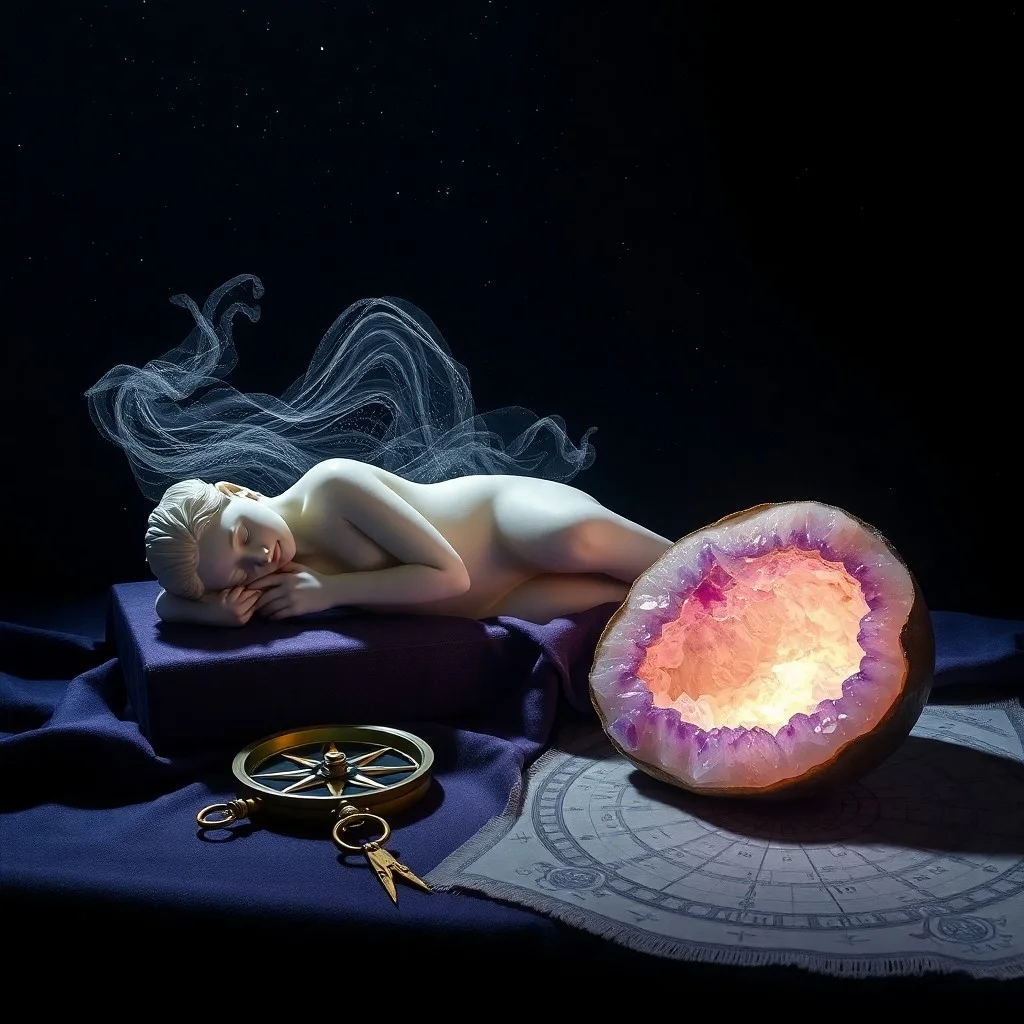
An array of Tarot Quantum Mechanics Intersecting Divination Reality and journals, representing the meticulous preparation involved in conscious astral travel.
Advanced Methods for Conscious Astral Exploration
For those who have mastered the foundational techniques and wish to deepen their practice, advanced methods offer greater control and a more conscious experience. These techniques often build upon existing skills, requiring heightened awareness and energy manipulation. They are designed to facilitate more intentional and vivid astral journeys.
- The "Mind Awake, Body Asleep" Technique (MAST): This method, often associated with lucid dreaming, involves maintaining full waking consciousness while the physical body enters a state of sleep paralysis. It requires intense mental focus to stay aware as the body falls asleep. Once sleep paralysis sets in, the practitioner can then use visualization or the rope method to induce separation. This technique bypasses the need to induce vibrations directly, as the body's natural transition into sleep creates the optimal state.
- The "Dream Exit" Technique (DET): This advanced method leverages the transition from a lucid dream directly into an astral projection. While lucid dreaming, the practitioner can consciously decide to exit their dream body and enter the astral plane. This often involves performing an exit maneuver within the dream, such as flying upwards through the dreamscape or simply willing oneself to awaken in the astral. The fluidity of the dream state makes this transition often seamless.
- Energy Work and Chakra Activation: Advanced practitioners often incorporate energy work into their preparation. This involves meditating on and activating the body's energy centers, or chakras, particularly the third eye and crown chakras. By stimulating these energy points, practitioners aim to enhance their subtle body's sensitivity and facilitate easier separation. Visualization of energy flowing through the chakras, combined with specific breathing techniques, can create a powerful energetic foundation for projection.
- The "Target" Method: This technique involves setting a specific destination or "target" on the astral plane before attempting projection. The practitioner intensely visualizes this target, focusing on its details, sensations, and purpose. This strong intention acts as a magnet, guiding the astral body directly to the desired location upon separation. It requires significant visualization skills and unwavering focus.
These advanced methods demand a higher level of discipline and internal control. They offer the potential for more intentional and meaningful astral experiences, allowing for exploration of specific areas or interaction with particular entities within the astral realm. Continuous practice and refinement of these skills will yield increasingly profound results.
Safety and Ethical Considerations in Astral Travel
While astral projection offers incredible opportunities for growth, it is crucial to approach it with awareness of safety and ethical guidelines. Responsible practice ensures a positive and secure experience. Neglecting these considerations can lead to uncomfortable or unsettling encounters.
- Protection and Grounding: Before and after projection, it is advisable to perform protection rituals or visualizations. Imagine yourself surrounded by a protective shield of light. Upon returning, ensure you are fully grounded by focusing on your physical body, eating, or spending time in nature. This prevents feelings of disorientation or detachment.
- Clear Intentions: Always set clear, positive intentions for your astral journey. Avoid projecting out of fear, anger, or malice. A pure intention acts as a guide and a shield in the astral plane, attracting positive experiences and entities.
- Avoiding Fear: Fear is the most significant obstacle and potential danger in astral projection. If you encounter anything unsettling, remember that your thoughts and emotions directly influence your astral experience. Focus on love, light, and your intention to return safely. Your will is powerful in the astral realm.
- Respect for Others: Just as in physical reality, respect the privacy and autonomy of others in the astral plane. Do not attempt to spy on individuals or interfere with their experiences. Approach all encounters with kindness and non-judgment.
- Physical Well-being: Ensure your physical body is well-rested and healthy before attempting projection. Fatigue or illness can make the experience more challenging and potentially draining. Astral projection is an energy-intensive process.
Adhering to these guidelines fosters a respectful and secure environment for astral exploration. The astral plane is a reflection of consciousness, and a responsible approach ensures that your experiences are always constructive and enlightening. Always prioritize your well-being and maintain a sense of ethical conduct.
Benefits and Potential Applications of Astral Projection
The practice of astral projection offers a multitude of benefits, ranging from profound personal growth to unique opportunities for learning and exploration. These advantages extend beyond mere curiosity, impacting one's spiritual, psychological, and even physical well-being. Many practitioners report life-changing insights.
- Self-Discovery and Spiritual Growth: Astral travel can provide a direct experience of consciousness beyond the physical body, leading to a deeper understanding of one's true nature as a spiritual being. This can alleviate the fear of death and foster a sense of interconnectedness with the universe. It offers a unique path to spiritual enlightenment.
- Expanded Perception and Knowledge: The astral plane is believed to contain vast amounts of information and different perspectives on reality. Practitioners report gaining insights into complex problems, understanding universal laws, and even accessing forgotten memories or future possibilities. It can be a direct route to expanded consciousness.
- Healing and Well-being: Some practitioners use astral projection for self-healing, visualizing their astral body absorbing healing energies or visiting healing centers on the astral plane. The profound relaxation and sense of peace often associated with OBEs can also reduce stress and improve overall mental health.
- Overcoming Fears: Confronting the unknown in a controlled environment can help individuals overcome fears, particularly the fear of death. The direct experience of conscious separation often demystifies the process of dying, fostering a sense of peace and acceptance.
- Creative Inspiration: Many artists, writers, and musicians have reported receiving creative inspiration during or after astral projections. The unique perspectives and experiences gained in the astral realm can spark new ideas and artistic expressions.
The applications of astral projection are as diverse as the individuals who practice it. From personal enlightenment to practical problem-solving, the ability to consciously explore non-physical realms opens up a new frontier for human experience. It is a powerful tool for those committed to expanding their understanding of reality.

An artistic depiction of a Bio-Astral Projection: Conscious Journeys Through Starlight, symbolizing the intricate and colorful pathways to astral dimensions.
Overcoming Common Challenges in Astral Projection
While the allure of astral projection is strong, practitioners often encounter various challenges that can hinder their progress. Recognizing and addressing these common hurdles is essential for sustained practice and eventual success. Patience and persistence are key virtues in this endeavor.
| Challenge | Solution/Strategy |
|---|---|
| Fear of the Unknown/Separation: Apprehension about leaving the body or encountering unfamiliar entities. | Educate yourself about the astral plane, visualize protective light, and focus on positive intentions. Start with short, controlled attempts and gradually extend. Affirmations like "I am safe and protected" can be beneficial. |
| Difficulty Reaching the Vibrational State: Inability to feel the characteristic buzzing or tingling sensations. | Deepen relaxation techniques. Experiment with different times of day (e.g., waking up after a few hours of sleep). Focus on energy circulation exercises or chakra activation to stimulate subtle body awareness. |
| Losing Focus/Falling Asleep: The mind drifts or the practitioner falls into natural sleep before separation. | Practice mindfulness meditation to strengthen concentration. Use mental anchors (e.g., counting, repeating a mantra) to keep the mind alert. Ensure you are not overly tired before starting. |
| Inability to Separate: Feeling stuck or unable to complete the exit maneuver. | Intensify visualization of the exit technique (e.g., rope method, rolling out). Focus on the sensation of lightness and detachment. Try different exit methods if one isn't working. Sometimes, a strong intention to "float up" is all that's needed. |
| Returning Too Soon/Abruptly: The projection ends prematurely or feels jarring. | Practice maintaining calm and control during the experience. A strong emotional reaction or fear can trigger an immediate return. Set an intention to stay out for a desired duration. Grounding exercises after return are crucial. |
Each challenge presents an opportunity for deeper self-understanding and refinement of your practice. By consistently applying these solutions and maintaining a positive, determined attitude, you can gradually overcome these obstacles and unlock the full potential of astral projection. The journey is as much about inner mastery as it is about outer exploration.
Conclusion: The Journey Continues
Astral projection is a profound esoteric practice that offers a unique pathway to conscious exploration beyond the physical realm. From mastering deep relaxation and concentration to employing advanced techniques like MAST and DET, the journey requires dedication, patience, and an unwavering commitment to self-discovery. Understanding the astral body and plane provides the necessary context for navigating these non-physical dimensions safely and effectively.
By adhering to ethical considerations and practicing grounding techniques, individuals can ensure their experiences are not only enlightening but also secure. The benefits, ranging from spiritual growth and expanded perception to creative inspiration and overcoming fears, underscore the transformative potential of this practice. While challenges may arise, they serve as opportunities for growth and refinement of one's inner faculties.
Ultimately, astral projection is more than just an out-of-body experience; it is an inward journey that illuminates the vastness of consciousness and the interconnectedness of all existence. As you continue your exploration, remember that each attempt, successful or not, contributes to your overall development as a conscious explorer. The astral journey is an ongoing adventure, promising endless insights for those brave enough to undertake it.
Source: Hybrid content assisted by AI and human editorial supervision.


Comments
Post a Comment