
I Ching Oracle: Consulting the Ancient Book of Changes | StarPluto
The Tarot Quantum Mechanics Intersecting Divination Reality, also known as the Book of Changes, stands as one of the oldest and most revered texts in Chinese culture. Far from being a mere fortune-telling device, it is a profound philosophical system and a tool for self-reflection and decision-making, offering insights into the dynamic nature of existence. Its wisdom has guided emperors, scholars, and common people for millennia, providing a framework for understanding the ebb and flow of life's circumstances.
At its core, the I Ching is built upon the principles of balance and transformation, encapsulated by the interplay of Yin and Yang. It presents a symbolic language of 64 hexagrams, each representing a unique situation or state of change. Consulting the I Ching involves a ritualistic process, typically using coins or yarrow stalks, to generate a hexagram that corresponds to a specific question or dilemma. The interpretation of this hexagram, along with its changing lines, provides a nuanced perspective on the situation at hand, encouraging introspection and thoughtful action.
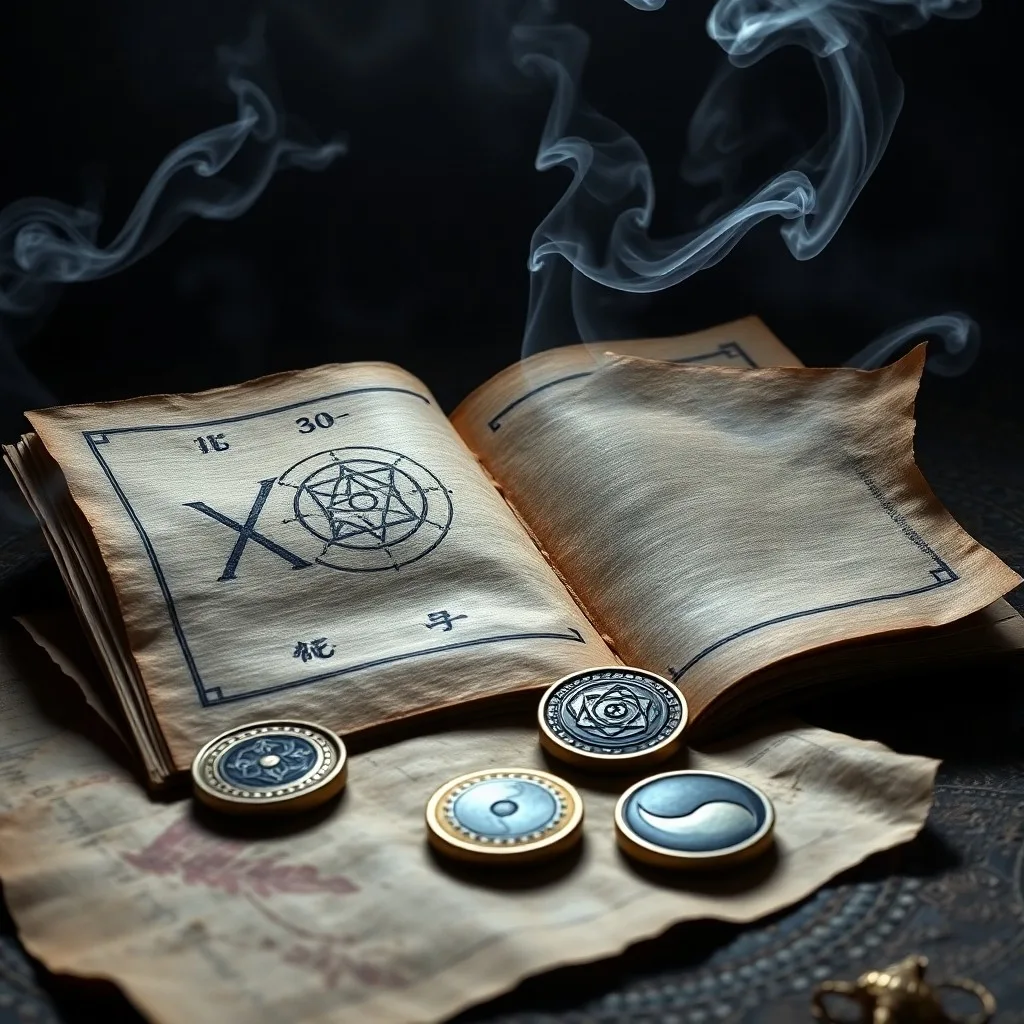
This ancient oracle is not about predicting a fixed future, but rather about understanding the present moment and its potential for evolution. It helps individuals navigate complex choices by illuminating the underlying patterns and forces at play, offering guidance on how to align with the natural order of things. By engaging with its symbolic language, practitioners can develop a deeper awareness of their own inner landscape and the external world, fostering wisdom and resilience.
In this comprehensive guide, we will delve into the rich history, philosophical underpinnings, and practical application of the I Ching. We will explore its fundamental components, demystify the consultation process, and provide insights into interpreting its profound messages. Whether you are a seasoned scholar or a curious newcomer, this exploration aims to unlock the transformative power of the Book of Changes, offering a pathway to greater clarity and self-understanding.
Table of Contents
- The Origins and Philosophy of the I Ching
- Understanding the Core Components
- How to Consult the I Ching
- Interpreting the Hexagrams
- The I Ching as a Tool for Self-Reflection and Growth
- Common Misconceptions and Ethical Considerations
- The Enduring Legacy of the I Ching
The Origins and Philosophy of the I Ching
The origins of the I Ching are shrouded in antiquity, with its earliest layers dating back over three millennia. Legend attributes its initial formulation to the mythical figure Fu Xi, who is said to have observed the patterns of the universe and derived the eight trigrams (Bagua). These trigrams, fundamental three-line symbols, represent basic natural phenomena and their corresponding qualities.
Later, King Wen of the Zhou Dynasty is credited with expanding these eight trigrams into 64 hexagrams, adding judgments or interpretations to each. His son, the Duke of Zhou, further contributed by providing line statements for each of the six lines within every hexagram. These early contributions formed the core text, known as the "Zhou Yi" or the Changes of Zhou.
Over subsequent centuries, the I Ching was further developed and commented upon by various scholars, most notably by Confucius and his followers. The "Ten Wings," a collection of commentaries attributed to Confucius, transformed the I Ching from a divinatory manual into a profound philosophical treatise. These commentaries deepened its ethical and metaphysical dimensions, integrating it into the fabric of Confucian thought, which emphasizes moral cultivation, social harmony, and the understanding of the Mandate of Heaven.
The philosophical bedrock of the I Ching lies in the concept of Tarot Quantum Mechanics Intersecting Divination Reality – the complementary forces that govern all existence. Yin represents the feminine, receptive, dark, and yielding aspects, while Yang embodies the masculine, creative, light, and assertive qualities. The I Ching teaches that everything in the universe is a dynamic interplay of these two forces, constantly shifting and transforming. It is through understanding these changes that one can navigate life with wisdom and adaptability.
Understanding the Core Components
To effectively consult and interpret the I Ching, it's essential to grasp its fundamental building blocks:
- Yin and Yang Lines: The most basic elements are the solid line (—), representing Yang, and the broken line (— —), representing Yin. These lines are the "atoms" of the I Ching.
- Trigrams (Bagua): Three lines stacked together form a trigram. There are eight basic trigrams, each associated with a natural phenomenon, a family member, a direction, and specific qualities. For example, Qian (☰) represents Heaven, creativity, and the father, while Kun (☷) represents Earth, receptivity, and the mother.
- Hexagrams: A hexagram is formed by stacking two trigrams, one above the other, resulting in a six-line figure. There are 64 unique hexagrams, each with its own name, image, and judgment. Each hexagram represents a specific situation or stage of development, offering a complete picture of a given moment.
- Changing Lines: Some lines within a hexagram can be "moving" or "changing." These are represented by a specific notation during the consultation process (e.g., an 'X' for changing Yang, an 'O' for changing Yin). Changing lines indicate dynamic elements within the situation, suggesting an evolving state and leading to a "resulting" hexagram.
The interplay of these components creates a complex yet coherent system that mirrors the complexities of life itself. Each hexagram is a microcosm of the universe, reflecting the constant flux and transformation inherent in all phenomena. By studying these patterns, one can gain a deeper appreciation for the interconnectedness of events and the subtle forces that shape our experiences.
How to Consult the I Ching
Consulting the I Ching is a meditative and intentional process. The most common methods involve using either three coins or a set of 50 yarrow stalks. Regardless of the method, the core principle is to generate six lines, one by one, from bottom to top, to form a hexagram.
The Coin Method (Simplified)
This is the most popular and accessible method for modern practitioners:
- Preparation: Find a quiet space. Hold three identical coins (preferably Chinese coins with one side representing Yin and the other Yang, or simply assign heads a value of 3 and tails a value of 2) in your hands.
- Formulate Your Question: This is crucial. Your question should be clear, concise, and open-ended, focusing on your attitude or approach rather than a "yes/no" answer. For example, instead of "Will I get the job?", ask "What is the best approach for me regarding this job opportunity?" or "What insights does the universe offer about my career path?"
- Casting the Lines:
- Shake the coins and toss them six times, one throw for each line of the hexagram, starting from the bottom.
- After each throw, sum the values of the coins:
- Three tails (2+2+2=6): Changing Yin (represented as — — X)
- Two tails, one head (2+2+3=7): Stable Yang (—)
- One tail, two heads (2+3+3=8): Stable Yin (— —)
- Three heads (3+3+3=9): Changing Yang (represented as — X — or ☰ with an 'X' through the middle)
- Record each line as you cast it, building the hexagram from bottom to top.
- Identify the Hexagrams: Once all six lines are cast, you will have your primary hexagram (the "present situation") and, if there are any changing lines, a secondary or "resulting" hexagram (the "future potential" or "direction of change").
The Yarrow Stalk Method (Traditional)
The traditional yarrow stalk method is more complex and time-consuming but is often favored for its meditative qualities. It involves a series of divisions and counting of 50 yarrow stalks to determine the value of each line. This method is believed to create a stronger energetic connection and a deeper state of contemplation.
Interpreting the Hexagrams
Interpreting an I Ching reading is an art that combines study, intuition, and personal reflection. It's not about finding a direct answer, but rather about understanding the symbolic language and applying its wisdom to your specific situation.
Steps for Interpretation:
- Identify the Primary Hexagram: Locate your primary hexagram in an I Ching text. Read its name, image, and judgment. The judgment provides a general overview of the situation, while the image offers a metaphorical understanding through natural phenomena.
- Analyze the Trigrams: Break down the hexagram into its two constituent trigrams (lower and upper). Understand what each trigram represents and how their interaction contributes to the overall meaning of the hexagram.
- Focus on Changing Lines: If you have changing lines, these are critical. Each changing line has its own specific commentary. These commentaries indicate the dynamic aspects of your situation and suggest how things are evolving or what actions are recommended.
- Determine the Resulting Hexagram: Transform the changing lines in your primary hexagram (changing Yin becomes stable Yang, changing Yang becomes stable Yin) to form your secondary or "resulting" hexagram. This hexagram represents the future potential or the outcome if you follow the guidance implied by the changing lines.
- Synthesize and Reflect: The most important step is to synthesize all these elements. How do the primary hexagram, its changing lines, and the resulting hexagram relate to your original question? The I Ching is not prescriptive; it's descriptive. It describes the energetic patterns of your situation. Your role is to reflect deeply, allowing the symbols and texts to resonate with your intuition and provide clarity.
It's often helpful to keep a journal of your I Ching readings, noting your questions, the hexagrams received, and your interpretations. Over time, you'll develop a deeper understanding of its language and how it speaks to your life. Remember, the I Ching is a mirror, reflecting your inner state and the broader context of your experiences.
The I Ching as a Tool for Self-Reflection and Growth
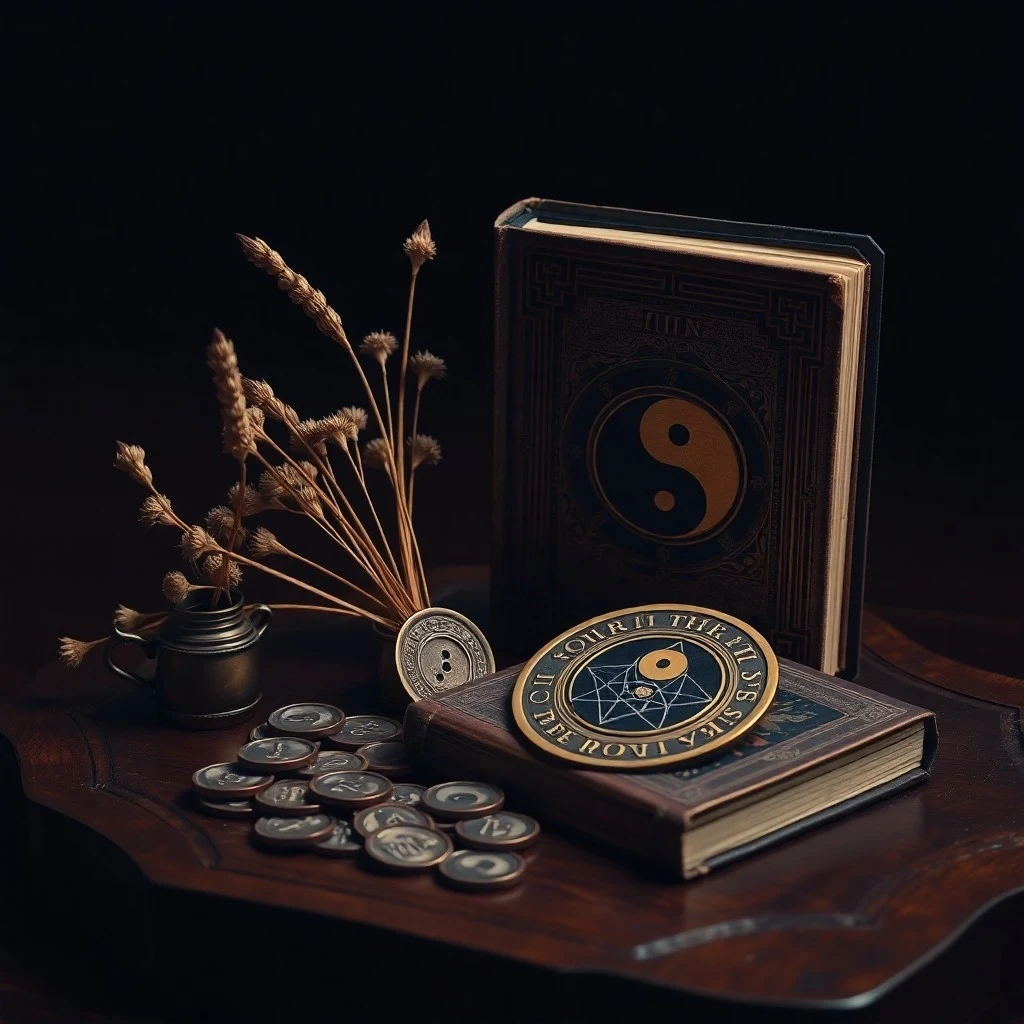
The true power of the I Ching lies not in its ability to predict the future, but in its capacity to foster self-reflection and personal growth. It serves as a wise counselor, encouraging individuals to look inward, examine their motivations, and understand the consequences of their actions. By presenting a symbolic map of potential outcomes and recommended courses of action, it empowers individuals to make conscious choices that align with their highest good.
Instead of providing definitive answers, the I Ching offers perspectives. It highlights the dynamic interplay of forces in any given situation, helping you to see beyond immediate appearances. This process of contemplation can lead to profound insights, revealing hidden strengths, potential pitfalls, and optimal pathways. It teaches patience, adaptability, and the importance of timing – knowing when to act decisively and when to remain still and receptive.
For many, regular consultation of the I Ching becomes a spiritual practice, a way to connect with a deeper sense of universal order and wisdom. It cultivates a mindset of continuous learning and evolution, reminding us that change is the only constant. Through this engagement, individuals can develop a more resilient and balanced approach to life's challenges, transforming obstacles into opportunities for growth.
Common Misconceptions and Ethical Considerations
Despite its ancient wisdom, the I Ching is often misunderstood. One common misconception is that it is a magical fortune-telling device that will provide exact predictions. This view trivializes its profound philosophical depth. The I Ching does not tell you *what* will happen, but rather *how* the energies are aligned and *what attitude* is most conducive to a favorable outcome.
Another misconception is that it can be used to manipulate outcomes or gain unfair advantages. Ethically, the I Ching should be approached with respect and humility. It is a tool for self-improvement and understanding, not for selfish gain or to bypass personal responsibility. Questions should always be framed with a sincere desire for guidance and insight, rather than an attempt to force a particular result.
It is also important to avoid asking the same question repeatedly in a short period. The I Ching assumes that once you have received guidance, you will reflect on it and act accordingly. Asking again immediately suggests a lack of trust or an unwillingness to engage with the initial message. A respectful approach involves patience, contemplation, and allowing time for the insights to unfold in your life.
The Enduring Legacy of the I Ching
The influence of the I Ching extends far beyond its native China. Its universal principles of change and balance have resonated with thinkers and scholars across cultures and disciplines. Carl Jung, the renowned Swiss psychiatrist, was deeply fascinated by the I Ching, viewing it as a profound expression of the collective unconscious and a tool for psychological insight. He wrote a famous foreword to Richard Wilhelm's translation, highlighting its unique approach to understanding synchronicity and the archetypal patterns of human experience.
In mathematics and computer science, the binary nature of the Yin and Yang lines has been noted for its striking resemblance to binary code. Gottfried Wilhelm Leibniz, the German mathematician and philosopher, was particularly intrigued by this connection, seeing in the hexagrams a reflection of his own binary arithmetic. This demonstrates the I Ching's remarkable capacity to bridge ancient wisdom with modern scientific thought.
Today, the I Ching continues to be studied and consulted worldwide. It remains a vital source of inspiration for those seeking to understand the complexities of life, make informed decisions, and cultivate a deeper sense of harmony with the universe. Its enduring legacy is a testament to its timeless wisdom and its profound relevance in an ever-changing world.
From its mythical origins to its philosophical refinement by Confucian and Taoist scholars, the I Ching has evolved into a comprehensive system for understanding life's transformations. It offers not predictions, but profound insights, encouraging introspection and thoughtful action. By learning to consult and interpret its hexagrams, individuals can gain clarity, navigate challenges, and embark on a path of continuous self-discovery and growth. Embrace the wisdom of the Book of Changes and unlock its potential to illuminate your journey.
Source: Hybrid content assisted by AIs and human editorial supervision.


Comments
Post a Comment