
Sound Healing: Frequencies, Vibrations, Therapeutic Effects | StarPluto
Sound Healing: Exploring Frequencies, Vibrations, and Their Therapeutic Effects
Sound healing, an ancient practice gaining renewed recognition in modern holistic wellness, harnesses the power of frequencies and vibrations to promote physical, mental, and spiritual well-being. This profound modality, often referred to as vibrational medicine, operates on the principle that everything in the universe, including the human body, is in a state of vibration. When these vibrations become disharmonious due to stress, illness, or emotional blockages, sound can be used to restore balance and harmony.
The concept is rooted in the understanding that specific sound frequencies can influence brainwave states, cellular function, and energetic pathways within the body. By engaging with resonant tones, individuals can experience deep relaxation, pain relief, emotional release, and enhanced spiritual connection. This introductory guide delves into the foundational principles, historical context, scientific underpinnings, and practical applications of sound healing, offering a comprehensive overview for those new to this transformative practice.
A 3D digital illustration of a crystalline structure radiating healing frequencies and vibrations.
Table of Contents
- Historical Roots and Ancient Practices
- The Science Behind Sound Healing
- Types of Sound Healing Instruments and Modalities
- Therapeutic Effects and Benefits
- Vibrational Medicine: A Broader Perspective
- How to Experience Sound Healing
- Considerations and Best Practices
Historical Roots and Ancient Practices
The use of sound for healing is not a modern invention; it is a practice deeply embedded in human history and across diverse cultures. Ancient civilizations intuitively understood the profound impact of sound on the human psyche and physical body. From the chanting of mantras in Vedic traditions to the use of didgeridoos by Australian Aboriginals, sound has served as a conduit for spiritual connection and physical restoration for millennia.
In ancient Egypt, priests used vocal toning in sacred chambers to induce altered states of consciousness and promote healing. The Greeks, including Pythagoras, explored the mathematical relationships of musical intervals and their effects on human health, believing in the power of music to purify the soul and balance emotions. Indigenous cultures worldwide have long incorporated drums, rattles, and vocalizations into their healing rituals, recognizing the ability of rhythmic sounds to shift energy and facilitate trance states for spiritual insight and physical recovery.
These historical applications highlight a universal recognition of sound's therapeutic potential, laying the groundwork for contemporary sound healing practices. The continuity of these traditions underscores the enduring human connection to sound as a source of comfort, transformation, and healing.
The Science Behind Sound Healing: Frequencies, Vibrations, and Resonance
While ancient cultures relied on intuitive understanding, modern science is beginning to unravel the complex mechanisms through which sound impacts our biology. The core principles revolve around frequencies, vibrations, and the phenomenon of resonance.
Every object, including every cell in our body, vibrates at a specific natural frequency, known as its resonant frequency. When we are healthy, our cells vibrate harmoniously. However, disease or stress can disrupt this natural rhythm, leading to disharmony. Sound healing aims to reintroduce healthy frequencies to the body, encouraging cells to return to their optimal vibrational state through the principle of sympathetic resonance.

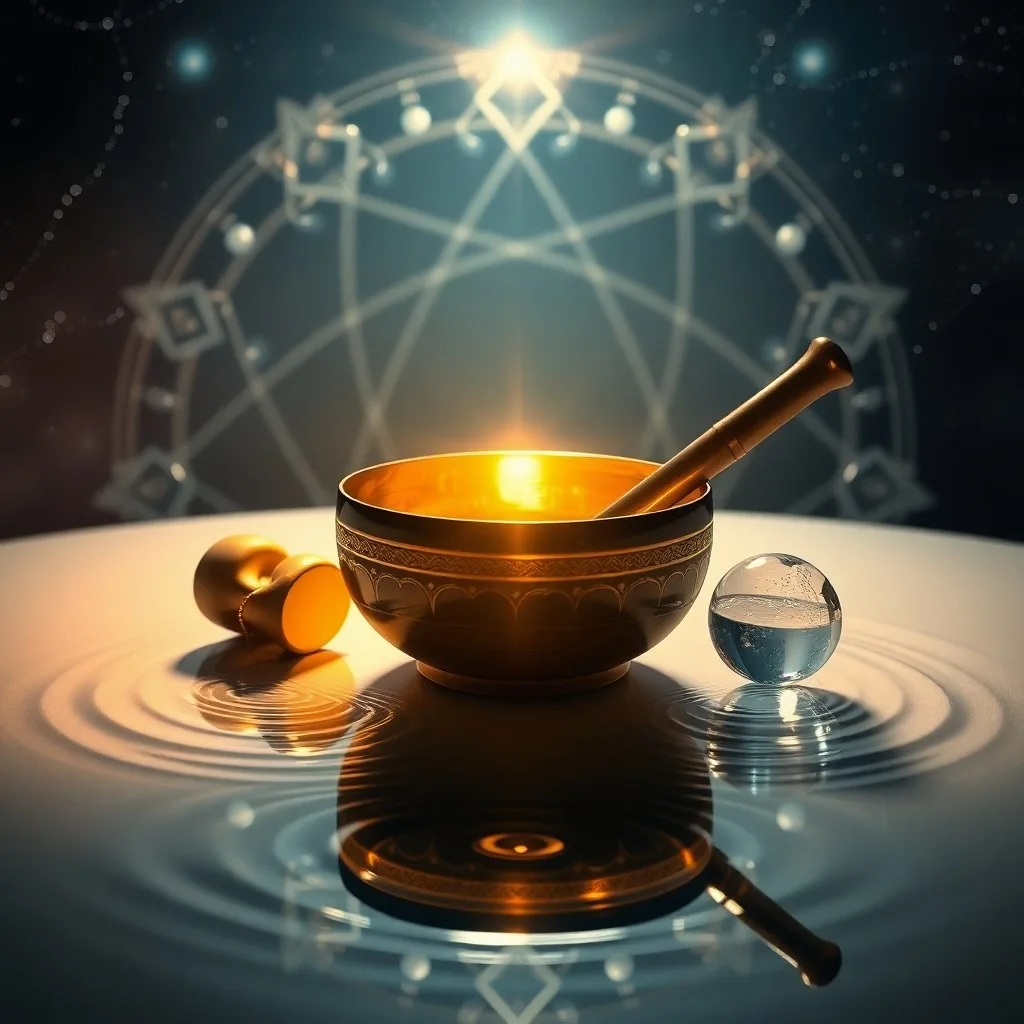
An antique Tibetan singing bowl, a powerful tool in sound therapy.
Scientific studies have shown that sound can:
- Influence Brainwave States: Specific frequencies, like binaural beats, can guide brainwaves into states associated with relaxation (alpha), meditation (theta), or deep sleep (delta), promoting stress reduction and mental clarity.
- Reduce Cortisol Levels: Research indicates that exposure to certain sounds can lower cortisol, the primary stress hormone, leading to a decrease in anxiety and improved mood.
- Impact Cellular Function: The vibrations generated by sound instruments can penetrate the body, affecting tissues, organs, and cells at a molecular level, potentially stimulating circulation, reducing inflammation, and promoting cellular regeneration.
- Modulate the Nervous System: Sound healing can activate the parasympathetic nervous system, responsible for the "rest and digest" response, counteracting the effects of chronic stress and promoting overall physiological balance.
The concept of cymatics, the study of visible sound and vibration, further illustrates this principle. When sound waves pass through a medium, they create intricate geometric patterns, demonstrating the organizing power of vibration. This visual representation helps us understand how sound can bring order and harmony to the chaotic states within our bodies.
Types of Sound Healing Instruments and Modalities
The world of sound healing is rich with a diverse array of instruments and techniques, each offering unique vibrational qualities and therapeutic benefits. Understanding these modalities can help individuals choose the most suitable approach for their needs.
- Singing Bowls (Tibetan and Crystal): These resonant bowls produce sustained, rich tones and vibrations. Tibetan singing bowls, made from a blend of metals, offer deep, earthy tones, while crystal singing bowls, made from quartz, produce pure, expansive frequencies. Both are used for meditation, relaxation, and balancing energy centers.
- Gongs: Gongs create a powerful, immersive sound bath experience. Their complex overtones and sustained vibrations can induce deep meditative states, facilitate emotional release, and clear energetic blockages.
- Tuning Forks: Calibrated to specific frequencies (e.g., the Schumann Resonance, Solfeggio frequencies), tuning forks are often applied directly to the body or held near energy points. They are believed to stimulate cellular repair, reduce pain, and balance the nervous system.
- Voice and Chanting: The human voice is a potent healing instrument. Chanting, toning, and vocalizing specific sounds or mantras can create powerful internal vibrations, promoting emotional release, spiritual connection, and self-expression.
- Drums and Percussion: Rhythmic drumming can alter brainwave states, induce trance, and facilitate shamanic journeys. The deep, grounding vibrations of drums are excellent for releasing stagnant energy and promoting physical vitality.
- Binaural Beats: These are auditory illusions perceived when two slightly different frequency pure-tone sine waves are presented to a listener, one to each ear. The brain processes the phase difference between the frequencies, creating a third "beat" frequency. They are used to entrain brainwaves for specific states like relaxation, focus, or sleep.
- Harp and Lyre: The gentle, ethereal sounds of stringed instruments like the harp can soothe the nervous system, reduce anxiety, and promote a sense of peace and tranquility.
Each instrument and modality offers a unique pathway to healing, often used in combination during sound healing sessions to create a multi-layered therapeutic experience.
Therapeutic Effects and Benefits of Sound Healing
The benefits of engaging with sound healing are wide-ranging, impacting various aspects of an individual's well-being. These therapeutic effects are often cumulative, deepening with consistent practice and exposure.
- Stress Reduction and Relaxation: One of the most immediate and profound effects of sound healing is its ability to induce deep states of relaxation. The resonant frequencies help to quiet the mind, slow heart rate, and reduce muscle tension, effectively counteracting the body's stress response.
- Pain Management: Many individuals report a reduction in chronic pain after sound healing sessions. The vibrations can act as a form of "internal massage," promoting circulation, reducing inflammation, and distracting the brain from pain signals.
- Emotional Release and Balance: Sound can bypass the analytical mind, allowing suppressed emotions to surface and be processed. This can lead to significant emotional release, reduced anxiety, and a greater sense of inner peace and emotional stability.
- Improved Sleep Quality: By shifting brainwave patterns from beta (waking consciousness) to alpha (relaxed) and theta (meditative/dreamlike) states, sound healing can significantly improve sleep onset and quality, leading to more restorative rest.
- Enhanced Mental Clarity and Focus: Regular exposure to specific sound frequencies can help to quiet mental chatter, improve concentration, and foster a greater sense of mental clarity and cognitive function.
- Spiritual Connection and Expanded Consciousness: For many, sound healing is a powerful tool for spiritual exploration. The immersive vibrations can facilitate altered states of consciousness, deepen meditative practices, and foster a stronger connection to one's inner self and the universal energy field.
- Energy Balancing: In esoteric traditions, sound is believed to clear and balance the body's energy centers (chakras) and aura, promoting a free flow of vital life force energy and overall energetic harmony.

A conceptual artwork depicting the energetic interaction of sound with the human form.
These benefits underscore the holistic nature of sound healing, addressing not just physical symptoms but also mental, emotional, and spiritual dimensions of health.
Vibrational Medicine: A Broader Perspective
Sound healing is a significant component of a larger paradigm known as vibrational medicine. This holistic approach posits that illness is often a manifestation of energetic imbalances or blockages within the body's subtle energy systems. Vibrational medicine seeks to restore health by rebalancing these energies using various forms of vibration, including sound, light, color, and even thought.
The core premise is that all matter is energy vibrating at different frequencies. When the body's natural energetic patterns are disrupted, dis-ease can arise. Vibrational therapies, therefore, work by introducing coherent and harmonious frequencies to realign the body's energetic blueprint. This goes beyond the purely physical, recognizing the intricate connection between our emotional, mental, and spiritual states and our overall health.
"The future of medicine will be the medicine of frequencies."
- Albert Einstein (often misattributed, but encapsulates the principle)
While the scientific community continues to explore and validate the mechanisms of vibrational medicine, many practitioners and individuals attest to its efficacy in promoting deep healing and well-being. It represents a paradigm shift from purely biochemical interventions to an understanding of health as an intricate interplay of energy and vibration.
How to Experience Sound Healing
There are several ways to engage with sound healing, ranging from facilitated sessions to personal practices. The choice often depends on individual comfort, accessibility, and desired depth of experience.
1. Group Sound Baths: These are popular communal experiences where participants lie down comfortably while a practitioner plays various instruments like gongs, singing bowls, and chimes. The sounds wash over the participants, creating an immersive and deeply relaxing experience. Sound baths are excellent for stress reduction and general well-being.
2. Individual Sound Therapy Sessions: In a one-on-one setting, a sound healing practitioner can tailor the session to specific needs, using instruments directly on or around the body. These sessions can be more targeted for pain relief, emotional processing, or energetic balancing.
3. Personal Practice:
- Listening to Healing Frequencies: Many apps and online platforms offer recordings of Solfeggio frequencies, binaural beats, or nature sounds designed to promote specific states of mind.
- Using Personal Instruments: Investing in a small singing bowl, tuning fork, or even practicing vocal toning can be a powerful way to integrate sound healing into daily life.
- Mindful Listening: Simply paying close attention to the sounds around you, whether it's music, nature, or ambient noise, can become a meditative practice that enhances awareness and reduces stress.
Regardless of the method, approaching sound healing with an open mind and a willingness to receive its benefits is key to a positive experience.
Considerations and Best Practices
While generally safe and beneficial, there are a few considerations and best practices to keep in mind when exploring sound healing:
- Consult a Professional: If you have specific health concerns, especially conditions like epilepsy, pacemakers, or severe mental health issues, it's advisable to consult with a healthcare professional before engaging in intensive sound healing sessions.
- Qualified Practitioners: When seeking facilitated sessions, look for practitioners who are certified and have a good reputation. A skilled sound healer understands the nuances of frequencies and their impact.
- Comfort and Environment: Ensure you are in a comfortable, quiet, and safe environment for sound healing. This allows for deeper relaxation and receptivity to the vibrations.
- Hydration: Staying well-hydrated before and after a session can enhance the body's ability to conduct and integrate the vibrational changes.
- Integration: After a sound healing session, take time to rest and integrate the experience. Journaling, quiet reflection, or gentle activities can help process any insights or emotions that arose.
- Personal Sensitivity: Some individuals may be more sensitive to certain frequencies or vibrations. Pay attention to your body's responses and communicate any discomfort to your practitioner.
By approaching sound healing with awareness and respect, individuals can unlock its profound potential for healing and transformation.
Conclusion
Sound healing, with its rich history and emerging scientific validation, offers a powerful and accessible path to holistic well-being. By understanding how frequencies and vibrations interact with our physical and energetic bodies, we can tap into an ancient wisdom that promotes balance, reduces stress, and fosters deep healing. Whether through immersive sound baths, personalized therapy, or mindful personal practice, the therapeutic effects of sound invite us to tune into our inner harmony and experience a profound sense of peace and vitality. As we continue to explore the intricate relationship between sound and consciousness, the potential of vibrational medicine to transform our health and lives appears boundless.
Fuente: Contenido híbrido asistido por IAs y supervisión editorial humana.


Comments
Post a Comment