
Bio-Energetic Sacred Spaces: Harmonizing Urban Resonance
Table of Contents
- Introduction: The Energetic Blueprint of Sacred Spaces
- Historical Foundations: Ancient Wisdom in Sacred Architecture
- Key Principles of Bio-Energetic Design
- The Human Experience and Energetic Resonance
- Modern Applications: Harmonizing Cities with Cosmic Flow
- Challenges and the Future of Bio-Energetic Urbanism
- Conclusion: Reclaiming Sacredness in Urban Design
Introduction: The Energetic Blueprint of Sacred Spaces
The concept of "sacred space" transcends mere architectural form, delving into a profound understanding of how physical environments can interact with and amplify subtle energies. Bio-energetic architecture explores the intricate relationship between built structures, natural forces, and human consciousness, positing that certain designs and alignments can foster a deeper connection to cosmic resonance. This field, while often associated with ancient spiritual practices, offers a compelling framework for re-evaluating modern urban planning and design.
From megalithic structures to grand cathedrals, humanity has long sought to imbue its most significant constructions with a sense of the divine and the harmonious. These spaces were not merely shelters or places of worship; they were conceived as living entities, designed to channel, concentrate, and radiate specific energetic qualities. Understanding these principles can unlock new paradigms for creating urban environments that nurture well-being and spiritual coherence, moving beyond purely functional or aesthetic considerations.
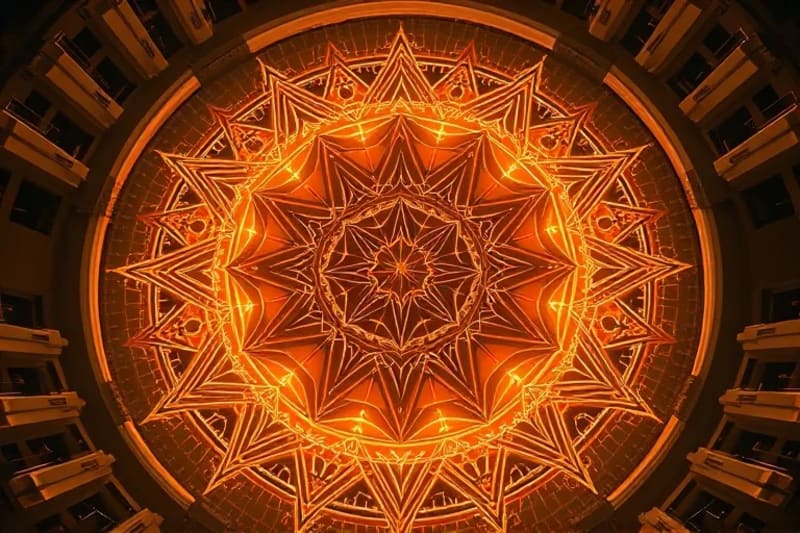
Conceptual representation of a bio-energetic sacred space, illustrating the harmonious interplay between architectural design, natural light, and the subtle energetic flows that connect it to the cosmos within an urban landscape.
This image is a conceptual AI render, exploring the fusion of ancient wisdom and futuristic design to depict the energetic blueprint of sacred spaces.Historical Foundations: Ancient Wisdom in Sacred Architecture
The practice of designing spaces with energetic intent is not new; it is a thread woven through the fabric of human history across diverse cultures. Ancient civilizations possessed a sophisticated understanding of natural forces, celestial mechanics, and their influence on terrestrial life. This knowledge was meticulously integrated into the planning and construction of their most revered sites.
Consider the megalithic structures of Stonehenge, precisely aligned with solstices and equinoxes, or the pyramids of Egypt, whose orientations reflect astronomical observations. These structures were not accidental but deliberate attempts to create conduits between the earthly and the celestial realms. The builders understood that specific alignments and proportions could enhance the energetic properties of a site, making it conducive to ritual, healing, or contemplation.
In classical antiquity, Greek temples were often sited on telluric energy points and designed using principles of sacred geometry, such as the Golden Ratio, to achieve aesthetic perfection and energetic balance. Similarly, Gothic cathedrals of medieval Europe utilized intricate geometric patterns, precise orientations, and the manipulation of light to evoke awe and facilitate spiritual experiences. These architectural marvels were not just buildings; they were instruments for spiritual transformation.
Eastern traditions, such as Feng Shui in China and Vastu Shastra in India, offer comprehensive systems for harmonizing human-made structures with natural energies. These practices emphasize the flow of "chi" or "prana" within a space, considering factors like orientation, layout, materials, and even colors to optimize energetic balance and promote well-being. Their enduring relevance highlights a universal human quest for environmental harmony.
Key Principles of Bio-Energetic Design
Bio-energetic architecture draws upon several core principles to create spaces that resonate with cosmic energies and support human flourishing. These principles often overlap and reinforce each other, forming a holistic approach to design.
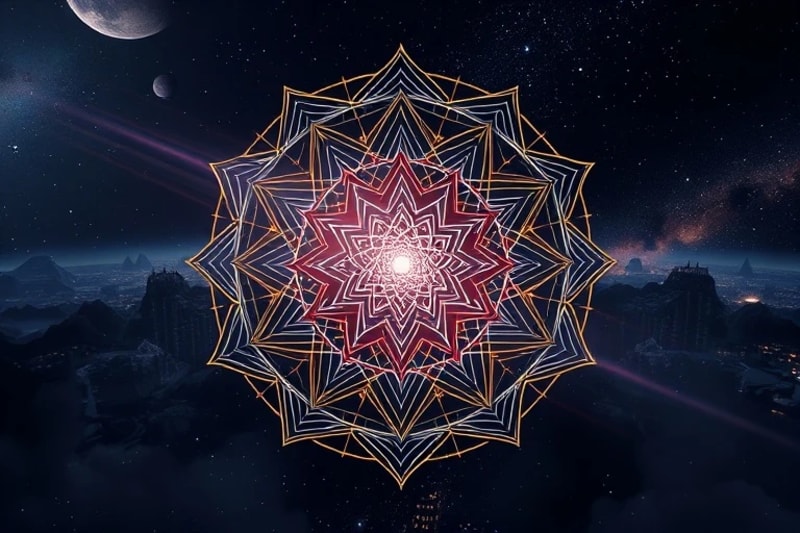
An abstract visualization of sacred geometry principles, illustrating how fundamental mathematical patterns can be integrated into architectural forms to enhance energetic harmony within urban settings.
This 3D render represents conceptual design elements, emphasizing the role of geometric precision in bio-energetic architecture.- Sacred Geometry: This involves the use of universal patterns and proportions found in nature, such as the Golden Ratio (Phi), the Fibonacci sequence, and geometric forms like the platonic solids. These geometries are believed to create harmonious fields that resonate with the human body and mind, fostering balance and coherence. Architects consciously apply these ratios to building dimensions, layouts, and decorative elements.
- Geomancy and Ley Lines: Geomancy is the art of understanding and working with the Earth's subtle energy currents, often referred to as ley lines or telluric currents. These invisible lines of energy are thought to connect significant sites and can be harnessed or balanced through careful placement and design. Ancient builders often located sacred sites on these powerful energetic nodes, believing they could amplify spiritual experiences.
- Materiality and Resonance: The choice of building materials plays a crucial role in bio-energetic design. Natural materials like wood, stone, and clay are considered to have their own inherent energetic properties and can contribute to a healthier, more resonant environment. Crystals, metals, and specific minerals are also sometimes incorporated for their perceived ability to store, transmit, or amplify energy.
- Acoustics and Soundscapes: Sound is a powerful energetic force. Sacred spaces often feature carefully designed acoustics that enhance chanting, music, or silence, creating specific resonant frequencies. The reverberation, clarity, and overall sound quality of a space can profoundly influence the emotional and spiritual state of its occupants, fostering a sense of peace or heightened awareness.
- Light and Shadow: The deliberate manipulation of natural light and shadow is a hallmark of sacred architecture. Light can be used to symbolize divinity, guide attention, or create dramatic effects that evoke spiritual contemplation. The interplay of light and dark within a space can influence mood, perception, and even the body's natural rhythms, contributing to a sense of sacredness.
The Human Experience and Energetic Resonance
The ultimate purpose of bio-energetic architecture is to positively impact the human experience within a space. When designed with cosmic resonance in mind, these environments can facilitate a range of psychological, physiological, and spiritual benefits.
Individuals often report feeling a sense of calm, clarity, and heightened focus in well-designed sacred spaces. The harmonious proportions, natural light, and balanced energetic flow can reduce stress, improve concentration, and promote a general sense of well-being. This is not merely anecdotal; research in environmental psychology and neuroarchitecture is beginning to explore the measurable effects of built environments on human brain activity and emotional states.
From a spiritual perspective, these spaces are designed to facilitate introspection, meditation, and a connection to something greater than oneself. The architectural elements, combined with the subtle energetic qualities, can create an atmosphere conducive to deep spiritual experiences. This aligns with the principles of ancient wisdom traditions that sought to create environments for spiritual growth.
Furthermore, sacred spaces often serve as focal points for community and collective consciousness. The shared experience of being in an energetically resonant environment can foster a sense of unity, purpose, and belonging. This collective resonance can amplify the individual benefits, creating a powerful feedback loop that strengthens both personal and communal well-being.
Modern Applications: Harmonizing Cities with Cosmic Flow
While the concept of sacred spaces often conjures images of ancient temples or secluded monasteries, the principles of bio-energetic architecture have profound implications for contemporary urban planning. As cities grow denser and more complex, the need for spaces that foster harmony and well-being becomes increasingly critical.
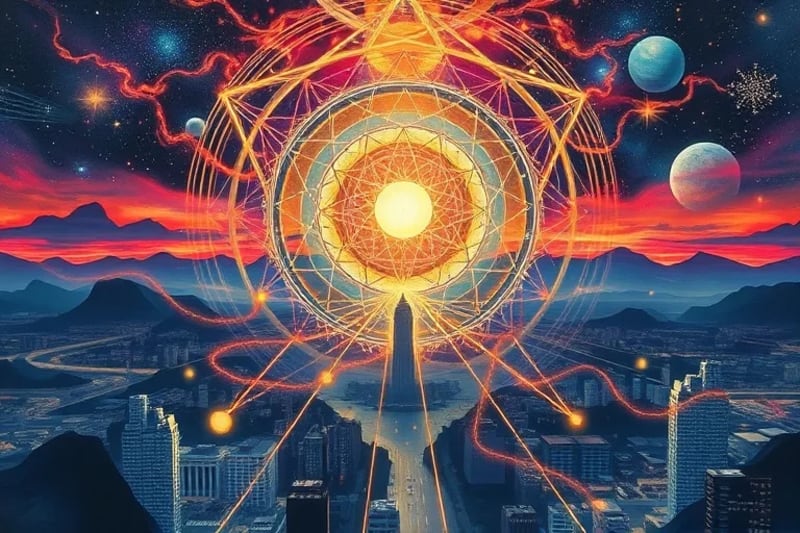
An artistic interpretation of energetic ley lines and telluric currents flowing beneath a modern cityscape, symbolizing the unseen bio-energetic architecture that influences urban harmony.
This oil painting uses abstract forms to depict the subtle energy networks believed to exist within and around urban environments.One key application lies in integrating biomimicry and sustainable design with energetic principles. By observing and replicating nature's efficient and harmonious designs, architects can create buildings that are not only environmentally friendly but also energetically balanced. This includes considering natural ventilation, daylighting strategies, and the use of locally sourced, non-toxic materials that resonate positively.
The idea of "energetic mapping" cities could involve identifying existing ley lines, geological formations, and historical power points within urban landscapes. This information could then inform the placement of public parks, community centers, or even residential zones to optimize energetic flow and create more vibrant, life-affirming environments. Such an approach moves beyond purely aesthetic urban design to incorporate a deeper understanding of place.
Public spaces, such as plazas, gardens, and community halls, offer prime opportunities for applying bio-energetic principles. Designing these areas with sacred geometry, optimal orientations, and resonant materials can transform them into urban sanctuaries that uplift the human spirit. Imagine city parks designed to enhance specific energetic frequencies, or public buildings that actively promote a sense of peace and connection.
The challenges for contemporary architects and urban planners are significant. Modern construction often prioritizes speed, cost, and density over subtle energetic considerations. However, a growing awareness of holistic well-being and the impact of the built environment on mental and physical health is paving the way for new approaches. Integrating energetic awareness into design curricula and urban policy could lead to a paradigm shift.
Challenges and the Future of Bio-Energetic Urbanism
Implementing bio-energetic architecture on a large scale within existing urban frameworks presents numerous challenges. The scientific validation of subtle energy concepts remains a subject of ongoing debate, and integrating such principles into conventional planning regulations can be complex. Furthermore, the economic pressures of urban development often conflict with the potentially higher costs or longer timelines associated with specialized bio-energetic design.
Despite these hurdles, the future of bio-energetic urbanism holds immense promise. As our understanding of the interconnectedness between environment, health, and consciousness grows, there is an increasing demand for spaces that support holistic well-being. Advanced sensor technologies and data analytics could potentially offer new ways to measure and map subtle energy fields, providing empirical support for these ancient practices.
Collaborations between architects, urban planners, scientists, and spiritual practitioners could foster innovative solutions. Imagine cities where every new development undergoes an "energetic impact assessment" alongside its environmental review. This holistic approach could lead to urban landscapes that are not only sustainable and functional but also deeply nourishing for the human spirit, harmonizing with the natural rhythms of the Earth and the cosmos.
The integration of planetary cycles and ecological principles into urban design is another promising avenue. By aligning buildings and public spaces with celestial movements and natural ecosystems, we can create environments that are more attuned to the broader cosmic order. This could lead to a new generation of "living cities" that breathe, grow, and resonate with the universe.
Conclusion: Reclaiming Sacredness in Urban Design
The bio-energetic architecture of sacred spaces offers a powerful reminder that our built environments are more than just physical structures; they are dynamic fields of energy that profoundly influence our lives. By re-engaging with ancient wisdom and integrating principles of sacred geometry, geomancy, and conscious materiality, we can begin to design cities that are truly harmonious.
Harmonizing cities with cosmic resonance is not about abandoning modernity but about enriching it with a deeper understanding of universal principles. It is an invitation to create urban landscapes that not only serve our practical needs but also uplift our spirits, foster community, and connect us to the profound energetic tapestry of the cosmos. The future of urban design lies in reclaiming the sacredness of space, one building and one city plan at a time.
Explore More Insights
- Astrological Houses: Comprehensive Guide Life's Spheres
- Gnostic Wisdom: Modern Spirituality Reclaiming Inner Knowledge
- Agile Project Management for AI Development
- Ming Gua Kua Number: Feng Shui Personal Directions Guide
- Norse Runes and Lunar Magic: Cosmic Abundance Rituals
- Mindfulness Retrogrades: Navigating Planetary Inner Calm
Source: Hybrid content assisted by AI and human editorial supervision.


Comments
Post a Comment