
Galactic Nomads Feng Shui: Harmonizing Interstellar Living Spaces
As humanity ventures beyond the confines of Earth, the concept of home extends into the vastness of space. For galactic nomads, those intrepid explorers and settlers traversing the cosmos, the need for harmonious and energetically balanced living spaces becomes paramount. Traditional Feng Shui, an ancient Chinese art and science, offers profound insights into arranging environments to optimize energy flow and promote well-being. This article explores how these timeless principles can be adapted and reinterpreted for the unique challenges and opportunities presented by interstellar living.
The adaptation of Feng Shui for extraterrestrial environments is not merely a philosophical exercise; it is a practical necessity. Creating a sense of stability, comfort, and vitality in artificial, often confined, spaces is crucial for the psychological and physical health of space inhabitants. By integrating cosmic energies and advanced technological solutions, galactic nomads can transform their vessels and habitats into true homes, fostering prosperity and peace amidst the stars.
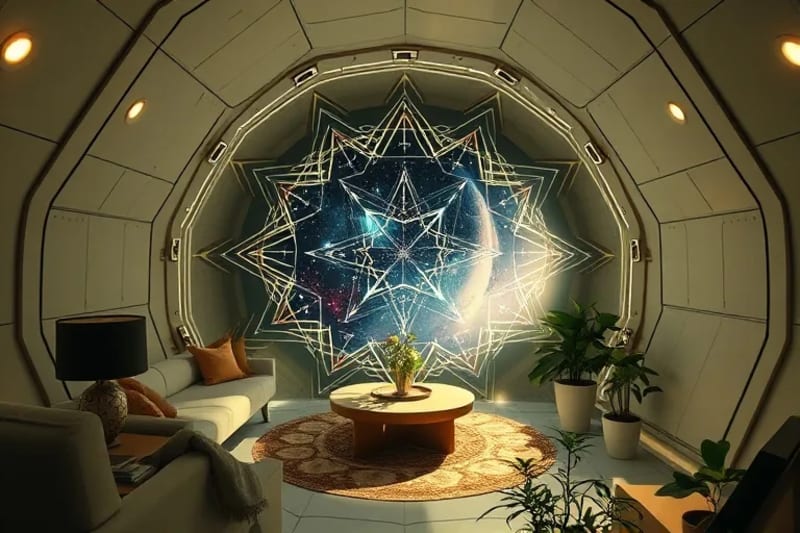 Conceptual designs and advanced visualizations illustrating the integration of ancient principles into futuristic space habitats, fostering balance and well-being.
This visual representation is a conceptual AI render, blending speculative architecture with energetic harmony, reflecting the article's themes.
The Evolution of Feng Shui Beyond Earth's Atmosphere
Feng Shui, traditionally rooted in the observation of natural landscapes and celestial alignments on Earth, seeks to balance the invisible forces of the universe, known as Qi. On Earth, this involves understanding topography, water flow, and cardinal directions. In space, these parameters shift dramatically, requiring a radical reinterpretation of its core tenets.
The absence of a natural ground, the constant exposure to cosmic radiation, and the reliance on artificial life support systems introduce new variables. Galactic nomads must consider factors like the ship's orientation relative to celestial bodies, the shielding against harmful energies, and the creation of simulated natural environments. The evolution of Feng Shui in this context becomes a blend of ancient wisdom and cutting-edge astro-engineering.
- Reconceptualizing Qi: Instead of terrestrial energy flows, space Qi might relate to the ship's power grid, life support systems, and the subtle electromagnetic fields generated by advanced technology.
- Celestial Alignments: While Earth-based Feng Shui uses the sun and moon, cosmic Feng Shui could incorporate planetary alignments, nebulae, and even distant galaxies as sources of subtle energy.
- Artificial Environments: Creating a sense of nature through advanced hydroponics, simulated daylight cycles, and biophilic design becomes crucial for psychological well-being.
Core Principles of Cosmic Feng Shui: Adapting Ancient Wisdom
The fundamental principles of Feng Shui—Yin and Yang, the Five Elements, and the Bagua map—remain relevant but require significant adaptation for interstellar habitats. Yin and Yang, representing complementary opposites, can be applied to the balance between artificial and natural light, active and resting zones, or technological and organic materials within a space vessel.
The Five Elements (Wood, Fire, Earth, Metal, Water) can be interpreted not just by materials but by their energetic qualities and functions. For instance, a high-energy propulsion system might embody the Fire element, while a water reclamation unit represents Water. The Bagua, a map used to divide a space into nine life areas, can be projected onto the ship's layout, ensuring each sector supports specific aspects of life, from career to relationships.
| Feng Shui Principle | Terrestrial Application | Cosmic Adaptation for Nomads |
|---|---|---|
| Qi Flow | Smooth pathways, clear entrances, avoiding clutter. | Optimized ventilation, clear corridors for movement in zero-G, efficient data and energy conduits. |
| Yin & Yang | Balance light/dark, active/passive zones, hard/soft textures. | Dynamic lighting systems mimicking day/night cycles, designated quiet zones vs. communal areas, ergonomic design. |
| Five Elements | Decor, colors, shapes, materials representing Wood, Fire, Earth, Metal, Water. | Material science (e.g., bioplastics for Wood, heat sinks for Fire), energy signatures, holographic projections, soundscapes. |
| Bagua Map | Dividing a home into nine life areas (e.g., wealth, relationships, career). | Mapping ship sectors to life areas, ensuring each module supports specific functions for crew well-being and mission success. |
Harmonizing Interstellar Living Spaces: Practical Applications
Designing an interstellar habitat with Feng Shui in mind involves meticulous planning and innovative solutions. The layout of modules, the choice of materials, and the management of energy are critical. For instance, the main entrance to a living module, analogous to the front door of an Earth home, should be clear and inviting, allowing positive energy to flow in. This might mean designing airlocks and transition zones that feel welcoming rather than purely utilitarian.
Materials used in space vessels often prioritize durability and weight. However, incorporating elements that mimic natural textures and colors can significantly enhance the living experience. Bioplastics, recycled composites, and advanced textiles can provide the warmth and organic feel often missing in high-tech environments. Furthermore, managing waste and recycling effectively is not just an environmental concern but also a Feng Shui principle, preventing stagnant energy accumulation.
 An artistic interpretation of cosmic energy pathways influencing the design and energetic balance of a futuristic living environment.
This artwork, generated by AI, visualizes the abstract concept of integrating cosmic forces into architectural design, blending ancient symbolism with future aesthetics.
Lighting plays a pivotal role in space. Without natural daylight cycles, artificial lighting must be carefully calibrated to support circadian rhythms and mood. Dynamic lighting systems that shift in color and intensity throughout the "day" can mimic Earth's natural light, reducing fatigue and improving mental clarity. Soundscapes, too, can contribute to harmony, from white noise generators to natural sounds designed to mask mechanical hums and create a sense of calm.
The concept of Digital Sacred Spaces could also be integrated, offering virtual environments that replicate serene natural landscapes or spiritual sanctuaries, providing mental and emotional refuge for galactic nomads. Such innovations ensure that even in the most alien environments, a connection to inner peace and natural harmony can be maintained.
Chinese Zodiac Influence on Galactic Nomad Dwellings
Beyond general principles, individual preferences based on the Chinese Zodiac can offer personalized Feng Shui tips for galactic nomads. Each of the twelve animal signs is associated with specific elements, directions, and personality traits, which can inform the design of personal quarters or even communal spaces within a starship. Understanding one's Chinese Zodiac Financial Luck or elemental compatibility can extend to optimizing living environments for prosperity and well-being.
For example, individuals born under the sign of the Dragon, associated with the Wood element and a strong, pioneering spirit, might thrive in spaces with expansive views, dynamic lighting, and elements that encourage growth and innovation. Incorporating sleek, vertical lines and vibrant green accents could resonate well with their energetic nature. Conversely, a person born under the sign of the Ox, linked to the Earth element and a desire for stability, would benefit from solid, grounded furniture, warm, earthy tones, and a clear, uncluttered layout that promotes security.
- Rat (Water): Favors clever storage solutions, reflective surfaces, and adaptable, fluid layouts.
- Tiger (Wood): Needs open spaces, natural textures, and areas for dynamic activity.
- Rabbit (Wood): Prefers soft lighting, comfortable furnishings, and private nooks for contemplation.
- Snake (Fire): Appreciates sophisticated designs, subtle lighting, and areas for deep thought.
- Horse (Fire): Benefits from energetic colors, open social areas, and efficient movement paths.
- Goat (Earth): Thrives in cozy, artistic spaces with soft textiles and personal touches.
- Monkey (Metal): Enjoys innovative tech, modular furniture, and spaces that encourage curiosity.
- Rooster (Metal): Prefers organized, clean spaces with clear lines and functional design.
- Dog (Earth): Needs comfortable, secure areas, warm lighting, and a sense of belonging.
- Pig (Water): Values comfort, luxury, and communal areas for relaxation and enjoyment.
These personalized considerations, when combined with the broader principles of cosmic Feng Shui, ensure that each galactic nomad can find a sense of home that resonates deeply with their individual energetic blueprint. The concept of Zodiac Decanates further refines these insights, offering even deeper layers of personality and corresponding environmental needs.
 A conceptual device designed to harmonize cosmic energies within a confined space, symbolizing the blend of technology and ancient wisdom.
This AI-generated 3D render illustrates a futuristic artifact, embodying the article's exploration of energetic balance in advanced environments.
Navigating Cosmic Energies: Challenges and Future Innovations
Interstellar travel presents unique energetic challenges that traditional Feng Shui never anticipated. Cosmic radiation, solar flares, and the fluctuating gravitational fields of different celestial bodies can all impact the energetic balance of a living space. Advanced shielding technologies and energy dampeners will be crucial, but Feng Shui offers a complementary approach by focusing on the subtle energetic resilience of the inhabitants.
Future innovations in cosmic Feng Shui might involve "bio-resonant" materials that actively harmonize ambient energies, or AI-driven systems that dynamically adjust environmental parameters (lighting, temperature, air quality, soundscapes) based on the occupants' energetic needs and the external cosmic conditions. Imagine a ship's AI constantly monitoring the energetic pulse of the vessel and its inhabitants, making subtle adjustments to maintain optimal Qi flow.
The psychological impact of isolation and confinement in space also needs addressing. Feng Shui principles, by promoting order, beauty, and a connection to "natural" elements (even if simulated), can significantly mitigate stress and foster a sense of well-being. This holistic approach, combining scientific understanding with ancient wisdom, will be vital for the long-term success and happiness of galactic nomads.
Discover Our Content Ecosystem
- Feng Shui Chinese Zodiac Business: Element Harmony Prosperity
- Advanced Candle Magic: Sigils, Intentions, Lunar Alignment
- Temporal Lineage Therapy: Healing Ancestral Karma
- Aquarius Decans Deep Dive: Water Bearer Faces Explained
- Hellenistic Astrology: Bridging Ancient Wisdom and Modern Spirituality
- Astrocartography Soulmate Connections: Ideal Relationship Lines
- Horoscope Natal Chart: Comprehensive Distinction
- Astro-Linguistics Vibrational Mantras Reality Shaping
- Dragon's Shadow: Darker Traits & Challenges
- AI-Powered Dream Interpretation: Decoding Symbolic Language
- Auspicious Dates Times Electional Astrology Business Ventures
- Imum Coeli Astrology: Decoding Roots, Private Self
- Michael Jackson's Environmental Activism: Beyond Earth Song
- Video Games Cultural Impact: Social Artistic Global Phenomenon
- Nanomedicine: Revolutionary Advances in Health and Treatment
- Natal Chart Nodal Axis: Life Purpose and Karmic Destiny
- Rat Monkey Chinese Horoscope: Advanced Prosperous Relationship Strategies
- Psycho-Aromatherapy Vibrational: Chakras, Aromas Emotional Healing
- Gothic Trinity Sacred Geometry Medieval Architecture: Divine Patterns
- Theological Depth of Relics: Bridge Heaven Earth
- Saint Michael Archangel: Digital Warrior Psychological Fraud
Source: Hybrid content assisted by AI and human editorial supervision.


Comments
Post a Comment