
Digital Sacred Spaces: VR AR Meditation Spiritual Practice
In an increasingly digital world, the quest for inner peace and spiritual growth has found an unexpected ally in technology. The concept of Digital Sacred Spaces, facilitated by Virtual Reality (VR) and Augmented Reality (AR), is emerging as a groundbreaking frontier for meditation and spiritual practice. These immersive environments offer a unique opportunity to transcend physical limitations, creating personalized sanctuaries that foster mindfulness, connection, and profound introspection.
This exploration delves into how VR and AR are not merely tools for entertainment but potent platforms for spiritual development. By carefully crafting experiences that are both ethically sound and deeply engaging, these technologies can enhance traditional meditation techniques, making spiritual practice more accessible and impactful for a wider audience. The integration of digital immersion with ancient wisdom promises a future where technology serves as a bridge to deeper self-awareness and spiritual enlightenment.
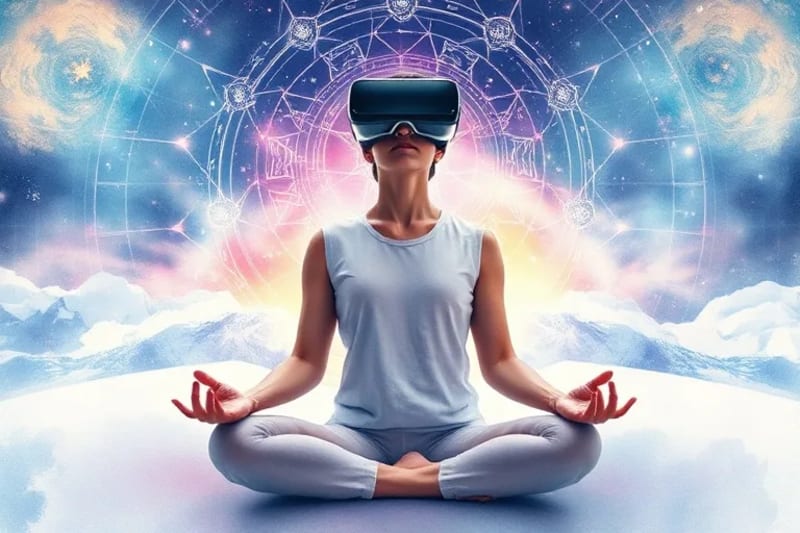
An individual engaging in a virtual reality meditation session within a serene digital sanctuary, highlighting the potential of immersive technology for spiritual practice.
Table of Contents
- Understanding Digital Sacred Spaces
- VR Meditation: Transforming Inner Journeys
- AR for Mindfulness and Spiritual Connection
- Ethical Considerations in Immersive Spiritual Tech
- Benefits of VR/AR in Spiritual Practice
- Designing Effective Digital Sacred Environments
- Future Outlook and Integration
Understanding Digital Sacred Spaces
Digital sacred spaces are virtual or augmented environments specifically designed to facilitate spiritual practices, meditation, and mindfulness. Unlike conventional digital interactions, these spaces are crafted with intentionality, aiming to evoke feelings of reverence, tranquility, and connection to a higher purpose or inner self. They leverage the immersive capabilities of VR and AR to transport individuals beyond their immediate physical surroundings, offering a controlled and often customizable setting for spiritual exploration.
The core idea is to replicate or enhance the conditions traditionally found in physical sacred sites—such as temples, natural retreats, or quiet meditation rooms—within a digital realm. This can involve meticulously rendered natural landscapes, abstract geometric patterns, or interactive elements that respond to a user's breath or gaze. The goal is not to replace traditional spiritual practices but to augment them, providing new avenues for engagement and accessibility.
- Immersive Environments: Full sensory engagement to block out distractions and create a deep sense of presence.
- Customization: Ability to personalize settings, sounds, and visual elements to suit individual spiritual needs and preferences.
- Accessibility: Overcoming geographical and physical barriers, allowing anyone to access a sacred space from anywhere.
- Guided Experiences: Often integrated with guided meditations, breathwork exercises, or spiritual teachings delivered within the immersive setting.
VR Meditation: Transforming Inner Journeys
Virtual Reality meditation applications offer a profound level of immersion, effectively isolating the user from external stimuli and guiding them into deep states of relaxation and focus. By donning a VR headset, individuals can find themselves transported to serene beaches, ancient forests, cosmic expanses, or abstract realms designed to calm the mind and open the heart. This complete sensory encapsulation is a significant advantage, particularly for those living in noisy urban environments or struggling with distractions.
Research from institutions like Stanford University has explored the efficacy of VR in reducing anxiety and pain, suggesting its potential for mental well-being applications. When applied to meditation, VR can enhance the feeling of "being there," making visualizations more vivid and the sense of presence more tangible. This can lead to deeper meditative states, improved emotional regulation, and a stronger connection to one's inner self. The ability to explore different sacred landscapes can also cater to diverse spiritual traditions and personal preferences.
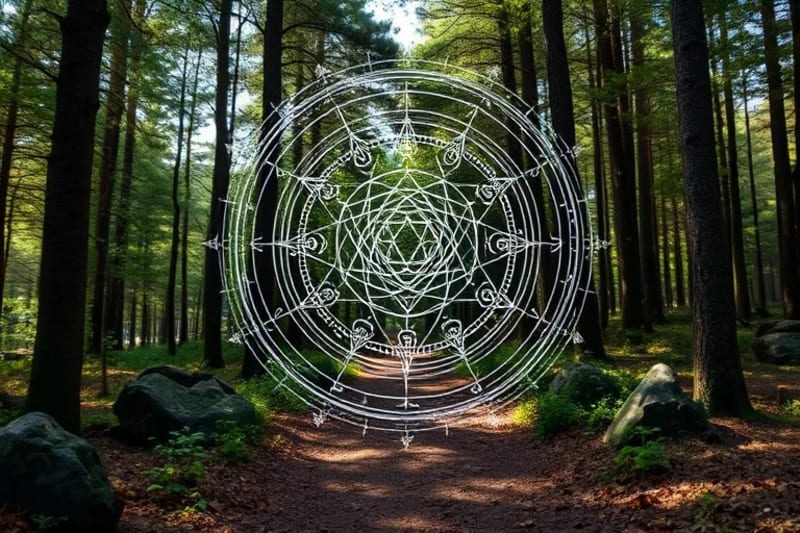
Vector art illustrating augmented reality overlays of spiritual symbols onto a natural forest scene, symbolizing the integration of digital and physical realms for mindfulness.
Beyond simple scenic backdrops, advanced VR meditation experiences incorporate biofeedback mechanisms. These systems can monitor heart rate, breath patterns, and even brainwave activity, providing real-time visual or auditory cues that help users deepen their meditative state. For instance, a virtual flame might flicker in sync with one's breath, or a soundscape might subtly shift as relaxation levels increase. This interactive feedback loop empowers users to actively engage with their physiological responses, fostering greater self-awareness and control over their meditative practice.
AR for Mindfulness and Spiritual Connection
Augmented Reality, in contrast to VR, overlays digital information onto the real world, enhancing our immediate environment rather than replacing it. This technology holds immense promise for integrating mindfulness and spiritual practices into daily life. Imagine walking through your home or a park and seeing subtle AR overlays—perhaps a glowing mandala appearing on your coffee table, a gentle reminder to breathe, or a virtual guide offering words of wisdom as you pass a specific landmark.
AR applications can transform mundane spaces into sacred ones, making spiritual practice less confined to specific times or locations. For example, an AR app could project a virtual altar in your living room, or guide you through a walking meditation by highlighting points of focus in your natural surroundings. This seamless integration allows for "on-the-go" mindfulness, fostering a continuous state of awareness and spiritual connection throughout the day, rather than just during dedicated meditation sessions.
- Contextual Mindfulness: Bringing spiritual awareness into everyday activities and environments.
- Interactive Guidance: Virtual instructors or prompts appearing in your real-world view.
- Environmental Enhancement: Overlaying calming visuals or symbolic elements onto physical spaces.
- Community Connection: Potential for shared AR experiences where multiple users can perceive the same overlaid spiritual elements, fostering a sense of collective practice.
Ethical Considerations in Immersive Spiritual Tech
As with any powerful technology, the development and deployment of digital sacred spaces must be approached with careful ethical consideration. The immersive nature of VR and AR means that these experiences can significantly influence a user's perceptions, emotions, and even beliefs. Therefore, developers and practitioners must prioritize transparency, user autonomy, and well-being.
One critical aspect is the potential for commercial exploitation or manipulation. Spiritual experiences are deeply personal, and there is a risk that digital platforms could be designed to promote specific ideologies, products, or even cult-like behaviors. Safeguards must be in place to ensure that these spaces remain neutral, respectful of diverse beliefs, and focused on genuine spiritual growth rather than profit or persuasion. Data privacy is another concern; biometric data collected during VR meditation, for example, must be handled with the utmost care and transparency.
An oil painting depicting a luminous lotus flower surrounded by intricate digital patterns, representing the profound inner peace and expanded consciousness achieved through enhanced spiritual practices.
Furthermore, it is crucial to avoid cultural appropriation and ensure that digital representations of sacred traditions are respectful and accurate. Collaboration with spiritual leaders and cultural experts is essential to prevent misrepresentation or trivialization of deeply held beliefs. The goal should always be to create inclusive spaces that honor the richness of human spirituality, rather than commodifying or distorting it.
Benefits of VR/AR in Spiritual Practice
The integration of VR and AR into spiritual practice offers a multitude of benefits that can enhance traditional methods and open new avenues for exploration. These technologies can address common challenges faced by meditators and spiritual seekers, making practices more effective and accessible.
| Benefit Category | Description and Impact |
|---|---|
| Enhanced Focus & Immersion | VR's ability to block external distractions creates a highly focused environment, allowing users to dive deeper into meditative states without interruption. This is particularly valuable for beginners or those in busy environments. |
| Accessibility & Inclusivity | Digital sacred spaces remove geographical and physical barriers, enabling individuals with limited mobility or those in remote areas to access diverse spiritual environments and guided practices. |
| Personalization & Customization | Users can tailor their spiritual environment, choosing landscapes, sounds, and interactive elements that resonate most deeply with their personal spiritual path, fostering a more profound connection. |
| Novelty & Engagement | The innovative nature of VR/AR can re-engage individuals who find traditional meditation challenging or monotonous, offering fresh perspectives and interactive elements that maintain interest. |
| Biofeedback Integration | Real-time physiological feedback (e.g., heart rate, breath) integrated into the virtual environment helps users understand and refine their meditative responses, accelerating skill development. |
| Emotional & Psychological Healing | Immersive, calming environments can reduce stress, anxiety, and even chronic pain, providing a safe space for emotional processing and psychological well-being. |
Designing Effective Digital Sacred Environments
Creating truly effective digital sacred spaces requires a multidisciplinary approach, blending insights from psychology, neuroscience, spiritual traditions, and cutting-edge technology. The design process must go beyond mere aesthetics, focusing on elements that genuinely support and deepen spiritual practice.
Key design principles include creating environments that are visually harmonious and free from distracting elements. Sound design is equally crucial, incorporating binaural beats, ambient nature sounds, or calming musical compositions that induce specific brain states conducive to meditation. Haptic feedback, where available, can add another layer of immersion, such as subtle vibrations mimicking a gentle breeze or the resonance of a singing bowl.
Furthermore, the integration of narrative and symbolic elements can enrich the spiritual experience. This might involve guided journeys through archetypal landscapes, interactions with virtual avatars representing spiritual guides, or visual metaphors for concepts like interconnectedness or transcendence. The goal is to create not just a visual space, but a holistic experience that engages the mind, body, and spirit, fostering a sense of awe, wonder, and inner peace.
Future Outlook and Integration
The future of digital sacred spaces is poised for significant growth and integration into mainstream wellness and spiritual practices. As VR and AR technologies become more sophisticated, affordable, and widespread, their potential to transform how we approach meditation and spiritual development will expand exponentially. We can anticipate more personalized experiences, driven by AI that adapts to individual user needs and progress, offering tailored guidance and environments.
Beyond individual practice, these technologies could foster new forms of digital spiritual communities. Imagine participating in a global meditation session within a shared virtual temple, connecting with practitioners from around the world in real-time. This could bridge geographical divides and cultivate a sense of universal spiritual connection. The ethical frameworks will also continue to evolve, ensuring that these powerful tools are used responsibly and for the highest good of humanity.
Ultimately, digital sacred spaces represent a harmonious blend of ancient wisdom and modern innovation. They offer a compelling vision for a future where technology serves as a powerful conduit for inner exploration, fostering deeper mindfulness, spiritual growth, and a profound sense of connection in an increasingly complex world. By embracing these advancements with an ethical and intentional mindset, we can unlock new dimensions of spiritual practice for generations to come.
Fuente: Contenido híbrido asistido por IAs y supervisión editorial humana.


Comments
Post a Comment