
Astro Genomics Epigenetics Karmic Blueprints Astrology
Astro-Genomics & Epigenetics: Unlocking Ancestral Karmic Blueprints Through Birth Chart Analysis
The convergence of ancient wisdom and modern science offers a fascinating new lens through which to understand human existence. Astro-genomics and epigenetics represent a cutting-edge frontier, exploring how cosmic influences, as depicted in an individual's birth chart, might correlate with genetic predispositions and the dynamic expression of our DNA. This interdisciplinary approach seeks to uncover the intricate connections between our celestial heritage and our biological programming, suggesting that our ancestral karmic blueprints might be encoded not just in our spiritual lineage but also within our very cells.
 Precursors intellectuales, diagramas fundamentales y representaciones conceptuales que forjaron la visión de la interconexión cósmica y biológica.
Fuente visual sujeta a disponibilidad del ecosistema: Wikimedia Commons bajo licencia CC BY-SA 4.0 o renderizado conceptual IA.
This article delves into the theoretical framework of astro-genomics, examining how the positions of planets and houses at the moment of birth could reflect inherited traits, ancestral patterns, and even predispositions to certain life experiences. By integrating principles of epigenetics—the study of how environmental factors and lifestyle choices can influence gene expression—we can explore the dynamic interplay between fixed astrological influences and the mutable nature of our genetic code. The goal is to provide a comprehensive understanding of how these fields might offer unprecedented insights into personal growth, healing, and self-actualization.
The birth chart, a snapshot of the cosmos at our exact moment of inception, has long been considered a map of our potential and challenges. When viewed through the lens of astro-genomics, it transforms into a potential blueprint that not only outlines psychological tendencies but also hints at biological susceptibilities and ancestral legacies. Understanding this intricate relationship can empower individuals to navigate their lives with greater awareness, making informed choices that align with their deepest nature and highest potential.
Understanding Astro-Genomics: Bridging Cosmos and Biology
Astro-genomics is an emerging conceptual field that postulates a correlation between astrological placements and genetic predispositions. It suggests that the unique cosmic signature of a birth chart might correspond to specific genetic expressions or even epigenetic markers passed down through generations. While mainstream science has yet to fully embrace this connection, proponents argue that ancient astrological systems, which have observed human patterns for millennia, could offer a framework for understanding complex biological inheritances.
The core idea is that planetary energies, rather than being mere symbolic representations, could exert subtle yet profound influences on the developing embryo and, consequently, on the individual's genetic makeup and expression. This doesn't imply a deterministic fate but rather a set of energetic predispositions that can be activated or modulated. For instance, certain planetary aspects might correlate with specific temperamental traits that have a genetic basis, or with tendencies towards particular health conditions that run in families.
Researchers in this speculative field often look for patterns between astrological data and observable genetic traits or health records. Although challenging to quantify with current scientific methods, the hypothesis invites us to consider a more holistic view of human biology, one that extends beyond purely material explanations. The concept of Mars in Signs and Houses, for example, traditionally describes an individual's drive and assertion, which could, in an astro-genomic context, relate to genetic factors influencing energy levels or competitive behavior.
Epigenetics: The Dynamic Layer of Genetic Expression
Epigenetics provides a crucial bridge for understanding how external factors can influence our internal biological machinery without altering the underlying DNA sequence. It focuses on modifications to gene expression that are heritable but do not involve changes to the genetic code itself. These epigenetic changes—such as DNA methylation or histone modification—can turn genes "on" or "off," influencing how our cells read and interpret our genetic blueprint.
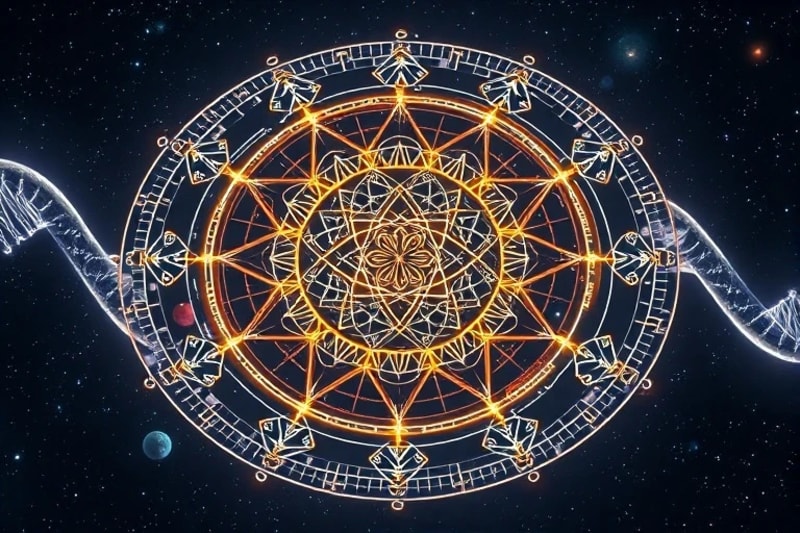 An intricate holographic birth chart superimposed on a DNA double helix, illustrating the conceptual merging of celestial patterns with genetic information.
Environmental factors, lifestyle choices, diet, stress, and even emotional experiences can trigger epigenetic changes. This means that while we inherit a specific genetic code, how those genes are expressed is highly dynamic and responsive to our environment and choices. This dynamic nature of epigenetics offers a compelling mechanism through which astrological influences, if they exist, could manifest in a tangible biological way. For example, if a birth chart indicates a predisposition to anxiety, epigenetic factors influenced by life experiences could either exacerbate or mitigate this tendency.
The concept of "karmic blueprints" finds resonance here, as epigenetic research has shown that traumatic experiences or significant life events can leave epigenetic marks that are passed down through generations. This suggests a biological basis for inherited patterns that align with the astrological concept of ancestral karma or lineage. The interaction between these inherited epigenetic patterns and the unique astrological signature of an individual's birth chart could provide a richer, more nuanced understanding of their life path.
The Birth Chart as a Karmic Blueprint
In astrology, the birth chart is often described as a map of the soul's journey, outlining inherent talents, challenges, and life lessons. From an astro-genomic perspective, this "karmic blueprint" could be seen as a reflection of both inherited genetic and epigenetic patterns, alongside the unique cosmic energies imprinted at birth. The chart's houses, signs, and planetary aspects describe specific areas of life and psychological drives, which could correspond to the activation or deactivation of certain genetic potentials.
For example, a prominent Jupiter Sign in a birth chart might indicate a predisposition for growth, luck, and philosophical pursuits. In an astro-genomic context, this could translate to epigenetic markers that promote neural pathways associated with optimism, learning, or a robust immune system. Conversely, challenging planetary aspects might highlight areas where inherited epigenetic vulnerabilities are more likely to be expressed, requiring conscious effort and intervention.
The concept of ancestral karma, often discussed in spiritual traditions, finds a compelling parallel in epigenetic inheritance. Just as family patterns and traumas can be passed down and influence subsequent generations, the birth chart might indicate the specific nature of these inherited energetic and biological legacies. By analyzing the birth chart, individuals can gain insights into these ancestral patterns, allowing them to consciously work with or transmute inherited predispositions rather than being passively subjected to them.
Planetary Influences and Genetic Predispositions
Each planet in astrology is associated with specific archetypal energies and functions. In astro-genomics, these planetary influences are hypothesized to correlate with genetic predispositions in various ways. For instance:
Sun: Represents vitality, core identity, and life force. Astro-genomically, this could relate to overall genetic resilience, immune system strength, and the expression of genes related to self-perception and leadership, such as those associated with the Leo Zodiac Sign.
Moon: Governs emotions, instincts, and ancestral patterns. Its position might indicate epigenetic markers related to emotional regulation, stress response, and inherited family traits or sensitivities.
Mercury: Associated with communication and intellect. This could correspond to genetic factors influencing cognitive function, neural plasticity, and learning abilities.
Venus: Relates to love, values, and aesthetics. Its placement might reflect genetic predispositions for social bonding, artistic talent, or even metabolic processes related to pleasure and reward.
Mars: Symbolizes drive, energy, and aggression. Astro-genomically, this could link to genes involved in physical endurance, inflammation, or assertive behaviors.
Jupiter: Represents expansion, luck, and philosophy. Its influence might correlate with epigenetic patterns promoting growth, optimism, and metabolic efficiency.
Saturn: Associated with structure, discipline, and challenges. This could relate to genetic predispositions for bone density, resilience to stress, or inherited limitations.
Outer Planets (Uranus, Neptune, Pluto): These generational planets are thought to influence broader societal and collective epigenetic shifts, as well as deeper, often unconscious, genetic patterns within families. Uranus in Astrology, for example, speaks to rebellion and innovation, which could manifest as genetic predispositions for neurodiversity or unconventional thinking.
While these correlations are largely theoretical, they open avenues for future interdisciplinary research. The challenge lies in developing methodologies that can rigorously test these complex interactions, moving beyond anecdotal evidence to empirical data. The field of Generational Predictions: Slow Planets and Epochs already touches upon the long-term, collective impacts of outer planets, which could implicitly include widespread epigenetic changes.
Ancestral Patterns and Astrological Lineages
The concept of ancestral patterns is deeply embedded in both astrology and epigenetics. Astrologically, family karma and inherited traits are often seen through the lens of the 4th house (roots, ancestry), the Moon (mother, lineage), and Saturn (ancestral burdens, lessons). Certain planetary aspects or placements can indicate inherited family dynamics, unresolved issues, or karmic debts passed down through generations.
 An evocative still life combining an antique astrology text with scientific instruments, representing the synthesis of ancient wisdom and contemporary biological understanding.
Epigenetically, research demonstrates that the experiences of our ancestors, particularly those involving trauma or significant environmental shifts, can leave lasting marks on their genes that are then transmitted to their offspring. For example, studies on famine survivors have shown epigenetic changes related to metabolism that persist for several generations. This provides a biological mechanism for the "inheritance" of ancestral patterns that astrologers have long observed.
When combining these perspectives, an individual's birth chart could be interpreted as a symbolic representation of these inherited epigenetic legacies. A challenging Saturn placement, for instance, might not only indicate personal lessons but also reflect epigenetic markers from ancestors who faced similar struggles. Understanding these connections can be profoundly empowering, as it allows individuals to consciously engage with their inherited blueprint, potentially transforming negative patterns and fostering healing for themselves and future generations.
Unlocking Potential: Practical Applications and Ethical Considerations
If astro-genomics and epigenetics can indeed unlock ancestral karmic blueprints, the practical applications are vast. For individuals, this could mean a deeper understanding of their inherent strengths and vulnerabilities, guiding them toward more effective personal development strategies. By identifying astrological indicators of certain predispositions, individuals could proactively engage in lifestyle choices, therapies, or spiritual practices that positively influence their epigenetic expression.
For example, if a birth chart suggests a predisposition to stress-related conditions, understanding the epigenetic mechanisms involved could lead to tailored interventions like mindfulness, dietary changes, or specific forms of therapy. This personalized approach to well-being, informed by both cosmic and biological data, offers a holistic pathway to optimizing health and potential. It moves beyond a one-size-fits-all model, recognizing the unique interplay of cosmic and genetic factors in each individual.
However, this field also raises significant ethical considerations. The potential for misinterpretation or deterministic views could be harmful. It is crucial to emphasize that astrological and genetic predispositions are not fixed destinies but rather tendencies that can be influenced and transformed. The focus should always be on empowerment, self-awareness, and conscious choice, rather than on labeling or limiting individuals based on their charts or genetic profiles. Responsible application requires careful consideration of privacy, informed consent, and the avoidance of genetic discrimination.
Future Directions: Research and Integration
The field of astro-genomics and epigenetics is still in its nascent stages, largely theoretical and awaiting rigorous scientific validation. Future research will need to develop sophisticated methodologies to correlate astrological data with genetic and epigenetic markers. This could involve large-scale studies comparing birth charts with genomic sequencing data and epigenetic profiles, looking for statistically significant patterns.
Interdisciplinary collaboration between astrologers, geneticists, epigenetics researchers, and statisticians will be essential. The integration of advanced computational tools and artificial intelligence could help uncover subtle correlations that are currently beyond human perception. Furthermore, exploring the energetic mechanisms through which cosmic influences might impact biological systems—perhaps through quantum effects or subtle energy fields—could provide a more complete picture.
Ultimately, the promise of astro-genomics lies in its potential to offer a more integrated understanding of what it means to be human—a complex tapestry woven from cosmic energies, ancestral legacies, and individual choices. By bridging the gap between the macrocosm and the microcosm, this field could revolutionize our approach to health, personal development, and our place in the universe. It encourages us to see our birth chart not just as a static map, but as a dynamic, living blueprint that interacts with our biology, constantly evolving through our life experiences and conscious engagement.
Conclusion
The exploration of astro-genomics and epigenetics opens a new chapter in our quest for self-understanding. By considering the birth chart as a potential ancestral karmic blueprint that interacts dynamically with our genetic and epigenetic makeup, we gain profound insights into our inherited patterns and personal potential. This interdisciplinary approach, while still largely theoretical, invites us to embrace a holistic view of human existence, where cosmic rhythms and biological processes are intimately intertwined. As research progresses, the integration of these fields promises to unlock new pathways for healing, growth, and a deeper connection to our cosmic and ancestral heritage.
Related Searches & Further Reading
Source: Hybrid content assisted by AI and human editorial supervision.


Comments
Post a Comment