
AI Predictive Astrology Collective Trends Big Data Ethics
In an era defined by rapid technological advancement and an insatiable hunger for understanding the future, the ancient practice of astrology is finding an unexpected ally: Artificial Intelligence (AI). AI predictive astrology represents a groundbreaking frontier, merging millennia-old wisdom with cutting-edge computational power to analyze and forecast collective societal trends. This innovative field moves beyond individual horoscopes, aiming to decipher broader patterns in human behavior, economic shifts, and cultural movements by processing vast datasets.
The application of AI to astrology offers a unique lens through which to explore the intricate dance between cosmic influences and earthly events. By leveraging big data analytics and machine learning algorithms, researchers are beginning to identify correlations that were previously imperceptible to the human eye, offering new insights into the cyclical nature of history and human experience. This approach promises to elevate astrology from a personal interpretive art to a robust tool for collective foresight, albeit with significant ethical considerations.
Precursors intelectuales, diagramas fundamentales y representaciones conceptuales que forjaron la visión de la Astrología Predictiva con IA sobre las tendencias colectivas.
Fuente visual sujeta a disponibilidad del ecosistema: Wikimedia Commons bajo licencia CC BY-SA 4.0 o renderizado conceptual IA.The Convergence of Ancient Wisdom and Modern Technology
Astrology, in its essence, is the study of celestial bodies' movements and positions, interpreting their potential influence on terrestrial events and human affairs. For millennia, this practice has relied on meticulous observation, complex calculations, and intuitive interpretation by trained astrologers. The advent of AI introduces a paradigm shift, enabling the processing of astronomical data with unprecedented speed and accuracy, alongside vast amounts of historical human data.
This convergence is not about replacing human intuition but augmenting it with computational power. AI can identify subtle patterns and correlations in planetary alignments and historical events that might be too complex for human analysis alone. It transforms astrology into a more data-driven discipline, opening doors to new levels of predictive capability for collective phenomena.
The foundational principles of astrology, such as planetary cycles, aspects, and houses, remain central. However, AI's role is to analyze these principles against real-world outcomes on a massive scale, moving beyond anecdotal evidence to statistically significant patterns. This blend of ancient wisdom and modern technology promises a more nuanced and verifiable understanding of cosmic influences.
Astrology and Big Data: A New Synergy
The core of AI predictive astrology lies in its ability to harness big data. This includes not only precise astronomical data—such as planetary positions, speeds, and aspects over vast periods—but also extensive historical records of human activity. These records can encompass economic indicators, political events, social movements, cultural shifts, and even anonymized demographic data.
Machine learning algorithms are then employed to sift through these colossal datasets, identifying recurring patterns and correlations between specific astrological configurations and subsequent collective events. For example, an AI might analyze centuries of stock market data alongside planetary transits to find statistically significant correlations between certain astrological aspects and periods of economic boom or recession. This is akin to the concepts explored in Astro-Economy: Predicting Financial Markets Planetary Cycles, but with enhanced computational power.
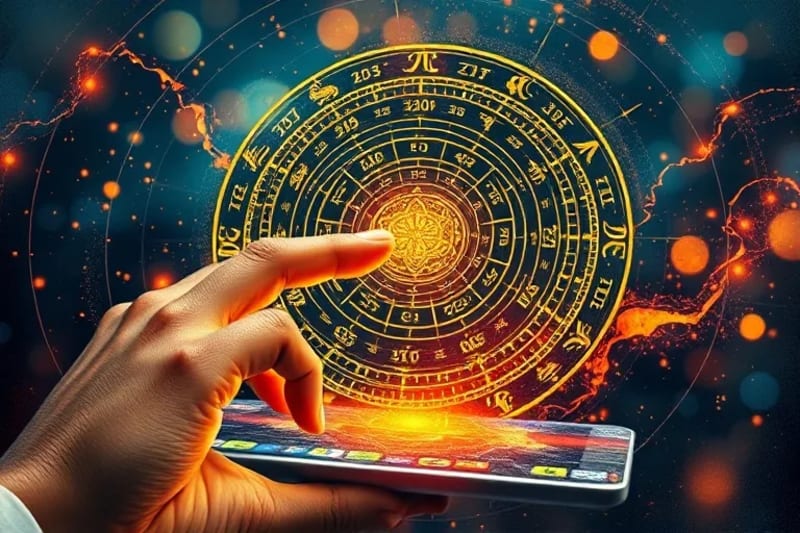
Integrating astrological charts with vast datasets for deeper insights.
The sheer volume and velocity of big data allow for a level of analysis impossible for human researchers. This capability is crucial for identifying subtle, long-term trends and understanding how celestial mechanics might influence global consciousness, a concept often discussed in Cosmic Sociology: Celestial Mechanics Influence Global Consciousness.
The process involves several key steps:
- Data Collection: Gathering precise ephemeris data, historical event logs, economic statistics, social media trends, and more.
- Feature Engineering: Transforming raw astrological data (e.g., planetary positions, aspects, midpoints) into features that machine learning models can understand.
- Model Training: Using algorithms (e.g., neural networks, regression models) to find correlations between astrological features and historical collective outcomes.
- Validation and Prediction: Testing models on unseen data to ensure accuracy and then using them to forecast future collective trends.
Mechanisms of AI Predictive Astrology
At its core, AI predictive astrology operates by identifying statistical probabilities rather than deterministic fates. It's about recognizing patterns that suggest heightened likelihoods for certain collective behaviors or events under specific astrological conditions. This contrasts with traditional individual birth chart analysis, which focuses on personal psychological tendencies and life paths.
The algorithms analyze complex interactions, such as:
- Planetary Cycles: The long-term movements of outer planets (Jupiter, Saturn, Uranus, Neptune, Pluto) which are associated with generational and societal shifts.
- Major Aspects: The angular relationships between planets (conjunctions, squares, oppositions, trines, sextiles) that signify periods of tension, harmony, or change.
- Ingresses and Retrogrades: When planets enter new zodiac signs or appear to move backward, often correlating with shifts in collective focus or re-evaluation.
- Lunar Nodes: These karmic points, as explored in Lunar Nodes Aspect Soul Purpose: Karmic Lessons Unpacked, can indicate collective evolutionary directions or challenges.
By correlating these astrological markers with historical data on political unrest, technological breakthroughs, artistic movements, or shifts in public sentiment, AI can construct predictive models. These models do not claim to predict exact events but rather to highlight periods of increased potential for certain types of collective energy or challenges. The recognition of these patterns is often based on principles akin to Sacred Geometry: Universal Truths, Esoteric Symbols Unlocked, where underlying cosmic structures manifest in observable phenomena.
Applications and Societal Benefits
The potential applications of AI predictive astrology extend across various sectors, offering valuable foresight for collective decision-making. It's not about fortune-telling for individuals, but rather about providing a macro-level understanding of prevailing energies and trends that can influence society as a whole.
Key areas of application include:
- Economic Forecasting: Identifying periods conducive to market volatility, growth, or recession, helping businesses and policymakers prepare.
- Sociopolitical Analysis: Predicting times of social unrest, political shifts, or periods of heightened collective activism, aiding in strategic planning for governance and community leaders.
- Cultural Trend Prediction: Anticipating shifts in popular culture, artistic expression, or societal values, which can benefit industries like entertainment, fashion, and marketing.
- Resource Management: Understanding long-term cycles that might impact climate, agriculture, or resource availability, supporting sustainable planning.
By offering a probabilistic framework for understanding collective trends, AI predictive astrology can empower societies to navigate complex periods with greater awareness. It encourages proactive responses to potential challenges and leverages favorable cosmic energies for collective advancement, fostering a more harmonious relationship between humanity and the cosmos.
Ethical Implications and Challenges
As with any powerful technology, the integration of AI into predictive astrology comes with a host of ethical considerations and challenges that must be carefully addressed. The potential for misuse, misinterpretation, and the reinforcement of biases is significant, demanding a responsible and transparent approach to its development and deployment.
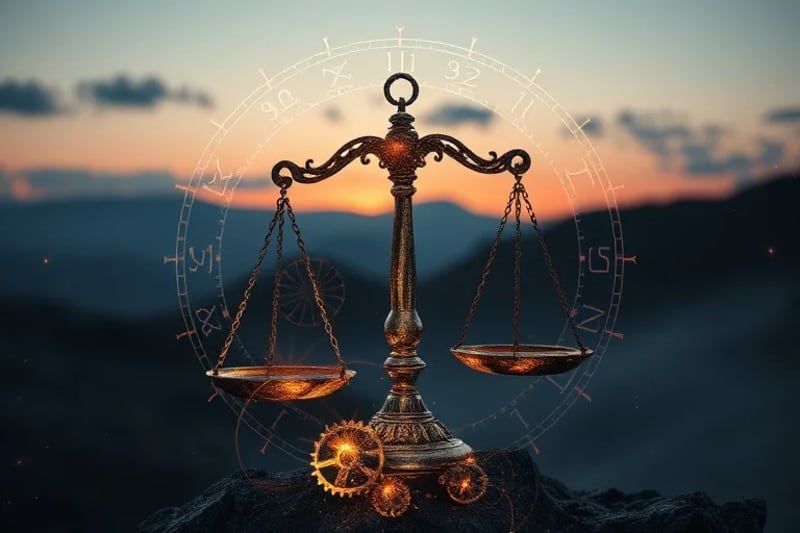
The delicate balance between technological power and ethical responsibility in AI astrology.
Key ethical concerns include:
- Data Privacy and Security: While collective trends are the focus, the underlying data might contain sensitive personal information, necessitating robust privacy protocols.
- Algorithmic Bias: If historical data used to train AI models contains societal biases (e.g., economic disparities linked to specific demographics), the AI might perpetuate or even amplify these biases in its predictions.
- Determinism vs. Free Will: The perception of "prediction" can lead to a fatalistic worldview, undermining human agency and the belief in free will. It's crucial to emphasize that these are probabilistic trends, not unchangeable destinies.
- Misinterpretation and Misuse: Simplified or sensationalized interpretations of AI astrological predictions could lead to panic, irrational decisions, or exploitation.
- The "Black Box" Problem: Many advanced AI models, particularly deep learning networks, can be opaque, making it difficult to understand how they arrive at their conclusions. This lack of transparency can hinder trust and accountability.
Addressing these challenges requires a multidisciplinary approach, involving ethicists, astrologers, data scientists, and policymakers. Transparency in data sources, continuous auditing for bias, and clear communication about the probabilistic nature of predictions are paramount for the responsible development of this field. Furthermore, the integration of more nuanced astrological concepts, such as those found in Dwarf Planets Asteroid Goddesses: Advanced Natal Chart Analysis, could potentially add layers of complexity that require careful handling.
The Future Landscape of AI Astrology
The future of AI predictive astrology is poised for significant growth and refinement. As AI technologies become more sophisticated and data collection methods improve, the accuracy and granularity of collective trend predictions are likely to increase. This evolution will necessitate ongoing research, interdisciplinary collaboration, and a commitment to ethical guidelines.
Further developments could include:
- Enhanced Predictive Models: Incorporating more complex astrological factors and integrating data from diverse fields like psychology, sociology, and environmental science.
- Explainable AI (XAI): Developing AI systems that can articulate their reasoning and the astrological correlations they identify, increasing transparency and trust.
- Interactive Platforms: Creating user-friendly interfaces that allow researchers and the public to explore collective trends and their astrological underpinnings in an ethical and educational manner.
- Global Collaboration: Establishing international frameworks for data sharing and ethical standards in AI astrology research.
Ultimately, AI predictive astrology holds the promise of deepening our understanding of the cosmos's subtle influence on human collective experience. It offers a powerful tool for foresight, enabling societies to anticipate challenges, harness opportunities, and foster a more conscious and harmonious future. The journey ahead requires careful navigation, balancing technological innovation with profound ethical responsibility, ensuring that this powerful tool serves humanity's highest good.
By embracing this synergy, we can move towards a future where ancient wisdom and modern science converge to illuminate the intricate patterns of existence, guiding collective action with informed insight and ethical prudence. The integration of AI into astrological studies is not merely a technological feat but a philosophical exploration into the very fabric of our shared reality.
Explore Further: Related Insights
- Biofield Manifestation & Quantum Physics
- Numerology Dream Interpretation
- Planetary Herbalism: Astrological Remedies
- Lunar Mansions: Predictive Astrology
- Advanced Crystal Grids & Sacred Geometry
- Pluto Astrology: Transformation & Rebirth
- Scrying Art & Divination Techniques
- Destiny & Free Will in Astrology
- Automatic Writing: Spiritual Guidance
- Wood Dragon Chinese Zodiac Analysis
Source: Hybrid content assisted by AI and human editorial supervision.


Comments
Post a Comment