
Dwarf Planets Asteroid Goddesses: Advanced Natal Chart Analysis
In the vast expanse of astrological study, the traditional focus often centers on the ten major planets, the Sun, and the Moon. However, as our understanding of the cosmos expands, so too does the depth of natal chart analysis. The inclusion of dwarf planets and asteroid goddesses offers an unparalleled opportunity to explore uncharted psychological and spiritual territories within an individual's astrological blueprint. These minor celestial bodies, though smaller in size, carry potent archetypal energies that can illuminate nuanced facets of personality, hidden talents, and profound life lessons.
A cosmic observatory delves into the subtle energies of dwarf planets and asteroid goddesses, revealing hidden astrological insights.
This advanced exploration moves beyond surface-level interpretations, inviting practitioners to delve into the subtle yet profound influences that shape our inner world and external experiences. By integrating these celestial newcomers, astrologers can construct a more holistic and intricate narrative of an individual's life path, revealing layers of meaning previously inaccessible through conventional methods.
The journey into the depths of dwarf planets and asteroid goddesses is not merely an academic exercise; it is a profound spiritual undertaking. It encourages a re-evaluation of our place in the universe and the myriad ways cosmic energies manifest within us. This comprehensive guide aims to equip advanced students and seasoned astrologers with the knowledge and tools necessary to unlock these powerful, often overlooked, astrological keys.
The Rise of Minor Celestial Bodies in Astrology
For centuries, astrological practice was largely confined to the visible planets—Mercury, Venus, Mars, Jupiter, and Saturn—alongside the Sun and Moon. With the advent of the telescope, Uranus, Neptune, and Pluto were discovered, gradually integrated into the astrological lexicon, and profoundly expanded our understanding of collective and individual consciousness. However, the early 21st century brought a new wave of discoveries, particularly in the Kuiper Belt, leading to the reclassification of Pluto and the recognition of numerous dwarf planets and thousands of asteroids.
These celestial bodies, once considered mere cosmic debris, are now understood to hold significant symbolic weight. Their relatively recent discovery aligns with humanity's evolving consciousness, suggesting that their archetypal energies are becoming more accessible and relevant to our collective and individual journeys. The integration of these minor bodies marks a paradigm shift in astrological interpretation, moving towards a more granular and psychologically rich understanding of the natal chart.
The initial resistance to incorporating these new entities stemmed from a practical need for simplicity and a lack of established interpretive frameworks. However, pioneering astrologers have diligently observed and documented their effects, gradually building a robust body of knowledge. This ongoing process highlights astrology's dynamic nature, constantly adapting to new scientific discoveries and evolving human experience.
Dwarf Planets: Beyond the Traditional Scope
Dwarf planets, defined by their ability to orbit the Sun and be massive enough to be rounded by their own gravity but not to have cleared their orbital neighborhood, offer profound insights into our deeper psychological and spiritual landscapes. Beyond Pluto, which now holds this classification, several other dwarf planets have gained prominence in advanced astrological analysis.
Eris: The Awakener of Truth. Named after the Greek goddess of discord and strife, Eris challenges existing paradigms and exposes hidden truths. In a natal chart, Eris's placement can indicate areas where an individual is called to confront injustice, dismantle illusions, and advocate for authentic self-expression, often through disruptive but ultimately liberating means. Its long orbital period (557 years) signifies generational themes of societal upheaval and re-evaluation of values.
Haumea: The Cosmic Creator. Associated with rapid change, spiritual birth, and creative regeneration. Haumea's influence often points to an individual's capacity for innovation, their ability to adapt to sudden shifts, and their unique gifts for bringing new forms into existence. It can signify areas of life where profound spiritual insights and breakthroughs occur, often accompanied by intense, transformative experiences.
Makemake: The Unwavering Purpose. Named after the Rapa Nui creator deity, Makemake represents unwavering purpose, spiritual initiation, and the manifestation of one's deepest convictions. Its position in the natal chart can reveal an individual's core spiritual mission, their resilience in pursuing their path, and their capacity to inspire others through their steadfast dedication. It often highlights areas where one's beliefs are tested and ultimately solidified.
Sedna: The Deep Spiritual Wound. Named after the Inuit goddess of the sea, Sedna symbolizes deep spiritual wounds, ancestral patterns, and karmic lessons that transcend individual lifetimes. Its placement can indicate profound isolation, betrayal, or sacrifice, but also an immense capacity for spiritual healing and connection to universal consciousness. Sedna's lessons often involve transcending personal suffering to access higher wisdom and compassion.
Beyond these dwarf planets, the centaur Chiron, often considered a bridge between the inner and outer planets, also plays a crucial role. Representing the "Wounded Healer," Chiron's position in the chart illuminates our deepest wounds, how we cope with them, and how these very wounds can become sources of profound healing and wisdom for ourselves and others. Its insights are invaluable for understanding our unique path to wholeness.
Asteroid Goddesses: Archetypal Feminine Principles
The four major asteroid goddesses—Ceres, Pallas Athena, Juno, and Vesta—were discovered in the early 19th century and represent crucial archetypal feminine energies that complement the traditional planetary pantheon. Their integration into natal chart analysis provides a richer understanding of an individual's relationship with nurturing, wisdom, partnership, and sacred devotion.
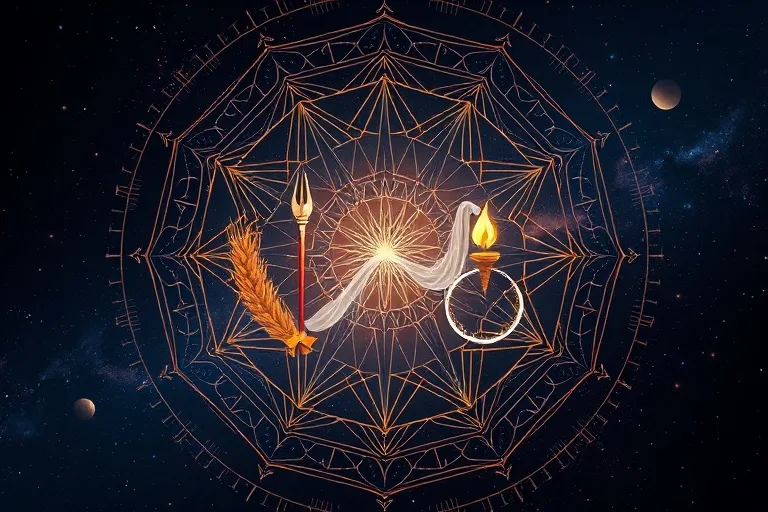
Ancient feminine symbols, representing the core energies of the asteroid goddesses, adrift in the cosmic ocean.
Ceres: The Nurturer and Giver. As the Roman goddess of agriculture, Ceres embodies themes of nurturing, sustenance, loss, and self-worth. Her placement indicates how we give and receive care, our relationship with food and the Earth, and how we process grief or separation. Ceres highlights our capacity for unconditional love and our need for emotional security.
Pallas Athena: The Warrior of Wisdom. Named after the Greek goddess of wisdom, strategy, and creative intelligence, Pallas Athena signifies our intellectual prowess, strategic thinking, and ability to defend our beliefs. Her position reveals our approach to problem-solving, artistic talents, and how we fight for justice or advocate for others. Pallas represents the integration of masculine and feminine intellect.
Juno: The Partner and Equal. Representing the Roman queen of the gods and goddess of marriage, Juno symbolizes partnership, commitment, and the desire for equality in relationships. Her placement indicates our ideal partner, our expectations in marriage or significant unions, and our struggles with jealousy or co-dependency. Juno illuminates the dynamics of our most intimate bonds.
Vesta: The Sacred Devotion. As the Roman goddess of the hearth and sacred flame, Vesta represents focus, spiritual independence, and sacred devotion. Her position highlights where we find our inner sanctuary, our capacity for single-pointed focus, and our dedication to a higher purpose or spiritual path. Vesta can also point to areas where we might feel celibate or dedicated to service.
These goddesses provide a rich tapestry of feminine archetypes, offering insights into our deepest drives, relational patterns, and spiritual callings that traditional planetary interpretations might only touch upon superficially. Their influence is particularly potent in understanding gender dynamics, personal empowerment, and the integration of various aspects of the self.
Integrating Minor Bodies into Natal Chart Analysis
The true power of dwarf planets and asteroid goddesses emerges when they are seamlessly integrated into a comprehensive natal chart analysis. Their positions by sign, house, and aspect significantly modify and deepen the interpretations of traditional planetary placements, offering a more nuanced and personalized reading.
Aspects and Houses: The aspects these minor bodies form with major planets, angles, and other points in the chart are crucial. A square to Ceres, for instance, might indicate challenges in nurturing or self-worth, while a trine to Pallas Athena could highlight an innate strategic mind. Their house placement reveals the specific life areas where these energies are most actively expressed. For example, Juno in the 7th house (relationships) would amplify themes of partnership and equality in significant unions.
Synastry and Composite Charts: In relationship astrology, the asteroid goddesses, especially Juno, offer profound insights into compatibility and relationship dynamics. Their inter-aspects in synastry can reveal unspoken needs, unconscious attractions, and potential areas of growth or conflict between partners. In a composite chart, their placement illuminates the shared purpose and unique challenges of the relationship itself.
Transits and Progressions: Observing the transits and progressions of dwarf planets and asteroid goddesses can pinpoint specific periods of activation for their archetypal energies. A transit of Eris, for example, might coincide with a period of significant societal or personal upheaval, prompting a re-evaluation of deeply held beliefs. Similarly, a progressed Vesta could indicate a time of intense spiritual focus or dedication to a particular cause.
These dynamic techniques allow astrologers to track the unfolding of these subtle influences over time, providing a roadmap for understanding personal evolution and the activation of latent potentials. The interplay between these minor bodies and the traditional planetary cycles creates a rich, multi-layered narrative of an individual's life journey.
Advanced Interpretive Techniques and Synergies
For the truly advanced astrologer, integrating dwarf planets and asteroid goddesses opens doors to even more sophisticated interpretive techniques. These methods allow for a deeper dive into the subtle vibrational frequencies and interconnectedness of the celestial tapestry.
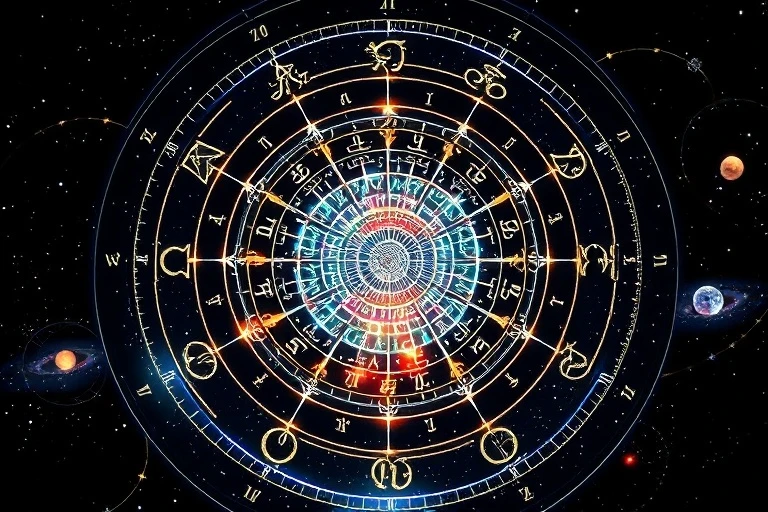
A complex holographic natal chart, illustrating the intricate energy patterns and deep cosmic connections revealed by advanced analysis.
Midpoints: Analyzing the midpoints involving dwarf planets and asteroid goddesses can unveil incredibly precise and subtle connections. For instance, the midpoint of Sun/Ceres might reveal a core identity tied to nurturing or creative expression, while a Mars/Pallas midpoint could indicate a highly strategic and assertive approach to action. These midpoints often act as sensitive trigger points in the chart, activated by transits or progressions.
Harmonic Astrology: This technique explores the harmonic relationships between planetary positions, revealing deeper vibrational patterns. When applied to dwarf planets and asteroid goddesses, harmonic charts can illuminate the underlying spiritual themes and karmic imprints associated with these bodies. For example, a prominent Eris in a 5th harmonic chart might signify a soul-level calling to disrupt injustice through creative expression.
Fixed Stars and Minor Bodies: The conjunctions and significant aspects between dwarf planets/asteroid goddesses and fixed stars can be exceptionally powerful. Fixed stars carry ancient, potent energies, and their alignment with these minor bodies can amplify their archetypal expression, suggesting fated events, profound talents, or significant challenges that transcend typical planetary influences. This combination often points to a unique destiny or spiritual lineage.
By employing these advanced methods, astrologers can move beyond descriptive analysis to a more predictive and transformative practice, offering clients profound insights into their soul's journey and potential for growth. The synergy between these techniques provides a truly multidimensional view of the natal chart, revealing layers of cosmic intelligence.
Challenges and Future Directions in Minor Body Astrology
While the integration of dwarf planets and asteroid goddesses offers immense potential, it also presents several challenges that advanced astrologers must navigate. These challenges are inherent in any evolving field of study and require a commitment to ongoing research, critical thinking, and collaborative exploration.
| Challenge Area | Description and Implications |
|---|---|
| Data Accuracy & Ephemeris | Accurate ephemeris data for newly discovered or less-studied minor bodies can be scarce or require specialized software. Precision in calculations is paramount for accurate chart interpretation. |
| Interpretive Consensus | Unlike major planets with centuries of interpretive tradition, the symbolic meanings of many minor bodies are still being refined. Astrologers must rely on empirical observation and comparative analysis to build consensus. |
| Over-Interpretation Risk | The sheer number of minor bodies can lead to "chart clutter" and the temptation to over-interpret every single placement. Prioritizing the most significant bodies and aspects is crucial for clarity. |
| Client Understanding | Explaining the complex influences of obscure celestial bodies to clients requires clear communication and a focus on practical, relatable insights rather than overwhelming them with technical jargon. |
Despite these hurdles, the future of minor body astrology is bright. Ongoing astronomical discoveries, coupled with the dedicated work of astrological researchers, continue to expand our cosmic vocabulary. The increasing availability of sophisticated astrological software also makes it easier to track and analyze these bodies. The field is moving towards a more integrated and holistic approach, where the macrocosm of the universe is reflected in the microcosm of the individual chart with unprecedented detail.
Conclusion: Embracing the Uncharted Depths
The journey into the uncharted depths of dwarf planets and asteroid goddesses represents a significant evolution in advanced natal chart analysis. By moving beyond the traditional planetary framework, astrologers can access a richer, more nuanced understanding of the human psyche, spiritual purpose, and relational dynamics. These minor celestial bodies are not mere footnotes but powerful archetypal keys that unlock hidden potentials and illuminate the intricate tapestry of our existence.
Integrating these cosmic influences requires dedication, an open mind, and a willingness to explore the subtle energies that shape our lives. As our collective consciousness continues to expand, the wisdom offered by these smaller, yet profoundly significant, celestial bodies will become increasingly vital for navigating the complexities of the modern world and fostering deeper self-awareness. Embracing this advanced astrological frontier allows us to paint a more complete and vibrant portrait of the soul's unique journey.
Fuente: Contenido híbrido asistido por IAs y supervisión editorial humana.


Comments
Post a Comment