
Biometric Divination Biofeedback Intuition Self-Discovery Physiological Data
In an increasingly complex world, the quest for self-understanding and inner guidance has led many to explore innovative pathways that merge ancient wisdom with modern technology. Among these emerging fields, biometric divination and biofeedback intuition stand out as powerful tools for self-discovery. These approaches harness the body's own physiological data to reveal profound insights into our emotional, mental, and even spiritual landscapes, offering a unique bridge between scientific measurement and intuitive knowing.
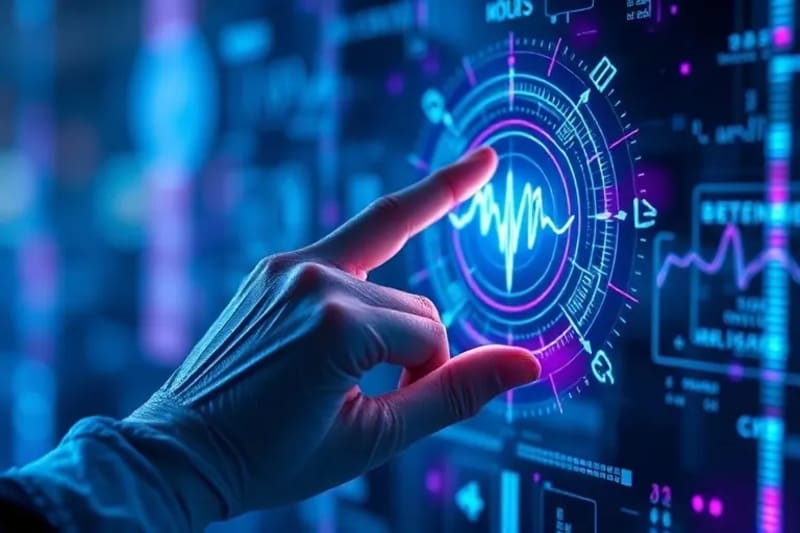
Conceptual representation of biometric data streams revealing profound self-insights.
Biometric divination, distinct from traditional predictive methods, focuses on interpreting the subtle language of the body. It posits that our physiological responses—such as heart rate patterns, skin conductance, and brainwave activity—are not merely random occurrences but rather a sophisticated communication system. These internal signals reflect our subconscious thoughts, emotional states, and energetic fluctuations, providing a rich tapestry of information about our inner world. By learning to decipher this biological language, individuals can gain a deeper, more objective understanding of their true self.
Complementing this, biofeedback is a clinically validated technique that teaches individuals to gain conscious control over involuntary bodily functions. Through real-time monitoring devices, users receive immediate feedback on their physiological states, allowing them to learn how to regulate these responses. This self-regulation can lead to significant improvements in stress management, emotional balance, and cognitive function. When integrated, biometric divination and biofeedback intuition create a dynamic loop: biofeedback trains the body and mind for optimal states, while biometric divination interprets the resulting data for enhanced self-awareness and intuitive guidance. This article explores the scientific foundations, practical applications, and ethical considerations of these transformative practices.
Table of Contents
- Understanding Biometric Divination and Biofeedback Intuition
- The Physiological Underpinnings of Biofeedback
- Bridging Science and Intuition: The Essence of Biometric Divination
- Practical Applications and Tools for Self-Exploration
- Ethical Considerations and Responsible Practice
- Future Prospects and Integration with Esoteric Disciplines
Understanding Biometric Divination and Biofeedback Intuition
The term "divination" often conjures images of ancient rituals or mystical predictions. However, in the context of biometric divination, it refers to the process of gaining insight or knowledge through the interpretation of biological signals. This modern interpretation grounds the concept in quantifiable data, moving it from the realm of the purely esoteric into a more empirical, yet still deeply personal, domain. It's about recognizing the body as a sophisticated sensor, constantly processing and reacting to internal and external stimuli, and then learning to read these reactions as a form of inner guidance.
Biofeedback, a well-established therapeutic technique, plays a crucial role in this process. It functions by using electronic instruments to monitor and display real-time information about physiological processes that are normally outside conscious awareness. These processes include heart rate, muscle tension, skin temperature, and brainwave activity. By seeing these measurements, individuals can learn to consciously alter their physiological responses, thereby influencing their emotional and mental states. For example, a person might learn to lower their heart rate or relax tense muscles simply by observing the feedback and adjusting their thoughts or breathing patterns.
The combination of these two concepts creates a powerful framework for self-exploration. Biometric divination uses biofeedback data as a mirror, reflecting subconscious patterns and intuitive nudges. This enhanced self-awareness is not about predicting a fixed future but about understanding the present moment with greater clarity, enabling individuals to make more aligned choices. It helps in identifying subtle shifts in one's energetic state that might correlate with moments of inspiration or internal conflict. Understanding how these personal energetic shifts align with broader patterns, such as those described in planetary cycles and esoteric manifestation, can provide an even richer context for self-discovery.
The Physiological Underpinnings of Biofeedback
The scientific efficacy of biofeedback stems from its ability to measure and provide feedback on specific physiological parameters that are intricately linked to our psychological states. Understanding these metrics is fundamental to grasping how biometric divination works:
- Heart Rate Variability (HRV): This metric quantifies the beat-to-beat changes in heart rate. It is a powerful indicator of autonomic nervous system balance. High HRV is associated with parasympathetic dominance, indicating relaxation, emotional resilience, and adaptability. Conversely, low HRV can signal stress, anxiety, or burnout. Devices measure HRV by tracking the timing of R-waves in an electrocardiogram (ECG) or photoplethysmography (PPG) signals.
- Galvanic Skin Response (GSR) / Skin Conductance: Also known as electrodermal activity, GSR measures the electrical conductivity of the skin, which changes with sweat gland activity. These glands are primarily controlled by the sympathetic nervous system, making GSR a reliable indicator of emotional arousal, stress, and cognitive effort. Sensors typically use two electrodes placed on the fingers or palms to detect minute changes in skin resistance.
- Electroencephalography (EEG) / Brainwave Activity: EEG measures the electrical activity of the brain, reflecting neural communication. Different frequency bands—Delta (deep sleep), Theta (meditation, creativity), Alpha (relaxed, alert), Beta (active thinking), and Gamma (high-level processing)—are associated with distinct states of consciousness. EEG biofeedback helps individuals learn to produce or suppress specific brainwave patterns, impacting focus, relaxation, and cognitive performance. Electrodes are placed on the scalp to detect these electrical signals.
- Electromyography (EMG): EMG measures the electrical activity produced by skeletal muscles. It is used to detect muscle tension, which often accompanies stress, anxiety, or physical pain. By providing feedback on muscle activity, EMG biofeedback helps individuals learn to relax specific muscle groups, alleviating tension-related symptoms. Sensors are placed on the skin over the target muscles.
- Skin Temperature: Peripheral skin temperature, particularly in the hands and feet, is influenced by blood flow, which is regulated by the autonomic nervous system. Cooler extremities often indicate sympathetic activation (stress response), while warmer extremities suggest relaxation (parasympathetic activation). Temperature sensors provide feedback to help individuals increase peripheral blood flow and promote relaxation.
By providing objective, real-time data on these physiological indicators, biofeedback empowers individuals to observe the direct impact of their thoughts, emotions, and relaxation techniques on their bodily functions. This objective feedback loop is crucial for developing a heightened sense of interoception—the awareness of one's internal bodily states—which is a cornerstone of intuitive development.
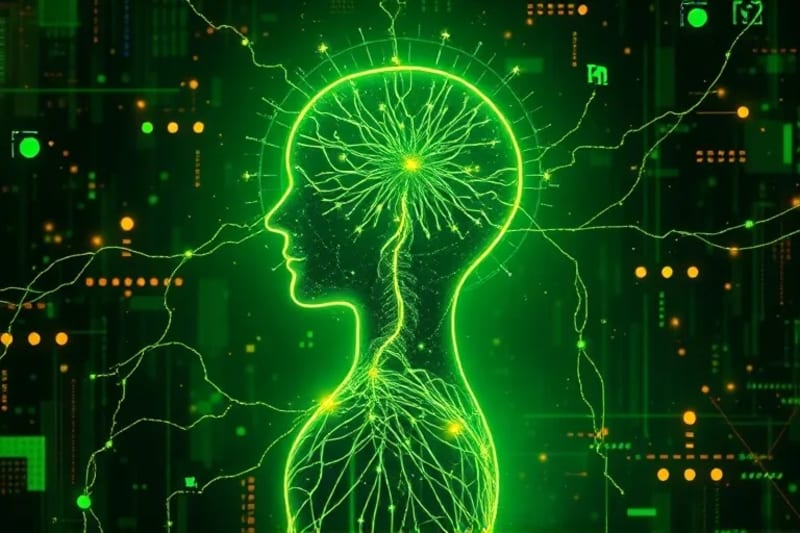
Digital art illustrating the intricate connection between human physiology and data.
Bridging Science and Intuition: The Essence of Biometric Divination
The concept of intuition, often described as a "gut feeling" or an immediate knowing without conscious reasoning, has long fascinated philosophers and scientists alike. Biometric divination offers a compelling hypothesis: that intuition is not merely an abstract phenomenon but is deeply rooted in our physiological responses. Our bodies continuously process vast amounts of information, both conscious and subconscious, and these processes manifest as subtle, measurable changes in our biometric data.
When faced with a decision or a new situation, our bodies react instantaneously. For instance, research suggests that individuals can exhibit distinct physiological responses (e.g., changes in GSR or HRV) to potentially threatening or advantageous stimuli even before they are consciously aware of the threat or opportunity. This "pre-cognitive" or "pre-sentiment" response is what biometric divination seeks to harness. By monitoring these subtle shifts, individuals can learn to identify their body's intuitive signals, distinguishing genuine insights from mere anxiety or wishful thinking.
This approach does not advocate for abandoning rational thought but rather for integrating it with the body's innate wisdom. It suggests that a balanced decision-making process involves both logical analysis and an awareness of one's physiological intuition. This integration resonates with broader philosophical inquiries into the nature of consciousness and interconnectedness, similar to the principles explored in cosmic sociology and global consciousness trends, which examine how individual states contribute to collective patterns. The essence lies in cultivating a deep trust in one's internal guidance system, informed by objective physiological data, to navigate life's complexities with greater coherence and clarity.
Practical Applications and Tools for Self-Exploration
The practical applications of biometric divination and biofeedback intuition are vast and continually expanding. They offer individuals tangible ways to enhance their well-being, improve cognitive function, and deepen their self-awareness. Here are some key areas of application:
- Stress Reduction and Resilience: Biofeedback is highly effective in teaching individuals to manage stress, anxiety, and even chronic pain. By learning to regulate HRV, muscle tension, or brainwave states, users can actively reduce their physiological stress responses, leading to greater emotional resilience.
- Enhanced Focus and Cognitive Performance: Neurofeedback (a type of EEG biofeedback) can train individuals to sustain specific brainwave patterns associated with concentration and mental clarity. This has applications for students, professionals, and anyone seeking to optimize their cognitive abilities.
- Emotional Regulation: By observing real-time GSR or HRV data, individuals can become more attuned to their emotional triggers and learn strategies to maintain emotional balance. This helps in developing greater emotional intelligence and self-control.
- Intuitive Decision-Making: Users can employ biometric feedback to "test" their intuitive responses to various choices. For example, by contemplating different options and observing their physiological reactions, they might discern which path resonates most authentically with their inner self. This provides an objective anchor for subjective intuitive experiences.
- Deepening Meditation and Mindfulness: Biofeedback devices can provide objective feedback during meditation, helping practitioners achieve deeper states of relaxation and focus more efficiently. This can accelerate the development of mindfulness and inner peace.
A range of tools supports these applications, from sophisticated clinical-grade biofeedback systems to consumer-friendly wearable devices. Smartwatches, for instance, often include HRV tracking, while dedicated biofeedback sensors for EEG or GSR are becoming more accessible. These tools, when used consistently and with intention, can transform abstract concepts of self-awareness into concrete, measurable progress. Just as historical systems like Hellenistic astrology provided frameworks for understanding human nature through celestial patterns, modern biometric tools offer a data-driven lens for personal insight through internal patterns.
Abstract watercolor capturing the subtle interplay of data and intuitive insight.
Ethical Considerations and Responsible Practice
The integration of technology with personal well-being and intuitive exploration necessitates a strong ethical framework. Responsible engagement with biometric divination and biofeedback intuition is crucial to prevent misuse, misinterpretation, and potential harm. Key ethical considerations include:
- Privacy and Data Security: Physiological data is inherently sensitive. Developers and users must prioritize robust encryption, secure storage, and clear consent protocols to protect personal information from unauthorized access or exploitation.
- Avoiding Medical Diagnosis: While biofeedback has therapeutic applications, consumer-grade biometric devices and self-interpretation should never be used for medical diagnosis or as a substitute for professional healthcare advice. Claims of "healing" or "curing" diseases through these methods without scientific validation are unethical and potentially dangerous.
- Scientific Rigor and Evidence-Based Claims: It is imperative to distinguish between scientifically validated biofeedback techniques and speculative interpretations. Claims about direct "divinatory" powers should be approached with skepticism and a demand for empirical evidence. Focus should remain on self-awareness and self-regulation.
- Qualified Professional Guidance: For therapeutic applications of biofeedback, seeking guidance from certified biofeedback therapists, psychologists, or medical professionals trained in these techniques is essential. They can ensure proper setup, interpretation, and personalized training protocols.
- Preventing Over-Reliance: The goal is empowerment and self-sufficiency, not dependence on technology for all answers. Individuals should be encouraged to integrate insights from biometric data with their own critical thinking, emotional intelligence, and life experiences.
By adhering to these ethical guidelines, practitioners and users can ensure that these powerful tools serve as genuine aids for personal growth and holistic well-being, rather than becoming sources of misinformation or undue influence. This mindful approach aligns with the principles of Techno-Shamanism, where technology is seen as a sacred tool to bridge the physical and spiritual, demanding respect and conscious application.
Future Prospects and Integration with Esoteric Disciplines
The horizon for biometric divination and biofeedback intuition is bright, promising even more sophisticated and integrated tools for self-discovery. Advancements in artificial intelligence and machine learning are poised to revolutionize how we interpret physiological data, moving beyond simple metrics to identify complex patterns that correlate with nuanced emotional states, cognitive biases, and intuitive breakthroughs. Personalized AI coaches could one day provide real-time feedback and guidance, helping individuals optimize their inner states for specific goals, whether it's enhancing creativity, improving emotional resilience, or deepening spiritual practices.
Furthermore, the integration of these scientific approaches with traditional esoteric disciplines is a particularly exciting prospect. Imagine using biofeedback to objectively measure the physiological effects of meditation, energy healing, or even dream interpretation. This convergence could offer empirical validation for practices long considered purely subjective, fostering a new era of evidence-based spirituality. It could also provide a common language for dialogue between scientific and esoteric communities, breaking down traditional barriers and fostering a more holistic understanding of the human experience.
The ultimate vision is to create a future where individuals are empowered with advanced tools to navigate their inner worlds with unprecedented clarity and precision. By embracing both the scientific rigor of biofeedback and the interpretive potential of biometric divination, we can unlock new dimensions of self-awareness, leading to more coherent decisions, greater emotional harmony, and a profound connection to our innate intuitive wisdom. This journey of self-discovery, guided by our own physiological data, promises a richer, more integrated human experience.
Explore Related Insights
Advanced Planetary Aspects
Delve into the intricate dynamics of trines, sextiles, and quincunxes in astrological charts.
Read MoreZodiacal Release Techniques
Uncover ancient predictive methods for timing life events and understanding personal timelines.
Read MoreNatal Moon: Emotions & Instincts
Explore how your natal Moon sign guides your emotional landscape and nurturing instincts.
Read MoreFixed Stars Astrology
Discover the mythos and impact of fixed stars in astrological interpretations and their cosmic influence.
Read MoreSource: Hybrid content assisted by AI and human editorial supervision.


Comments
Post a Comment