
Cosmic Sociology Celestial Mechanics Global Consciousness Trends
The intersection of cosmic phenomena and human societal development has long captivated thinkers, from ancient philosophers observing the heavens to modern researchers exploring complex systems. Cosmic sociology emerges as an interdisciplinary field dedicated to understanding how celestial mechanics and planetary transits might correlate with, or even influence, global consciousness trends and collective human behavior. This advanced perspective moves beyond simplistic astrological predictions, delving into the intricate dance between macrocosmic forces and microcosmic societal evolution.
At its core, cosmic sociology posits that the energetic signatures and gravitational interactions of celestial bodies create a dynamic field that subtly shapes the collective human experience. This field of study seeks to identify patterns, correlations, and potential causal links between specific astronomical configurations and observable shifts in global consciousness, cultural paradigms, economic cycles, and political landscapes. It requires a rigorous, data-driven approach, blending astrological principles with sociological analysis, psychology, and even quantum physics.
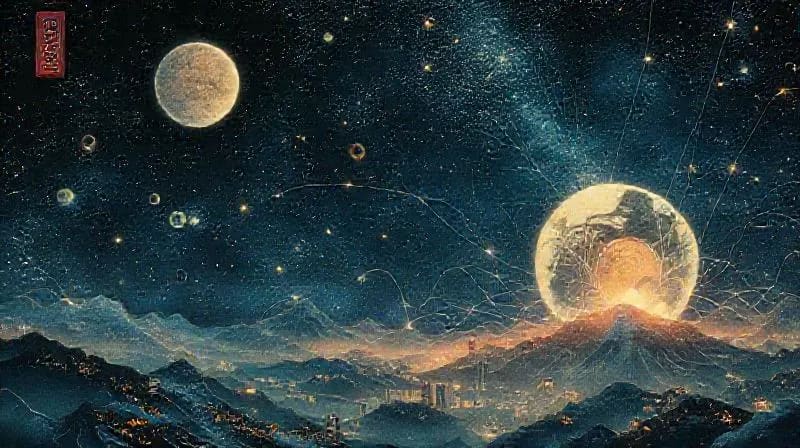 Conceptual representation of cosmic influences on collective human awareness and societal structures.
The endeavor to map global consciousness trends through the lens of celestial mechanics is not without its challenges. It demands a sophisticated understanding of both traditional astrological symbolism and contemporary scientific methodologies. The goal is to move beyond anecdotal evidence, seeking verifiable statistical correlations and theoretical frameworks that can explain these observed relationships. This article will explore the theoretical underpinnings, methodologies, and potential implications of cosmic sociology, offering a comprehensive overview for advanced students and researchers.
The Foundations of Cosmic Sociology
Cosmic sociology draws inspiration from various intellectual traditions, including Jungian psychology's concept of the collective unconscious, systems theory, and the philosophical tenets of hermeticism. It suggests that just as the moon influences tides, and solar flares impact communication systems, larger planetary cycles may exert subtle but pervasive influences on the human psyche at a collective level. This influence is not seen as deterministic fate, but rather as a set of energetic predispositions or archetypal currents that shape the collective narrative.
Historically, ancient civilizations across the globe meticulously observed celestial movements, correlating them with earthly events such as harvests, wars, and the rise and fall of empires. While often framed within mythological or religious contexts, these observations formed the bedrock of early astrological systems. Modern cosmic sociology seeks to extract the underlying patterns from these historical correlations, reinterpreting them through a scientific lens that acknowledges the complexity of human agency and societal dynamics.
Key theoretical components include the idea of planetary "signatures" or archetypes, which represent fundamental psychological and sociological principles. For instance, Saturn is often associated with structure, limitation, and societal norms, while Uranus signifies innovation, disruption, and collective awakening. When these planetary energies interact through specific astrological aspects, they are hypothesized to trigger corresponding shifts in global consciousness. Understanding these dual esoteric systems can be further explored through Numerology Astrology: Decoding Life Path Dual Esoteric Systems.
Celestial Mechanics and Planetary Transits
Celestial mechanics is the branch of astronomy that deals with the motions of celestial objects. In cosmic sociology, it provides the precise mathematical framework for understanding planetary positions, orbital periods, and the geometric relationships (aspects) between planets as viewed from Earth. These planetary transits—the ongoing movement of planets through the zodiac and their dynamic interactions with each other—are considered the primary drivers of collective energetic shifts.
Advanced astrological analysis focuses on the slower-moving outer planets (Jupiter, Saturn, Uranus, Neptune, Pluto) due to their longer cycles and more profound, generational impact. Their transits through specific zodiac signs and their aspects to each other are thought to delineate major historical eras and collective psychological themes. For example, a conjunction of Uranus and Pluto, occurring roughly every 120-140 years, has historically coincided with periods of profound societal upheaval, revolution, and structural transformation.
The concept of critical degrees, or specific points in the zodiac that are highly sensitive to planetary activation, also plays a crucial role. These degrees are believed to act as "hotspots" that amplify the energetic impact of transiting planets, potentially triggering significant global events or shifts in collective perception. Further insights into these sensitive points can be found in Advanced Planetary Dignities Beyond Rulerships Synastry Electional Astrology.
 Visualizing the complex interplay of collective human emotions and subtle cosmic energies.
Mapping Global Consciousness Trends
Mapping global consciousness trends requires a multidisciplinary approach to data collection and analysis. Researchers in cosmic sociology utilize various metrics to quantify collective shifts, including:
- Sociological Data: Analysis of demographic shifts, crime rates, political polarization, social movements, and cultural phenomena.
- Economic Indicators: Correlation with market cycles, recessions, technological booms, and global financial trends.
- Psychological Metrics: Studies on collective mood, anxiety levels, spiritual awakenings, and shifts in dominant belief systems.
- Technological Adoption: Tracking the emergence and widespread acceptance of disruptive technologies.
- Environmental Awareness: Changes in collective concern and action regarding ecological issues.
The challenge lies in establishing statistically significant correlations while accounting for numerous confounding variables. Advanced statistical methods, including time-series analysis and regression models, are employed to identify non-random patterns between celestial events and societal data. The use of computational tools, similar to those in AI Oneiromancy: Decoding Dream Symbols with Algorithms, could potentially aid in processing vast datasets and identifying subtle connections.
The concept of global consciousness itself is complex, often referring to the emergent properties of interconnected human minds. It encompasses shared beliefs, values, archetypes, and the collective emotional state of humanity. Cosmic sociology proposes that planetary transits act as catalysts, activating certain archetypal energies that then manifest through these collective trends.
Case Studies: Historical Correlations
Examining historical periods through the lens of celestial mechanics reveals compelling correlations. While not definitive proof of causation, these patterns offer fertile ground for further research. Here are a few notable examples:
| Celestial Transit | Approximate Period | Global Consciousness/Societal Trend |
|---|---|---|
| Uranus in Taurus | 1934-1942, 2018-2026 | Disruption of financial systems, redefinition of values, technological innovation in resources (e.g., Great Depression recovery, rise of cryptocurrencies and sustainable tech). |
| Pluto in Capricorn | 2008-2024 | Transformation of global power structures, breakdown of traditional institutions, challenges to corporate and governmental authority (e.g., 2008 financial crisis, political polarization, demands for systemic change). |
| Neptune in Pisces | 2011-2026 | Rise of spiritual awareness, blurring of boundaries, increased empathy, but also confusion, escapism, and widespread misinformation (e.g., new age movements, opioid crisis, internet echo chambers). |
| Saturn-Pluto Conjunction | 1914-1915, 1947, 1982, 2020 | Periods of intense restructuring, global crises, and the solidification of new power dynamics (e.g., WWI, Cold War beginnings, AIDS epidemic, COVID-19 pandemic). |
These correlations suggest that specific planetary configurations may act as cosmic triggers, aligning collective human experience with broader archetypal energies. The study of Celestial Mechanics Karmic Cycles Planetary Transits Destiny offers a deeper dive into these interconnected phenomena.
 An intricate mechanical model symbolizing the precise and interconnected nature of celestial mechanics and global consciousness.
Predictive Models and Ethical Considerations
The ultimate aspiration of cosmic sociology is to develop predictive models that can anticipate future global consciousness trends based on upcoming celestial configurations. Such models would not aim for deterministic predictions of specific events, but rather for identifying periods of heightened potential for certain archetypal expressions within the collective. For instance, a period dominated by challenging aspects involving Uranus might suggest an increased likelihood of technological disruption, social unrest, or calls for radical change.
However, the development and application of such predictive insights carry significant ethical considerations. It is crucial to avoid fatalistic interpretations that could disempower individuals or justify inaction. Instead, the knowledge derived from cosmic sociology should serve as a tool for enhanced awareness, allowing humanity to consciously navigate collective challenges and opportunities. The emphasis must remain on free will and collective responsibility, understanding that celestial energies provide a context, not an unalterable script.
Ethical guidelines for cosmic sociological research would include transparency in methodology, rigorous peer review, and a commitment to presenting findings in a way that promotes empowerment and critical thinking. The field must guard against misuse for manipulative purposes or the perpetuation of unfounded superstitions.
Integrating Esoteric Symbolism and Modern Science
A significant challenge and opportunity for cosmic sociology lies in effectively integrating esoteric symbolism with modern scientific paradigms. Traditional astrology, with its rich tapestry of planetary archetypes, zodiacal signs, and house systems, offers a profound symbolic language for describing human experience. However, this language often lacks the empirical validation demanded by contemporary science.
The integration process involves translating archetypal meanings into testable hypotheses and observable phenomena. For example, the "disruptive" energy of Uranus could be operationalized as an increase in innovation patents, social protests, or market volatility. Similarly, the "structuring" influence of Saturn might correlate with periods of institutional reform or economic contraction.
This interdisciplinary synthesis requires scholars who are fluent in both the symbolic language of astrology and the quantitative methods of sociology, psychology, and statistics. It is about finding the correlations that resonate across different levels of reality, from the celestial to the societal. The philosophical underpinnings of such a synthesis can be found in systems like the Hermetic Kabbalah: Tree Life Spiritual Attainment, which also seeks to map macrocosmic principles onto microcosmic experience.
The long-term vision for cosmic sociology is to contribute to a more holistic understanding of human evolution, recognizing the universe as an interconnected system where celestial events, human consciousness, and societal structures are dynamically linked. By mapping these complex interactions, we can gain deeper insights into the forces that shape our collective journey.
This field, while nascent, holds the promise of bridging ancient wisdom with modern scientific inquiry, offering a fresh perspective on the grand narrative of human civilization. It invites us to look both inward at our collective psyche and outward at the cosmic clockwork, seeking harmony in the intricate dance between heaven and Earth.
Related Searches & Further Reading


Source: Hybrid content assisted by AI and human editorial supervision.


Comments
Post a Comment