
AI Oneiromancy: Decoding Dream Symbols with Algorithms
Dreams have fascinated humanity for millennia, serving as a mysterious conduit to our subconscious minds, offering glimpses into our fears, desires, and hidden truths. From ancient civilizations interpreting prophetic visions to modern psychology delving into the psyche, the quest to understand dream symbols has been a persistent human endeavor. Today, a groundbreaking synergy between ancient oneiromancy and cutting-edge artificial intelligence is emerging, promising to revolutionize how we decode these nocturnal narratives.
A futuristic interface visualizes the complex process of AI-assisted dream analysis, merging technology with esoteric understanding.
AI-assisted oneiromancy represents a paradigm shift, moving beyond traditional, often subjective, interpretations to a more data-driven and comprehensive analysis. By leveraging advanced algorithms, machine learning, and natural language processing (NLP), AI can identify patterns, correlations, and symbolic meanings within dream narratives that might elude human interpreters. This innovative approach offers a new pathway to self-discovery and a deeper understanding of our inner worlds.
This article will explore the fascinating realm of AI-assisted oneiromancy, detailing its historical roots, the technological underpinnings of its modern application, and its profound implications for personal growth and psychological insight. We will delve into how advanced algorithms are trained to recognize and interpret esoteric dream symbols, providing a more objective and personalized decoding experience.
Table of Contents
- The Ancient Roots of Oneiromancy
- Bridging Ancient Wisdom with Modern AI
- How AI Deciphers Dream Symbols
- Benefits and Applications of AI Oneiromancy
- Challenges and Ethical Considerations
- The Future of Dream Interpretation
- Integrating AI with Other Esoteric Practices
The Ancient Roots of Oneiromancy
Oneiromancy, the art of dream interpretation, dates back to the earliest human civilizations. Ancient Egyptians, Greeks, and Romans believed dreams were messages from deities or prophecies of future events. Dream manuals, such as the famous Artemidorus's "Oneirocritica," compiled vast catalogs of symbols and their meanings, providing a foundational framework for understanding dream content. These early practices, while often steeped in mysticism, laid the groundwork for systematic dream analysis.
In many cultures, dream interpreters held significant social and religious roles, guiding leaders and common people alike. The symbolism was often tied to cultural narratives, religious beliefs, and daily life experiences. For example, seeing water in a dream could signify purification or emotional states, depending on its context and the cultural lens through which it was viewed. This historical context underscores the enduring human need to find meaning in our dreams.
The advent of modern psychology, particularly with figures like Sigmund Freud and Carl Jung, brought a more scientific approach to dream analysis. Freud viewed dreams as "the royal road to the unconscious," revealing repressed desires and conflicts. Jung, on the other hand, emphasized collective unconscious and archetypes, suggesting universal symbols that transcend individual experience. Both perspectives, though different, highlight the profound psychological depth of dreams.
Bridging Ancient Wisdom with Modern AI
The integration of AI into oneiromancy is not about replacing human intuition but enhancing it with computational power. AI algorithms can process vast amounts of data, including historical dream interpretations, psychological theories, and individual dream journals, to identify recurring motifs and their potential meanings. This creates a more robust and personalized interpretive framework than ever before.
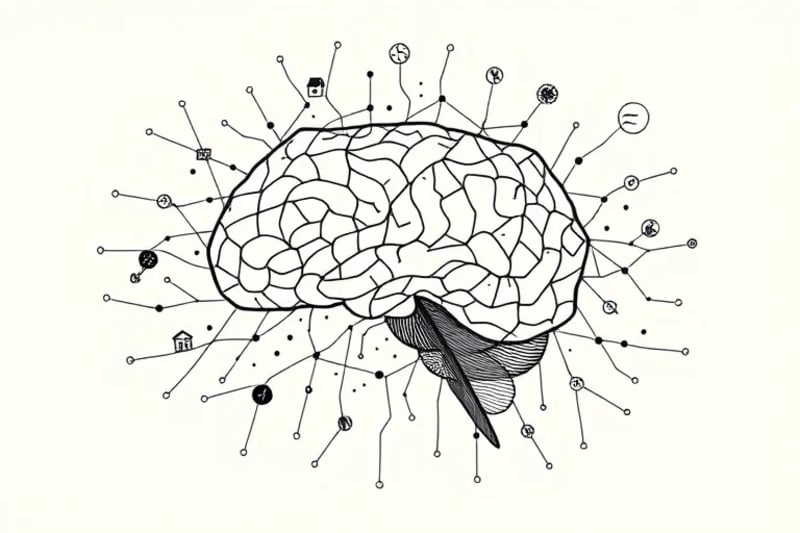
Intricate vector art illustrates the complex algorithmic networks that power AI dream analysis.
One of the primary challenges in traditional oneiromancy is the subjective nature of interpretation. What one person perceives as a warning, another might see as an opportunity. AI, by analyzing patterns across millions of data points, can offer a more objective probabilistic interpretation, taking into account cultural nuances, personal history, and even current life events. This allows for a more nuanced and less biased understanding of dream content.
Furthermore, AI can help in identifying subtle connections that human minds might miss. For instance, a recurring color or a specific type of animal appearing in different dream contexts could be indicative of a deeper, underlying theme. The ability of AI to perform complex pattern recognition across diverse datasets makes it an invaluable tool in unraveling the intricate tapestry of our dreams.
How AI Deciphers Dream Symbols
The process of AI-assisted dream interpretation involves several sophisticated technological components:
- Natural Language Processing (NLP): Dream narratives, often recorded as text, are processed by NLP algorithms. These algorithms can identify key entities, sentiments, and relationships within the dream story, breaking down complex descriptions into analyzable data points.
- Machine Learning (ML): ML models are trained on vast datasets of dream journals, symbolic dictionaries, and psychological interpretations. This training allows them to learn the associations between symbols and their potential meanings, improving their accuracy over time.
- Pattern Recognition: AI excels at identifying recurring patterns, not just within a single dream but across a series of dreams. This can reveal evolving themes, unresolved issues, or consistent symbolic language unique to an individual.
- Contextual Analysis: Beyond mere symbol recognition, advanced AI can factor in the dreamer's personal context—their daily experiences, emotional state, cultural background, and even astrological influences. This leads to highly personalized interpretations. For instance, understanding a Advanced Planetary Dignities Beyond Rulerships Synastry Electional Astrology could add another layer of personal context to the dream analysis.
Consider a scenario where a dreamer repeatedly dreams of a specific animal, like a tiger. While a general dream dictionary might offer a broad interpretation of "power" or "aggression," an AI system could analyze the specific actions of the tiger in the dream, the dreamer's feelings towards it, and its appearance in relation to other symbols. It could then cross-reference this with the dreamer's recent life events, perhaps identifying a correlation with a new challenge at work or a personal struggle with assertiveness.
The sophistication of these algorithms allows for a multi-layered analysis, moving beyond superficial meanings to uncover deeper psychological insights. This is particularly useful for esoteric symbols, which often carry multiple, complex layers of meaning that require careful consideration of context.
Benefits and Applications of AI Oneiromancy
The applications of AI-assisted oneiromancy are diverse and impactful, offering numerous benefits for personal development and mental well-being:
- Enhanced Self-Awareness: By providing objective interpretations, AI can help individuals gain deeper insights into their subconscious thoughts, emotions, and motivations, fostering greater self-awareness.
- Personalized Guidance: Unlike generic dream dictionaries, AI can tailor interpretations to the individual, making the insights more relevant and actionable. This personalized approach can be particularly helpful in understanding complex emotional landscapes.
- Therapeutic Support: For individuals undergoing therapy, AI-assisted dream analysis can serve as a valuable supplementary tool, providing therapists with additional data points and insights into their clients' inner worlds. This can accelerate the therapeutic process and facilitate breakthroughs.
- Creative Inspiration: Artists, writers, and innovators can use dream insights to tap into their subconscious creativity, finding new ideas and perspectives for their work. Dreams are often a rich source of symbolic imagery and narrative potential.
- Early Warning System: Recurring nightmares or specific unsettling symbols, when analyzed by AI, might indicate underlying stress, anxiety, or even physical health issues, prompting individuals to seek professional help if needed.
The ability to track dream patterns over time offers a unique longitudinal perspective on personal growth and psychological shifts. Imagine an AI system that can show you how your dream themes have evolved over a year, correlating them with major life events or personal development milestones. This kind of insight can be incredibly empowering.
Challenges and Ethical Considerations
While the potential of AI-assisted oneiromancy is immense, it also presents several challenges and ethical considerations that must be addressed:
- Data Privacy and Security: Dream journals contain highly personal and sensitive information. Ensuring robust data encryption and privacy protocols is paramount to protect users' intimate thoughts and feelings.
- Bias in Algorithms: If the training data for AI models contains inherent biases, the interpretations could be skewed or inaccurate. Continuous auditing and diversification of datasets are crucial to mitigate this risk.
- Over-reliance and Misinterpretation: There's a risk that individuals might over-rely on AI interpretations, potentially neglecting their own intuition or professional psychological advice. AI should be viewed as a tool, not a definitive oracle.
- The Subjectivity of Experience: While AI can provide objective analysis, the subjective experience of a dream is inherently personal. The emotional resonance and individual meaning can sometimes be lost in a purely algorithmic approach.
- Ethical Boundaries: Defining the ethical boundaries of AI interpreting the subconscious is critical. How much influence should AI have over personal decision-making based on dream analysis? These questions require careful consideration.
Addressing these challenges requires a collaborative effort between AI developers, psychologists, ethicists, and users. Transparency in how algorithms work and clear disclaimers about the nature of AI interpretations are essential for responsible implementation. For those interested in other forms of self-discovery, exploring Western Chinese Astrology can offer complementary insights into personality and life paths.
A digital painting evokes a sense of introspection, as an individual reflects on esoteric dream symbols by a serene lake.
The Future of Dream Interpretation
The future of AI-assisted oneiromancy is poised for significant advancements. We can anticipate more sophisticated algorithms capable of understanding complex narrative structures, emotional nuances, and even the sensory details of dreams. Integration with biofeedback devices, such as sleep trackers and brainwave monitors, could provide real-time data to further refine interpretations, correlating dream content with physiological states.
Imagine an AI that not only interprets your dreams but also suggests personalized exercises or meditations to address underlying issues revealed in your dreamscape. This could lead to a more proactive approach to mental and emotional well-being. The development of interactive dream analysis platforms could also foster communities where individuals share and discuss their AI-interpreted dreams, creating a collective learning environment.
Furthermore, research into the neuroscience of dreaming, combined with AI's analytical capabilities, could unlock deeper mysteries about consciousness itself. By understanding how the brain constructs dreams, and how AI can decode them, we might gain unprecedented insights into the human mind's most enigmatic processes. This interdisciplinary approach promises to push the boundaries of both technology and self-understanding.
Integrating AI with Other Esoteric Practices
AI's analytical power can extend beyond mere dream interpretation, offering fascinating possibilities when integrated with other esoteric practices. For instance, an AI could analyze dream symbols in conjunction with a user's Solar Return Chart, providing a holistic perspective that combines subconscious messages with astrological influences. This cross-referencing could reveal deeper patterns and predictive insights.
Similarly, AI could be employed to analyze patterns in practices like Automatic Writing for Shadow Work, identifying recurring themes or blockages that manifest both in waking consciousness and dream states. By connecting these disparate data points, AI can help individuals gain a more comprehensive understanding of their inner landscape and facilitate profound personal transformation. The goal is not to replace these practices but to augment them, offering new dimensions of analysis and insight.
The convergence of ancient esoteric wisdom and modern AI technology represents an exciting frontier in the journey of self-discovery. As AI continues to evolve, its capacity to unravel the complex language of dreams will undoubtedly grow, offering humanity a powerful new tool for introspection, healing, and spiritual growth. The future of understanding our dreams is brighter and more insightful than ever before, guided by the precision of algorithms and the depth of human experience.
The development and application of AI in sensitive areas such as psychological interpretation are subject to evolving regulatory frameworks. Ethical guidelines for AI, focusing on data privacy, algorithmic transparency, and user well-being, are being established by international bodies and national governments. Compliance with these regulations is crucial for the responsible deployment of AI-assisted oneiromancy tools.
Users are advised to consult official psychological or medical professionals for any health-related concerns, as AI interpretations are not a substitute for expert human advice. Continuous research and peer review are essential to validate the efficacy and safety of AI applications in this domain.
Explore Further: Related Insights
- Planetary Declinations Astrology: Parallels Contra-Parallels – Discover how celestial movements influence personal energies.
- Elemental Magic: Connecting with Earth, Air, Fire, Water Spirits – Deepen your connection with the fundamental forces of nature.
- Automatic Writing: Connecting with Spirit Guides – Learn techniques for channeling subconscious insights and spiritual guidance.
- Law of Attraction: Manifesting Desires with Universal Principles – Understand the principles behind attracting your desires into reality.
- Lucid Dreaming: Control Your Dream World – Master the art of conscious dreaming for exploration and self-mastery.
- Scrying Techniques: Peering Future with Mirrors Water Guide – Explore ancient methods of divination and foresight.
- Advanced Astrocartography: Planetary Lines for Success – Uncover geographical locations aligned with your astrological strengths.
- Sound Healing Singing Bowls: Vibrational Therapy – Experience the therapeutic power of sound for balance and healing.
- Tiger Dragon Compatibility: Dynamic Zodiac Pairing – Analyze compatibility in Chinese astrology for deeper relationship understanding.
- 5th House Astrology: Creativity, Romance, Children Guide – Delve into the astrological house governing passion and self-expression.
Source: Hybrid content assisted by AI and human editorial supervision.


Comments
Post a Comment