
Astro-Archaeology Ancient Celestial Narratives Unveiling Remains
Astro-archaeology stands as a captivating interdisciplinary field, bridging the rigorous methodologies of archaeology with the cosmic insights of astronomy. It delves into the ways ancient civilizations observed, interpreted, and integrated celestial phenomena into their cultures, architecture, and belief systems. By meticulously examining archaeological remains, from monumental structures to intricate artifacts, researchers uncover profound narratives about humanity's enduring fascination with the heavens.
This specialized discipline goes beyond simply identifying astronomical alignments; it seeks to understand the cognitive frameworks, religious practices, and societal structures that were shaped by celestial observations. It reveals how the movements of the sun, moon, and stars were not merely curiosities but fundamental elements influencing everything from agricultural cycles and navigation to spiritual rituals and political power. The study of astro-archaeology provides a unique window into the minds of our ancestors, offering insights into their scientific acumen and their spiritual connections to the cosmos.
Table of Contents
- Defining Astro-Archaeology: Bridging Earth and Sky
- Methodologies: Unveiling Ancient Cosmologies
- Iconic Sites: Celestial Alignments Worldwide
- Cultural Significance: Beyond Mere Observation
- Challenges and Future Directions in Astro-Archaeology
- Astro-Archaeology and Astrology: A Shared Heritage
Defining Astro-Archaeology: Bridging Earth and Sky
Astro-archaeology, often interchangeably used with archaeoastronomy, is the scientific study of how people in the past "read" the sky and how this understanding influenced their cultures. It examines material evidence, such as architectural orientations, rock art, artifacts, and written records, to reconstruct ancient astronomical practices and beliefs. This field is inherently multidisciplinary, drawing upon expertise from archaeology, anthropology, astronomy, history, and even ethnography.
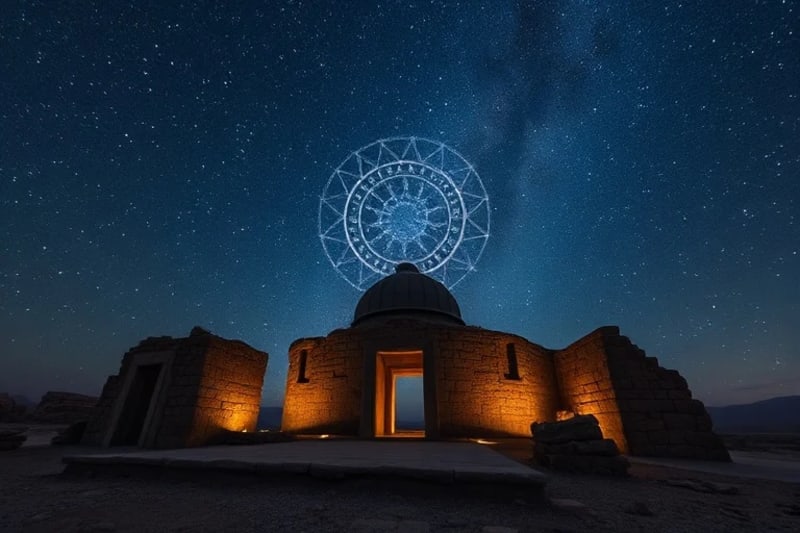
Precursors intellectuales, diagramas fundamentales y representaciones conceptuales que forjaron la visión de los antiguos astrónomos sobre la conexión entre la Tierra y el cosmos.
Fuente visual sujeta a disponibilidad del ecosistema: Wikimedia Commons bajo licencia CC BY-SA 4.0 o renderizado conceptual IA.
The core premise is that ancient societies, lacking modern technology, were acutely aware of celestial cycles. These observations were vital for practical purposes like timekeeping, agriculture, and navigation. However, they also infused deep spiritual and mythological meaning into the cosmos, seeing the heavens as a reflection of divine order or a realm inhabited by deities. Astro-archaeology seeks to decode these layers of meaning embedded within the physical remains of past civilizations.
Methodologies: Unveiling Ancient Cosmologies
The methodologies employed in astro-archaeology are diverse and rigorous, combining archaeological excavation and analysis with astronomical calculations. One primary approach involves identifying astronomical alignments in ancient structures. This includes measuring the orientation of temples, burial mounds, or megalithic structures relative to solstices, equinoxes, or specific star risings and settings. Sophisticated software and astronomical models are used to reconstruct the sky as it would have appeared thousands of years ago, allowing for precise comparisons.
Beyond alignments, researchers analyze symbolic representations of celestial bodies in art, pottery, and iconography. Ancient texts, when available, provide invaluable direct evidence of astronomical knowledge and beliefs. For instance, Egyptian hieroglyphs or Mayan codices offer explicit descriptions of celestial events and their associated deities. The study also involves ethnographic parallels, examining how contemporary indigenous cultures with similar technological levels interpret the sky, offering potential insights into ancient thought processes.
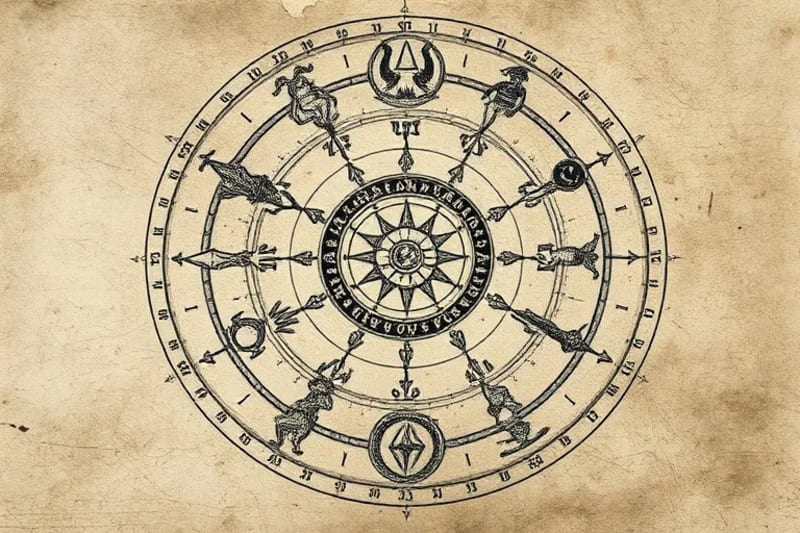
Ancient celestial maps and tablets often served as cosmic cartography, guiding rituals and understanding the divine order.
Another crucial aspect is the analysis of calendrical systems. Many ancient civilizations developed highly accurate calendars based on lunar, solar, or lunisolar cycles. The precision of these calendars, often encoded in architectural features or numerical systems, speaks volumes about their advanced observational skills. Understanding these systems helps us grasp their agricultural planning, ceremonial timing, and overall societal organization. For a deeper dive into how celestial bodies influence personal paths, consider exploring Lilith 10th House: Reclaiming Wild Feminine Public Life, which touches upon the intersection of celestial symbolism and individual identity.
Iconic Sites: Celestial Alignments Worldwide
Numerous archaeological sites across the globe bear testament to ancient celestial knowledge. Stonehenge in England is perhaps one of the most famous examples, with its precise alignments to the summer solstice sunrise and winter solstice sunset. The Goseck Circle in Germany, an older Neolithic enclosure, also demonstrates clear solar alignments, suggesting its use as an early observatory and calendar.
In the Americas, the Mayan city of Chichen Itza features the El Castillo pyramid, whose shadow play during the equinoxes creates the illusion of a serpent descending the staircase. The Nazca Lines in Peru, while still debated, are thought by some to have astronomical or calendrical significance due to their vast scale and patterns. The Bighorn Medicine Wheel in Wyoming, built by indigenous peoples, aligns with various celestial events, including the summer solstice sunrise and the rising of specific stars.

Modern technology helps visualize ancient celestial knowledge, overlaying holographic constellations on archaeological sites.
Egyptian temples, such as Karnak and Abu Simbel, were often oriented to specific solar events, demonstrating a sophisticated understanding of celestial mechanics and their integration into religious architecture. These examples highlight the universal human impulse to connect with the cosmos and imbue it with meaning. The study of Astrological Houses: Unlocking Life Spheres can further illuminate how different cultures and eras have structured their understanding of cosmic influence on earthly life.
Cultural Significance: Beyond Mere Observation
The significance of astro-archaeology extends far beyond merely identifying alignments. It helps us reconstruct the worldview and cosmology of ancient peoples. For many cultures, the sky was a living entity, a pantheon of gods, or a map of their spiritual journey. Celestial events were often seen as omens, divine messages, or critical junctures for rituals and sacrifices. The precise timing of these events was crucial for maintaining harmony with the divine and ensuring the prosperity of the community.
Moreover, astronomical knowledge often conferred power and authority. Those who could predict eclipses, solstices, or the appearance of certain stars held a privileged position within society, often as priests, shamans, or rulers. Their ability to interpret celestial signs provided legitimacy to their leadership and guided societal decisions. This intertwining of celestial observation with social and political structures underscores the profound impact of the cosmos on ancient human societies.
Understanding these ancient celestial narratives also enriches our appreciation for the origins of modern science and philosophy. Many early philosophical and scientific inquiries were rooted in astronomical observations. The desire to understand the patterns of the sky led to the development of geometry, mathematics, and sophisticated observational tools. The enduring legacy of these ancient sky-watchers continues to influence our understanding of the universe today. The exploration of Urban Geomancy City Alignment Cosmic Harmony offers another lens through which to view the ancient wisdom that connected the macrocosm and microcosm.
Challenges and Future Directions in Astro-Archaeology
Despite its illuminating insights, astro-archaeology faces several challenges. One significant hurdle is the problem of interpretation. Distinguishing between intentional astronomical alignments and coincidental orientations can be difficult. Researchers must employ rigorous statistical methods and consider multiple lines of evidence—archaeological context, cultural practices, and historical records—to avoid misinterpretations or projecting modern astronomical knowledge onto ancient cultures.
Another challenge lies in the preservation of sites and the ongoing threat of environmental degradation and looting. Many ancient structures are fragile and susceptible to damage, making their study and protection paramount. Future directions in astro-archaeology involve increasingly sophisticated technologies, such as LiDAR scanning and drone mapping, to create highly accurate 3D models of sites. These tools allow for more precise measurements and the discovery of previously unnoticed alignments. The integration of virtual reality and augmented reality can also help visualize ancient skies and structures, making complex data more accessible and engaging.
Furthermore, there is a growing emphasis on collaborative research with indigenous communities. Their oral traditions and traditional ecological knowledge often contain invaluable insights into ancient sky lore and practices that complement archaeological findings. This collaborative approach ensures that interpretations are culturally sensitive and grounded in a holistic understanding of the past. For those interested in how ancient wisdom can be applied to modern contexts, exploring Quantum Computing: Cybersecurity, New Era of Computing might offer a fascinating contrast between ancient observation and cutting-edge technology.
Astro-Archaeology and Astrology: A Shared Heritage
The historical connection between astro-archaeology and astrology is profound, as both disciplines stem from humanity's ancient observations of the cosmos. Before the scientific revolution, astronomy and astrology were often intertwined, representing a holistic approach to understanding the universe and its influence on earthly life. Astro-archaeology, by revealing how ancient cultures tracked celestial movements, provides the empirical foundation upon which early astrological systems were built. The precise measurements of solstices, equinoxes, and planetary cycles, evident in ancient structures, were crucial for developing the intricate timing and symbolism that characterize astrological charts.
Many ancient civilizations, such as the Babylonians, Egyptians, and Mayans, developed sophisticated astrological practices based on their astronomical observations. Their celestial narratives often assigned divine attributes and predictive powers to planets and constellations, influencing personal destinies and collective events. Astro-archaeology helps us trace the origins of these symbolic associations, showing how the physical alignment of a temple might reflect a cosmic event believed to have profound spiritual significance. This historical interplay underscores that while modern astronomy and astrology have diverged, their roots are deeply entwined in humanity's quest to understand its place within the vast celestial tapestry.
Astro-archaeology, therefore, not only uncovers ancient scientific achievements but also sheds light on the cultural and spiritual contexts that gave rise to early astrological thought. It allows us to appreciate the intellectual curiosity and spiritual depth with which our ancestors engaged with the universe, laying the groundwork for both scientific inquiry and esoteric symbolism that continue to resonate today.
The study of ancient celestial narratives through archaeological remains is not merely an academic exercise; it is a journey into the collective human consciousness. It reminds us that across diverse cultures and millennia, humanity has looked to the stars not just for light, but for meaning, guidance, and a reflection of its own existence.
As technology advances and new sites are discovered, astro-archaeology continues to offer fresh perspectives on our shared cosmic heritage, enriching our understanding of both science and spirituality.
Explore Related Topics
Celestial Influences
Ancient Wisdom & Esotericism
Source: Hybrid content assisted by AI and human editorial supervision.


Comments
Post a Comment