
Urban Geomancy: Aligning Dwellings Cosmic Energies
Urban geomancy, an ancient practice adapted for the modern cityscape, explores the profound connection between human dwellings and the subtle energies of the cosmos and Earth. Far beyond mere interior design, it delves into the strategic placement and orientation of buildings, the flow of vital energy (often referred to as Qi or Prana), and the harmonious integration of natural and man-made elements within an urban environment. This discipline seeks to create spaces that not only function efficiently but also foster well-being, prosperity, and a deep sense of belonging for their inhabitants.
In an increasingly dense and artificial world, the principles of urban geomancy offer a powerful framework for re-establishing balance. It recognizes that cities, much like living organisms, possess their own energetic patterns and influences. By understanding and working with these forces, practitioners aim to mitigate the stresses of urban living and enhance the positive vibrations within homes, workplaces, and public spaces. This introductory guide will explore the core concepts, historical roots, and practical applications of urban geomancy, providing a foundation for those seeking to align their metropolitan existence with cosmic harmony.
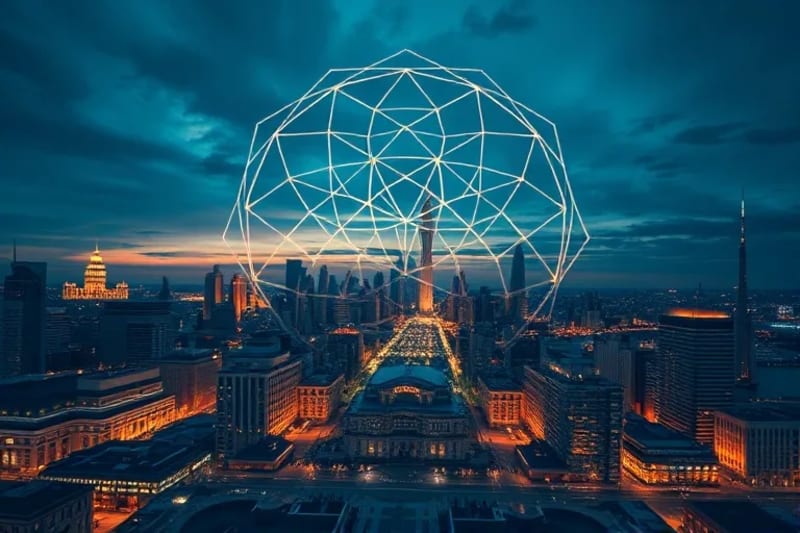 A harmonious urban landscape where architectural design subtly integrates with the natural flow of cosmic energies, fostering well-being.
Table of Contents
- Historical Foundations and Global Perspectives
- Core Principles of Urban Geomancy
- Practical Application in Urban Dwellings
- Understanding Energetic Flow in Cities
- Benefits and Challenges of Urban Geomancy
- Modern Integration and Future Prospects
Historical Foundations and Global Perspectives
The concept of geomancy is not new; its roots stretch back millennia, influencing ancient civilizations across the globe. From the elaborate city planning of ancient China, guided by Feng Shui principles, to the sacred architecture of India, informed by Vastu Shastra, humanity has long recognized the importance of aligning built environments with natural forces. These traditions understood that the Earth itself possesses energetic currents, and that structures could either enhance or disrupt these flows, impacting the lives of those within them.
In Western traditions, early forms of geomancy focused on divining auspicious sites for settlements and temples, often considering ley lines and telluric currents. While the methodologies varied, the underlying premise remained consistent: a well-placed and well-designed dwelling, in harmony with its surroundings, fosters prosperity and health. The transition to urban environments presented new challenges, as natural landscapes were replaced by concrete and steel, necessitating an adaptation of these ancient wisdoms.
The evolution of geomantic thought into an "urban" context involves translating these traditional principles to the unique dynamics of city life. This includes considering not just the immediate plot of land, but also the broader urban grid, traffic patterns, electromagnetic fields, and the collective consciousness of the populace. It's about finding ways to create pockets of natural harmony amidst the artificiality of metropolitan areas, drawing upon the wisdom of systems like Zi Wei Dou Shu Lunar Mansions Advanced Timing Transitions, which also emphasize energetic alignment.
Core Principles of Urban Geomancy
At its heart, urban geomancy operates on several fundamental principles. The most crucial is the concept of "Qi" (or "Chi"), the life force energy that permeates everything. In an urban setting, Qi flows through streets, buildings, and open spaces. Good geomancy aims to channel positive, vibrant Qi and disperse stagnant or negative Qi. This involves careful consideration of:
- Site Selection and Orientation: Choosing a location that naturally receives beneficial cosmic and telluric energies, and orienting structures to maximize these inflows.
- Form and Structure: The shape, size, and layout of buildings, both individually and in relation to their neighbors, can significantly impact energy flow. Sharp angles and chaotic designs can create "sha Qi" (negative energy), while gentle curves and balanced forms promote positive flow.
- Five Elements Theory: Many geomantic traditions, particularly Feng Shui, utilize the five elements (Wood, Fire, Earth, Metal, Water) to understand and balance energies within a space. Each element corresponds to specific colors, materials, shapes, and directions.
- Yin and Yang Balance: Achieving equilibrium between complementary forces – light and dark, active and passive, open and enclosed – is vital for creating a harmonious environment.
- Landscape and Water Features: Even in urban areas, the integration of greenery, water bodies, and natural materials can significantly enhance the energetic quality of a space.
These principles are not rigid rules but rather flexible guidelines that require intuitive understanding and adaptation to specific contexts. They are about creating a dialogue between the built environment and the unseen energetic landscape, much like understanding the Golden Rectangle Harmony Birth Chart helps unlock cosmic balance in an individual's life.
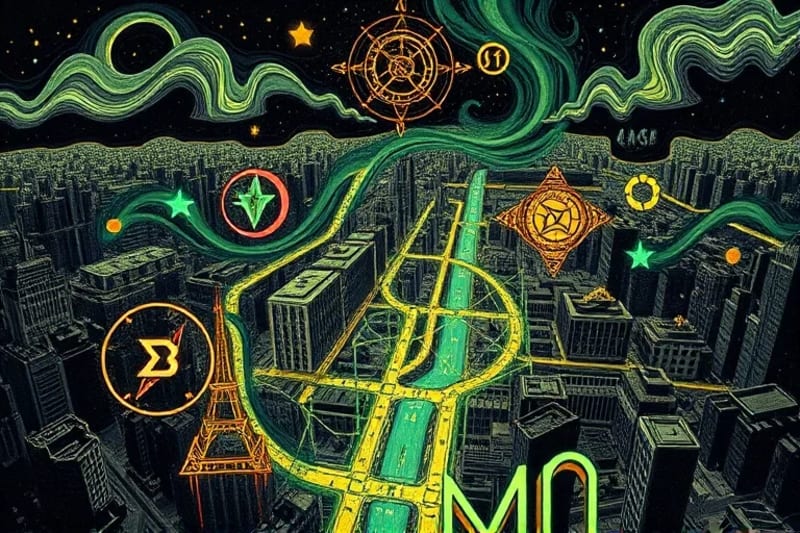 An abstract representation of a city's energetic grid, highlighting the subtle forces influencing urban spaces.
Practical Application in Urban Dwellings
Applying urban geomancy to individual dwellings involves a systematic assessment and thoughtful adjustments. It begins with an analysis of the building's exterior, including its relationship to surrounding structures, roads, and natural features. For instance, a building at a T-junction might experience a rush of "sha Qi," requiring specific remedies to deflect or neutralize it. The orientation of the main entrance is also crucial, as it dictates how energy enters the home.
Inside the dwelling, geomantic principles guide the layout of rooms, placement of furniture, and choice of colors and materials. For example, bedrooms should ideally be located in quieter, more Yin areas to promote rest, while active spaces like living rooms and kitchens can benefit from more Yang energy. Clutter is often seen as stagnant Qi, and its removal is a common recommendation to improve energetic flow.
Specific elements, such as mirrors, plants, water features, and crystals, can be strategically placed to enhance or redirect energy. For instance, a small indoor fountain can activate wealth energy, while a mirror can expand a small space or reflect beneficial views. The goal is to create an environment where energy moves smoothly and gently, supporting the occupants' health, relationships, and aspirations. This careful consideration of space and energy mirrors the introspective work required to understand one's inner landscape, often explored through practices like Psycho-Astrology Archetypal Psychology Jungian Shadow Natal Chart Wholeness.
Understanding Energetic Flow in Cities
Beyond individual buildings, urban geomancy considers the city as a whole. Major roads, rivers, subway lines, and even power grids can act as conduits for energetic flow, influencing entire districts. A well-designed city, from a geomantic perspective, would have a balanced distribution of open spaces, green areas, and built structures, allowing Qi to circulate freely and nourish all parts of the urban fabric. Conversely, poorly planned cities can create energetic blockages or excessive speeds, leading to stress, crime, and general malaise.
Urban geomancers might analyze the "dragon veins" or "ley lines" of a city, identifying powerful energetic pathways and nodes. These are often areas where public buildings, parks, or significant landmarks are located. Understanding these macro-level flows is crucial for urban planners and developers who wish to create sustainable and thriving communities. It involves a holistic view, recognizing that every element of the city contributes to its overall energetic signature.
The impact of modern technology, such as cell towers and Wi-Fi networks, on these subtle energies is also a growing area of concern within urban geomancy. While not traditionally part of ancient geomantic texts, contemporary practitioners often consider the electromagnetic environment and its potential effects on human well-being, seeking ways to harmonize these new influences with established energetic principles.
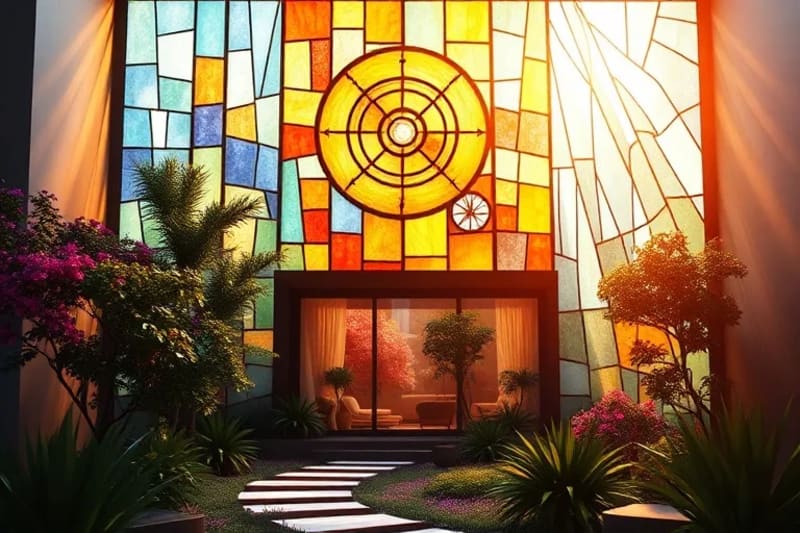 A stylized dwelling demonstrating perfect integration with its energetic environment, bathed in subtle cosmic light.
Benefits and Challenges of Urban Geomancy
The benefits of applying urban geomancy are multifaceted. Individuals and communities can experience improved health, reduced stress, enhanced creativity, and greater financial prosperity. A harmonized living or working space can lead to better sleep, stronger relationships, and a more positive outlook on life. On a larger scale, geomantically designed urban areas can foster a stronger sense of community, reduce social friction, and promote overall civic vitality. It’s about creating environments that support human flourishing in all its dimensions.
However, urban geomancy also presents unique challenges. The existing infrastructure of most cities makes radical changes difficult and costly. Adapting ancient principles to modern building codes, land ownership complexities, and diverse cultural preferences requires creativity and compromise. Furthermore, the subtle nature of energetic flows means that results may not always be immediately quantifiable, leading to skepticism from those accustomed to empirical evidence. The field also grapples with the interpretation of Vertex Anti-Vertex Karmic Synastry Predestined Relationships, which suggests that some alignments are fated, making intentional adjustments more complex.
Despite these hurdles, the growing interest in holistic well-being and sustainable urban development is driving a renewed appreciation for geomantic principles. As cities continue to expand, the need for spaces that nurture rather than deplete human energy becomes increasingly critical.
Modern Integration and Future Prospects
The future of urban geomancy lies in its integration with contemporary urban planning, architecture, and interior design. This could involve architects incorporating geomantic assessments into their initial design phases, urban planners considering energetic flows when zoning new developments, and individuals making conscious choices about their living and working environments. Educational programs could help raise awareness and train professionals in these specialized skills, bridging the gap between ancient wisdom and modern scientific understanding.
Technological advancements, such as advanced mapping software and environmental sensors, could also play a role in identifying and visualizing energetic patterns, making geomantic analysis more accessible and objective. The goal is not to replace modern science but to complement it, offering a more holistic and human-centered approach to urban development. By doing so, we can create cities that are not just functional, but truly vibrant, supportive, and spiritually enriching places to live. The ongoing dialogue between ancient wisdom and modern innovation continues to shape our understanding of how to live in harmony with the cosmos, even within the most bustling urban centers.
Explore Further Insights
- Guided Meditation Moon Sign: Cultivating Emotional Harmony: Find peace through lunar wisdom.
- Planetary Dignities: Aspects Strengthening Natal Potential: Uncover your astrological strengths.
- Karmic Nodes Synastry Composite Charts: Advanced Astrology Guide: Navigate complex karmic relationships.
- AI Meditation Personalized Digital Rituals Mindfulness: Innovate your mindfulness practice.
- Shadow Work Planetary Retrogrades Natal Chart Potentials: Transform challenges into growth.
- Shadow Work Astrology: Unseen Self Integration Growth Guide: Integrate your hidden aspects for wholeness.
- Tiger-Horse Compatibility: Dynamic Zodiac Energy: Explore vibrant Chinese zodiac pairings.
- IC Ruler Aspects: Unpacking Family Legacy, Emotional Foundation Guide: Connect with your roots.
- Monkey Zodiac Elements: Ingenuity, Strategy, Life Path: Discover insights from the Monkey zodiac.
- Lilith Synastry: Decoding Power, Desires, Shadow Integration: Explore the deeper dynamics of attraction.
- Advanced Dragon Compatibility: Chinese Zodiac Dynamics: Unravel the mysteries of Dragon compatibility.
- Impacto Redes Sociales Salud Mental Adolescentes: Prevención: (ALTHOX) Understand social media's effect on mental health.
- IA Cuántica Cambio Climático: Modelos Predictivos Optimización Energética: (ALTHOX) Discover AI's role in climate change.
- Michael Jackson: Impacto Sociopolítico "They Don't Care About Us": (ALTHOX) Analyze Michael Jackson's social impact.
- Signos Tierra: Estabilidad, Concreción y Conexión Naturaleza: (ASTROFUTURO) Explore the stability of Earth signs.
- Cosmología Andina: Arquetipos Pachamama en tu Carta Natal: (ASTROFUTURO) Connect with Andean cosmology.
- Vertex Anti-Vertex Eje Destino Conexiones Inevitables Carta: (ASTROFUTURO) Understand fated astrological connections.
- Profecías Andinas Escatología Cristiana: Diálogo Intercultural Sabiduría: (PROFECIAS) A dialogue on prophecies.
- Santísima Trinidad Vida Diaria Oración Contemplación: (PROFECIAS) Daily spiritual reflection.
- Consagración Sagrado Corazón: Oraciones Jesús y María: (PROFECIAS) Prayers of consecration.
Source: Hybrid content assisted by AI and human editorial supervision.


Comments
Post a Comment