
Urban Geomancy: Aligning Cities for Enhanced Well-being
Urban Geomancy: Harmonizing City Life with Earth's Subtle Energies
Urban geomancy represents a fascinating intersection of ancient wisdom and modern city living, offering a unique approach to enhancing well-being within our built environments. This practice extends the principles of traditional geomancy, which historically focused on aligning structures with natural energy flows, to the complex, often chaotic, landscape of contemporary urban centers. By understanding and consciously working with the subtle energies of the Earth and cosmos, urban geomancy seeks to transform concrete jungles into spaces that foster health, prosperity, and spiritual harmony for their inhabitants.
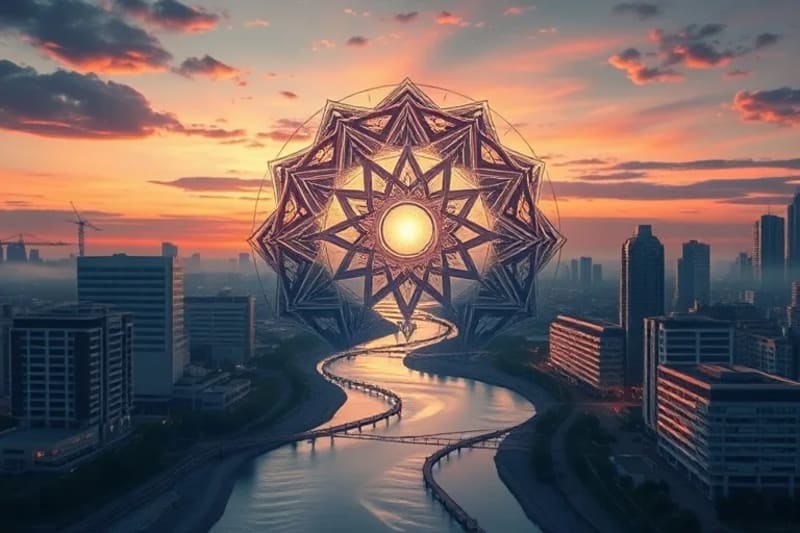 Precursors, conceptual diagrams, and abstract representations that forge the vision of urban geomancy in aligning city structures with cosmic energy flows.
Fuente visual sujeta a disponibilidad del ecosistema: Wikimedia Commons bajo licencia CC BY-SA 4.0 o renderizado conceptual IA.
The core idea behind urban geomancy is that every location possesses a unique energetic signature, influenced by geological formations, water bodies, and even man-made structures. In cities, these energies can become disrupted or stagnant due to dense construction, electromagnetic fields, and the sheer volume of human activity. Geomancers aim to identify these energetic imbalances and implement strategies to restore equilibrium, thereby creating more vibrant and supportive environments.
This interdisciplinary field draws upon various traditions, including Feng Shui, sacred geometry, and dowsing, adapting them for the urban context. It's not merely about aesthetics or architectural design; it delves into the unseen forces that profoundly impact our daily lives, from our mood and productivity to our overall sense of connection and purpose. As our world becomes increasingly urbanized, the principles of urban geomancy offer a crucial framework for designing cities that are not only functional but also deeply nurturing.
Table of Contents
- Understanding Urban Geomancy: A Modern Perspective
- Historical Roots and Global Traditions of Geomancy
- Key Principles of Urban Geomancy: Energy Flow and Alignment
- Identifying and Working with Urban Ley Lines
- Sacred Geometry in City Planning and Architecture
- Practical Applications: Enhancing Well-being in Urban Spaces
- Challenges and Opportunities in Modern Urban Geomancy
- The Future of Urban Geomancy: Sustainable and Harmonious Cities
Understanding Urban Geomancy: A Modern Perspective
In an era dominated by rapid urbanization and technological advancement, the concept of urban geomancy gains increasing relevance. It posits that cities, much like living organisms, possess an energetic anatomy that can either support or detract from the vitality of their inhabitants. This modern perspective moves beyond simplistic notions of "good" or "bad" energy, embracing a nuanced understanding of how various forces interact within a built environment.
Urban geomancy acknowledges that while natural landscapes have inherent energetic patterns, cities introduce complex layers of human-generated energy. These include the energetic imprints of historical events, the collective consciousness of millions, and the ubiquitous electromagnetic fields (EMFs) emitted by modern infrastructure. A geomancer's task is to perceive these layers and devise interventions that harmonize them, rather than merely replicating rural geomantic practices.
The goal is to create urban spaces that are not just functional and aesthetically pleasing, but also energetically supportive. This involves considering factors such as building orientation, material choices, water features, green spaces, and even the flow of traffic and pedestrian movement. The ultimate aim is to foster environments where people feel more connected, less stressed, and more capable of achieving their full potential, contributing to overall enhanced well-being.
Historical Roots and Global Traditions of Geomancy
Geomancy, meaning "earth divination," has a rich and diverse history spanning thousands of years across various cultures. Its origins can be traced back to ancient civilizations that recognized the profound connection between human settlements and the natural world. These traditions were not merely superstitious beliefs but sophisticated systems of ecological and energetic understanding.
One of the most well-known forms is Chinese Feng Shui, which translates to "wind and water." For centuries, Feng Shui masters have advised on the optimal placement and orientation of buildings, tombs, and cities to harness beneficial "qi" (life force energy). This involves analyzing landforms, water courses, and celestial alignments to ensure harmony and prosperity. The principles of Feng Shui Digital Nomads Harmonizing Workspaces Cosmic Energies are a direct descendant of these ancient practices, adapted for modern living.
Similarly, ancient European cultures, including the Celts and Druids, practiced forms of geomancy, often associated with sacred sites like Stonehenge and Avebury. They believed in "ley lines" – invisible lines of telluric energy connecting significant places. Indigenous cultures worldwide, from Native Americans to Australian Aborigines, also possessed deep knowledge of earth energies and their impact on human well-being, often expressed through their spiritual practices and sacred sites. These global traditions underscore a universal human intuition about the energetic landscape.
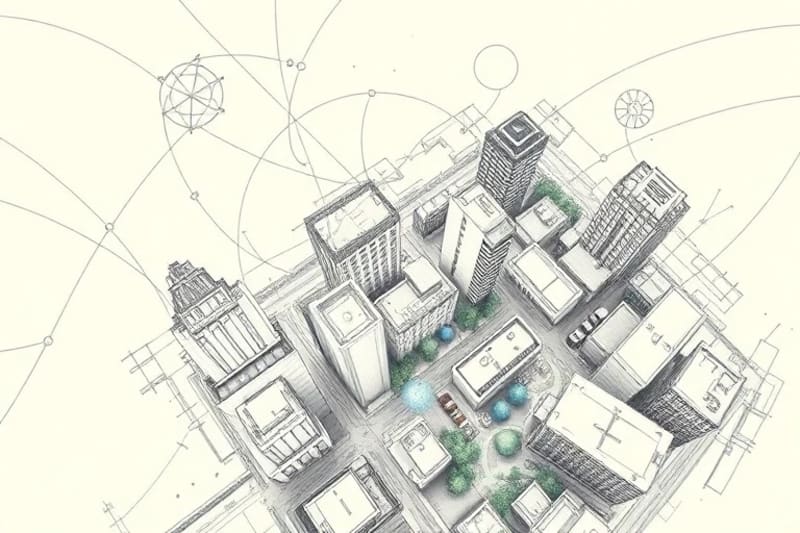 An abstract visualization of urban energy flows, illustrating the complex interplay of natural and man-made forces within a city's energetic landscape.
Key Principles of Urban Geomancy: Energy Flow and Alignment
At the heart of urban geomancy lies the understanding of energy flow and alignment. Just as blood circulates through the human body, subtle energies are believed to flow through the Earth and its structures. Geomancers identify these flows and assess their quality – whether they are vibrant and nourishing, or stagnant and detrimental. This assessment is crucial for optimizing urban spaces.
Key principles include:
- Qi (Chi) Flow: Derived from Chinese Feng Shui, this refers to the life force energy that permeates everything. In urban settings, geomancers analyze how buildings, roads, and open spaces facilitate or obstruct the smooth flow of qi. Sharp angles, cluttered areas, and dead-end streets can create "sha qi" (negative energy), while curved paths, open plazas, and green corridors promote "sheng qi" (positive energy).
- Yin and Yang: The balance of complementary opposites is fundamental. Urban environments often lean heavily towards "yang" (active, masculine, concrete, fast-paced) energy. Geomancy seeks to introduce "yin" (receptive, feminine, natural, calm) elements through parks, water features, and softer architectural forms to create equilibrium.
- Five Elements: Wood, Fire, Earth, Metal, and Water represent different qualities and energies. Urban geomancy applies these elements to design choices, materials, and colors to create harmonious interactions. For example, excessive metal and fire elements might be balanced with wood and water to reduce stress and promote growth.
- Cosmic Alignment: Beyond terrestrial energies, urban geomancy considers the influence of celestial bodies. This can involve aligning buildings with cardinal directions, significant astrological points, or even incorporating principles derived from Lunar Mansions Astrology to tap into specific cosmic frequencies.
These principles guide the geomancer in making recommendations for urban planning, architectural design, and even interior arrangements, all with the aim of fostering a more harmonious and supportive environment.
Identifying and Working with Urban Ley Lines
Ley lines, often described as invisible lines of energy crisscrossing the Earth's surface, are a central concept in geomancy. While their existence is debated in mainstream science, proponents believe they represent pathways of telluric energy that can be harnessed or mitigated. In urban environments, identifying and working with these subtle lines presents unique challenges and opportunities.
Urban ley lines may not be as pristine as those found in untouched natural landscapes. They can be influenced, disrupted, or even amplified by human activity and infrastructure. Geomancers use various techniques, including dowsing, intuition, and historical mapping, to detect these lines within city grids. They look for correlations with ancient pathways, historical landmarks, and even modern infrastructure like major roads or subway tunnels, which sometimes follow older energetic alignments.
Once identified, the goal is to optimize their flow. If a ley line passes through a building, its energy can be channeled to enhance specific functions, such as creativity in an art studio or healing in a wellness center. Conversely, if a ley line is blocked or creates a discordant energy, geomancers might suggest interventions like placing specific crystals, planting certain trees, or redesigning pathways to redirect or harmonize the flow. This conscious interaction aims to integrate these powerful earth energies beneficially into the urban fabric.
Sacred Geometry in City Planning and Architecture
Sacred geometry, the belief that certain geometric shapes and proportions have inherent energetic and spiritual significance, plays a vital role in urban geomancy. From ancient temples to medieval cathedrals, architects have long incorporated these timeless patterns to create spaces that resonate with universal harmony and elevate the human spirit. In city planning, sacred geometry can be applied to create more balanced and uplifting urban environments.
The Golden Ratio (Phi), the Fibonacci sequence, and shapes like the vesica piscis or the flower of life are not just aesthetic principles; they are believed to reflect the underlying order of the cosmos. When these proportions are integrated into urban layouts, building designs, and public spaces, they can subtly influence human perception and well-being. For example, parks designed with spiraling pathways or buildings whose facades reflect golden ratio proportions can evoke a sense of peace and natural beauty.
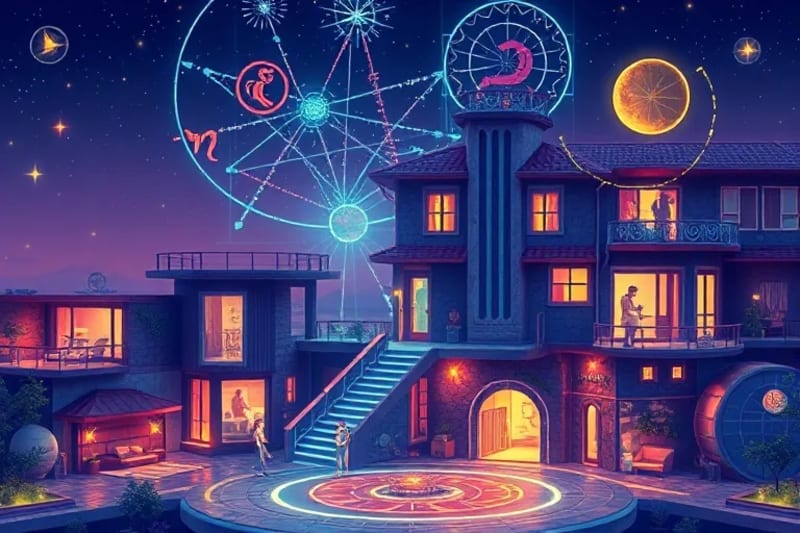 A conceptual still-life depicting architectural tools, sacred geometric symbols, and urban planning schematics, representing the thoughtful integration of timeless design principles into cityscapes.
Beyond individual structures, sacred geometry can inform the overall city grid. Historically, many cities were laid out according to astronomical alignments or geometric patterns that mirrored celestial configurations. Reintroducing such principles, even subtly, can help reconnect urban dwellers with the larger cosmic order, fostering a sense of belonging and purpose. The exploration of Esoteric Symbolism in Modern Art often touches upon these ancient geometric principles, revealing their enduring power.
Practical Applications: Enhancing Well-being in Urban Spaces
The theoretical framework of urban geomancy translates into a variety of practical applications aimed at improving the quality of life in cities. These applications range from large-scale urban planning to individual dwelling adjustments, all focused on optimizing energetic environments.
Here are some key practical applications:
- Site Selection and Orientation: For new developments, geomancers can advise on selecting sites with beneficial energy flows and orienting buildings to maximize positive cosmic and telluric influences. This includes considering natural topography, water bodies, and existing energetic pathways.
- Architectural Design: Incorporating geomantic principles into building design involves more than just aesthetics. It includes using natural, breathable materials, optimizing natural light and ventilation, and designing layouts that promote harmonious energy circulation within the structure.
- Green Spaces and Water Features: Integrating parks, gardens, and water elements (fountains, ponds) is crucial. These elements act as energetic anchors, cleansing and vitalizing urban spaces. They provide "yin" energy, balancing the "yang" of concrete and steel.
- Electromagnetic Field (EMF) Mitigation: Modern cities are saturated with EMFs from Wi-Fi, cell towers, and power lines. Urban geomancy addresses this by recommending shielding techniques, strategic placement of electronic devices, and the use of natural materials that can absorb or neutralize harmful frequencies.
- Public Art and Symbolism: Strategically placed public art, sculptures, and monuments can act as energetic focal points, enhancing the flow of positive energy or redirecting stagnant forces. These can embody symbolic meanings that uplift the collective consciousness.
- Community Gardens and Urban Farming: These initiatives not only provide fresh produce but also reconnect urban dwellers with the Earth, grounding them and introducing vital earth energies into dense areas.
By implementing these applications, urban geomancy aims to create cities that are not only sustainable but also deeply supportive of human flourishing, fostering a sense of peace and vitality amidst the urban hustle.
Challenges and Opportunities in Modern Urban Geomancy
While the potential benefits of urban geomancy are significant, its implementation in modern cities faces several challenges. However, these challenges also present unique opportunities for innovation and integration into contemporary urban planning paradigms.
Challenges:
- Skepticism and Lack of Scientific Validation: Geomancy often operates outside conventional scientific frameworks, leading to skepticism from urban planners, architects, and policymakers who demand empirical evidence.
- Complexity of Urban Environments: The dense, multi-layered nature of cities, with their myriad of underground utilities, historical structures, and constant development, makes it difficult to accurately assess and modify energetic flows.
- Economic Pressures: Implementing geomantic principles can sometimes involve higher initial costs or require deviations from standard construction practices, which may be resisted due to budget constraints.
- Conflicting Interests: Urban development often involves multiple stakeholders with diverse agendas, making it challenging to achieve consensus on geomantically informed designs.
- Electromagnetic Pollution: The pervasive nature of EMFs in cities creates a constant energetic interference that can be difficult to mitigate effectively.
Opportunities:
- Growing Demand for Holistic Well-being: There is an increasing public interest in holistic health, mindfulness, and sustainable living, creating a fertile ground for geomantic principles to be embraced.
- Integration with Sustainable Design: Geomancy aligns well with principles of green architecture and sustainable urban planning, offering a complementary lens for creating eco-friendly and energetically balanced environments. This echoes the broader themes of Bioclimatic Architecture.
- Technological Advancements: New technologies in mapping, environmental sensing, and data analysis could potentially provide new tools for geomancers to identify and visualize subtle energy patterns, bridging the gap with scientific understanding.
- Community Engagement: Involving local communities in geomantic projects can foster a sense of ownership and connection to their environment, promoting collective well-being.
- Revitalization of Urban Spaces: Geomancy can offer innovative solutions for revitalizing neglected urban areas, transforming them into vibrant, energetically supportive community hubs.
By addressing these challenges and leveraging opportunities, urban geomancy has the potential to become a valuable component of future urban development, contributing to healthier and more harmonious cities.
The Future of Urban Geomancy: Sustainable and Harmonious Cities
As we look to the future, the principles of urban geomancy offer a compelling vision for creating cities that are not only ecologically sustainable but also energetically and spiritually harmonious. The growing awareness of the interconnectedness between human well-being and the environment suggests that geomancy could play an increasingly significant role in shaping our urban landscapes.
The future of urban geomancy likely involves a multidisciplinary approach, integrating ancient wisdom with modern science and technology. This could mean architects, urban planners, environmental scientists, and geomancers collaborating from the initial stages of city design. Imagine cities where every park, building, and street is consciously designed to optimize energy flow, minimize energetic pollution, and enhance the vitality of its inhabitants.
This holistic approach extends beyond physical structures to the very fabric of urban life. It envisions communities that are not just economically prosperous but also spiritually rich, where residents feel deeply connected to their surroundings and to each other. By aligning city dwellings with cosmic and telluric energies, urban geomancy promises a future where our cities are not just places to live, but vibrant ecosystems that actively support human flourishing and a deeper connection to the natural world.
Explore More Esoteric Wisdom
Source: Hybrid content assisted by AI and human editorial supervision.


Comments
Post a Comment