
Astrology Art Literature: Cosmic Symbolism Ages | StarPluto
The celestial tapestry has long captivated humanity, inspiring not only scientific inquiry but also profound artistic and literary expression. From the earliest civilizations observing the night sky to the intricate narratives of modern fiction, astrology and its rich cosmic symbolism have served as a boundless wellspring for creative minds. This enduring connection highlights how our understanding of the cosmos intertwines with our attempts to comprehend human nature, destiny, and the very fabric of existence.
This article delves into the fascinating journey of cosmic symbolism through the ages, exploring its pervasive influence across various artistic movements and literary genres. We will uncover how ancient beliefs about planetary deities and zodiacal influences evolved into sophisticated allegories, character archetypes, and visual motifs that continue to resonate in contemporary culture. Understanding this symbiosis offers a richer appreciation of both the arts and the timeless human quest for meaning in the stars.
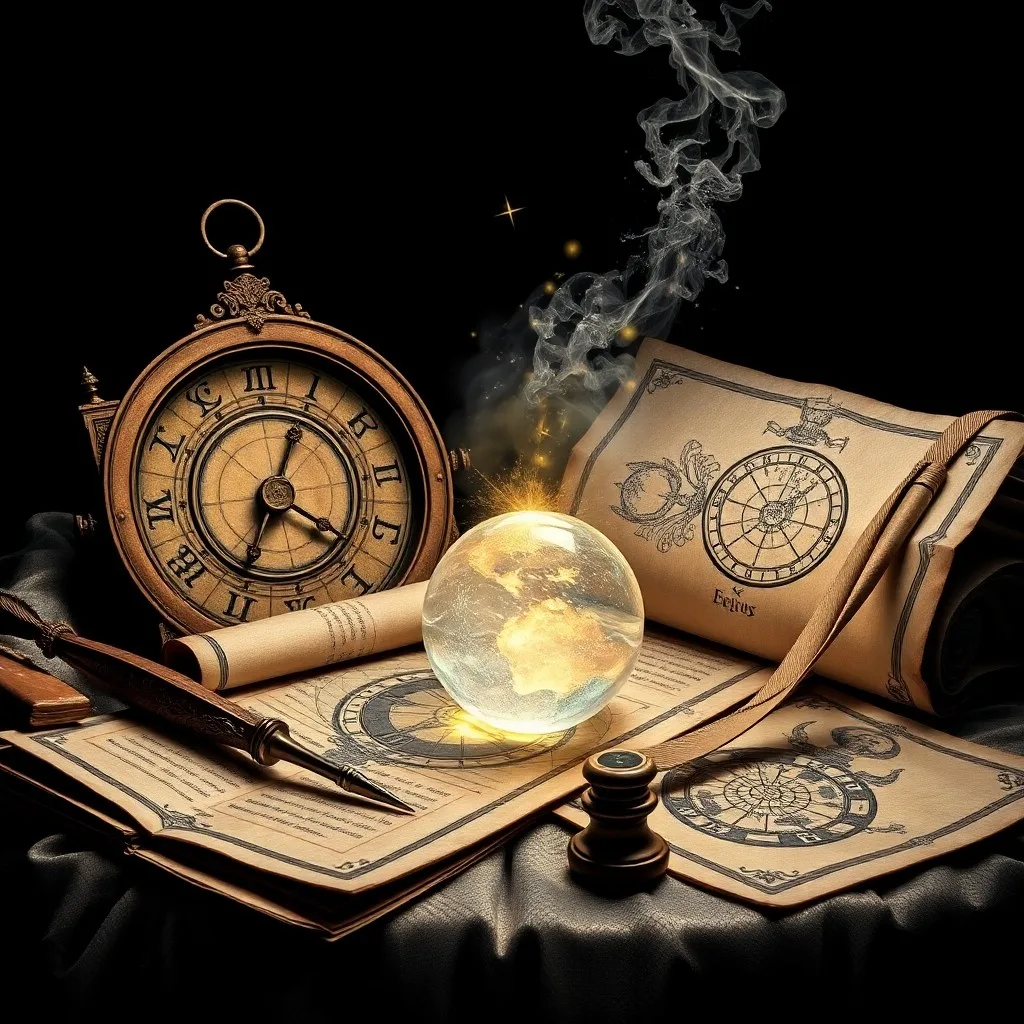
Ancient texts reveal the deep-rooted connection between astrology, art, and literature, showcasing cosmic symbolism.
Table of Contents
- Historical Roots: Ancient Civilizations
- Classical Era: Mythology and the Heavens
- Medieval Period: Celestial Allegories and Christian Cosmology
- The Renaissance: Astrology as a Source of Artistic Inspiration
- Key Astrological Concepts in Visual Arts
- Cosmic Narratives in Literature
- Modern and Contemporary Interpretations
- The Enduring Legacy of Celestial Influence
Historical Roots: Ancient Civilizations
The earliest evidence of astrological thought and its artistic representation can be traced back to ancient Mesopotamia, particularly Sumeria, Babylonia, and Assyria. These civilizations meticulously observed celestial phenomena, associating planets and constellations with their deities and attributing specific influences to them. Cuneiform tablets reveal detailed astronomical records alongside omens and prophecies, indicating a deep integration of celestial observations into daily life and religious practices.
In ancient Egypt, the stars played a crucial role in regulating agricultural cycles, religious festivals, and the afterlife. Astronomical ceilings adorned tombs and temples, depicting constellations and planetary movements, often intertwined with mythological figures. The zodiac, while later formalized by the Greeks, has precursors in Egyptian and Babylonian celestial maps, influencing funerary art and monumental architecture.
The ancient world viewed the cosmos not as a distant, indifferent realm, but as an active participant in human affairs. This perspective permeated every aspect of culture, from religious rituals to the construction of monumental art, laying the groundwork for millennia of cosmic symbolism in art and literature.
These early connections established a fundamental principle: the heavens were not merely physical entities but living, breathing forces with direct bearing on terrestrial events and human destinies. This worldview provided a rich symbolic language that artists and storytellers would utilize for centuries to come, embedding cosmic narratives into their creations.
Classical Era: Mythology and the Heavens
The Greeks and Romans inherited and significantly developed Mesopotamian and Egyptian astronomical and astrological knowledge. They personified the planets as their principal deities: Jupiter (Zeus), Mars (Ares), Venus (Aphrodite), Mercury (Hermes), and Saturn (Cronus). Each deity was associated with specific characteristics, domains, and mythological narratives, which in turn became symbolic attributes of their corresponding planets.
Greek mythology is replete with celestial references, from the origins of constellations (e.g., Ursa Major as Callisto) to the divine interventions of planetary gods in human affairs. This era saw the formalization of the zodiac as a band of constellations through which the sun, moon, and planets appeared to travel. Each zodiac sign was linked to specific myths, animals, or human figures, imbuing them with distinct symbolic meanings that influenced character portrayal in epic poems and dramatic plays.
In visual arts, particularly sculpture and frescoes, the planetary deities were frequently depicted with their associated symbols, such as Venus with doves and Cupid, or Mars with armor and weapons. These representations were not merely decorative; they conveyed deeper meanings about love, war, wisdom, and fate, reflecting the astrological understanding of their influence on human life and the natural world.
Medieval Period: Celestial Allegories and Christian Cosmology
During the Middle Ages, astrology continued to be a significant intellectual pursuit, albeit often viewed through the lens of Christian theology. While the Church sometimes condemned certain forms of divination, the study of celestial influences was often reconciled with divine providence. Scholars like Thomas Aquinas debated the extent to which stars influenced human free will, generally concluding that they could incline but not compel.

Intricate medieval tapestries often wove zodiacal imagery into scenes of daily life, reflecting cosmic influence.
Artistic expressions of this period, such as illuminated manuscripts, cathedral sculptures, and frescoes, frequently incorporated astrological symbols. Zodiac signs often appeared in cycles of the months or seasons, connecting celestial rhythms to agricultural and human activities. The "Wheel of Fortune," a common medieval motif, sometimes depicted planetary rulers influencing the rise and fall of human fortunes, symbolizing the unpredictable nature of fate under cosmic sway.
Literary works like Dante Alighieri's The Divine Comedy are prime examples of astrology's profound impact. Dante's journey through Hell, Purgatory, and Paradise is structured according to Ptolemaic cosmology, with each celestial sphere corresponding to different virtues or stages of spiritual purification. His characters are often described with reference to their planetary or zodiacal influences, linking their moral and spiritual state to the cosmic order.
The allegorical nature of medieval art and literature found a natural partner in astrology, providing a complex system of symbols to convey moral, theological, and philosophical ideas. The cosmos was seen as a divine blueprint, and understanding its language was a path to deeper spiritual insight.
The Renaissance: Astrology as a Source of Artistic Inspiration
The Renaissance marked a resurgence of classical learning, including a renewed interest in astrology. It was not uncommon for popes, princes, and wealthy patrons to employ court astrologers, whose predictions and insights influenced political decisions, personal lives, and even the timing of major events. This patronage directly fueled the integration of astrological themes into the art and literature of the period.
Artists like Raphael, Botticelli, and Michelangelo incorporated astrological motifs into their works. For instance, the Sala dei Mesi (Hall of the Months) in the Palazzo Schifanoia in Ferrara features elaborate frescoes depicting the twelve months, each associated with its zodiac sign and planetary ruler, alongside scenes of daily life and mythological narratives. These works were not just beautiful; they were encyclopedic visual representations of the cosmic order as understood at the time.
In literature, William Shakespeare frequently alluded to astrological concepts, using phrases like "star-crossed lovers" (Romeo and Juliet) or exploring the idea of planetary influence on character and destiny. While not always explicitly endorsing astrological determinism, Shakespeare used these references to deepen character psychology and explore themes of fate versus free will, reflecting the prevalent beliefs of his audience.
The Renaissance era saw a sophisticated integration of astrology into the intellectual and artistic fabric of society. Artists and writers used cosmic symbolism to enrich their narratives, imbue characters with deeper meaning, and reflect the prevailing worldview that saw humanity intricately connected to the celestial spheres.
This period showcased astrology not merely as a predictive tool but as a complex philosophical system that offered insights into temperament, relationships, and the unfolding of historical events. Its influence on the arts provided a visual and narrative language that transcended mere decoration, becoming integral to the meaning of the works themselves.
Key Astrological Concepts in Visual Arts
Visual artists across different epochs have employed various astrological concepts to convey meaning and enhance their compositions. These elements serve as powerful symbols that resonate with viewers familiar with their cosmic associations.
- Zodiac Signs: Often depicted as a circular band, the twelve zodiac signs represent distinct personality traits, seasons, and mythological figures. In art, they can symbolize the passage of time, the cycle of life, or the inherent qualities of a person or event. Examples range from medieval cathedral carvings to modern astrological charts.
- Planets and Deities: Each classical planet (Sun, Moon, Mercury, Venus, Mars, Jupiter, Saturn) is associated with a Roman or Greek deity, carrying specific attributes. Artists personify these planets, using their divine counterparts to symbolize love (Venus), war (Mars), wisdom (Jupiter), or melancholy (Saturn), adding layers of allegorical meaning to portraits, historical scenes, and mythological paintings.
- Constellations: Beyond the zodiac, other constellations, often linked to classical myths, appear in celestial maps and narrative art. These can represent epic tales, divine interventions, or the vastness and mystery of the cosmos itself.
- Cosmology: The prevailing cosmological model of an era often finds its way into art. The geocentric model, with Earth at the center surrounded by concentric spheres of planets and fixed stars, was a dominant motif in medieval and Renaissance art, symbolizing a divinely ordered universe.

Futuristic art envisions celestial maps and planetary orbits as sources of inspiration for literature and knowledge.
The use of astrological imagery in visual arts is not merely decorative; it functions as a sophisticated language that communicates complex ideas about fate, human character, and the divine order. By decoding these symbols, viewers gain a deeper understanding of the artist's message and the cultural context of the work.
Cosmic Narratives in Literature
Literature, much like visual art, has consistently drawn upon astrological themes to enrich narratives, develop characters, and explore profound philosophical questions. The cosmos provides a universal backdrop against which human dramas unfold, often hinting at larger forces at play.
- Character Archetypes: Writers frequently imbue their characters with traits associated with zodiac signs or planetary rulers. A character born under Mars might be fiery and impulsive, while one influenced by Venus could be artistic and loving. This shorthand allows authors to quickly establish character depth and motivation, drawing on a shared cultural understanding of astrological archetypes.
- Plot Devices: Astrological predictions, prophecies, and celestial omens often drive the plot forward. An eclipse might signal a tragic event, a comet could herald a new era, or a specific planetary alignment could dictate a character's destiny. These cosmic events add a layer of dramatic tension and a sense of predetermined fate to the narrative.
- Symbolism: Beyond direct references, authors use planetary and zodiacal symbolism metaphorically. The "darkness of Saturn" might represent melancholy or restriction, while the "light of Jupiter" could signify expansion and good fortune. This symbolic language enriches the text, allowing for multiple layers of interpretation.
- Notable Works:
- Geoffrey Chaucer's The Canterbury Tales: Chaucer often references planetary positions and astrological influences to describe his characters' temperaments and the timing of events, reflecting the widespread belief in astrology during his time.
- T.S. Eliot's The Waste Land: While modern, Eliot's poem uses astrological symbols and allusions to ancient myths to comment on the spiritual barrenness of the post-World War I era, demonstrating the enduring power of cosmic symbolism.
- W.B. Yeats's Poetry: Yeats, deeply interested in mysticism and the occult, frequently incorporated astrological and esoteric symbols into his poetry, creating complex layers of meaning related to destiny, history, and the human soul.
From ancient epics to contemporary fantasy and science fiction, the cosmos remains a powerful narrative tool. It allows writers to explore themes of fate, free will, the interconnectedness of all things, and humanity's place within a vast, mysterious universe. The language of astrology provides a ready-made lexicon for these profound explorations.
Modern and Contemporary Interpretations
While the scientific revolution of the 17th century gradually separated astronomy from astrology, diminishing astrology's role in scientific discourse, its influence on art and literature persisted and evolved. In the modern era, astrology often appears as a metaphor, a psychological framework, or a cultural reference rather than a literal predictive system.
In the 20th and 21st centuries, artists and writers continue to engage with cosmic symbolism, albeit with new perspectives. Surrealist artists, for example, often explored dreamscapes and subconscious imagery that resonated with the mystical and symbolic aspects of astrology. Contemporary literature frequently uses astrological signs to define character traits or to add a layer of pop culture relevance, even if ironically.
The rise of New Age movements and a renewed interest in spirituality have also brought astrology back into popular discourse, influencing various forms of media, from graphic novels and video games to fashion and music. This demonstrates astrology's adaptability and its enduring appeal as a system for self-understanding and interpreting the world around us.
Even in works that do not explicitly mention astrology, the archetypal patterns associated with planets and zodiac signs often unconsciously inform character development and narrative arcs. The "hero's journey," for instance, can be seen to parallel astrological progressions, representing stages of growth and transformation that resonate with universal human experiences.
The Enduring Legacy of Celestial Influence
The journey of astrology through art and literature is a testament to its profound and multifaceted impact on human culture. From the earliest star-gazers who saw deities in the constellations to Renaissance masters depicting cosmic order, and modern authors weaving celestial metaphors into their narratives, the heavens have continuously provided a rich vocabulary for expressing the human condition.
This cosmic symbolism offers a unique lens through which to explore themes of fate, free will, personality, and the cyclical nature of existence. It allows artists and writers to tap into universal archetypes and shared cultural understandings, creating works that transcend time and speak to fundamental human questions about our place in the universe.
Ultimately, the enduring presence of astrology in art and literature underscores a fundamental human desire to find meaning and order in the vastness of the cosmos. Whether viewed as a science, a philosophy, or a symbolic language, the stars continue to inspire, challenge, and enrich our creative expressions, ensuring that cosmic symbolism will remain a vital thread in the tapestry of human culture for generations to come.
Fuente: Contenido híbrido asistido por IAs y supervisión editorial humana.


Comments
Post a Comment