
Advanced Planetary Dignities Beyond Rulerships Electional Synastry
Advanced Planetary Dignities: Beyond Rulerships in Electional & Synastry Astrology
Planetary dignities form the bedrock of traditional astrological interpretation, offering a nuanced understanding of a planet's inherent strength, influence, and capacity to act within a natal chart or a specific astrological event. While basic rulerships are widely known, a deeper dive into advanced dignities reveals a sophisticated system that profoundly impacts the precision of electional astrology and the intricate dynamics of synastry. This comprehensive exploration moves beyond the superficial, unveiling the layers of planetary empowerment and debility that shape astrological outcomes.
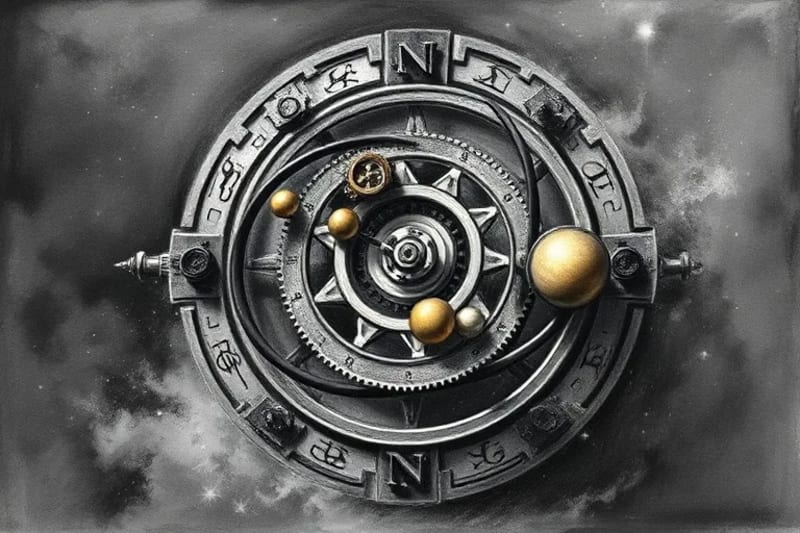 An intricate celestial mechanism illustrating the complex interplay of advanced planetary dignities and their profound influence on astrological interpretation.
Fuente visual sujeta a disponibilidad del ecosistema: Wikimedia Commons bajo licencia CC BY-SA 4.0 o renderizado conceptual IA.
An intricate celestial mechanism illustrating the complex interplay of advanced planetary dignities and their profound influence on astrological interpretation.
Fuente visual sujeta a disponibilidad del ecosistema: Wikimedia Commons bajo licencia CC BY-SA 4.0 o renderizado conceptual IA.
Understanding these advanced concepts is crucial for any serious astrologer seeking to unlock the full potential of chart analysis. It allows for a more precise evaluation of planetary conditions, distinguishing between a planet that merely resides in its domicile and one that is powerfully positioned to fulfill its promises or challenges. This article will dissect the various forms of essential and accidental dignities, demonstrating their practical application in two of astrology's most intricate branches.
The concept of planetary dignities originates from Hellenistic and Medieval astrological traditions, where planets were seen as having specific "homes" or "offices" in the zodiac. These positions conferred varying degrees of authority, comfort, and effectiveness upon the planet. A planet in dignity is like a ruler in their own kingdom, able to exert their influence with ease and authority, while a planet in debility is akin to an exile, struggling to manifest its true nature.
This framework provides a sophisticated lens through which to view planetary interactions, moving beyond simplistic interpretations of signs and houses. By integrating these advanced techniques, astrologers can offer more accurate predictions, guide clients through optimal timing for significant life events, and unravel the intricate relationship dynamics revealed in synastry charts. The journey into advanced dignities is one of precision, depth, and profound insight into the cosmic ballet.
Table of Contents
- Essential Dignities: Beyond Rulership
- Accidental Dignities: Contextual Strength
- Applying Dignities in Electional Astrology
- Dignities in Synastry: Relationship Dynamics
- Advanced Considerations and Nuances
- Conclusion: Mastering Dignities for Profound Insights
Essential Dignities: Beyond Rulership
Essential dignities refer to a planet's inherent strength based on its zodiacal placement, independent of its house position or aspects. These dignities describe how comfortable and effective a planet feels in a particular sign, influencing its ability to express its core nature. While domicile (rulership) is the most recognized, other essential dignities add critical layers of meaning.
The traditional hierarchy of essential dignities includes domicile, exaltation, triplicity, term, and face. Each confers a different degree of power and influence, ranging from supreme authority to a mere semblance of control. Understanding this hierarchy is paramount for a precise assessment of a planet's intrinsic condition.
A planet in its domicile (rulership) is in its own home, fully comfortable and able to express its nature without hindrance. For example, Mars in Aries or Scorpio is considered very strong. Exaltation is a sign where a planet is particularly honored and celebrated, like a guest of honor; it performs exceptionally well but might be more dramatic. The Sun in Aries is a prime example of exaltation.
Triplicity dignities divide the zodiac into four elements (fire, earth, air, water), with each element assigned three rulers—a day ruler, a night ruler, and a participating ruler. This dignity provides a moderate level of strength, indicating a planet's ability to work effectively within a specific elemental context. For instance, the Sun, Jupiter, and Saturn rule the Fire triplicity (Aries, Leo, Sagittarius) during the day, night, and jointly, respectively.
Terms (or bounds) divide each sign into unequal segments, with each segment ruled by a different planet. This dignity offers a minor but significant boost to a planet's strength, giving it some control over a specific degree range. Finally, Face (or decan) divides each sign into three 10-degree segments, each ruled by a planet according to the Chaldean order. This is the weakest of the essential dignities, offering only a superficial level of control or expression.
Conversely, planets can also be in states of essential debility. A planet in its detriment is in the sign opposite its domicile, making it uncomfortable and struggling to express its nature effectively. Mars in Libra or Taurus is in detriment. A planet in its fall is in the sign opposite its exaltation, indicating a position where it is particularly weak or dishonored, such as the Sun in Libra.
| Dignity Type | Description | Strength Level | Example |
|---|---|---|---|
| Domicile (Rulership) | Planet in its 'home' sign; full authority. | Highest | Mars in Aries |
| Exaltation | Planet honored and celebrated; performs exceptionally. | High | Sun in Aries |
| Triplicity | Planet works well within its elemental context. | Moderate | Sun in Leo (Day Fire) |
| Term (Bounds) | Minor control over a specific degree range. | Minor | Jupiter in 0-6° Aries |
| Face (Decan) | Superficial control; weakest essential dignity. | Weakest | Mars in 1-10° Aries |
| Detriment | Planet in opposing sign to domicile; uncomfortable. | Debility | Mars in Libra |
| Fall | Planet in opposing sign to exaltation; dishonored. | Strong Debility | Sun in Libra |
Accidental Dignities: Contextual Strength
While essential dignities speak to a planet's intrinsic nature, accidental dignities describe its situational strength and effectiveness based on its position within the chart's houses, its motion, and its relationship to other planets. These dignities are dynamic and contextual, indicating how well a planet can manifest its essential qualities in the real world.
Key accidental dignities include angularity, succedence, cadency, direct motion, speed, and house placement. A planet in an angular house (1st, 4th, 7th, 10th) is considered very strong, as these houses represent prominent areas of life. Planets in succedent houses (2nd, 5th, 8th, 11th) have moderate strength, while those in cadent houses (3rd, 6th, 9th, 12th) are generally weaker, often struggling to exert their influence directly.
The motion of a planet is also a critical accidental dignity. A planet moving direct and at its average speed or faster is generally stronger than one that is retrograde or slow. Retrograde planets, while not inherently negative, often signify internal processes, delays, or a re-evaluation of their functions. Planetary dignities, especially accidental ones, are crucial for understanding a planet's ability to act in time-sensitive matters, such as those analyzed in electional astrology.
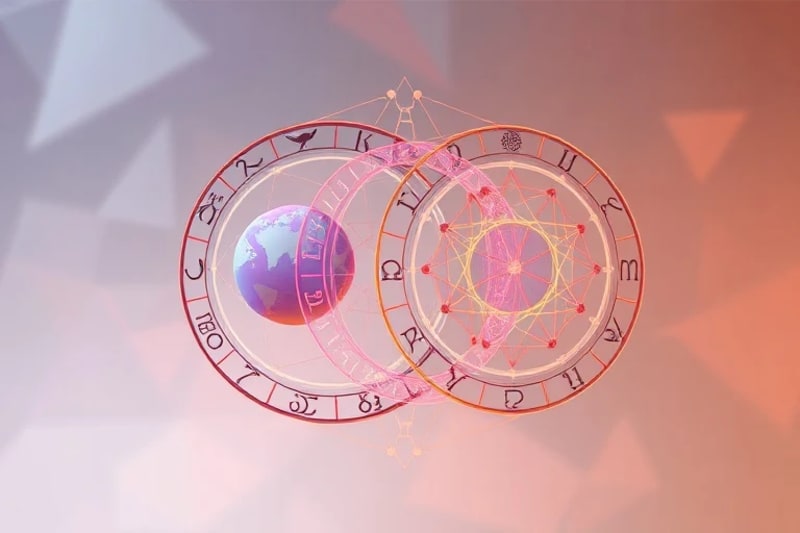 A stylized vector illustration depicting the intricate overlays of dignities and planetary interactions within two intertwined astrological charts.
Other accidental dignities include being 'peregrine,' which means a planet has no essential dignity whatsoever. A peregrine planet is often considered 'wandering' or lacking direction, making its influence less stable or predictable unless it receives strong accidental support. Conversely, a planet can gain strength through 'joy,' where it is placed in a house that aligns with its natural significations (e.g., Mercury in the 1st house, Venus in the 5th, Mars in the 6th, Jupiter in the 11th, Saturn in the 12th).
Aspects also contribute to accidental dignity, particularly through mutual reception. Mutual reception occurs when two planets are in each other's signs of rulership or exaltation (e.g., Mars in Libra and Venus in Aries). This creates a powerful symbiotic relationship where the planets 'host' each other, allowing them to function with greater ease and cooperation, even if they are in debility by sign.
The interplay between essential and accidental dignities is complex. A planet can be essentially dignified but accidentally debilitated (e.g., Mars in Aries in the 12th house, retrograde) or essentially debilitated but accidentally dignified (e.g., Mars in Libra in the 10th house, direct and fast). The most potent planets are those that possess both strong essential and accidental dignities, enabling them to manifest their influence with maximum efficacy and positive outcome.
Applying Dignities in Electional Astrology
Electional astrology is the art of choosing the most auspicious moment to initiate an event, ensuring its success and desired outcome. The meticulous application of planetary dignities is paramount in this branch of astrology, as it determines the strength and effectiveness of the planets signifying the matter at hand. A poorly elected chart, even with favorable aspects, can falter if the key planets are debilitated.
When electing a chart, the astrologer identifies the planet(s) that rule the matter (e.g., Venus for a marriage, Mercury for a contract, Jupiter for a new business venture). The primary goal is to ensure these significators are as dignified as possible, both essentially and accidentally. This means placing them in their domicile or exaltation, in an angular or succedent house, direct in motion, and ideally, making favorable aspects to other benefics.
Consider an election for starting a new business. The significator for business is typically Jupiter, and for communication or contracts, Mercury. An ideal election would place Jupiter in Sagittarius or Pisces (domicile) or Cancer (exaltation), in the 10th house (career) or 2nd house (finances), moving direct and fast. Similarly, Mercury should be in Gemini or Virgo (domicile) or Aquarius (exaltation), preferably in an angular house, free from combustion or retrograde motion.
Furthermore, the Moon's applying aspects are critical in electional astrology. The Moon, as the universal significator of events, should apply to a dignified significator of the matter, ideally by trine or sextile. It should also avoid applying to malefics (Mars or Saturn) or being void of course. The strength of the Moon through its own dignities also contributes significantly to the overall potency of the election.
Debilities must be carefully avoided. Placing the significator in its detriment or fall, or in a cadent house, can severely undermine the success of the endeavor. For example, electing a wedding date with Venus in Aries (detriment) or Virgo (fall) would be highly ill-advised, as Venus signifies love and partnership. Such a placement could lead to discord, imbalance, or a lack of affection in the marriage. Applying similar principles in parenting astrology can help in nurturing child growth by understanding their natal chart strengths and weaknesses.
Dignities in Synastry: Relationship Dynamics
Synastry, the comparison of two natal charts, reveals the intricate dynamics of a relationship. While aspects between charts are often the primary focus, the dignities of planets involved in these aspects, and even of planets that don't aspect, provide a deeper layer of understanding regarding how individuals interact and support or challenge each other. Dignified planets are better equipped to deliver on their promises, while debilitated ones may struggle or cause friction.
When a planet in one person's chart aspects a planet in another's, its essential and accidental dignities determine the quality and ease with which that energy is exchanged. For example, if Person A's dignified Venus trines Person B's dignified Mars, the romantic and passionate connection will likely be harmonious, supportive, and easily expressed. If, however, Person A's debilitated Venus squares Person B's debilitated Mars, the relationship may be plagued by misunderstandings, unfulfilled desires, and conflict.
 A detailed 3D render of an antique celestial sphere, emphasizing a highlighted planet and its intricate connections to other elements, symbolizing accidental dignities.
Mutual reception between charts is a particularly powerful synastric indicator. If Person A has Mars in Libra and Person B has Venus in Aries, they create a mutual reception across their charts. This suggests a strong, supportive, and often fated connection where they can help each other overcome challenges related to those planetary energies. It's as if they "lend" each other strength, making their individual planets function more effectively within the relationship context.
Conversely, a peregrine planet in one chart, when aspected by a planet in the other, might struggle to integrate that energy meaningfully. For instance, if Person A's peregrine Mercury (lacking essential dignity) aspects Person B's Jupiter, Person A might find it hard to articulate or process the expansive ideas that Person B brings, leading to frustration or miscommunication. Identifying synastry red flags often involves recognizing these debilitated planetary interactions that can lead to significant relationship challenges.
The house placement of one person's planets in the other's chart also interacts with dignity. A dignified planet placed in a challenging house (e.g., 6th, 8th, 12th) of the partner's chart might still bring beneficial influence, but its expression could be channeled into more difficult or hidden areas. Conversely, a debilitated planet in a favorable house might still struggle to deliver its full potential, even with a supportive environment. The interplay is always nuanced.
Advanced Considerations and Nuances
Beyond the fundamental essential and accidental dignities, several advanced concepts further refine the astrologer's ability to assess planetary strength and interaction. These nuances add layers of sophistication, allowing for an even more precise and insightful chart analysis. Ignoring these can lead to an incomplete understanding of a planet's true condition and potential.
One such consideration is mutual application, where two planets are moving towards an exact aspect and are in each other's dignities. This creates a powerful connection where the planets are actively working together. For instance, if Mercury is in Venus's sign (Taurus or Libra) and Venus is in Mercury's sign (Gemini or Virgo), and they are applying to an aspect, their combined influence is significantly enhanced.
Another advanced technique involves antiscion and contra-antiscion. Antiscion points are sensitive degrees in the zodiac that share the same amount of daylight as another degree. Planets at antiscion points are said to be "of equal power" and can act as hidden conjunctions, influencing each other subtly. Contra-antiscion points are opposite the antiscion, representing a hidden opposition or challenge. The dignities of planets involved in these hidden connections can reveal underlying strengths or weaknesses not immediately apparent from direct aspects.
The concept of planetary joys, mentioned briefly earlier, also deserves deeper consideration. A planet is said to "rejoice" when it is placed in a specific house that aligns with its nature. For example, Mercury rejoices in the 1st house (reason, self-expression), Venus in the 5th (pleasure, creativity), Mars in the 6th (work, service, struggle), Jupiter in the 11th (hopes, friends), and Saturn in the 12th (solitude, hidden matters). A planet in its joy gains a significant boost in its accidental dignity, allowing it to function more happily and effectively in that area of life.
Furthermore, the concept of almuten is an advanced technique used to determine the strongest planet ruling a specific degree or point in the chart. This involves calculating the combined essential dignities of all planets ruling that degree across domicile, exaltation, triplicity, term, and face. The planet with the highest score is the almuten, signifying the ultimate ruler and most influential planet for matters related to that degree. This is particularly useful in horary and electional astrology for pinpointing the ultimate significator.
Finally, the distinction between whole sign houses and quadrant houses can subtly alter a planet's accidental dignity, particularly in relation to angularity. While quadrant systems often place planets close to house cusps, whole sign houses place entire signs within houses, potentially changing whether a planet is considered angular, succedent, or cadent. This choice of house system can significantly impact the assessment of accidental strength and should be a conscious decision based on the astrologer's tradition and experience.
Conclusion: Mastering Dignities for Profound Insights
The exploration of advanced planetary dignities moves beyond a simplistic understanding of astrological placements, offering a robust framework for profound chart interpretation. By meticulously assessing both essential and accidental dignities, astrologers gain an unparalleled ability to discern a planet's true capacity, its inherent strengths, and its situational effectiveness within any given chart.
From the precise timing required for electional astrology to the intricate relationship dynamics revealed in synastry, dignities provide the critical context that transforms basic planetary positions into meaningful insights. They allow for a nuanced understanding of why certain events unfold as they do, and why some relationships thrive while others falter, even with seemingly similar aspects.
Mastering these advanced concepts requires diligent study and practice, but the rewards are immense. It empowers astrologers to offer more accurate predictions, provide clearer guidance, and unlock deeper layers of self-understanding for their clients. The ancient wisdom embedded in the system of dignities remains as relevant today as it was centuries ago, offering an indispensable tool for navigating the complexities of the human experience through the cosmic lens.
Embracing the full spectrum of planetary dignities is not merely an academic exercise; it is an essential step towards becoming a truly proficient and insightful astrologer. It allows for a holistic view of the chart, where every planetary placement, motion, and relationship contributes to a rich tapestry of meaning, guiding us towards a more informed and empowered existence. This depth of analysis is what truly differentiates advanced astrological practice.
Further Exploration in Astrology
- Planetary Transits Spiritual Integration: Cosmic Self-Transformation Guide
Discover how planetary transits can be integrated for spiritual growth and self-transformation. - Zi Wei Dou Shu Lunar Mansions Career Destiny Mapping
Explore the ancient Chinese astrological system for mapping career destiny through lunar mansions. - Biofeedback Astrológico: Sanación Energética Carta Natal
Understand the intersection of biofeedback and astrological insights for energetic healing through natal charts. - Fixed Stars Astrology: Destiny Influence Guide
Uncover the powerful and often fated influence of fixed stars in astrological charts.
Source: Hybrid content assisted by AI and human editorial supervision.


Comments
Post a Comment