
Astro-Archaeology Unearthing Ancient Celestial Narratives
Astro-Archaeology: Unearthing Ancient Civilizations Through Celestial Narratives
Astro-archaeology is a fascinating interdisciplinary field that investigates the astronomical practices, celestial beliefs, and cosmic orientations of ancient cultures. It combines the rigorous methods of archaeology with the precise observations of astronomy to uncover how our ancestors understood and interacted with the cosmos. This discipline goes beyond merely identifying alignments; it seeks to reconstruct the complex worldviews, ritualistic practices, and societal structures that were profoundly influenced by the movements of celestial bodies.
From the monumental stone circles of Stonehenge to the intricate Mayan pyramids, countless ancient sites across the globe bear witness to a sophisticated understanding of the heavens. These structures often served not only as temples or burial grounds but also as precise observatories and calendars, marking solstices, equinoxes, and other significant astronomical events. By studying these ancient constructions and their associated artifacts, astro-archaeologists gain invaluable insights into the intellectual prowess and spiritual lives of bygone civilizations.
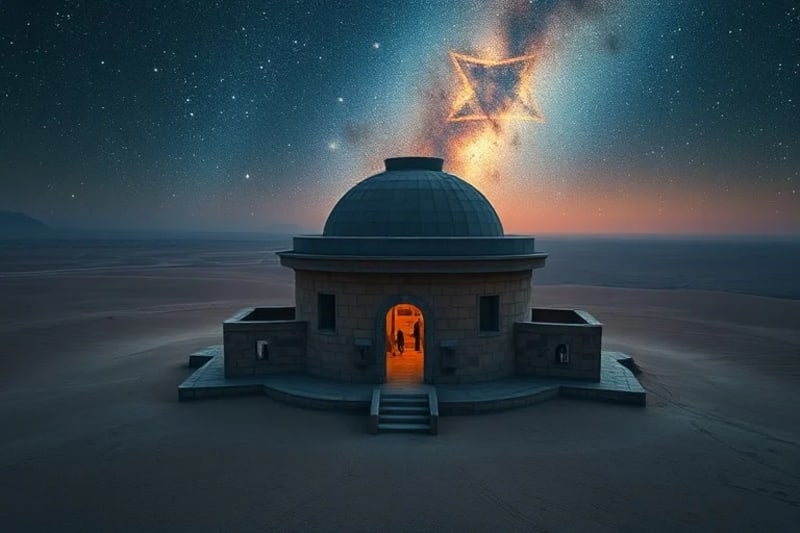 Precursors intellectuales, diagramas fundamentales y representaciones conceptuales que forjaron la visión de la astro-arqueología sobre la conexión entre el cosmos y las civilizaciones antiguas.
The study of astro-archaeology is not just about finding physical evidence; it also involves deciphering the symbolic language embedded in myths, oral traditions, and artistic expressions. These narratives often encode astronomical knowledge, reflecting how celestial phenomena were integrated into the very fabric of daily life, governance, and religious belief. Understanding these celestial narratives helps us appreciate the holistic way ancient peoples perceived their place within the universe, often seeing themselves as intimately connected to the cosmic dance above.
Table of Contents
- Celestial Alignments in Ancient Structures
- Cosmology, Myth, and Ritual
- Ancient Astronomical Instruments and Calendars
- Deciphering Celestial Narratives
- Modern Techniques in Astro-Archaeology
- Significance and Implications
Celestial Alignments in Ancient Structures
One of the most compelling aspects of astro-archaeology is the discovery of precise celestial alignments within ancient architectural marvels. Structures like Stonehenge in England, Newgrange in Ireland, and the pyramids of Giza in Egypt demonstrate an astonishing accuracy in marking significant astronomical events. Stonehenge, for instance, is famously aligned with the summer solstice sunrise and winter solstice sunset, suggesting its use as a sophisticated calendar and ceremonial site.
In the Americas, the Mayan city of Chichen Itza features the El Castillo pyramid, whose shadow play during the equinoxes creates the illusion of a serpent descending its stairs. This intricate design reflects a profound understanding of celestial mechanics and its integration into religious and political power. Similarly, many ancient homes and temples were oriented to specific stars or planetary risings, embedding cosmic order into their physical environment.
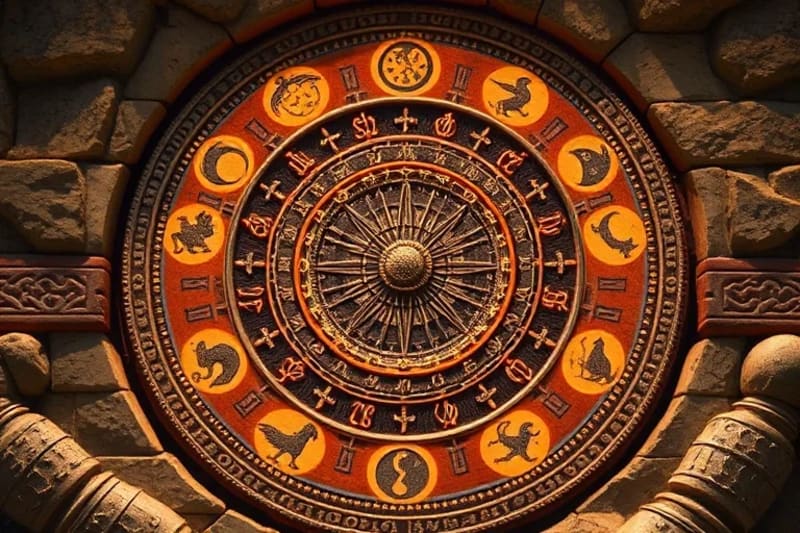 An ancient calendar wheel, intricately carved with symbols representing lunar and solar cycles, showcasing the sophisticated astronomical knowledge of early civilizations.
These alignments were not accidental; they required generations of meticulous observation and accumulated knowledge. The study of astrological aspects and planetary movements was crucial for these cultures, as they believed the heavens held keys to understanding earthly events and divine will. The precision with which these alignments were executed speaks volumes about the advanced engineering and astronomical skills possessed by these ancient societies.
Cosmology, Myth, and Ritual
Beyond physical alignments, astro-archaeology delves into the rich tapestry of cosmology, myth, and ritual that permeated ancient cultures. For many civilizations, the cosmos was not merely a distant realm but a living entity, a source of divine power and an arbiter of destiny. Celestial bodies were often personified as gods and goddesses, and their movements were interpreted as messages or omens.
The Egyptian pharaohs, for example, were believed to ascend to the stars after death, particularly to Orion and Sirius, which played central roles in their funerary rites and beliefs about the afterlife. Similarly, the Chinese Zodiac animals and their associated constellations were deeply interwoven with their philosophical and calendrical systems, influencing everything from personal destiny to agricultural cycles. These cosmic narratives provided a framework for understanding existence, morality, and the cyclical nature of time.
Rituals were often performed in sync with celestial events, such as solstices, equinoxes, and planetary conjunctions, to ensure agricultural fertility, successful hunts, or the well-being of the community. These ceremonies reinforced the connection between the earthly and celestial realms, demonstrating a profound spiritual engagement with the cosmos that is often lost in modern secular societies. Astro-archaeology helps us recover these lost dimensions of human experience.
Ancient Astronomical Instruments and Calendars
Ancient civilizations developed sophisticated tools and systems to track celestial movements. While many observatories were monumental structures, others were portable instruments or intricate calendar systems. The Antikythera Mechanism, an ancient Greek analog computer, is a prime example of advanced astronomical technology, capable of predicting eclipses and planetary positions with remarkable accuracy.
Calendar systems were fundamental to ancient life, dictating agricultural cycles, religious festivals, and social organization. Many cultures developed lunisolar calendars, attempting to reconcile the cycles of the moon and the sun. The Mayan Long Count calendar, with its intricate cycles and precise calculations, is another testament to ancient astronomical genius, reflecting a deep understanding of time and cosmic periodicity. These calendars were not just practical tools but also encoded complex cosmological beliefs.
 An archaeological dig site revealing ancient pottery fragments and artifacts adorned with celestial motifs, hinting at the profound cosmic connection of past cultures.
The Nazca Lines in Peru, while still debated, are sometimes interpreted as vast astronomical observatories or geoglyphs marking celestial events. Their sheer scale and precision suggest an organized society with a strong connection to the sky. Understanding these ancient instruments and calendars provides a window into the scientific and technological capabilities of early human societies, challenging modern assumptions about their limitations.
Deciphering Celestial Narratives
Deciphering the celestial narratives of ancient cultures requires a multidisciplinary approach, combining archaeological findings with linguistic, ethnographic, and historical analysis. Petroglyphs, cave paintings, and ancient texts often contain symbolic representations of celestial phenomena, such as constellations, supernovae, or comets. Interpreting these symbols correctly is crucial for reconstructing ancient astronomical knowledge.
For example, the "supernova of 1054," which created the Crab Nebula, is believed to be depicted in several ancient rock art sites across the world, including those by the Ancestral Puebloans in North America. These depictions provide direct evidence of ancient observations of transient celestial events. Oral traditions, passed down through generations, also preserve valuable astronomical information, even if their original context has been partially lost.
The challenge lies in distinguishing genuine astronomical knowledge from mythological embellishments. Astro-archaeologists use rigorous methodologies to cross-reference different sources and validate interpretations, ensuring that conclusions are based on solid evidence rather than speculation. This careful process allows for a deeper appreciation of the sophisticated ways ancient peoples integrated their observations into their cultural fabric.
Modern Techniques in Astro-Archaeology
Modern technology has revolutionized the field of astro-archaeology, allowing researchers to uncover previously hidden connections between ancient sites and the cosmos. Techniques such as LiDAR (Light Detection and Ranging) enable the creation of highly detailed 3D maps of archaeological sites, revealing subtle alignments that might be invisible from the ground.
Satellite imagery and aerial photography provide broader perspectives, helping to identify patterns of settlement and monumental construction that correspond to celestial orientations. Computational modeling allows researchers to simulate ancient sky conditions, recreating the exact positions of stars and planets at specific historical dates. This helps to verify proposed alignments and understand the astronomical context of ancient observations.
Furthermore, advanced statistical analysis is used to determine the probability of observed alignments being intentional rather than coincidental. This scientific rigor ensures that astro-archaeological findings are robust and credible, moving the field beyond mere speculation. These tools empower researchers to explore vast landscapes and complex structures with unprecedented precision, opening new avenues for discovery.
Significance and Implications
The insights gained from astro-archaeology have profound implications for our understanding of human history and cultural development. By revealing the deep connection between ancient societies and the cosmos, this field challenges the notion that early humans were primitive or solely focused on immediate survival. Instead, it highlights their intellectual curiosity, their capacity for abstract thought, and their sophisticated scientific observations.
Astro-archaeology also sheds light on the origins of scientific inquiry, demonstrating how early astronomical observations laid the groundwork for later developments in mathematics, engineering, and philosophy. It underscores the universal human desire to understand our place in the universe and the enduring influence of celestial phenomena on human culture. From horoscope birth charts to grand architectural designs, the cosmos has always been a guiding force.
This field encourages a holistic view of ancient civilizations, recognizing the interconnectedness of their science, religion, art, and social organization. It reminds us that the quest for knowledge about the heavens is an ancient and fundamental aspect of the human experience, connecting us across millennia to our stargazing ancestors. The celestial narratives they left behind continue to inspire wonder and offer profound lessons about humanity's enduring relationship with the cosmos.
Explore More Celestial Insights
- Healing Crystals Beginners: Energy, Properties, Uses
- Advanced Planetary Dignities in Profections: Timing Annual Themes
- Lilith in Astrology: Embracing Your Wild Feminine Power
- Planetary Crystal Grids: Natal Chart Alignment Guide
- Jungian Shadow Alchemy: Integrating Archetypes Birth Chart Analysis
- Astro-Genomics Decoding Karmic Health Blueprints
- Astro-Archeology Unearthing Ancient Celestial Narratives Civilizations
- Mindfulness Astrological Cycles Daily Practices
- Neptune in Houses: Dreams, Illusions, and Spirituality
- Davison Relationship Charts: Unique Partnership Entity
- Nutrición Ultra-Maratonistas: Antes, Durante y Después
- Blockchain Música: Transparencia Derechos Autor Artistas Futuro
- Transporte Aéreo Pasajeros: Código Comercio Colombiano
- Psicología Horóscopo Chino: Compatibilidad Animal Relaciones
- Famosos Conejo de Agua: Intuición, Creatividad y Éxito Discreto
- Tránsitos Planetarios Anuales: Navegando Eras Transformación Global
- Intercesión Profética Orar Futuro Don Espíritu Santo
- Profecías Bíblicas: Restauración Total en Cristo
- Profecías Marianas Modernas: Esperanza y Acción
Source: Hybrid content assisted by AI and human editorial supervision.


Comments
Post a Comment