
Astro-Archeology Unearthing Ancient Celestial Narratives Civilizations
Astro-archeology, also known as archaeoastronomy, is a captivating interdisciplinary field that explores the astronomical knowledge of ancient cultures and how this understanding influenced their architecture, art, and societal structures. It delves into the ways our ancestors observed the cosmos, interpreted celestial phenomena, and integrated these cosmic narratives into their daily lives and spiritual beliefs. This discipline bridges the seemingly disparate worlds of archaeology and astronomy, offering profound insights into the intellectual sophistication of prehistoric and ancient civilizations.
By examining the alignments of ancient monuments, the symbolism in ancient texts, and the oral traditions passed down through generations, astro-archeologists reconstruct the celestial worldview of past societies. This pursuit is not merely about identifying ancient observatories; it’s about understanding the profound human connection to the sky. It reveals how celestial cycles dictated agricultural practices, guided navigation, structured religious ceremonies, and even shaped political power dynamics.
- The Deep Roots of Celestial Observation
- Iconic Sites and Their Celestial Alignments
- Methodologies: Deciphering Ancient Celestial Codes
- Celestial Influence on Mythology, Religion, and Society
- Modern Relevance: Lessons from Ancient Skies
- Challenges and Future Directions in Astro-Archeology
- Conclusion: Echoes of a Cosmic Past
The Deep Roots of Celestial Observation
Humanity's fascination with the night sky is as old as civilization itself. From the earliest nomadic hunter-gatherers to the sophisticated empires of antiquity, the rhythmic movements of the sun, moon, and stars provided a fundamental framework for understanding the world. These celestial patterns offered predictability in an often unpredictable existence, signaling seasonal changes crucial for survival and agriculture.
Early sky-watchers were not just casual observers; they were meticulous record-keepers, passing down generations of detailed astronomical data. This knowledge was often intertwined with spiritual beliefs, leading to the deification of celestial bodies and the creation of elaborate cosmologies. The sky was seen as a living entity, a divine realm influencing earthly affairs and human destiny. This deep connection formed the bedrock of many ancient belief systems.
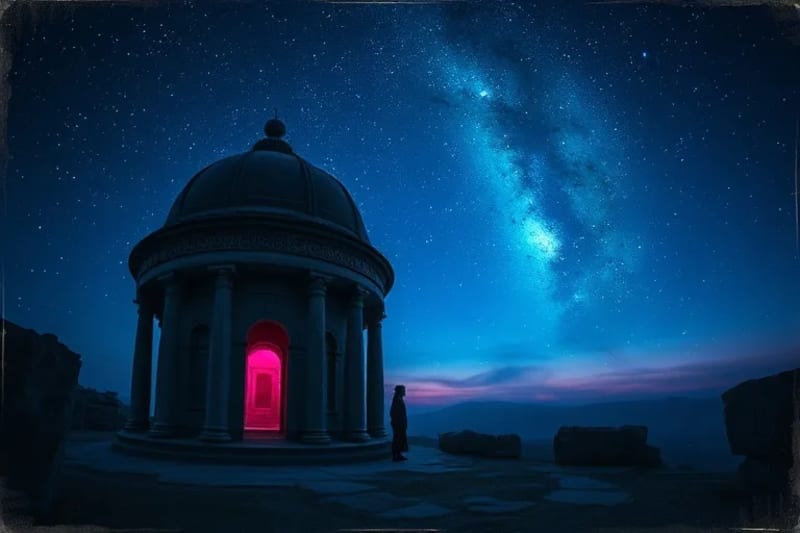
Ancient civilizations meticulously aligned their structures with celestial events, reflecting a profound understanding of the cosmos and its influence on earthly life.
Source visual subject to ecosystem availability: Wikimedia Commons under license CC BY-SA 4.0 or conceptual AI rendering.
Iconic Sites and Their Celestial Alignments
Across the globe, numerous archaeological sites bear witness to the sophisticated astronomical knowledge of their builders. These structures serve as tangible proof of ancient peoples' dedication to observing and commemorating celestial events. Each site tells a unique story of how the sky was integrated into the fabric of their existence, from monumental temples to intricate rock art.
One of the most famous examples is Stonehenge in England, a prehistoric monument precisely aligned with the solstices. On the summer solstice, the rising sun perfectly aligns with the Heel Stone, casting its first rays into the heart of the monument. This alignment suggests a deep understanding of the sun's annual cycle and its importance for agricultural and ritualistic purposes.
In ancient Egypt, the Great Pyramids of Giza are not only architectural marvels but also astronomical statements. Their precise orientation to the cardinal directions and the alignment of their shafts with specific stars (like Orion's Belt and Thuban, the North Star of their era) indicate a profound connection between their cosmology, kingship, and the celestial realm. The Egyptians believed the pharaoh's soul ascended to the stars, making these alignments crucial for their afterlife beliefs.
The Mayan civilization in Mesoamerica was renowned for its advanced astronomical observations and complex calendar systems. Sites like Chichen Itza in Mexico feature structures such as El Castillo (the Temple of Kukulcan), which demonstrates remarkable solar alignments. During the spring and autumn equinoxes, the sun creates a shadow illusion of a serpent descending the pyramid's staircase, symbolizing the feathered serpent deity Kukulcan. This event marked significant agricultural and ceremonial periods for the Maya.
Further south, the enigmatic Nazca Lines in Peru include geoglyphs that some researchers believe may have astronomical significance. While their primary purpose remains debated, some figures, particularly those depicting celestial beings or patterns, could have served as markers or guides related to astronomical observations or ritualistic practices tied to the sky. Understanding these ancient markings helps us map global consciousness trends and how they were influenced by cosmic events.
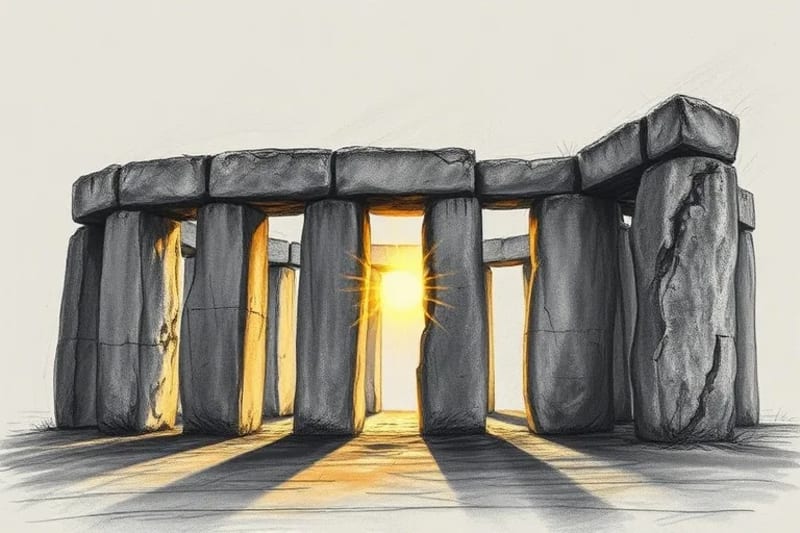
Detailed analysis of ancient structures reveals precise solar and lunar alignments, demonstrating sophisticated astronomical knowledge.
Methodologies: Deciphering Ancient Celestial Codes
Astro-archeologists employ a diverse set of methodologies to uncover and interpret the astronomical practices of ancient cultures. This interdisciplinary approach combines archaeological fieldwork with astronomical calculations, historical research, and ethnographic studies. The goal is to move beyond mere identification of alignments to a deeper understanding of their cultural context and significance.
One primary method involves precise surveying of archaeological sites to measure the orientation of structures, entrances, and significant features. These measurements are then compared with astronomical data, calculating the positions of celestial bodies (sun, moon, stars, planets) at the time the structures were built. This requires accurate dating of the archaeological remains, often achieved through radiocarbon dating or other chronometric techniques.
Another crucial aspect is the analysis of ancient texts, iconography, and oral traditions. For literate societies like the Babylonians, Egyptians, or Maya, surviving texts provide direct evidence of their astronomical observations, calendars, and cosmological beliefs. For non-literate societies, rock art, pottery decorations, and ethnographic accounts from descendant cultures can offer valuable clues about their celestial narratives and rituals.
Computer simulations play an increasingly vital role, allowing researchers to recreate ancient sky views from specific locations and times. This helps in verifying potential alignments and understanding how celestial events would have appeared to ancient observers. This blend of traditional archaeology with modern technology provides a comprehensive toolkit for deciphering the complex celestial codes embedded in ancient civilizations.
Celestial Influence on Mythology, Religion, and Society
The celestial sphere was not just a clock or a calendar for ancient peoples; it was a profound source of meaning, shaping their mythologies, religious practices, and social structures. The movements of the sun, moon, and stars were often personified as deities, heroes, or cosmic forces engaged in an eternal drama that mirrored human existence. This integration of the celestial into the spiritual realm was universal.
Myths often explained celestial phenomena, such as the daily journey of the sun across the sky or the phases of the moon. These narratives provided moral lessons, explained the origins of the world, and offered comfort in the face of the unknown. For instance, many cultures had sun gods and moon goddesses, whose interactions were believed to influence fertility, war, and the well-being of the community.
Religious rituals were frequently timed to coincide with significant astronomical events, such as solstices, equinoxes, or the heliacal rising of specific stars. These ceremonies were often held at astronomically aligned sites, reinforcing the connection between the earthly and celestial realms. Priests and shamans, who often possessed advanced astronomical knowledge, played crucial roles as intermediaries between humans and the divine cosmos.
Social organization and political power were also deeply influenced by celestial observations. Rulers often claimed divine lineage or a special connection to celestial deities, legitimizing their authority. The ability to predict eclipses or other celestial events could be a powerful tool for maintaining control and awe among the populace. The cosmic order was frequently mirrored in the social order, with hierarchies reflecting celestial arrangements. This ancient understanding of cosmic patterns can be seen as an early form of planetary aspects and elemental compatibility, applied to societal structures.
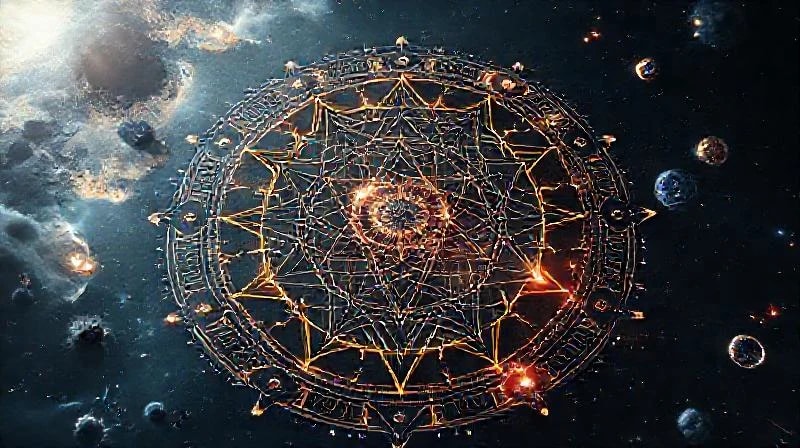
Ancient cosmic maps, often blending observation with mythology, reveal sophisticated attempts to chart the heavens and understand cosmic influence.
Modern Relevance: Lessons from Ancient Skies
The study of astro-archeology is not merely an academic exercise in understanding the past; it holds significant relevance for contemporary society. By examining how ancient cultures integrated celestial knowledge into their lives, we gain a deeper appreciation for the human capacity for observation, innovation, and symbolic thought. It reminds us of a time when humanity felt more intimately connected to the natural world and the cosmos.
In an age dominated by artificial light and urban environments, many have lost their direct connection to the night sky. Astro-archeology helps rekindle this sense of wonder and encourages us to look up and reconnect with the celestial tapestry that has inspired humanity for millennia. It highlights the universal human quest for meaning and our enduring desire to understand our place in the vast universe.
Furthermore, the sophisticated astronomical knowledge of ancient civilizations challenges modern assumptions about their "primitiveness." It demonstrates that complex scientific understanding can exist alongside profound spiritual beliefs, offering a holistic worldview that often contrasts with contemporary compartmentalized approaches to knowledge. This ancient wisdom can even inspire modern approaches to digital alchemy and virtual manifestation, by understanding the power of symbolic alignment.
Challenges and Future Directions in Astro-Archeology
Despite its fascinating insights, astro-archeology faces several challenges. One major hurdle is the difficulty in definitively proving astronomical intent. Alignments can sometimes be coincidental, and distinguishing between deliberate design and random orientation requires rigorous statistical analysis and contextual evidence. The interpretation of ancient beliefs from material remains is inherently complex and open to multiple perspectives.
Preservation of sites is another critical concern. Many ancient astronomical sites are vulnerable to environmental degradation, urban development, and looting. Protecting these invaluable cultural heritage sites is essential for future research and for understanding our shared human history. International collaboration and public awareness are vital in these efforts.
The future of astro-archeology promises exciting developments. Advances in remote sensing technologies, such as LiDAR and satellite imagery, allow for the discovery of previously unknown sites and more precise mapping of existing ones. Virtual reality and augmented reality can offer immersive experiences, helping researchers and the public visualize ancient sky events and their impact on monumental architecture. Continued interdisciplinary collaboration, integrating insights from anthropology, cognitive science, and even astro-genomics, will further enrich our understanding of humanity's celestial past.
Conclusion: Echoes of a Cosmic Past
Astro-archeology offers a unique window into the minds of our ancestors, revealing their profound connection to the cosmos and their sophisticated understanding of celestial mechanics. It demonstrates that ancient civilizations were not merely striving for survival but were also deeply engaged in seeking meaning, order, and spiritual connection through the observation of the heavens. From the megalithic circles of Europe to the pyramids of Mesoamerica, the echoes of their cosmic narratives continue to resonate.
By unearthing these ancient celestial narratives, we not only honor the intellectual and spiritual legacy of past cultures but also gain a renewed perspective on our own place in the universe. Astro-archeology invites us to look beyond the immediate and consider the timeless dance between humanity and the cosmos, a dance that has shaped civilizations and continues to inspire wonder.
Explore More Cosmic Connections
Dive deeper into the mystical and scientific intersections of ancient wisdom and modern understanding:
- Quantum Entanglement: Esoteric Synchronicity & Non-Local Connections
- Mercury Signs: Communication Styles & Intellectual Processes Guide
- Mediumship Basics: Communicating with the Spirit World
- Cosmic Sociology: Mapping Global Consciousness Trends
- Mars Astrology: Drive, Passion, & Conflict Chart Guide
- Digital Feng Shui: Harmonizing Virtual Spaces for Productivity
- Capricorn Zodiac Sign: Ambition, Structure, & Discipline
- Channeling Automatic Art: Intuition & Expressing Beyond Words
- Automatic Writing: Problem Solving & Subconscious Solutions Unlocked
- Relationship Astrology: Composite & Davison Charts Explained
- Neuroscience of Humor: Laughter Transforms Brain & Mental Health
- Karmic Astrology: Akashic Records, Ancestral Patterns & Dharma
- Advanced Crystal Healing: Esoteric Chakra Rebalancing
- Biblical Prophecies & Artificial Intelligence: Digital End Times Signals
Source: Hybrid content assisted by AI and human editorial supervision.


Comments
Post a Comment