
Channeling Automatic Art Intuition: Expressing Beyond Words | StarPluto
Channeling and automatic art represent fascinating intersections of human consciousness, creativity, and the esoteric. These practices delve into the realm where the conscious mind steps aside, allowing for the expression of information, energy, or artistic forms that appear to originate from beyond the individual's ordinary awareness.
Often associated with spiritual traditions, transpersonal psychology, and parapsychology, they offer unique avenues for self-discovery, healing, and the exploration of non-ordinary states of consciousness. This comprehensive guide explores the multifaceted nature of channeling and automatic art, from their historical roots to their contemporary applications and the underlying mechanisms.
Exploring the mystical connection between intuitive channeling and spontaneous artistic creation.
The concept of receiving information or inspiration from external, non-physical sources has been present across cultures and throughout history. Automatic art, as a specific manifestation of this phenomenon, provides a tangible record of these often subtle and profound experiences.
Understanding these practices requires an open mind and a willingness to explore the boundaries of conventional understanding, acknowledging both their potential for profound insight and the need for discernment.
Introduction to Channeling and Automatic Art
Channeling, in its broadest sense, refers to the process of receiving and conveying information, energy, or guidance from a source believed to be external to the channeler's conscious mind. This source can be interpreted in various ways, including:
- Spirit Guides or Entities: Disembodied intelligences or ancestral spirits.
- Higher Self: A deeper, more expansive aspect of one's own consciousness.
- Universal Consciousness: A collective field of information and energy.
- Subconscious Mind: The vast reservoir of personal memories, instincts, and archetypes.
The output of channeling can take many forms, such as verbal communication (trance channeling), written text (automatic writing), or artistic expression (automatic art). The common thread is the perceived bypassing of the conscious ego, allowing for a more direct and unfiltered flow of information.
Automatic art, specifically, is the creation of visual art, writing, or music without conscious thought or intention. The artist acts as a conduit, allowing images, symbols, words, or melodies to emerge spontaneously. This process often results in works that are surprising, complex, and imbued with symbolic meaning that the artist may not have consciously intended.
Historical Roots and Evolution
The practice of channeling and automatic expression is not a modern invention. Its roots can be traced back to ancient shamanic traditions, prophetic oracles, and mystical practices across diverse cultures. In many indigenous societies, shamans would enter altered states of consciousness to receive guidance, healing, or artistic inspiration from the spirit world.
The Oracle of Delphi in ancient Greece, for instance, was believed to channel prophecies from the god Apollo. Similarly, various religious texts and spiritual teachings are often attributed to divine inspiration or direct revelation, which can be seen as a form of channeling.
The modern era saw a resurgence of interest in these phenomena, particularly during the Spiritualism movement of the 19th century. Mediums would conduct séances, often engaging in automatic writing or drawing to communicate with deceased spirits. Notable figures like Georgiana Houghton, a Victorian spiritualist artist, created intricate abstract paintings that she claimed were guided by spirits.
In the early 20th century, the Surrealist movement, led by André Breton, embraced automatic writing and drawing as a technique to tap into the subconscious mind and liberate artistic expression from rational control. Artists like Salvador Dalí and Joan Miró experimented with these methods, believing they could access a deeper, more authentic creative source.
This artistic exploration provided a psychological framework for understanding automatic processes, moving beyond purely spiritual interpretations to include the vast potential of the unconscious psyche. The concept of the collective unconscious, proposed by Carl Jung, further enriched this understanding, suggesting a universal reservoir of archetypes and symbols accessible through such practices.
An old fountain pen rests on parchment, symbolizing the ancient practice of automatic writing.
The Mechanisms: Intuition, Subconscious, and Beyond
The precise mechanisms behind channeling and automatic art remain a subject of debate and scientific inquiry. However, several theories attempt to explain these phenomena:
- Accessing the Subconscious Mind: Many psychologists and artists view automatic processes as a direct pipeline to the subconscious. This part of the mind stores memories, emotions, instincts, and creative impulses that are not readily available to conscious thought. Automatic art can bypass the critical filter of the conscious mind, allowing these deeper layers to emerge.
- Intuition and Inner Wisdom: Intuition is often described as a form of knowing that bypasses rational thought. Channeling and automatic art can be seen as structured methods for enhancing and expressing intuitive insights. The "source" might be interpreted as an inner knowing or a connection to a deeper wisdom inherent within the individual.
- Altered States of Consciousness: Practitioners often enter a light trance or meditative state to facilitate channeling. These altered states can reduce the activity of the default mode network in the brain, which is associated with self-referential thought and conscious control, thereby opening pathways for non-ordinary information to flow.
- Energetic or Psychic Connection: From a spiritual or parapsychological perspective, channeling involves a genuine connection to non-physical entities, collective consciousness, or energetic fields. The channeler acts as a receiver and transmitter of these subtle energies and information.
- Dissociation: In some cases, particularly with deep trance channeling, the phenomenon can be understood through the lens of dissociation, where a part of the personality or consciousness temporarily detaches to allow another entity or aspect to express itself.
Regardless of the theoretical framework, the experience for many practitioners is one of profound connection and a sense of being guided by something larger than themselves. The resulting creations often contain symbolism, messages, or aesthetic qualities that transcend their ordinary artistic capabilities.
Diverse Forms of Automatic Art
Automatic art manifests in various creative disciplines, each offering a unique way to express intuitive insights:
- Automatic Drawing and Painting: This is perhaps the most recognized form. The artist allows their hand to move freely across the canvas or paper, without conscious planning or judgment. The resulting images can range from abstract patterns and symbols to figurative representations, often with a dreamlike or surreal quality. The medium can be anything from pencils and charcoal to paints and digital tools.
- Automatic Writing: Also known as psychography, this involves writing words, sentences, or entire passages without consciously composing them. The hand moves autonomously, often at a rapid pace, producing text that can be poetic, philosophical, or prophetic. The content might be in a language unknown to the writer or in a distinctive script.
- Automatic Music Composition: Musicians can engage in automatic composition by allowing melodies, harmonies, or rhythms to flow through them without conscious effort. This can involve improvising on an instrument or hearing complex musical structures internally and transcribing them.
- Automatic Sculpture or Craft: While less common, some artists report creating three-dimensional works or crafts under similar conditions, where the form and structure emerge without prior conceptualization.
- Automatic Dance or Movement: Dancers may enter a state where their body moves spontaneously, expressing emotions, stories, or energies without conscious choreography. This is often seen in ecstatic dance or certain forms of therapeutic movement.
Each form allows for a different kind of expression, but all share the core principle of surrendering conscious control to a deeper, more spontaneous creative impulse. The resulting works are often deeply personal, yet can resonate universally due to their connection to archetypal themes.
Benefits and Therapeutic Applications
Beyond their esoteric appeal, channeling and automatic art offer a range of potential benefits, both for the practitioner and for those who engage with the resulting creations:
- Self-Discovery and Insight: The symbols, messages, and themes that emerge can provide profound insights into one's own subconscious patterns, unresolved emotions, or spiritual path. It can act as a mirror to the inner landscape.
- Emotional Release and Healing: The act of spontaneous creation can be deeply cathartic, allowing for the release of suppressed emotions and traumas. It provides a non-verbal outlet for feelings that may be difficult to articulate.
- Enhanced Creativity: By bypassing conscious blocks and self-criticism, practitioners can tap into an uninhibited flow of creative energy, leading to novel ideas and artistic breakthroughs.
- Spiritual Connection and Guidance: For those who believe in external sources, these practices can deepen their spiritual connection, providing a sense of purpose, comfort, and direct guidance from perceived higher intelligences.
- Stress Reduction and Mindfulness: The meditative state required for channeling can be deeply relaxing and promote a sense of presence and flow, reducing anxiety and fostering mental well-being.
- Problem Solving: Sometimes, solutions to complex problems or new perspectives on challenges can emerge through automatic processes, as the subconscious mind works on issues outside of linear thought.
In therapeutic settings, expressive arts therapy often incorporates elements of spontaneous creation to help clients explore their inner world, process difficult experiences, and foster personal growth. While not always explicitly labeled "automatic art," the underlying principle of allowing unconscious material to surface through creative means is similar.
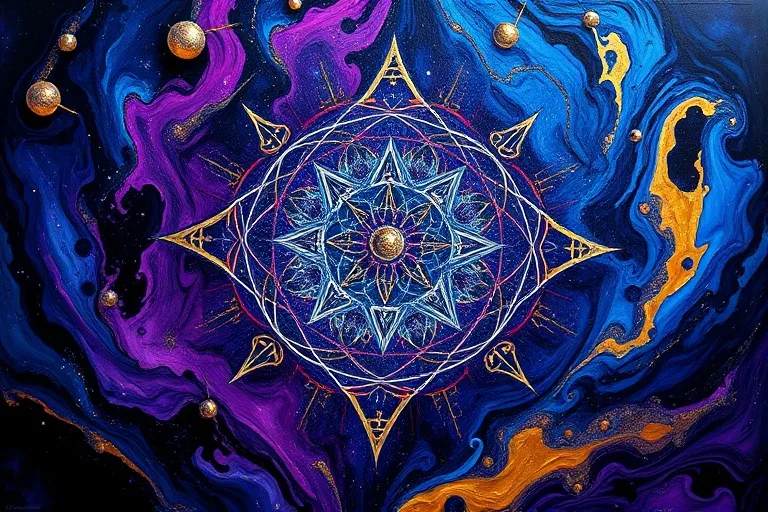
Vibrant abstract strokes reveal deep, unexpressed emotions and intuitive insights.
Cultivating the Practice: Techniques and Preparation
Developing the ability to channel or engage in automatic art requires patience, practice, and a willingness to surrender control. Here are some techniques and preparatory steps:
- Create a Sacred Space: Find a quiet, undisturbed environment where you feel safe and relaxed. This can be enhanced with candles, incense, or calming music.
- Meditation and Grounding: Begin with a short meditation to quiet the mind, release tension, and ground your energy. Focus on your breath and center yourself.
- Set Intention: Clearly state your intention for the session. This could be to receive guidance, express emotions, or simply explore your creativity. Be open to whatever emerges.
- Release Expectations: Avoid having preconceived notions about what the outcome should look like. The essence of automatic art is spontaneity and the absence of conscious judgment.
- Choose Your Medium: Have your chosen artistic tools (paper, pens, paints, instrument) readily available. For automatic writing, simply hold a pen over paper and allow your hand to move. For drawing, let your hand wander freely.
- Practice Regularly: Consistency is key. The more you practice, the more you train your mind to step aside and allow the flow to occur. Even short, daily sessions can be beneficial.
- Journaling and Reflection: After each session, take time to reflect on what emerged. Journal about your feelings, any insights gained, or interpretations of the symbols and messages.
It's important to approach these practices with a sense of curiosity and self-compassion. Not every session will yield profound results, and some may feel mundane. The journey itself is a significant part of the process, fostering a deeper connection to one's inner self and creative potential.
Ethical Considerations and Challenges
While offering many benefits, channeling and automatic art also come with ethical considerations and potential challenges:
- Discernment: It can be challenging to discern the source of channeled information. Is it truly from a higher entity, or is it a projection of one's own subconscious desires or fears? Critical thinking and intuition are vital.
- Over-Reliance: Becoming overly dependent on channeled guidance can hinder personal growth and the development of one's own decision-making abilities. It's crucial to integrate channeled messages with personal responsibility.
- Psychological Well-being: Individuals with certain psychological vulnerabilities, such as a history of psychosis or dissociative disorders, should approach these practices with extreme caution and ideally under professional guidance.
- Interpretation: Automatic art and writing often produce symbolic or cryptic messages that require careful interpretation. Misinterpretations can lead to confusion or misguided actions.
- Authenticity and Fraud: In the public sphere, there's always a risk of individuals feigning channeling abilities for personal gain. This underscores the importance of personal integrity and critical evaluation.
Responsible practice involves maintaining a healthy skepticism, prioritizing personal well-being, and integrating insights gained with one's rational understanding and ethical framework. The goal should be empowerment and growth, not abdication of personal agency.
Scientific Perspectives and Skepticism
From a scientific standpoint, channeling and automatic art are often viewed through the lens of psychology and neuroscience. While mainstream science generally does not validate the existence of external spiritual entities, it does acknowledge the profound capabilities of the human mind.
Research in areas like hypnosis, altered states of consciousness, and the psychology of creativity offers some parallels. Studies on the brain activity of individuals engaged in improvisation (e.g., jazz musicians, freestyle rappers) show decreased activity in brain regions associated with self-monitoring and increased activity in areas related to creativity and spontaneous thought, mirroring what might occur during automatic art.
For example, neuroimaging studies on mediums during trance states have shown altered brainwave patterns, particularly in the frontal lobes, which are involved in executive functions and self-awareness. These findings suggest a genuine shift in neurological activity, though they do not definitively prove an external source of information.
Skeptics often attribute channeled messages and automatic art to:
- Cryptomnesia: Unconscious plagiarism, where forgotten memories or information are presented as new insights.
- Subconscious Processing: The mind's ability to process vast amounts of information and present it in novel ways, without conscious awareness of the process.
- Suggestion and Expectation: The power of belief and expectation to influence perception and experience.
- Fraud or Self-Deception: Intentional deception or unconscious self-deception.
Despite the scientific challenges in proving external sources, the subjective experience and the therapeutic benefits reported by many practitioners remain significant. The exploration of these phenomena continues to bridge the gap between science, spirituality, and art, pushing the boundaries of what we understand about consciousness.
Conclusion: The Enduring Mystery
Channeling and automatic art stand as powerful testaments to the mysterious depths of human consciousness and creativity. Whether interpreted as direct communication from spiritual realms, expressions of the subconscious, or heightened intuitive states, these practices offer profound avenues for exploration, healing, and artistic innovation.
They challenge conventional notions of authorship and inspiration, inviting individuals to step beyond the confines of their rational minds and embrace the spontaneous flow of creative energy. As humanity continues to seek deeper meaning and understanding, the appeal of expressing intuition beyond words through channeling and automatic art will undoubtedly endure, enriching both personal lives and the collective tapestry of human culture.
Engaging with these practices responsibly, with discernment and an open heart, can unlock extraordinary potentials, revealing hidden truths and fostering a more profound connection to the vast wellspring of universal wisdom.
Source: Hybrid content assisted by AIs and human editorial supervision.


Comments
Post a Comment