
Psycho-Astrology Jungian Archetypes Shadow Work Dream Interpretation
Psycho-astrology represents a profound convergence of ancient wisdom and modern psychological theory, offering a unique framework for understanding the human psyche. This interdisciplinary approach integrates astrological principles with depth psychology, particularly the concepts pioneered by Carl Jung. By examining the natal chart through a Jungian lens, individuals can uncover deep-seated archetypal patterns, confront their shadow, and gain invaluable insights into their unconscious processes, especially as they manifest in dreams.
The synergy between astrology and Jungian psychology provides a comprehensive map for self-discovery and personal integration. Astrology, with its symbolic language of planets, signs, and houses, describes inherent potentials and challenges. Jungian psychology, through its exploration of the collective unconscious, archetypes, and the shadow, offers a dynamic process for engaging with these potentials and transforming challenges into growth opportunities. Dream interpretation becomes a vital bridge in this process, revealing the unconscious dialogue between the individual and their deeper self.

The intricate dance between cosmic patterns and the human psyche, a visual metaphor for psycho-astrology's profound insights into consciousness.
Jungian Archetypes and the Astrological Blueprint
Carl Jung posited that the human psyche is composed of various systems, including the ego, the personal unconscious, and the collective unconscious. The collective unconscious is a repository of universal images and ideas, known as archetypes, which are inherited patterns of thought and behavior. These archetypes manifest in myths, religions, art, and dreams across all cultures, representing fundamental human experiences and motivations.
In psycho-astrology, the natal chart serves as a symbolic representation of these archetypal energies within an individual. Each planet, zodiac sign, and house corresponds to specific psychological functions and archetypal roles. For instance, the Sun often symbolizes the Ego and the Hero archetype, representing the conscious identity and life purpose. The Moon reflects the Anima/Animus (soul image) and the Great Mother archetype, governing emotional needs, instincts, and the unconscious feminine/masculine.
Planets like Mars and Venus embody the Warrior and Lover archetypes, respectively, detailing how an individual asserts themselves or seeks connection. Jupiter can represent the Wise Old Man/Woman or the Benefactor, indicating areas of growth and expansion. Saturn often correlates with the Father archetype or the Senex, highlighting structures, discipline, and areas of limitation or mastery. Understanding these correlations allows for a deeper, archetypal interpretation of one's astrological chart.
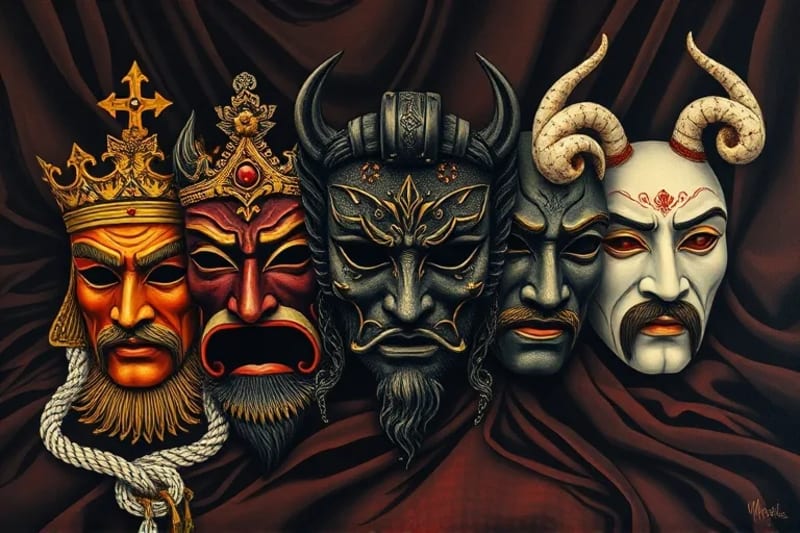
Symbolic masks illustrate the diverse Jungian archetypes, each representing a fundamental pattern within the collective unconscious.
The Shadow in the Natal Chart and Its Integration
The Shadow, a central Jungian concept, refers to the unconscious aspects of the personality that the conscious ego does not identify with. It comprises repressed desires, instincts, weaknesses, and unacknowledged potentials. While often perceived negatively, the shadow is not inherently evil; it simply holds everything that has been rejected or ignored by the conscious mind. Integrating the shadow is crucial for psychological wholeness and authenticity.
In a natal chart, the shadow can be identified through several indicators. Planets in challenging aspects (squares, oppositions, quincunxes) often highlight areas where unconscious conflicts reside. Pluto, the planet of transformation and the underworld, is particularly significant, revealing where an individual experiences power dynamics, repression, and the deepest parts of their shadow. Similarly, Chiron, the Wounded Healer, points to core wounds and the potential for healing through confronting these painful areas.
Saturn's placement and aspects can also indicate areas where fear, limitation, or parental projections have led to the repression of certain qualities. Engaging in shadow work through the natal chart involves consciously exploring these difficult placements and aspects, understanding the archetypal energies at play, and acknowledging the rejected parts of oneself. This process is not about eliminating the shadow but about integrating its energy into the conscious personality, transforming it from a source of unconscious sabotage into a wellspring of untapped potential.
For instance, a challenging Pluto aspect might reveal a fear of power or control, leading to passive-aggressive behaviors or a tendency to attract manipulative individuals. Through shadow work, one can recognize these patterns, understand their origins, and consciously choose to integrate healthy expressions of power. This journey often involves navigating life's awkward adjustments, as explored in articles on Quincunx Aspect Astrology, which can reveal hidden tensions requiring conscious effort to balance.
Dream Interpretation Through a Psycho-Astrological Lens
Dreams are often described as the royal road to the unconscious, providing direct access to the personal and collective unconscious. From a psycho-astrological perspective, dreams are not random but are symbolic messages from the deeper self, often reflecting archetypal patterns, unintegrated shadow material, and the current psychological dynamics described by astrological transits. Interpreting dreams with astrological knowledge adds a layer of precision and depth to the analysis.
When interpreting dreams, one can look for recurring symbols, characters, and scenarios that align with astrological archetypes. For example, a dream featuring a powerful, authoritative figure might relate to the Jupiter or Saturn archetype in the chart, or the Father complex. A dream about being lost or unable to speak could point to unintegrated Mercury or Gemini energies, or a repressed aspect of the Persona. Animals in dreams often symbolize instinctual drives or specific archetypal energies associated with zodiac signs (e.g., a lion for Leo, a crab for Cancer).
The emotional tone of the dream is also crucial. Feelings of fear, anxiety, or helplessness often indicate encounters with the shadow. Dreams of being pursued, for instance, can symbolize an avoidance of confronting an aspect of oneself. Conversely, dreams of flying, freedom, or profound connection might reflect integrated archetypal energies or the emergence of the Self. The goal is to connect these dream elements back to the individual's natal chart and current astrological transits, understanding what unconscious material is seeking conscious recognition.

A contemplative figure observes their shadow reflection in a tranquil lake, symbolizing the profound journey of dream interpretation and self-discovery.
Integrating Shadow Work and Dream Insights for Growth
The true power of psycho-astrology lies in its capacity for psychological integration. Once archetypal patterns from the natal chart are understood, and shadow material is identified through both astrological analysis and dream interpretation, the work of conscious integration begins. This involves acknowledging, accepting, and actively working with these previously unconscious elements rather than repressing them.
For example, if a dream reveals a recurring theme of being disempowered, and the natal chart shows challenging aspects to Pluto or Chiron, the individual can begin to explore their relationship with power and vulnerability. This might involve journaling, active imagination, or seeking therapeutic support. The process of healing wounds and fostering evolutionary growth, often highlighted by Chiron Houses, becomes a conscious journey guided by both celestial and internal messages.
The integration of shadow material leads to greater authenticity, reduced internal conflict, and an expansion of consciousness. By consciously engaging with the messages from the unconscious, individuals can transform limiting patterns, harness previously repressed energies, and move towards a more holistic and integrated sense of self. This journey is continuous, with dreams and astrological transits constantly providing new material for exploration and growth.
Benefits and Challenges of Psycho-Astrology
The benefits of applying psycho-astrology to dream interpretation and shadow work are manifold. It offers a rich, symbolic language for understanding complex psychological dynamics, providing a framework that transcends conventional therapeutic approaches. Individuals gain a deeper sense of self-awareness, purpose, and personal agency. It can illuminate the root causes of recurring life patterns, improve relationships by understanding archetypal projections, and foster profound spiritual and psychological growth.
| Aspect | Benefits | Challenges |
|---|---|---|
| Self-Awareness | Deepens understanding of innate potentials, motivations, and unconscious drives. | Requires confronting uncomfortable truths and repressed aspects of self. |
| Personal Growth | Facilitates integration of shadow material, leading to wholeness and authenticity. | Can be emotionally intense and require sustained effort and commitment. |
| Dream Insight | Provides a systematic method for decoding symbolic messages from the unconscious. | Interpretation can be subjective; requires practice and a solid understanding of both disciplines. |
| Holistic View | Connects individual psychology to universal patterns, fostering a sense of interconnectedness. | Risk of over-reliance on external systems rather than internal intuition. |
However, this path is not without its challenges. The process of shadow work can be confronting and emotionally demanding, requiring courage and perseverance. Misinterpretation of astrological symbols or dream imagery can lead to confusion or self-deception. It demands a nuanced understanding of both astrology and Jungian psychology, and often benefits from guidance from experienced practitioners. The journey is ultimately one of self-responsibility, where the individual actively engages with their inner world.
Conclusion: A Path to Wholeness
Psycho-astrology, through its integration of Jungian archetypes and shadow work in dream interpretation, offers a powerful and transformative path to psychological wholeness. By decoding the symbolic language of the natal chart and the unconscious messages embedded in dreams, individuals can embark on a profound journey of self-discovery. This journey involves acknowledging and integrating the full spectrum of their being, including the often-repressed shadow, leading to greater authenticity, resilience, and a deeper connection to their innate wisdom.
Embracing this interdisciplinary approach allows for a richer, more nuanced understanding of personal challenges and potentials, moving beyond superficial interpretations to address the core archetypal forces shaping one's life. It empowers individuals to become active participants in their psychological evolution, fostering a life lived with greater awareness, purpose, and integrity.
Explore More Content
- Guided Meditation: Techniques, Benefits for Inner Harmony
- Connecting with Spirit Guides: Methods & Practices
- Shamanic Journeying: Non-Ordinary Realities Explored
- Bio-Acoustic Therapy: Sound Healing Frequencies Cellular Alignment
Source: Hybrid content assisted by AI and human editorial supervision.


Comments
Post a Comment