
Psycho-Astrology Jungian Archetypes Shadow Wholeness
Psycho-astrology represents a fascinating and profound intersection where the ancient wisdom of astrology meets the depths of modern psychology, particularly the theories of Carl Jung. This integrative approach offers a unique lens through which individuals can explore their inner landscape, understand their core motivations, and embark on a journey towards psychological wholeness. By combining the symbolic language of the birth chart with Jungian concepts like archetypes and shadow work, psycho-astrology provides a powerful framework for self-discovery and personal evolution.

The fusion of cosmic patterns and psychological depth guides individuals toward profound self-understanding and holistic growth.
This conceptual image, a render by AI, encapsulates the journey of inner exploration facilitated by psycho-astrology, blending celestial wisdom with personal introspection.At its core, psycho-astrology posits that the birth chart is not merely a predictive tool but a symbolic map of the psyche, reflecting an individual's inherent psychological patterns, potentials, and challenges. Jung's work on the collective unconscious and archetypes provides a rich vocabulary to interpret these astrological symbols, transforming abstract planetary positions into relatable human experiences and developmental stages.
This article will delve into the foundational principles of psycho-astrology, exploring how Jungian archetypes manifest within the astrological chart and how shadow work becomes an indispensable process for achieving psychological integration and wholeness. We will examine practical ways to utilize this combined knowledge for deeper self-awareness and personal transformation.
Table of Contents
- Foundations of Psycho-Astrology: Jung and the Cosmos
- Jungian Archetypes in the Birth Chart
- Unveiling the Shadow Through Astrology
- Integrating the Shadow for Wholeness
- Astrology as a Guide to Individuation
- Planetary Transits and Archetypal Activation
- Practical Applications and Benefits
Foundations of Psycho-Astrology: Jung and the Cosmos
Carl Jung, the pioneering Swiss psychiatrist, recognized the profound symbolic resonance between astrological patterns and the human psyche. He viewed astrology as a symbolic representation of the collective unconscious, a repository of universal human experiences and patterns. Jung famously stated that "astrology is the sum of all the psychological knowledge of antiquity."
Psycho-astrology builds upon this insight, using the birth chart as a diagnostic and developmental tool. It moves beyond simplistic interpretations, seeking to understand the deeper psychological dynamics at play within an individual's life. The planets, signs, houses, and aspects are seen as symbolic expressions of inner drives, complexes, and archetypal energies.
For instance, the Moon in a birth chart might not just signify emotional needs but also represent the archetype of the "Great Mother" or the "Nurturer," influencing how an individual seeks and provides comfort. Similarly, Mars can embody the "Warrior" or "Hero" archetype, reflecting an individual's assertiveness and drive. This layered interpretation adds significant depth to astrological readings.
Jungian Archetypes in the Birth Chart
Archetypes are universal, archaic patterns and images that derive from the collective unconscious and are the psychic counterpart of instinct. They are unlearned, inherited tendencies to experience things in a certain way. In astrology, every planet, sign, and house can be associated with specific archetypal energies. Understanding these connections illuminates the psychological underpinnings of our astrological blueprint.
- The Sun (Hero/Self): Represents the conscious ego, identity, and the journey towards self-realization. Its sign and house placement describe the core essence of the individual's heroic quest.
- The Moon (Great Mother/Child): Symbolizes emotional needs, security, the unconscious, and instinctive reactions. It reveals our inner child and how we seek nurturing.
- Mercury (Trickster/Messenger): Governs communication, intellect, and adaptability. It shows how we perceive and articulate reality, often with a dualistic or clever nature.
- Venus (Lover/Goddess): Pertains to love, beauty, values, and relationships. It embodies the desire for connection and harmony, reflecting our aesthetic and relational archetypes.
- Mars (Warrior/Aggressor): Represents drive, assertion, courage, and aggression. It indicates how we fight for what we want and express our will.
- Jupiter (Wise Old Man/Benefactor): Associated with expansion, wisdom, philosophy, and luck. It points to areas of growth, optimism, and where we seek meaning.
- Saturn (Father/Elder/Taskmaster): Symbolizes structure, discipline, responsibility, and limitations. It highlights life lessons, areas of challenge, and where we build mastery.
- Uranus (Rebel/Innovator): Governs sudden change, innovation, freedom, and rebellion. It reflects our unique genius and where we break free from convention. For more on this, you might explore Uranus Astrology: Innovation Rebellion.
- Neptune (Mystic/Victim/Savior): Represents spirituality, illusion, dreams, and compassion. It shows where we seek transcendence or are prone to delusion.
- Pluto (Transformer/Destroyer/Healer): Associated with power, transformation, death, and rebirth. It reveals deep psychological processes, areas of intense change, and the shadow.
Each planet's placement in a specific zodiac sign and house, along with its aspects to other planets, creates a complex interplay of these archetypal energies. This intricate web describes the unique psychological landscape of an individual, offering insights into their strengths, weaknesses, and potential for growth.
Unveiling the Shadow Through Astrology
Jung's concept of the Shadow refers to the unconscious aspects of the personality that the conscious ego does not identify with. It comprises repressed ideas, weaknesses, desires, instincts, and shortcomings. While often perceived negatively, the Shadow also contains undeveloped positive qualities and creative potential.
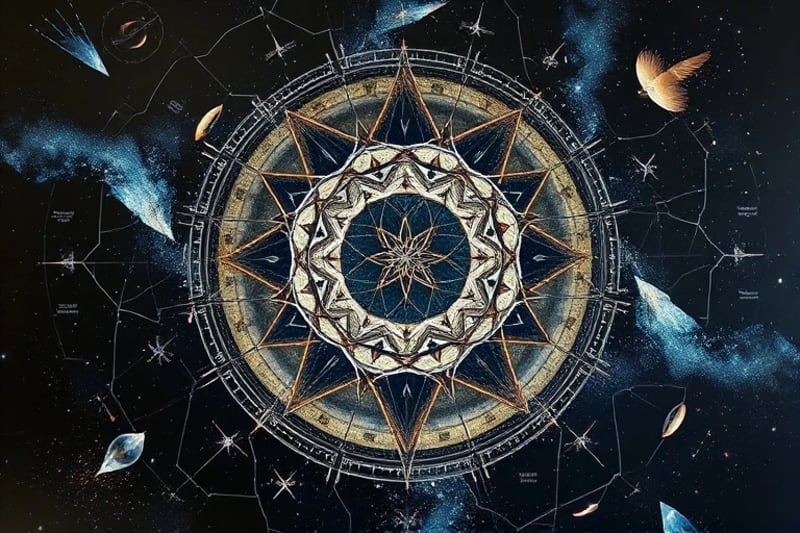
The intricate dance between conscious awareness and hidden psychological aspects, revealing the multifaceted nature of the self.
This surrealist painting, generated by AI, visually articulates the interplay of light and dark within the human psyche, embodying the essence of shadow work.In psycho-astrology, the birth chart provides invaluable clues to the nature of an individual's Shadow. Challenging aspects (squares, oppositions, quincunxes), particularly involving outer planets like Pluto, Uranus, and Neptune, often highlight areas where repressed energies or unacknowledged traits reside. These aspects can indicate where we project our own disowned qualities onto others or where we experience internal conflict.
Specific astrological placements are particularly relevant for identifying Shadow material:
- Pluto: The planet of transformation and the underworld is deeply connected to the Shadow. Its sign, house, and aspects reveal where we confront power dynamics, hidden compulsions, and deep-seated fears. Pluto's influence often points to what needs to be brought from the unconscious into conscious awareness for healing.
- The 12th House: Traditionally associated with hidden enemies, self-undoing, and the subconscious, the 12th house in a birth chart can signify repressed memories, unacknowledged talents, or patterns of self-sabotage. Planets placed here often operate unconsciously until brought to light.
- Challenging Aspects to Personal Planets: Squares and oppositions involving the Sun, Moon, Mercury, Venus, or Mars can indicate internal conflicts that lead to the repression of certain traits. For example, a Mars-Saturn square might suggest repressed anger or difficulty asserting oneself.
- The Descendant (7th House Cusp): While primarily about relationships, the Descendant can also reveal qualities we project onto others, often aspects of our own Shadow that we are unwilling to acknowledge directly.
Understanding these astrological indicators is the first step in engaging with Shadow work. It provides a roadmap to the parts of ourselves we have disowned or deemed unacceptable, paving the way for their eventual integration.
Integrating the Shadow for Wholeness
Shadow integration is not about eliminating the Shadow but about acknowledging, understanding, and ultimately integrating these unconscious aspects into the conscious personality. This process is crucial for achieving psychological wholeness, or what Jung called Individuation. When we ignore our Shadow, it tends to manifest in destructive ways, such as projections, self-sabotage, or compulsive behaviors.
Astrology offers practical insights for this integration:
- Conscious Awareness: By identifying the astrological placements associated with the Shadow, individuals can begin to consciously observe these patterns in their lives. For example, if Pluto in the 8th house indicates issues with control and power, one can become aware of how these themes play out in their relationships or financial dealings.
- Reclaiming Projections: When we project our Shadow onto others, we see our disowned qualities in them. Astrology helps us recognize these projections by highlighting the archetypal energies we tend to externalize. For instance, if someone constantly criticizes others for being lazy, they might have an unacknowledged "lazy" aspect of their own Shadow.
- Symbolic Engagement: Engaging with the symbols of the birth chart through journaling, active imagination, or dream work can help bring unconscious material to the surface. Meditating on the archetypal meaning of a challenging planetary placement can provide profound insights.
- Embracing the Full Spectrum: Integration means accepting all parts of oneself, both light and dark. It involves understanding that even seemingly negative traits have a positive, undeveloped potential. For example, "aggression" (Mars) can be reframed as "assertiveness" or "courage."
The process of shadow integration is often challenging, requiring courage and self-compassion. However, the rewards are immense, leading to greater authenticity, personal power, and a more integrated sense of self. It can also deeply impact our relationships, as explored in the dynamics of Relationship Astrology: Synastry, Composite Charts, Couple Dynamics.
Astrology as a Guide to Individuation
Individuation, for Jung, is the lifelong psychological process of differentiating the self from both the collective and personal unconscious, aiming to develop a unique individual personality. It is the process of becoming whole. Psycho-astrology serves as an excellent roadmap for this journey.
The birth chart outlines the potential for individuation, showing where an individual is meant to grow, transform, and integrate various aspects of their being. The nodal axis, for example, points to the soul's evolutionary path, indicating lessons to be learned and qualities to be developed over a lifetime. The Imum Coeli in Signs also offers insights into our foundational roots and unconscious heritage, crucial for understanding our starting point on this journey.
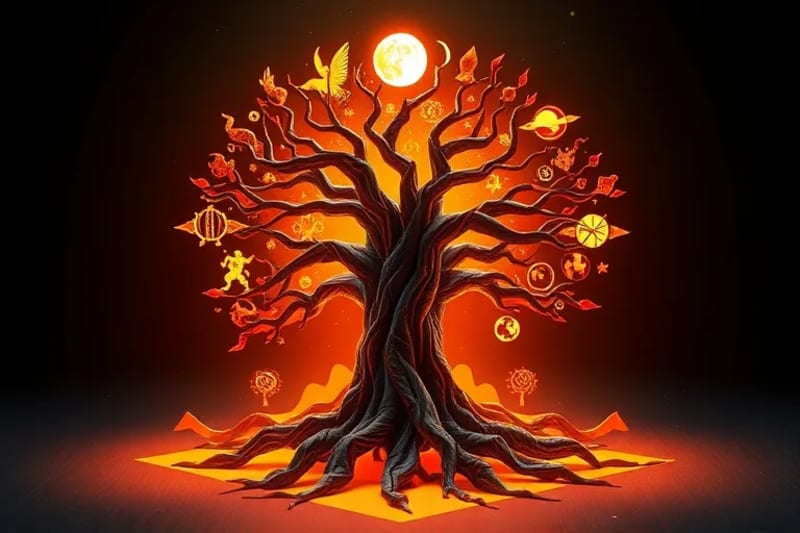
The profound process of becoming a fully integrated individual, connecting deep roots to expansive growth.
This 3D render, conceived by AI, illustrates the intricate path of individuation, where all aspects of the self converge into a unified, evolving entity.The process of individuation is dynamic, not static. It involves continuous self-reflection, confronting challenges, and integrating new experiences. Astrology helps by providing context and meaning to these experiences, showing how they align with the individual's unique psychological blueprint.
Planetary Transits and Archetypal Activation
Beyond the static birth chart, planetary transits and progressions activate different archetypal energies at various stages of life. These dynamic astrological events can trigger periods of intense psychological growth, crisis, or transformation. Understanding these transits through a Jungian lens allows for a more conscious and purposeful engagement with life's challenges.
For example, a challenging Pluto transit to a personal planet might signify a period where deep-seated Shadow material is brought to the surface, demanding confrontation and transformation. Similarly, a Jupiter transit could activate the "Benefactor" or "Wise Old Man" archetype, bringing opportunities for growth and expansion. Even the often-dreaded Planetas Retrógrados Carta Natal Lecciones Transformación Reaprendizaje can be seen as periods of intense inner work and re-evaluation.
By recognizing the archetypal themes activated by current planetary movements, individuals can prepare for and consciously navigate these periods, turning potential crises into opportunities for profound psychological integration. This proactive approach fosters resilience and accelerates the journey towards wholeness.
Practical Applications and Benefits
The integration of Jungian psychology and astrology offers numerous practical benefits for personal development:
| Benefit | Description |
|---|---|
| Enhanced Self-Awareness | Gaining deeper insights into one's motivations, fears, and inherent potentials. |
| Improved Relationships | Understanding personal projections and archetypal dynamics in interactions with others. |
| Purposeful Growth | Aligning personal development with the soul's evolutionary path outlined in the birth chart. |
| Emotional Resilience | Developing coping mechanisms by understanding the archetypal challenges presented by transits. |
| Creative Expression | Unlocking repressed talents and fostering a more authentic form of self-expression. |
| Spiritual Connection | Deepening one's connection to the collective unconscious and universal patterns. |
Psycho-astrology is a holistic practice that recognizes the intricate connection between the cosmos and the human psyche. It empowers individuals to become active participants in their psychological development, moving beyond victimhood into conscious creation. By embracing both the light and shadow aspects revealed by their birth chart, individuals can embark on a transformative journey towards genuine wholeness and self-realization.
Explore More Insights for Your Journey
Delve deeper into related topics and expand your understanding of the cosmic and psychological forces at play in your life.
- Advanced Planetary Dignities Electional Astrology: Optimizing Timings
- Biophilic Manifestation Nature's Blueprint Abundance
- Automatic Writing Techniques: Advanced Spiritual Connection
- Cosmic Sociology Global Consciousness Celestial Mechanics Trends
- AI Dream Interpretation: Algorithmic Decoding
- Emerald Tablet Quantum Manifestation Hermetic Reality
- Numerología Kármica: Vidas Pasadas, Patrones Ancestrales y Números
- Medios Comunicación Desinformación: Rol y Desafíos
Source: Hybrid content assisted by AI and human editorial supervision.


Comments
Post a Comment