
Urban Geomancy Aligning Cities Cosmic Harmonies
Urban Geomancy: Aligning Cities with Cosmic Harmonies for Collective Well-being
Urban geomancy represents a fascinating intersection of ancient wisdom and modern urban planning, offering a holistic approach to city design and human well-being. It is the practice of understanding and harmonizing the energetic flows within a city's landscape, recognizing that the built environment profoundly influences the collective experience of its inhabitants. By aligning urban structures and spaces with natural and cosmic energies, geomancy seeks to foster environments that promote health, prosperity, and spiritual balance.
Índice de Contenidos
This discipline extends beyond mere aesthetics or functionality, delving into the subtle energetic qualities of land, water, and sky. It considers how these elements interact with human-made structures to create either supportive or detrimental energetic fields. The goal is to consciously shape urban environments in a way that enhances the vitality and harmony of the community, drawing upon principles observed in nature and ancient traditions.
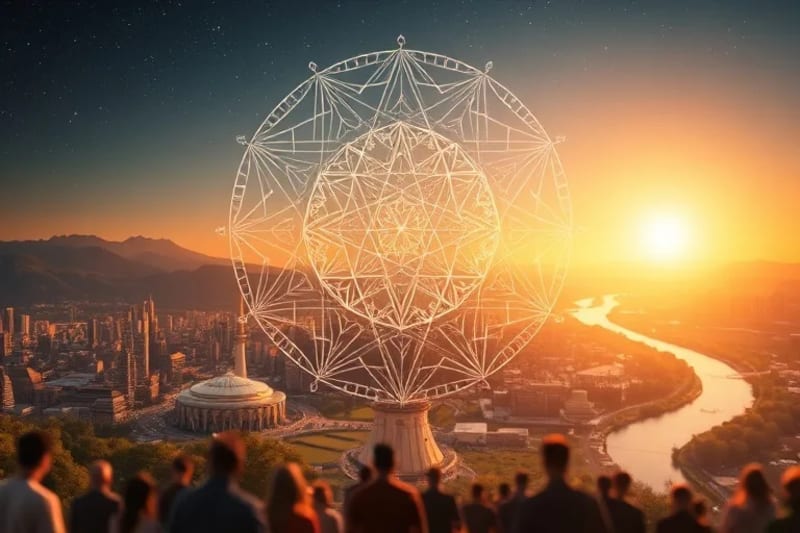
Conceptual rendering of an urban landscape integrated with subtle energetic flows, illustrating the principles of geomancy.
This image is a conceptual AI rendering, depicting the theoretical integration of cosmic and telluric energies within a city's design, inspired by ancient geomantic practices.
The concept of urban geomancy is not new; it has roots in various ancient civilizations across the globe, from the meticulous planning of Roman cities to the sacred geometry embedded in indigenous settlements. These cultures intuitively understood the importance of site selection and orientation, believing that certain locations possessed unique energetic properties that could either bless or curse a community. Modern urban geomancy seeks to revive and adapt these timeless principles for contemporary challenges.
Table of Contents
- Historical Roots and Global Traditions
- Core Principles of Urban Geomancy
- Benefits for Collective Well-being
- Modern Applications and Case Studies
- Challenges and the Future of Urban Geomancy
- Integrating Feng Shui in Urban Geomancy
Historical Roots and Global Traditions
The practice of geomancy, in its various forms, is a universal human endeavor to live in harmony with the environment. Ancient civilizations observed the subtle energies of the Earth and sky, developing sophisticated systems to interpret and utilize these forces. These systems often dictated the placement of sacred sites, homes, and entire cities, ensuring their alignment with beneficial cosmic and telluric currents.
In China, Feng Shui, meaning "wind-water," is perhaps the most well-known form of geomancy. It is an ancient art and science used to organize living spaces in harmony with the flow of Qi (life force energy). This involves careful consideration of topography, water bodies, cardinal directions, and the arrangement of buildings and objects to optimize auspicious energy and deflect negative influences. The principles of Feng Shui have guided Chinese urban planning for millennia, influencing everything from imperial palaces to common dwellings.
Similarly, in ancient Europe, cultures like the Celts and Romans practiced forms of geomancy. The Celts, with their intricate megalithic structures, often aligned their sacred sites with astronomical events and telluric energy lines, known as ley lines. Roman city planning, while seemingly pragmatic, also incorporated principles of orientation and sacred geometry, ensuring that their urban centers were not only functional but also energetically sound. These traditions highlight a shared human intuition about the energetic qualities of place.
Other indigenous cultures, such as those in Mesoamerica, also demonstrated profound geomantic knowledge. Their cities and ceremonial centers were meticulously aligned with celestial bodies and geographical features, reflecting a deep understanding of the cosmos and its influence on earthly life. For instance, the layout of Teotihuacan in Mexico exhibits precise astronomical alignments, suggesting a deliberate effort to connect the urban space with cosmic rhythms. This rich global history underscores the enduring relevance of geomancy.
Core Principles of Urban Geomancy
Urban geomancy operates on several fundamental principles that guide the assessment and design of urban environments. These principles are rooted in the idea that everything is interconnected and that the quality of our surroundings directly impacts our physical, emotional, and spiritual states. Understanding these core tenets is crucial for anyone seeking to apply geomantic wisdom to city planning.
One primary principle is the recognition of Qi (Chi) or Prana, the universal life force energy that permeates all things. In urban geomancy, the goal is to ensure the smooth and beneficial flow of Qi throughout the city. This involves identifying areas where Qi might be stagnant, overly aggressive, or blocked, and then implementing design solutions to rectify these imbalances. Good Qi flow is associated with vitality, prosperity, and harmony.
Another key concept is the interplay of Yin and Yang, the complementary opposing forces that maintain balance in the universe. In an urban context, this translates to balancing elements like open spaces (Yin) with built structures (Yang), or natural landscapes (Yin) with artificial environments (Yang). A city that is too dominated by one aspect can lead to imbalances, such as excessive concrete leading to a lack of natural respite, or sprawling green areas lacking sufficient infrastructure.
The Five Elements Theory (Wood, Fire, Earth, Metal, Water) is also integral, particularly in Chinese geomancy. Each element corresponds to specific shapes, colors, materials, and directions, and understanding their interactions helps in creating balanced urban designs. For example, incorporating water features (Water element) in a city dominated by tall, angular buildings (Wood/Fire elements) can help to soften and balance the energetic landscape.
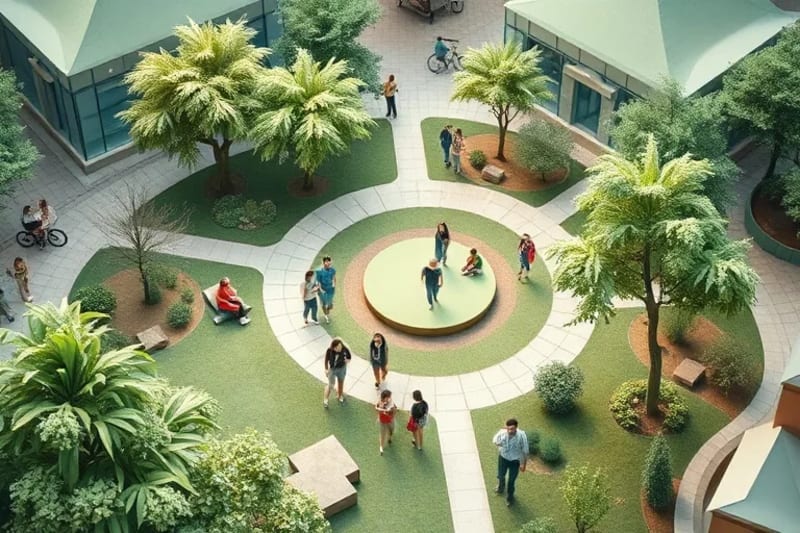
A watercolor depiction of a vibrant urban park, designed with geomantic principles to foster community interaction and well-being.
Site Selection and Orientation are paramount. Before any construction, geomancers assess the land's inherent energy, looking for auspicious locations that offer protection, good drainage, and beneficial views. The orientation of buildings relative to cardinal directions, prevailing winds, and solar paths is also critical, influencing light, temperature, and the flow of energy. This careful consideration ensures that structures are naturally aligned with environmental forces.
Finally, the concept of Form School and Compass School in Feng Shui provides practical guidelines. Form School focuses on the physical landscape, such as mountains, rivers, and roads, and how they influence Qi. Compass School uses a compass (Luopan) to determine auspicious directions and placements based on time and individual birth data. Together, these schools offer a comprehensive framework for geomantic analysis and design.
Benefits for Collective Well-being
The application of urban geomancy principles can yield a multitude of benefits for the collective well-being of city dwellers. By consciously designing environments that resonate with natural energies, cities can become more than just functional spaces; they can transform into vibrant ecosystems that nurture their inhabitants. These benefits extend across physical, mental, and social dimensions.
Enhanced Physical Health: Geomantically designed cities often prioritize access to natural light, fresh air, and green spaces. This can lead to reduced stress, improved respiratory health, and greater opportunities for physical activity. Proper orientation of buildings can also optimize natural ventilation and sunlight, reducing reliance on artificial heating and cooling, which in turn contributes to a healthier indoor environment and lower energy consumption.
Improved Mental and Emotional Balance: Environments that are harmoniously designed tend to evoke feelings of calm, peace, and inspiration. By mitigating sources of negative energy, such as sharp angles, cluttered spaces, or chaotic traffic flows, urban geomancy can reduce anxiety and promote mental clarity. Access to serene natural elements, even within an urban setting, has been shown to significantly boost mood and reduce symptoms of depression. Neuroarchitecture and cognitive well-being studies further support this connection.
Stronger Community Cohesion: Geomantic principles often encourage the creation of central gathering spaces, pedestrian-friendly zones, and aesthetically pleasing public areas. These design choices foster social interaction, a sense of belonging, and community pride. When people feel comfortable and uplifted by their surroundings, they are more likely to engage with their neighbors and participate in community life, leading to stronger social bonds.
Increased Prosperity and Creativity: In many geomantic traditions, good energy flow is directly linked to prosperity and success. A city designed with optimal Qi can attract positive opportunities, stimulate economic growth, and foster innovation. When individuals feel energetically supported, their creativity and productivity can flourish, contributing to the overall dynamism of the urban environment. This aligns with the ancient wisdom found in practices like Chinese Zodiac Spirituality which emphasizes harmony for success.
Environmental Sustainability: By emphasizing alignment with natural forces, urban geomancy inherently promotes sustainable practices. This includes efficient use of resources, integration of green infrastructure, and design that works with the natural landscape rather than against it. Reducing urban heat islands, improving water management, and preserving biodiversity are all natural outcomes of a geomantically informed approach to city planning.
Modern Applications and Case Studies
While rooted in ancient traditions, urban geomancy is finding renewed relevance in contemporary urban planning. Modern practitioners and visionary architects are integrating geomantic principles with cutting-edge technology and sustainable design to create cities that are both functional and energetically balanced. This involves a multidisciplinary approach, combining environmental science, architecture, urban design, and traditional wisdom.
One of the most notable modern applications is in the design of new urban developments and smart cities. Planners are increasingly considering the energetic impact of their designs, looking at factors such as electromagnetic fields, underground water currents, and the psychological effects of urban forms. For example, some architects consult Feng Shui masters during the initial planning stages of large-scale projects to ensure optimal orientation and layout for positive energy flow.
In Singapore, a city renowned for its meticulous urban planning, Feng Shui principles have been subtly integrated into various aspects of its development. From the orientation of buildings to the placement of water features and green spaces, there's an underlying consideration for harmonious energy flow. The city's success in creating a vibrant, prosperous, and livable environment is often attributed, in part, to this holistic approach.
Another area of application is in urban regeneration projects. Existing cities, often burdened by historical planning mistakes or rapid, unplanned growth, can benefit from geomantic remediation. This might involve redesigning public spaces, introducing green corridors, reorienting traffic flows, or even strategically placing art installations to redirect or harmonize energy. The goal is to revitalize stagnant or negative areas, transforming them into spaces that promote well-being.
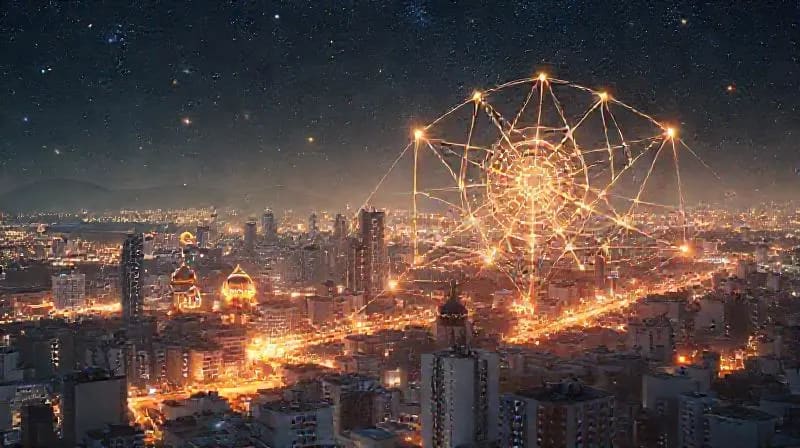
A 3D render illustrating the complex, abstract energy pathways within a city, highlighting geomantic considerations.
The integration of technology, such as GIS mapping and AI, is also opening new frontiers for urban geomancy. These tools can help analyze complex environmental data, identify energetic patterns, and simulate the impact of different design choices. This allows for a more precise and data-driven application of geomantic principles, moving beyond intuition to empirically informed design. The field of Cosmic Sociology in the Digital Age explores similar intersections of ancient wisdom and modern technology.
For instance, in some parts of Asia, developers of high-rise residential complexes routinely consult Feng Shui experts. These experts advise on everything from the building's orientation and facade design to the placement of entrances, windows, and even interior elements like fountains or plants. The aim is to create living spaces that not only look good but also feel good, enhancing the residents' quality of life and perceived value of the property.
Challenges and the Future of Urban Geomancy
Despite its potential, urban geomancy faces several challenges in gaining widespread acceptance and implementation in modern urban planning. One significant hurdle is the perception of geomancy as a pseudoscience or a superstitious practice, particularly in Western contexts. This skepticism often stems from a lack of empirical research that meets conventional scientific standards, making it difficult to integrate geomantic principles into mainstream planning curricula and regulations.
Another challenge lies in the complexity and subjectivity of geomantic interpretations. Different schools or practitioners may offer varying analyses and recommendations for the same site, leading to confusion and inconsistency. Standardizing geomantic assessment methods while respecting the nuances of different traditions is a formidable task. Moreover, applying these principles to existing, densely built urban environments presents practical difficulties, as major structural changes are often costly and disruptive.
However, the future of urban geomancy appears promising as there is a growing global interest in holistic well-being, sustainable development, and the integration of traditional ecological knowledge. As cities grapple with issues like climate change, mental health crises, and social fragmentation, there is an increasing openness to unconventional solutions that prioritize human and environmental harmony. The rise of AI oracles bridging ancient wisdom further exemplifies this trend.
The future will likely see more interdisciplinary collaboration between geomancers, architects, urban planners, environmental scientists, and public health experts. Research efforts will focus on developing quantifiable metrics for geomantic effects, perhaps through biophysical measurements or psychological impact studies, to build a stronger evidence base. Educational programs will also play a crucial role in demystifying geomancy and making its principles accessible to a broader audience of professionals and policymakers.
Ultimately, the evolution of urban geomancy will involve a synthesis of ancient wisdom with modern scientific understanding and technological capabilities. It will move beyond a niche practice to become an integral component of creating resilient, vibrant, and truly human-centered cities. The goal is not to replace conventional urban planning but to enrich it with a deeper understanding of the energetic landscape and its profound impact on collective well-being.
Integrating Feng Shui in Urban Geomancy
Within the broader scope of urban geomancy, Feng Shui offers specific, actionable guidelines that can be directly applied to city planning and design. Originating from ancient China, Feng Shui provides a detailed framework for understanding how the environment influences human experience through the flow of Qi. Its principles are highly relevant for creating urban spaces that promote health, happiness, and prosperity.
One of the key Feng Shui tips for urban design involves the strategic placement of entrances and pathways. Just as a river guides water, roads and walkways guide Qi through a city. Ensuring these pathways are clear, gently curving, and free from obstructions helps maintain a smooth and beneficial flow of energy. Sharp turns or dead ends can create "Sha Qi" (negative energy), leading to stagnation or conflict.
The integration of natural elements is another crucial aspect. Feng Shui emphasizes the importance of water features, such as fountains, ponds, and rivers, as they are believed to attract wealth and vitality. Green spaces, including parks, gardens, and tree-lined streets, provide vital "Sheng Qi" (positive energy), offering respite from the urban hustle and promoting relaxation. These elements not only enhance aesthetics but also serve as energetic conduits and balancers.
Building orientation and form are also critical. Feng Shui advises aligning buildings to take advantage of auspicious directions and to protect against harsh winds or direct negative energy. The shapes of buildings can also influence energy; for instance, round or undulating forms are generally considered more harmonious than sharp, angular structures. This consideration extends to the overall skyline, aiming for a balanced and visually pleasing silhouette.
Finally, the concept of the "Four Celestial Animals" (Green Dragon, White Tiger, Red Phoenix, Black Tortoise) provides a metaphorical framework for ideal site protection and energy flow. In urban planning, this translates to having higher ground or protective structures behind a city (Black Tortoise), slightly lower hills or buildings on the sides (Green Dragon and White Tiger), and an open, expansive view in front (Red Phoenix). This ensures a sense of security, support, and opportunity for the inhabitants.
Explore Our Content Ecosystem
Dive deeper into related topics that bridge ancient wisdom with modern understanding. Our curated selection of articles offers diverse perspectives on spirituality, technology, and human experience.
Fixed Stars Arabic Parts Esoteric Interpretations Destiny
Vertex Astrology: Fated Encounters, Destiny Points Explained | StarPluto
Love Languages Chinese Zodiac: Deeper Relationship Connections | StarPluto
Chinese Zodiac & Career Paths: Best Professions for Each Animal Sign | StarPluto
Chinese Zodiac Mythology: Legends Behind Each Animal Sign | StarPluto
Martyr Volunteer: Saints Offer Suffering Testimony | Profecías de la Virgen
Mary Undoer of Knots: Aid for Impossible Problems Obstacles | Profecías de la Virgen
Holy Trinity Liturgy: A Deep Spiritual Journey | Profecías de la Virgen
Source: Hybrid content assisted by AI and human editorial supervision.
🌐 Descubre nuestro Ecosistema de Contenidos
Amplía tu perspectiva explorando estas guías recomendadas de nuestra red:
- Starpluto: Crystal Grids Advanced Manifestation Techniques: Guide | StarPluto
- Starpluto: Zodiac Astrology Holistic Self-Discovery Bridging Systems
- Althox: Neurobiología Adicción: Vulnerabilidad y Recuperación | Althox
- Astrofuturo: Numerología Pitagórica Carta Natal: Códigos Destino Oculto
- Profecias: Meditación Espíritu Santo: Sanación Interior Profunda Guía


Comments
Post a Comment