
Urban Geomancy: Aligning Cities with Cosmic Harmonies
In an increasingly urbanized world, the connection between our built environments and the subtle energies that influence human well-being often goes unnoticed. Urban geomancy and celestial mechanics offer a profound framework for understanding how cities can be designed, or re-aligned, to resonate with cosmic harmonies. This ancient wisdom, once central to the planning of sacred sites and ancient cities, is experiencing a resurgence as we seek more holistic and sustainable ways of living within our metropolitan landscapes.
This article delves into the principles of urban geomancy and celestial mechanics, exploring their historical significance and contemporary relevance. We will uncover how these disciplines intersect with astrological concepts, particularly birth chart analysis, to create spaces that support individual and collective flourishing. By understanding these cosmic influences, we can begin to perceive our cities not merely as concrete jungles, but as living entities capable of profound energetic interaction.
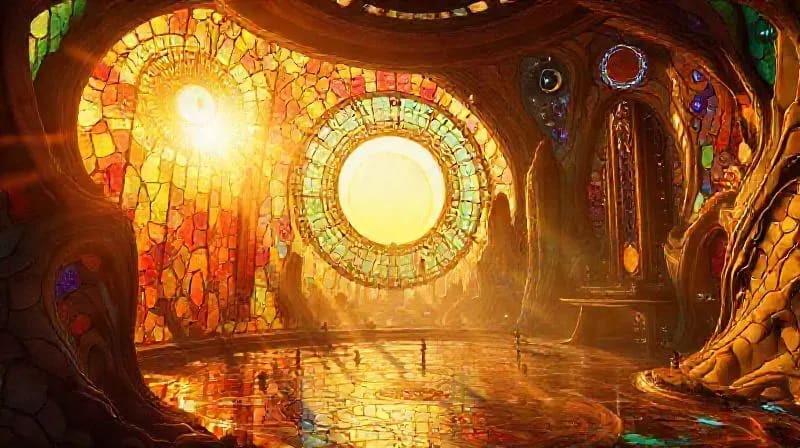
Envisioning cities as living canvases, where ancient wisdom guides modern design, creating spaces that resonate with the subtle energies of the cosmos.
Image: A conceptual AI render exploring the integration of cosmic principles into urban architecture, blending historical insights with futuristic design.Table of Contents
- Understanding Urban Geomancy: Earth's Subtle Energies
- Celestial Mechanics and Urban Design: Cosmic Blueprints
- Historical Perspectives: Sacred Architecture and City Planning
- Ley Lines and Earth Grids: The Planet's Energetic Network
- Planetary Influences on Urban Spaces: Astrological Zoning
- Synchronizing Cities with Birth Charts: Personal Resonance
- Modern Applications and Challenges: Revitalizing Urban Environments
- Practical Steps for Urban Harmony: Individual and Community Actions
Understanding Urban Geomancy: Earth's Subtle Energies
Urban geomancy is the art and science of aligning human settlements with the natural energy flows of the Earth. It recognizes that specific locations possess distinct energetic qualities that can profoundly impact the inhabitants. This discipline goes beyond mere aesthetics or functional planning, delving into the unseen forces that contribute to the vitality or stagnation of a place.
At its core, geomancy posits that the Earth is a living organism with its own circulatory system of energy, often referred to as "ley lines" or "dragon currents." Ancient cultures intuitively understood these energies, siting their temples, cities, and sacred monuments at points of optimal power. The goal of urban geomancy is to create environments that foster health, prosperity, and spiritual growth by harmonizing with these telluric forces.
This approach contrasts sharply with purely utilitarian urban planning, which often prioritizes economic efficiency over energetic balance. By neglecting the subtle energetic landscape, modern cities can inadvertently create areas of stress, imbalance, and dis-ease. Reintroducing geomantic principles offers a pathway to more integrated and life-affirming urban spaces.
Celestial Mechanics and Urban Design: Cosmic Blueprints
Celestial mechanics, in the context of urban design, refers to the practice of aligning human structures with astronomical phenomena and planetary positions. This involves understanding the influence of the sun, moon, planets, and stars on Earth, and how these cosmic rhythms can be integrated into the layout and orientation of cities. It's about recognizing that our terrestrial existence is inextricably linked to the celestial dance above.
Ancient civilizations, from the Egyptians to the Maya, were masters of celestial alignment. Their pyramids, temples, and entire cities were often oriented to solstices, equinoxes, or specific stellar risings, creating monumental calendars and energetic conduits. This was not merely for observational purposes but to imbue these spaces with specific cosmic energies, believed to enhance their spiritual and functional efficacy.
For instance, the orientation of a main avenue towards the sunrise on a significant day could symbolize new beginnings or connect the city to solar vitality. The placement of public squares or governmental buildings might correspond to planetary positions associated with justice or community. This integration of cosmic blueprints transformed cities into living astrological charts, reflecting the heavens on Earth.
Historical Perspectives: Sacred Architecture and City Planning
The history of urban planning is replete with examples of geomantic and celestial principles. From the grid plans of Roman cities, often aligned with cardinal directions, to the intricate Feng Shui layouts of Chinese imperial capitals, ancient builders understood the profound impact of orientation and placement.
In ancient Egypt, temples like Karnak were meticulously aligned with the solstices, allowing sunlight to penetrate specific sanctuaries only on certain days of the year. This created powerful energetic events, connecting the earthly structure to the cosmic cycles. Similarly, the Mayan city of Chichen Itza features structures designed to cast serpent-like shadows during the equinoxes, demonstrating a sophisticated understanding of celestial mechanics.
The concept of "sacred geography" was also prevalent, where entire landscapes were seen as imbued with divine energy. Mountains, rivers, and specific geological formations were considered sacred, and cities were often established in harmony with these natural features. This holistic view ensured that human settlements were not imposed upon nature but integrated within its energetic matrix.
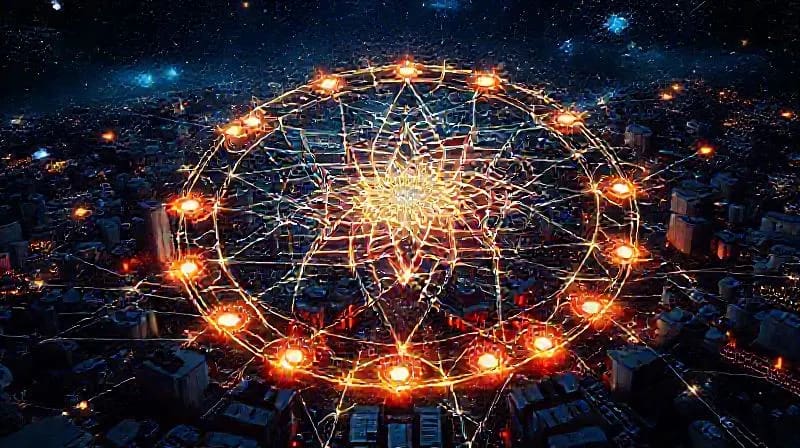
The unseen currents of Earth's energy, intricately woven into the fabric of our urban environments.
Image: A digital painting illustrating the conceptual flow of telluric energies beneath a city, suggesting hidden patterns of vitality.Ley Lines and Earth Grids: The Planet's Energetic Network
Ley lines are hypothetical alignments of ancient sites, such as megaliths, mounds, and churches, that are believed to mark paths of telluric energy. The concept, popularized by Alfred Watkins in the early 20th century, suggests that these lines represent a global energetic grid, similar to acupuncture meridians on the human body. Where these lines intersect, powerful energy vortices are thought to exist.
While scientific evidence for ley lines remains elusive, the geomantic tradition across various cultures speaks to a similar understanding of Earth's energy currents. In China, these are known as "dragon currents" (Lung Mei), guiding the practice of Feng Shui. In indigenous traditions, certain paths and sacred sites are recognized for their unique energetic properties, often associated with healing or spiritual insight.
Urban geomancy seeks to identify these ley lines and energy points within a city and either build upon them harmoniously or mitigate disruptive influences. For example, a building constructed directly on a strong ley line intersection might be designed to channel or amplify that energy, while a structure placed over a stagnant energy point might require specific design interventions to clear and revitalize the area. This holistic view considers the city as part of a larger energetic ecosystem.
Planetary Influences on Urban Spaces: Astrological Zoning
Just as planets influence individual personalities and life events in astrology, they are also believed to exert specific energetic qualities on geographical locations and urban spaces. This concept, sometimes referred to as "astrological zoning," suggests that different parts of a city might resonate more strongly with certain planetary archetypes.
Consider the traditional associations of planets:
- Sun: Represents vitality, leadership, and central authority. Areas influenced by the Sun might be central business districts, government hubs, or grand public spaces.
- Moon: Governs emotions, nurturing, and domestic life. Residential areas, parks, and places of care might resonate with lunar energies.
- Mercury: Associated with communication, commerce, and intellect. Educational institutions, markets, and transportation hubs could fall under Mercury's domain.
- Venus: Rules beauty, art, and relationships. Cultural centers, art galleries, fashionable districts, and romantic spots might align with Venus.
- Mars: Symbolizes drive, conflict, and industry. Industrial zones, sports arenas, or areas with high energy and potential for friction could be Martian. For more on this, see our guide on Mars Astrology.
- Jupiter: Represents expansion, wisdom, and abundance. Universities, religious institutions, and prosperous financial districts might carry Jupiterian energy.
- Saturn: Governs structure, discipline, and limitations. Historical districts, old established institutions, or areas with conservative architecture could be Saturnian.
By consciously integrating these planetary archetypes into urban planning, designers could theoretically create cities that support a wider range of human activities and experiences, ensuring that each function is energetically supported by its location. This creates a dynamic interplay between the cosmic and the terrestrial.
Synchronizing Cities with Birth Charts: Personal Resonance
The most fascinating intersection of urban geomancy, celestial mechanics, and personal astrology lies in understanding how a city's energetic blueprint can resonate with an individual's birth chart. Just as a birth chart reveals personal predispositions and life paths, a city's astrological and geomantic profile can indicate its inherent character and how it might interact with its inhabitants.
When an individual moves to a new city, their personal birth chart interacts with the city's "birth chart" (derived from its founding date and location) and its prevailing geomantic energies. This interaction can explain why some people thrive in certain urban environments while others feel out of sync. For example, a person with a strong emphasis on Venus in their chart might feel more at home in a city known for its art and culture, while someone with a prominent Mars might be drawn to a bustling, competitive metropolis.

The intricate dance of planets and their subtle, yet profound, impact on the very structure of our cities.
Image: A conceptual 3D render illustrating how celestial mechanics might symbolically shape and influence urban landscapes.Astrologers practicing "astrocartography" can map an individual's birth chart onto a world map, identifying lines where specific planetary energies are strongest. These lines can indicate optimal locations for career, relationships, or spiritual growth. Combining this with urban geomancy allows for an even deeper analysis, considering not just the broad planetary influence but also the specific energetic quality of a city's layout, its ley lines, and its architectural forms.
The goal is to find a city whose energetic signature supports and enhances the individual's unique life purpose and well-being, as revealed by their birth chart. This creates a powerful synergy, where the environment actively contributes to personal growth rather than hindering it. Understanding your Solar Return Chart can also provide insights into how specific locations might influence your year ahead.
Modern Applications and Challenges: Revitalizing Urban Environments
In the 21st century, the application of urban geomancy and celestial mechanics faces both immense potential and significant challenges. Modern cities are complex, often growing organically without a unifying energetic vision. However, the principles can still be applied in various ways:
- Urban Renewal Projects: When revitalizing old districts, geomantic surveys can identify areas of energetic stagnation or imbalance, guiding the placement of new parks, public art, or community centers to restore vitality.
- Sustainable Development: Integrating celestial alignments into building orientation can optimize natural light and energy efficiency, reducing environmental impact while enhancing the energetic quality of spaces.
- Public Space Design: Designing parks, plazas, and public buildings with geomantic principles can create spaces that feel more harmonious, inviting, and conducive to community interaction and well-being.
- Architectural Design: Individual buildings can be designed to resonate with specific planetary energies or to harmonize with local ley lines, creating structures that are not only aesthetically pleasing but also energetically supportive.
- Personalized Living: Individuals can use these principles to choose neighborhoods or even specific homes that align best with their personal astrological charts and energetic needs, fostering a deeper sense of belonging and well-being.
The main challenge lies in overcoming the prevailing materialistic paradigm of urban planning and introducing these subtle, holistic concepts to mainstream developers and policymakers. However, as awareness of environmental and personal well-being grows, the demand for energetically balanced spaces is likely to increase.
Practical Steps for Urban Harmony: Individual and Community Actions
Even without a complete overhaul of urban planning, individuals and communities can take steps to foster greater harmony with their urban environment:
- Observe and Feel: Pay attention to how different areas of your city make you feel. Do some places feel vibrant and uplifting, while others feel draining or oppressive? This is your intuitive geomantic radar at work.
- Connect with Nature: Seek out parks, green spaces, and natural water features within your city. Spending time in these areas can help ground you and replenish your energy.
- Learn Local History: Research the history of your city and neighborhood. Understanding its origins, significant events, and original land use can offer clues about its energetic signature.
- Personalize Your Space: Apply principles of Chakra Healing Basics or Feng Shui to your home and workspace. Even small adjustments can significantly improve the energetic flow of your immediate environment.
- Support Conscious Development: Advocate for urban planning that considers ecological impact, community well-being, and the integration of natural elements. Support initiatives that seek to create more harmonious public spaces.
- Astrological Consultation: Consult an astrologer specializing in astrocartography or locational astrology to understand how different cities or regions might align with your personal birth chart.
By becoming more conscious of the energetic interplay between ourselves and our urban surroundings, we can actively contribute to creating cities that are not just functional, but truly nurturing and inspiring. The ancient wisdom of urban geomancy and celestial mechanics offers a powerful lens through which to envision a more harmonious future for our built world.
Explore More Cosmic Connections
Dive deeper into the fascinating world of astrology, spirituality, and self-discovery with our curated selection of related articles:
- Astral Projection: Exploring Out-of-Body Experiences Safely
- Elemental Magic: Connecting with Earth, Air, Fire, Water Spirits
- Asteroid Goddesses Synastry: Modern Relationship Dynamics
- Guided Meditation Planetary Transits: Aligning Inner Harmony
- Spiritual Cleanse Rituals: Clearing Negative Energy
- Numerology & Name Analysis: Uncovering Your Destiny
- Psycho Astrology Jungian Archetypes Natal Chart
- Lunar Wisdom Chinese Zodiac Aligning Nature Rhythms
- Dragon Year 2024: Health, Wellness Forecast Zodiac Signs
- Dragon Phoenix Synastry: Elemental Compatibility Dynamics
- IA Cadena Suministro: Optimización, Eficiencia, Futuro Logístico
- Rueda Fortuna Sinastría: Prosperidad Pareja Astrología
- Sacramentales Reliquias Sagradas: Poder Sanador Fe Contemporánea
Source: Hybrid content assisted by AI and human editorial supervision.


Comments
Post a Comment