
Astro-Botany: Celestial Influences Plant Growth Energetics
Astro-botany, a fascinating and ancient discipline, explores the intricate relationships between celestial bodies and the plant kingdom. This field, rooted in historical observations and esoteric traditions, posits that the movements and positions of planets, the moon, and stars exert discernible influences on plant growth, vitality, and energetic properties. Far from being a modern invention, the principles of astro-botany have been woven into agricultural practices, herbal medicine, and spiritual beliefs across diverse cultures for millennia, offering a unique lens through which to understand the natural world.
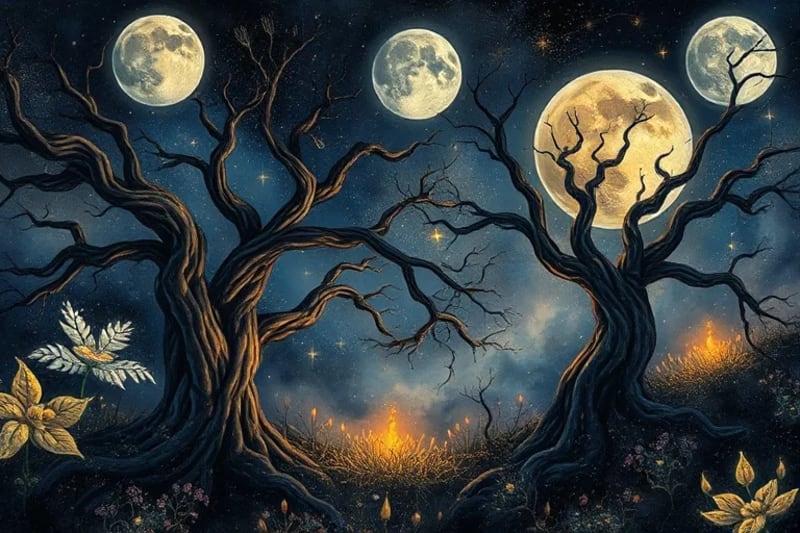
Ancient wisdom intertwines with cosmic energies, revealing the profound connection between celestial bodies and the vibrant life of the plant kingdom.
This conceptual rendering, crafted by AI, illustrates the ethereal beauty of a garden influenced by the celestial dance, drawing inspiration from historical botanical texts and astronomical observations.At its core, astro-botany suggests that just as the moon influences tides, celestial forces subtly impact the biological rhythms and energetic composition of plants. Proponents believe that by understanding these cosmic connections, cultivators can optimize planting and harvesting times, enhance the potency of medicinal herbs, and foster a deeper, more harmonious relationship with their botanical allies. This introductory exploration delves into the historical foundations, key principles, and practical applications of astro-botany, shedding light on its enduring appeal in both traditional and contemporary contexts.
Table of Contents
- Historical Roots and Ancient Wisdom
- Planetary Rulerships and Plant Associations
- Zodiacal Influences on Growth Cycles
- Lunar Gardening: Timing with the Moon
- Energetic Properties and Healing Applications
- Modern Interpretations and Biodynamic Agriculture
- Scientific Perspective and Observational Insights
Historical Roots and Ancient Wisdom
The concept of celestial influence on terrestrial life is not a new one; it is deeply embedded in the annals of human history. Ancient civilizations, from the Babylonians and Egyptians to the Greeks and Romans, meticulously observed the heavens, correlating planetary movements with earthly phenomena. This observational science often extended to agriculture and medicine, where the timing of planting, harvesting, and herbal preparation was frequently dictated by astrological considerations.
In ancient Egypt, agricultural calendars were often aligned with the heliacal rising of stars like Sirius, which signaled the flooding of the Nile, crucial for crop fertility. Similarly, Mesopotamian cultures developed sophisticated astrological systems that influenced every aspect of daily life, including the cultivation of plants. The Greeks, inheriting much of this knowledge, further integrated planetary symbolism into their medicinal practices, associating specific herbs with particular deities and their planetary counterparts.
During the medieval period, astro-botany flourished within the fields of alchemy, herbalism, and natural philosophy. Scholars like Nicholas Culpeper, a 17th-century English botanist and physician, famously documented the astrological properties of herbs in his "The English Physician," providing detailed instructions on when to gather plants based on planetary hours and lunar phases to maximize their medicinal efficacy. This era saw a systematic codification of planetary and zodiacal rulerships over various plants, forming the bedrock of traditional astro-botanical practice. For a deeper dive into historical astrological practices, one might explore the contributions of Medieval and Renaissance Astrologers.
Planetary Rulerships and Plant Associations
A cornerstone of astro-botany is the concept of planetary rulerships, where each planet is believed to govern specific types of plants, endowing them with particular characteristics and energetic qualities. These associations are based on a complex system of correspondences, linking planetary attributes (e.g., warmth, coolness, moisture, dryness) to plant morphology, growth habits, and medicinal uses.
- Sun (Sol): Rules plants that thrive in sunlight, often with yellow or orange flowers, and those that promote vitality, strength, and heart health. Examples include sunflowers, calendula, rosemary, and bay laurel.
- Moon (Luna): Governs plants associated with water, coolness, and intuition. These often have pale flowers, fleshy leaves, or grow in moist environments. Examples include lettuce, cabbage, cucumber, and white poppy.
- Mercury (Mercurius): Associated with plants that aid communication, mental clarity, and the nervous system. Often have small leaves, delicate flowers, or grow quickly. Examples include parsley, dill, lavender, and valerian.
- Venus: Rules plants known for beauty, love, fertility, and soothing properties. These often have fragrant flowers, sweet fruits, or are aesthetically pleasing. Examples include roses, apples, strawberries, and thyme.
- Mars: Governs plants with stimulating, pungent, or protective qualities. Often thorny, red, or spicy. Examples include nettle, garlic, onion, and cayenne pepper.
- Jupiter: Associated with plants that promote expansion, abundance, and liver health. Often large, stately, or have generous yields. Examples include oak, fig, dandelion, and sage.
- Saturn: Rules plants known for structure, discipline, and grounding. Often slow-growing, woody, or have a bitter taste. Examples include comfrey, hemlock, pine, and horsetail.
These planetary associations are not merely symbolic; they are believed to influence the plant's chemical composition and energetic signature. For instance, a plant ruled by the Sun might be harvested during daylight hours when the Sun's influence is strongest to maximize its solar energy. Understanding these rulerships allows practitioners to select plants that align with specific intentions, whether for healing, protection, or personal growth. Further insights into how celestial bodies influence personal paths can be found by exploring Lilith, Chiron, and Lunar Nodes in Karmic Astrology.
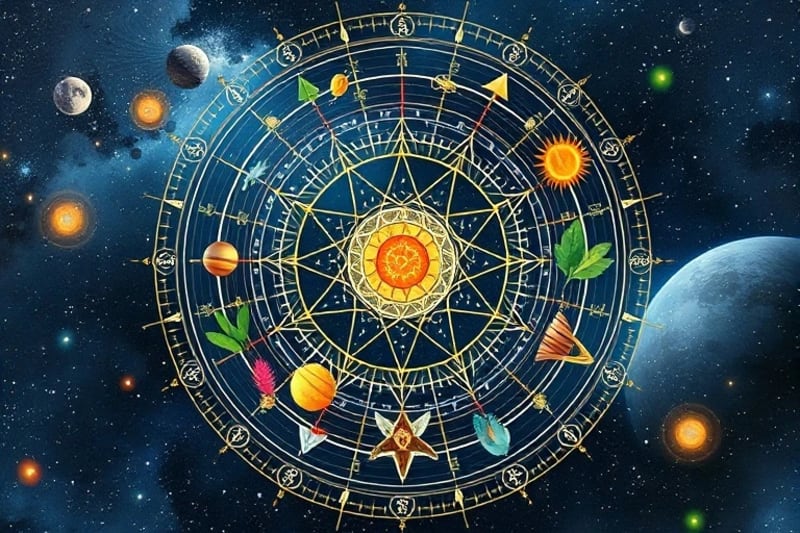
A visual representation of the traditional planetary associations with various botanical species, highlighting their symbolic connections.
This watercolor piece captures the essence of astro-botanical correspondences, reflecting ancient beliefs about cosmic influences on flora.Zodiacal Influences on Growth Cycles
Beyond planetary rulerships, the twelve zodiac signs also play a significant role in astro-botany, particularly in determining optimal planting and harvesting times. Each zodiac sign is associated with one of the four classical elements (Fire, Earth, Air, Water) and is believed to influence different parts of the plant: roots, leaves, flowers, or fruits/seeds.
- Fire Signs (Aries, Leo, Sagittarius): Associated with fruits and seeds. Planting during these signs is believed to encourage strong fruit development.
- Earth Signs (Taurus, Virgo, Capricorn): Linked to roots. Ideal for planting root crops like carrots, potatoes, and radishes.
- Air Signs (Gemini, Libra, Aquarius): Connected to flowers. Best for planting flowering plants and herbs grown for their blossoms.
- Water Signs (Cancer, Scorpio, Pisces): Associated with leaves. Favorable for leafy greens such as lettuce, spinach, and cabbage.
Gardeners practicing astro-botany often consult an astrological calendar to align their activities with the appropriate zodiac sign. For example, planting leafy vegetables during a Water sign is thought to promote lush foliage, while harvesting root crops during an Earth sign is believed to enhance their vitality and storage life. This meticulous timing aims to synchronize the plant's natural growth rhythms with beneficial cosmic energies, fostering more robust and productive yields.
Lunar Gardening: Timing with the Moon
One of the most widely practiced aspects of astro-botany is lunar gardening, which involves scheduling gardening tasks according to the phases of the moon. The moon's gravitational pull is known to affect water on Earth, and astro-botanists believe this influence extends to the moisture content in soil and plants, impacting seed germination and growth rates.
Lunar gardening typically divides the month into four main phases, each with specific recommendations:
- New Moon to First Quarter (Waxing Crescent): This period is associated with increased sap flow and strong root growth. It's considered ideal for planting leafy annuals, above-ground crops, and for grafting.
- First Quarter to Full Moon (Waxing Gibbous): Energy is directed towards leaves and stems. This phase is excellent for planting annuals that bear fruit or seeds, and for general cultivation.
- Full Moon to Last Quarter (Waning Gibbous): Energy shifts towards the roots. This is a good time for planting root crops, perennials, and biennials. It's also favorable for transplanting and pruning, as sap flow is reduced.
- Last Quarter to New Moon (Waning Crescent): A resting period for plants. This phase is best for weeding, pest control, cultivating the soil, and generally tidying the garden, as growth is slower.
Beyond the phases, the moon's position within the zodiac signs during these phases further refines the timing. For example, planting root crops during a waning moon when it is in an Earth sign (Taurus, Virgo, Capricorn) is considered particularly auspicious. This detailed approach to timing is believed to enhance plant vigor, resistance to pests, and overall yield. The moon's influence is also significant in other esoteric practices, as seen in Lunar Cycles Integration with Breathwork and Emotional Release.
Energetic Properties and Healing Applications
Astro-botany extends beyond mere physical growth to encompass the energetic and spiritual properties of plants. It is believed that plants absorb and store the celestial energies prevalent during their growth cycles, imbuing them with specific vibrational qualities. These energetic signatures are then utilized in herbal medicine, spiritual practices, and magical traditions.
For example, a plant harvested under a strong Venusian influence might be used in remedies for love, beauty, or emotional balance, while a plant gathered under a Martian aspect could be employed for protection, courage, or stimulating vitality. The concept is that the plant acts as a conduit, concentrating and transmitting cosmic energies to those who consume or interact with it. This perspective aligns with the broader understanding of energy centers, such as those explored in Chakra Healing: Balancing Energy Centers for Well-being.
In traditional herbalism, the astrological timing of harvesting is crucial for maximizing the plant's medicinal potency. It's not just about the chemical constituents, but also the subtle energetic imprint. This holistic view considers the plant as a living entity deeply connected to the cosmos, capable of offering more than just nutritional or chemical benefits, but also vibrational support for physical, emotional, and spiritual well-being.
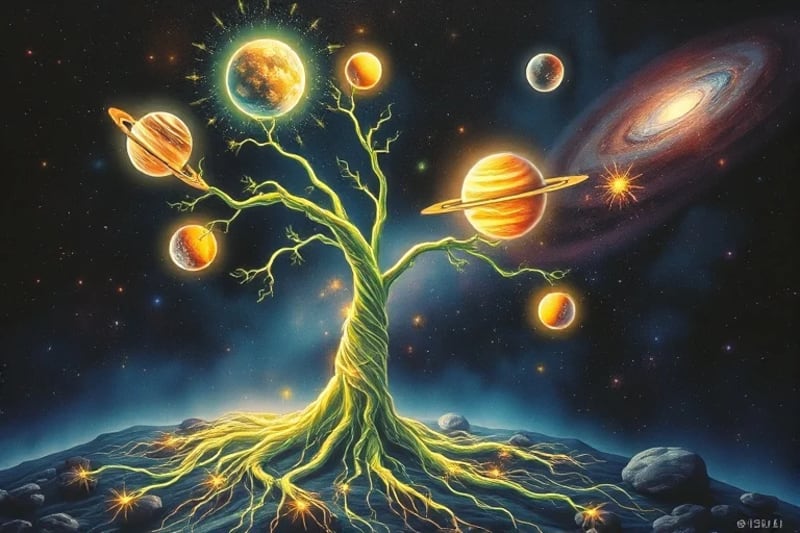
A conceptual visualization of a plant's intricate energetic field, illustrating its subtle connections to celestial bodies and cosmic influences.
This 3D rendering explores the theoretical energetic pathways between botanical life and planetary alignments, a core concept in astro-botany.Modern Interpretations and Biodynamic Agriculture
While classical astro-botany is rooted in esoteric traditions, its principles find echoes in more contemporary practices, most notably biodynamic agriculture. Developed by Rudolf Steiner in the early 20th century, biodynamics is an ecological and ethical approach to farming that emphasizes the holistic interrelationship of soil, plants, animals, and the cosmos. Biodynamic farmers often incorporate lunar and planetary calendars into their planting and harvesting schedules, similar to traditional astro-botany.
Although biodynamic agriculture uses a different theoretical framework and focuses more on subtle energetic forces within the farm ecosystem, its reliance on cosmic rhythms for optimal timing bears a striking resemblance to astro-botanical principles. Biodynamic preparations, often made from herbs and minerals, are applied to enhance soil fertility and plant vitality, with their application also timed according to celestial events. This modern approach demonstrates a continued interest in harmonizing agricultural practices with natural, cosmic cycles, even if the underlying explanations differ from traditional astrology.
Scientific Perspective and Observational Insights
From a mainstream scientific perspective, the direct influence of planets (beyond the Moon's gravitational pull) on plant growth and energetic properties lacks empirical evidence. Modern botany and agricultural science primarily focus on factors such as soil composition, nutrient availability, light, temperature, genetics, and water. The claims of planetary rulerships and zodiacal influences on specific plant parts are generally not supported by conventional scientific research.
However, the lunar gardening aspect does have some observational support, particularly concerning the Moon's gravitational effect on water. While not directly proving astrological claims, the idea that lunar phases can affect moisture levels in the soil and plant sap flow is plausible and has been anecdotally observed by many gardeners. Some studies have explored the subtle effects of lunar cycles on plant physiology, though results are often inconclusive or require further rigorous investigation.
Regardless of scientific validation, the practice of astro-botany continues to resonate with those seeking a deeper, more intuitive connection to nature. It encourages careful observation of natural rhythms and fosters a sense of stewardship and reverence for the plant kingdom. For many, it offers a meaningful framework for understanding the interconnectedness of life on Earth with the vast cosmos, enriching the gardening experience with an added layer of spiritual and philosophical depth.
Explore Our Ecosystem of Content
- Numerology & Name Analysis: Uncovering Your Destiny
- 12-Year Chinese Zodiac Cycle: Understanding Your Animal Sign
- Astro-Genomics: Decoding Karmic Health Blueprints DNA
- Planetary Hours: Optimizing Daily Activities for Success & Intentions Guide
- Spell Casting Basics: Ethics, Intention, Manifestation
- Biometric Divination Intuition: Biofeedback Self-Discovery
- Intercepted Houses: Unlocking Natal Chart Potentials
- Astrology Writers Creative Flow Publication Timing Guide
- Imum Coeli Aspects: Family Dynamics, Ancestral Influence
- AI Astrology Creative Writing Algorithms: Cosmic Muse
- Advanced Predictive Astrology: Mastering Critical Degrees
- AI Dream Interpretation Algorithmic Subconscious Symbolism Decoding
- Finanzas Descentralizadas Sostenibilidad Inversiones Verdes Impacto
- Cifrado Cuántico: Implicaciones y Desafíos
- Retorno Saturno Lecciones Kármicas Casas Astrología: Madurez Alma
- Cosmo-Gastronomía Cuántica: Recetas Intuitivas Chakras Signos
- Profecías Marianas: Fátima, Medjugorje y su Impacto
- Arte Generativo IA: Sueños Divinos Patrones Celestiales
- Profecías Anticristo: Signos y Advertencias
Source: Hybrid content assisted by AI and human editorial supervision.


Comments
Post a Comment