
AI Dream Interpretation Algorithmic Subconscious Symbolism Decoding
Dreams have long been considered a mysterious gateway to the subconscious mind, offering glimpses into our deepest fears, desires, and unresolved conflicts. For centuries, humanity has sought to decipher these nocturnal narratives, employing various methods from ancient shamanic practices to modern psychoanalysis. The advent of artificial intelligence (AI) is now revolutionizing this ancient quest, introducing sophisticated algorithmic tools capable of decoding the complex symbolism embedded within our dreams. This innovative approach promises to unlock new dimensions of self-understanding and mental well-being, bridging the gap between esoteric wisdom and cutting-edge technology.
AI dream interpretation leverages advanced computational techniques, including natural language processing (NLP), machine learning, and pattern recognition, to analyze dream narratives provided by users. By comparing these narratives against vast databases of psychological theories, cultural symbols, and personal user data, AI systems can identify recurring themes, emotional undertones, and potential meanings that might otherwise remain hidden. This article explores the intricate mechanisms behind AI dream interpretation, its profound benefits, inherent challenges, and the exciting future it holds for personal growth and psychological insight.
Table of Contents
- A Historical Perspective on Dream Analysis
- How AI Deciphers Dreams: The Algorithmic Approach
- The Data Fueling AI Dream Interpretation
- Unlocking Insights: Benefits of AI Dream Analysis
- Challenges and Ethical Considerations
- Future Applications and Potential
- Integrating AI Insights with Personal Reflection
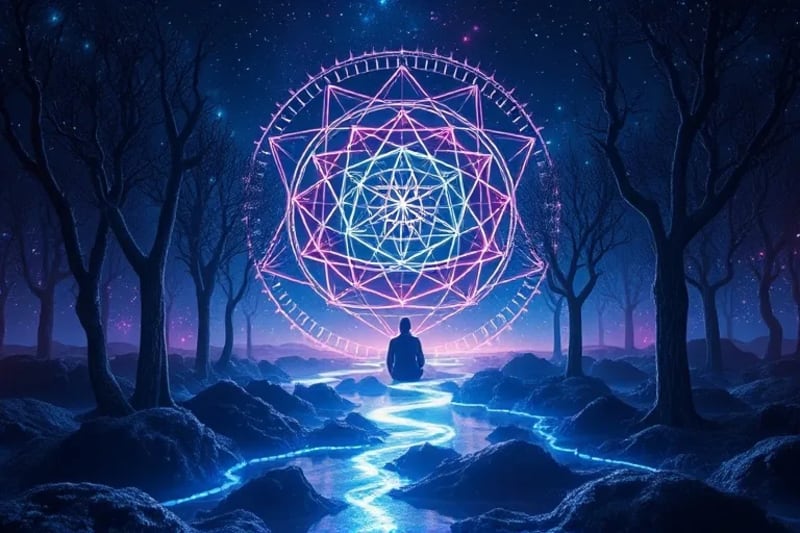 A contemplative figure engages with digital data streams and abstract symbols, representing the dynamic interaction between human subconscious and artificial intelligence in dream interpretation.
Fuente visual sujeta a disponibilidad del ecosistema: Wikimedia Commons bajo licencia CC BY-SA 4.0 o renderizado conceptual IA.
A Historical Perspective on Dream Analysis
Before delving into the specifics of AI, it is crucial to acknowledge the rich history of dream interpretation. Ancient civilizations, from Egyptians to Greeks, viewed dreams as divine messages or omens. Shamans and spiritual leaders often served as dream interpreters, guiding their communities based on these nocturnal visions. The 20th century brought about significant psychological theories, most notably those of Sigmund Freud and Carl Jung, who laid the groundwork for modern dream analysis.
Freud's psychoanalytic approach posited that dreams are the "royal road to the unconscious," revealing repressed desires and conflicts through symbolic representations. Jung, on the other hand, introduced the concept of the collective unconscious and archetypes, suggesting that certain universal symbols appear in dreams across cultures. While these theories provided profound insights, their application often relied on subjective interpretation by a trained professional, making it a time-consuming and sometimes inaccessible process. AI aims to complement these traditional methods by offering a more systematic and data-driven analytical framework.
How AI Deciphers Dreams: The Algorithmic Approach
AI dream interpretation operates on the principle of pattern recognition and contextual analysis. When a user inputs a dream narrative, the AI system processes the text using several key technologies:
- Natural Language Processing (NLP): NLP algorithms break down the dream narrative into its constituent parts, identifying keywords, entities (people, objects, places), actions, and emotional tones. It can discern nuances in language, such as metaphors and idioms, which are crucial for understanding symbolic meaning.
- Machine Learning (ML): ML models are trained on vast datasets comprising psychological texts, dream dictionaries, cultural mythologies, and anonymized user-submitted dreams. This training allows the AI to learn correlations between specific dream elements and their potential interpretations. For instance, if a "snake" frequently appears in dreams associated with "fear of change" or "transformation," the AI begins to establish this symbolic link.
- Symbolic Recognition and Contextual Analysis: Beyond simple keyword matching, AI systems employ sophisticated algorithms to understand the context in which symbols appear. A "house" might symbolize the self, but its condition (dilapidated, grand, burning) drastically alters its meaning. The AI considers the entire narrative, the user's emotional state within the dream, and other accompanying symbols to provide a holistic interpretation. This is akin to how Astro-Psychology delves into planetary archetypes for healing, seeking deeper, interconnected meanings.
- Personalized Learning: Over time, as a user provides more dream data and feedback, the AI can adapt its interpretations to the individual's unique psychological profile and life experiences. This personalization makes the analysis increasingly relevant and accurate for each user, moving beyond generic interpretations.
The Data Fueling AI Dream Interpretation
The effectiveness of any AI system heavily relies on the quality and quantity of its training data. For dream interpretation, this data comes from diverse sources:
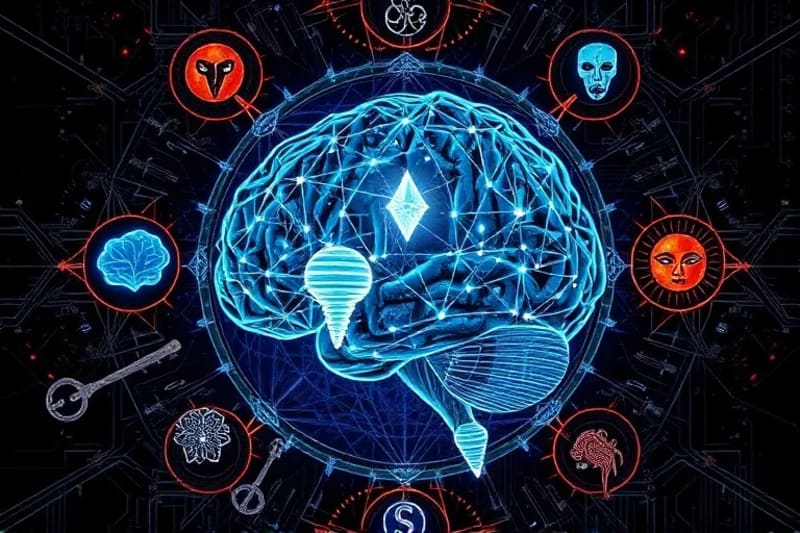 A stylized human brain intertwined with dream symbols and digital circuits, illustrating the intricate process of algorithmic subconscious decoding.
- Psychological Databases: Extensive collections of psychological research, theories, and case studies form the foundational knowledge base. This includes works by prominent psychologists, academic papers, and clinical observations.
- Dream Dictionaries and Encyclopedias: Compilations of common dream symbols and their traditional interpretations across various cultures are fed into the system. These provide a broad symbolic vocabulary for the AI to draw upon.
- User-Generated Content: Anonymized and aggregated dream narratives submitted by users are crucial for training the AI to recognize real-world dream patterns and evolving symbolism. This continuous feedback loop allows the AI to refine its understanding.
- Cultural and Mythological Texts: To account for the rich tapestry of human symbolism, AI models are also exposed to mythological stories, folklore, religious texts, and artistic expressions from around the world. This helps the AI understand how symbols might carry different meanings in various cultural contexts, similar to how Karmic Synastry Integration explores deep, inherited patterns.
- Linguistic and Semantic Networks: Advanced semantic networks help the AI understand the relationships between words and concepts, enabling it to infer meanings even when direct symbolic matches are not present.
The quality of these datasets is paramount. Biased or incomplete data can lead to inaccurate or misleading interpretations. Therefore, continuous curation and expansion of the knowledge base are essential for the ongoing improvement of AI dream interpretation systems.
Unlocking Insights: Benefits of AI Dream Analysis
The application of AI to dream interpretation offers several compelling advantages:
- Objectivity and Consistency: Unlike human interpretation, which can be influenced by personal biases or varying levels of expertise, AI provides consistent and objective analysis based on its programmed algorithms and data.
- Accessibility: AI-powered dream analysis tools can be accessed anytime, anywhere, making dream interpretation available to a much wider audience who may not have access to a human therapist or dream analyst.
- Pattern Recognition at Scale: AI can process and identify patterns across vast amounts of dream data much faster and more efficiently than any human. This capability can reveal overarching themes in an individual's dream life or even broader societal dream trends.
- Personalized Insights: As the AI learns from a user's repeated inputs, it can offer increasingly tailored interpretations that resonate deeply with the individual's life experiences and psychological state. This personalization can be incredibly valuable for self-discovery.
- Educational Tool: AI can serve as an educational resource, introducing users to common dream symbols, psychological concepts, and different interpretive frameworks, thereby enhancing their understanding of their own inner world.
These benefits underscore the potential of AI to democratize access to profound self-knowledge, offering a unique avenue for personal growth and mental exploration. Just as Biometric Divination uses biofeedback for self-discovery, AI dream interpretation uses digital feedback for subconscious insights.
Challenges and Ethical Considerations
Despite its promising potential, AI dream interpretation faces several significant challenges and raises important ethical questions:
- Lack of Subjective Experience: AI cannot "feel" or "experience" emotions in the way humans do. Dreams are deeply personal and often imbued with subjective feelings that are difficult for an algorithm to fully grasp, potentially leading to interpretations that lack emotional depth or nuance.
- Privacy and Data Security: Dream narratives often contain highly personal and sensitive information. Ensuring the privacy and security of user data is paramount. Robust encryption and anonymization protocols are essential to prevent misuse or breaches.
- Over-simplification: The complexity of the human psyche means that some dream interpretations might be overly simplistic or reductionist when performed by an AI. The richness of human experience often defies categorization.
- Cultural Nuances and Idioms: While AI can be trained on diverse cultural data, fully understanding the subtle cultural nuances and idiomatic expressions within a dream narrative remains a significant hurdle. A symbol's meaning can vary dramatically across cultures.
- Risk of Over-reliance: There is a risk that users might over-rely on AI interpretations, neglecting their own intuition and personal reflection, which are vital components of genuine self-discovery. AI should be viewed as a tool, not a definitive oracle.
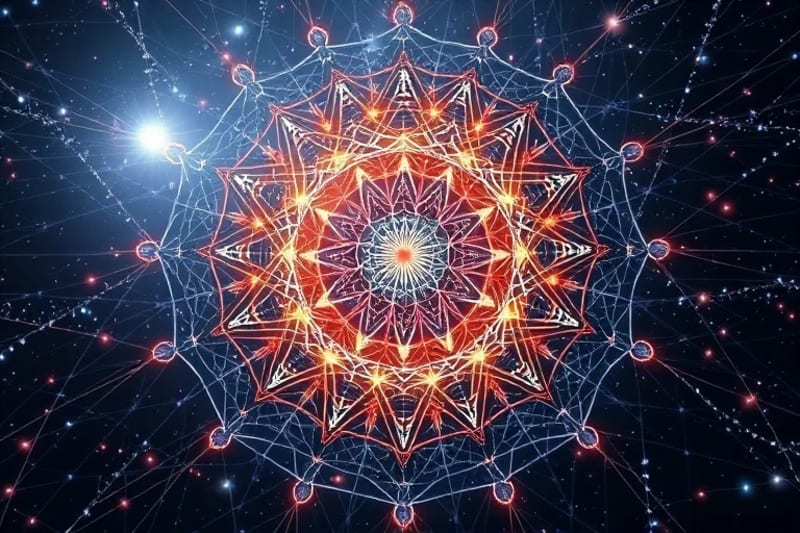 An abstract network of glowing nodes and lines, subtly integrating holographic dream scenarios, symbolizing the complex processing of diverse dream narratives by advanced AI.
Addressing these challenges requires ongoing research, ethical guidelines, and a commitment to responsible AI development. The goal is to augment human understanding, not replace it.
Future Applications and Potential
The future of AI dream interpretation is rich with possibilities:
- Therapeutic Support: AI tools could assist therapists by providing preliminary dream analyses, helping to identify recurring themes or potential areas of concern for their clients. This could streamline the therapeutic process and offer new avenues for insight.
- Mental Health Monitoring: By analyzing changes in dream patterns over time, AI could potentially flag early indicators of stress, anxiety, or other mental health issues, prompting users to seek professional help.
- Creative Inspiration: Artists, writers, and innovators could use AI dream analysis to tap into their subconscious for creative ideas, translating dream imagery into new works.
- Personal Development and Self-Discovery: For individuals seeking deeper self-understanding, AI can provide a continuous feedback loop, helping them track their inner journey and process emotional experiences. This aligns with the principles of Astro-Alchemy, transforming experiences into opportunities.
- Research into Consciousness: Aggregated, anonymized dream data analyzed by AI could offer unprecedented insights into the nature of human consciousness, universal symbols, and the collective unconscious, furthering scientific and psychological research.
The integration of AI with other biometric and psychological data could create even more comprehensive and personalized insights, pushing the boundaries of what we understand about the human mind.
Integrating AI Insights with Personal Reflection
While AI offers powerful analytical capabilities, it is crucial to remember that its role is to augment, not replace, human introspection. The most profound insights often emerge from the synergy between algorithmic analysis and personal reflection. Users are encouraged to view AI interpretations as starting points for their own exploration rather than definitive answers.
Engaging with AI dream reports should involve asking critical questions: "Does this resonate with my current life situation?" "What emotions did I feel in the dream, and how do they relate to the AI's interpretation?" "Are there personal associations with these symbols that the AI might not know?" This active engagement ensures that the process remains deeply personal and meaningful, fostering genuine self-awareness and growth.
The future of dream interpretation lies in this collaborative approach, where the efficiency and analytical power of AI meet the irreplaceable depth of human consciousness and subjective experience. As AI continues to evolve, its ability to understand and interpret the intricate language of dreams will only grow, offering humanity a powerful new tool for navigating the landscapes of the subconscious.
Explore More Insights
- Astro-Genomics: Karmic Health Blueprints DNA Connections Decoded
- Astro-Psychology: Shadow Work, Planetary Archetypes Healing
- Lilith's Shadow Chiron's Wound Karmic Synastry Integration
- Astro-Alchemy: Transmuting Lead Experiences into Gold Opportunities
- Chinese Lunar Calendar: Feng Shui, Personal Timing Applications
- Biometric Divination: Biofeedback Intuition Self-Discovery
- Astrological Decanates: Deeper Personality Layers Unlocked
- Karmic Nodes Vertex Conjunctions Soul Contracts Fated Dynamics
- Tarot Numerology Fusion: Life Path Predictive Insights
- Astrological Houses: Comprehensive Guide Life's Spheres
- Mutual Reception Astrology: Planetary Cooperation Chart Strength
- Crystal Healing Grids: Programming, Activating Intentions Guide
- Astro-Economics: Predicting Financial Markets Planetary Cycles
Source: Hybrid content assisted by AI and human editorial supervision.


Comments
Post a Comment