
Tarot Reading Esoteric Symbolism Universal Truths Unveiled
Tarot reading stands as an ancient and revered practice, offering a unique lens through which to explore the depths of human experience and the subtle energies of the universe. Far from being a mere fortune-telling device, Tarot is a profound system of esoteric symbolism, archetypes, and universal truths designed to foster self-awareness, provide guidance, and illuminate potential paths forward. This comprehensive guide delves into the intricate world of Tarot, unveiling its core components, historical roots, and its enduring relevance in contemporary spiritual and psychological exploration.
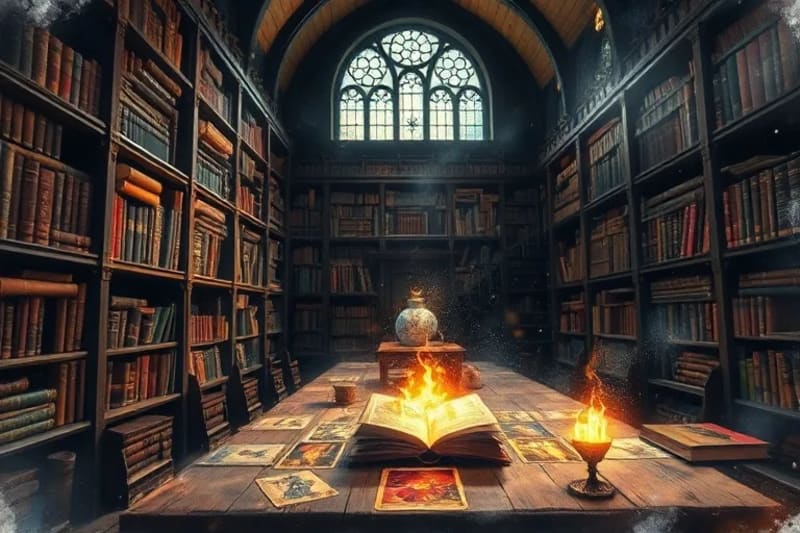 A mystical ancient library setting with glowing Tarot cards, representing the deep historical and symbolic roots of Tarot reading.
Originating in 15th-century Italy, the earliest Tarot decks, known as Tarocchi, were primarily used for games. However, over centuries, their rich imagery and thematic depth evolved into a powerful tool for divination and spiritual insight. Each card within a Tarot deck is a repository of symbolic meaning, drawing from a vast array of mystical traditions, alchemical principles, and universal archetypes that resonate deeply with the human psyche.
Understanding Tarot involves more than memorizing card meanings; it requires an intuitive grasp of the narrative unfolding within a spread and the ability to connect these symbols to personal circumstances. This introductory exploration aims to demystify Tarot, making its profound insights accessible to both novices and those seeking to deepen their existing knowledge. We will navigate its structure, decode its symbolism, and discuss how it serves as a mirror for our inner world, reflecting our past, present, and potential futures.
Table of Contents
- The Structure of a Tarot Deck: Major and Minor Arcana
- Decoding Esoteric Symbolism in Tarot
- The Art of Tarot Reading: Spreads and Interpretation
- Tarot as a Tool for Self-Reflection and Growth
- Ethical Considerations and Common Misconceptions
The Structure of a Tarot Deck: Major and Minor Arcana
A standard Tarot deck consists of 78 cards, divided into two main categories: the Major Arcana and the Minor Arcana. Each section plays a distinct role in conveying messages and insights, working together to form a holistic narrative during a reading.
The Major Arcana, comprising 22 cards, represents significant life lessons, karmic influences, and overarching archetypal themes. These cards depict major life events, spiritual awakenings, and fundamental aspects of the human journey. From The Fool's journey of innocence to The World's culmination of achievement, each card signifies a powerful universal force or stage of development.
Conversely, the Minor Arcana consists of 56 cards, further divided into four suits, much like a traditional playing card deck. These suits—Wands, Cups, Swords, and Pentacles—correspond to different aspects of daily life and elemental energies:
- Wands (Fire): Representing creativity, passion, inspiration, ambition, and action. They relate to our will and spiritual energy.
- Cups (Water): Symbolizing emotions, intuition, relationships, love, and creativity. They delve into our inner world and feelings.
- Swords (Air): Pertaining to intellect, logic, truth, conflict, and challenges. They address our thoughts, communication, and mental struggles.
- Pentacles (Earth): Associated with material possessions, finance, career, stability, and the physical world. They reflect our practical concerns and resources.
Each suit contains ten numbered cards (Ace to Ten) and four court cards (Page, Knight, Queen, King). These Minor Arcana cards illustrate the more mundane, day-to-day experiences, challenges, and opportunities, providing specific details and nuances to the broader themes presented by the Major Arcana. Together, they form a comprehensive system capable of reflecting the multifaceted nature of existence.
Decoding Esoteric Symbolism in Tarot
The true power of Tarot lies in its rich tapestry of esoteric symbolism. Every image, color, number, and character on a card is imbued with layers of meaning, drawing from diverse mystical traditions. Understanding these symbolic languages is key to unlocking the deeper messages of a reading.
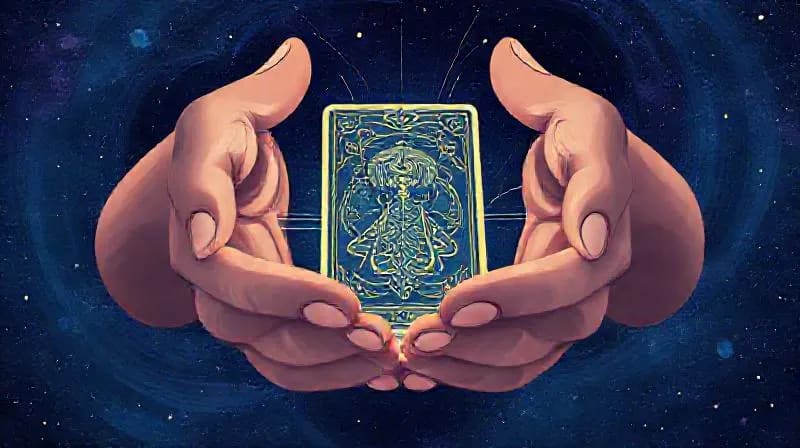 A digital painting of hands holding a Tarot card, illustrating the intricate details and cosmic connections within the symbolism.
Archetypes, as defined by Carl Jung, are universal, archaic patterns and images that derive from the collective unconscious. Tarot cards, particularly the Major Arcana, are potent representations of these archetypes. For instance, The Emperor embodies paternal authority and structure, while The Empress signifies nurturing and creativity. Recognizing these archetypal energies helps to interpret the psychological and spiritual dimensions of a reading.
Numerology also plays a crucial role in Tarot. Each number from one to ten carries specific vibrational meanings that enhance the card's interpretation. For example, the number one often signifies new beginnings and potential, while the number ten represents completion and culmination. The sequence of numbers within the Major Arcana also tells a story of spiritual evolution, from The Fool (0) to The World (21).
Furthermore, many Tarot decks incorporate astrological correspondences, linking cards to zodiac signs, planets, and elemental energies. This integration provides an additional layer of insight, connecting personal readings to broader cosmic influences. For those interested in exploring these deeper connections, understanding astrological houses can provide a foundational context for Tarot's cosmic symbolism, as discussed in Astrological Houses: Complete Guide to Birth Chart Areas.
The colors used in Tarot imagery are not arbitrary; they too carry symbolic weight. Red often signifies passion and energy, blue represents intuition and spirituality, and green is associated with growth and abundance. By paying attention to these visual cues, a reader can gain a more nuanced understanding of the card's message. The interplay of these diverse symbolic systems makes Tarot a uniquely rich and profound divinatory art.
The Art of Tarot Reading: Spreads and Interpretation
Reading Tarot is both an art and a skill that develops with practice and intuition. It involves selecting cards, arranging them in a specific pattern known as a "spread," and interpreting their meanings in relation to each other and the querent's question. There are numerous spreads, each designed for different types of inquiries.
One of the most popular and versatile spreads is the Celtic Cross, which typically uses ten cards to provide a comprehensive overview of a situation, including past influences, present challenges, future possibilities, and the querent's hopes and fears. Other common spreads include the Three-Card Spread (past, present, future), the Horseshoe Spread, and various custom spreads tailored to specific questions.
The interpretation of cards is not rigid; it is a fluid process that combines traditional meanings with intuitive insights. A card's meaning can shift depending on its position in a spread, its relationship to surrounding cards, and whether it appears upright or reversed. Reversed cards often indicate a blocked energy, an internal challenge, or an aspect that needs re-evaluation.
Developing intuition is paramount for effective Tarot reading. This can be enhanced through practices like meditation, journaling, and mindful observation. Just as Dream Incubation Starlight aims to harness subconscious insights, Tarot encourages a deep connection with one's inner wisdom to interpret the messages revealed by the cards. It's a dialogue between the conscious mind, the subconscious, and the universal energies represented by the Tarot.
 An abstract art piece with flowing colors, symbolizing the interconnectedness and universal energies that Tarot seeks to unveil.
Tarot as a Tool for Self-Reflection and Growth
Beyond its divinatory aspects, Tarot serves as an exceptional tool for self-reflection, personal growth, and psychological insight. It acts as a mirror, reflecting our inner landscape, highlighting our strengths, weaknesses, and the hidden dynamics at play in our lives. This introspective quality makes Tarot invaluable for personal development.
When approaching Tarot with a focus on self-reflection, the questions posed are often more open-ended and exploratory. Instead of asking "Will I get the job?", one might ask "What aspects of myself should I cultivate to attract the right career opportunity?" This shift in perspective empowers the querent to take an active role in shaping their future, rather than passively awaiting a prediction.
Tarot can help identify underlying patterns, unconscious beliefs, and emotional blocks that may be hindering progress. By bringing these to conscious awareness, individuals can begin to address them, fostering healing and transformation. This process aligns with the concept of exploring one's Akashic Records: Soul's Blueprint, accessing deeper layers of self-understanding and soul purpose.
Many psychologists and spiritual counselors integrate Tarot into their practices as a means of facilitating dialogue and exploring client issues from a symbolic perspective. It provides a non-threatening way to discuss sensitive topics and gain new perspectives. The visual nature of the cards often bypasses intellectual defenses, allowing for deeper emotional engagement and insight.
Ethical Considerations and Common Misconceptions
As with any practice involving personal guidance, ethical considerations are paramount in Tarot reading. A responsible reader approaches the cards with respect, empathy, and a commitment to empowering the querent. It is crucial to remember that Tarot offers insights and possibilities, not absolute decrees.
One common misconception is that Tarot predicts an unchangeable future. In reality, Tarot illuminates current energies, potential outcomes based on present circumstances, and areas for personal agency. The future is dynamic and influenced by free will; Tarot simply provides a map, not a fixed destination. It encourages proactive decision-making rather than passive acceptance.
Another misconception is that Tarot is inherently evil or associated with dark magic. Historically, Tarot has been used across various spiritual traditions and is a tool, its ethical application resting solely with the reader's intent. When used with positive intention, it serves as a source of wisdom and enlightenment.
Ethical readers avoid making definitive predictions about health, legal outcomes, or financial investments, as these areas require professional expertise. Instead, they focus on offering guidance that helps the querent navigate their choices and challenges. Transparency about the limitations of Tarot and a focus on empowering the individual are hallmarks of responsible practice. For those exploring new spiritual tools, understanding these boundaries is as important as exploring the potential of AI Spiritual Guidance: Ethics, Futures, Intuitive Tools.
In conclusion, Tarot reading is a rich, multifaceted practice that transcends simple fortune-telling. It is a powerful system of esoteric symbolism, archetypes, and universal truths that provides a framework for self-discovery, personal growth, and navigating life's complexities. By understanding its structure, decoding its symbols, and approaching it with an open mind and ethical intent, individuals can unlock profound insights and harness the wisdom of the cards to illuminate their path.
Explore Further: Related Insights
Source: Hybrid content assisted by AI and human editorial supervision.


Comments
Post a Comment