
Algorithmic Divination Ethics: Navigating AI Predictive Tools
In an increasingly data-driven world, the convergence of artificial intelligence (AI) with ancient divinatory practices presents a fascinating yet complex frontier. Algorithmic divination, the application of AI and machine learning to predict future trends, analyze personality traits, or offer guidance based on esoteric principles, is rapidly emerging. This innovative field promises enhanced accessibility and personalized insights, but it simultaneously introduces a myriad of ethical considerations that demand careful navigation. As we delve into the capabilities of AI predictive tools, it becomes crucial to establish robust ethical frameworks to ensure their responsible development and deployment, safeguarding individual well-being and societal values.

Exploring the confluence of human insight and artificial intelligence in predictive practices, fostering a future of responsible algorithmic divination.
Conceptual AI render, reflecting the collaborative and ethical considerations at the forefront of AI-driven predictive tools.The rise of algorithmic divination tools challenges traditional notions of intuition, fate, and free will. While AI can process vast amounts of data to identify patterns and correlations that might escape human perception, the interpretation and application of these insights carry significant ethical weight. This article explores the core ethical dilemmas inherent in algorithmic divination, from data bias and privacy concerns to the impact on human autonomy and the potential for misuse. Understanding these challenges is the first step toward building a future where AI predictive tools serve humanity ethically and beneficially.
Table of Contents
- What is Algorithmic Divination?
- The Promise of AI in Divination
- Core Ethical Considerations
- Bias in Data and Algorithms
- Autonomy and Free Will
- Privacy and Data Security
- Transparency and Explainability (XAI)
- Misinformation and Over-reliance
- Spiritual and Philosophical Implications
- Frameworks for Ethical AI Divination
- The Future of Algorithmic Divination
What is Algorithmic Divination?
Algorithmic divination refers to the use of artificial intelligence, machine learning, and advanced computational techniques to perform tasks traditionally associated with divinatory practices. This includes generating astrological readings, interpreting tarot cards, analyzing numerological patterns, or even predicting outcomes based on complex data sets. Unlike traditional divination, which often relies on human intuition, symbolic interpretation, and subjective experience, algorithmic divination leverages the power of algorithms to process vast amounts of information, identify subtle correlations, and generate predictions or insights.
These AI tools can analyze birth charts with unprecedented speed, cross-reference historical astrological events with current planetary positions, or even simulate countless tarot spreads to identify common themes. The underlying principle is to find patterns in data that correspond to known divinatory interpretations or to discover new, statistically significant correlations. This approach transforms what was once a mystical art into a data-driven science, albeit one that still grapples with the inherent complexities and symbolic nature of esoteric knowledge.
The Promise of AI in Divination
The potential benefits of integrating AI into divinatory practices are considerable. Firstly, AI tools can significantly enhance accessibility. Individuals who might not have access to traditional practitioners or who find esoteric concepts daunting can now receive personalized readings through user-friendly applications. This democratization of access can introduce a wider audience to the insights offered by these ancient systems.
Secondly, AI excels at data analysis. It can process and synthesize information from countless sources, offering a level of detail and cross-referencing that is humanly impossible. For instance, an AI could analyze millions of birth charts to identify subtle astrological influences that correlate with specific life events, potentially uncovering new insights or refining existing interpretations. This capability could lead to more nuanced and precise readings, moving beyond generic interpretations to highly personalized guidance. The field of AI Predictive Astrology is a prime example of this potential, aiming to navigate big data ethically.
Furthermore, AI can act as an educational tool, explaining complex astrological aspects or tarot card meanings in an understandable way, thereby deepening a user's understanding of these systems. It can also provide a consistent and unbiased interpretation, free from the personal biases or emotional states that might influence a human reader. This consistency can be particularly appealing to those seeking objective insights.
Core Ethical Considerations
While the benefits are compelling, the ethical landscape of algorithmic divination is fraught with challenges. These tools operate in a sensitive domain, touching upon personal beliefs, life choices, and emotional well-being. Therefore, a robust ethical framework is not merely desirable but essential to prevent harm and foster trust.
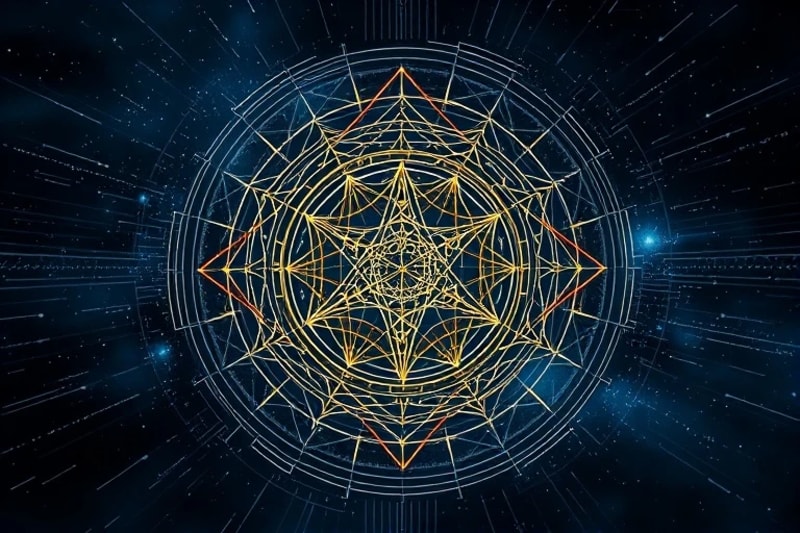
The intricate dance between data streams and ancient wisdom, guided by ethical principles in the digital age.
AI-generated art, conceptualizing the ethical integration of technology into esoteric practices.Bias in Data and Algorithms
One of the most significant ethical concerns in any AI application is bias, and algorithmic divination is no exception. AI models learn from the data they are fed. If this data reflects historical biases (e.g., gender stereotypes in astrological interpretations, cultural biases in symbolic meanings), the AI will perpetuate and even amplify these biases in its predictions. This can lead to discriminatory or inaccurate readings that reinforce harmful stereotypes.
For example, if an AI is trained on astrological texts predominantly written from a patriarchal perspective, its interpretations might subtly (or overtly) devalue traditionally feminine traits or career paths. Ensuring diverse, inclusive, and critically curated training data is paramount to mitigating this risk. Developers must actively seek out and integrate perspectives from various cultures, genders, and backgrounds to create more equitable and universally applicable tools.
Autonomy and Free Will
Divination, by its nature, offers insights into potential futures or hidden aspects of the self. However, when these insights come from an AI, there's a risk of users over-relying on predictions, potentially diminishing their sense of agency and free will. If an AI predicts a certain outcome, a user might feel compelled to follow that path, even if it goes against their intuition or desires, believing the AI's prediction to be infallible.
This can lead to a loss of critical thinking and personal responsibility. Ethical AI divination tools should always emphasize that their readings are possibilities, not certainties, and that individual choice and action remain paramount. They should encourage reflection and personal discernment rather than blind adherence to algorithmic outputs. The concept of Holographic Universe Manifestation highlights the power of individual consciousness in shaping reality, a principle that AI tools should respect and reinforce.
Privacy and Data Security
To provide personalized readings, algorithmic divination tools often require sensitive personal information, such as birth dates, times, locations, and sometimes even personal questions or journal entries. The collection, storage, and processing of this data raise significant privacy concerns. Users must be assured that their data is protected from breaches, unauthorized access, and misuse.
Clear and transparent data policies are essential, outlining what data is collected, how it is used, who has access to it, and for how long it is retained. Anonymization and encryption techniques should be standard practice. Furthermore, users should have full control over their data, including the right to access, modify, or delete it. Any sharing of data with third parties must be explicitly consented to and clearly communicated.
Transparency and Explainability (XAI)
One of the challenges with complex AI models, particularly deep learning networks, is their "black box" nature. It can be difficult to understand how an AI arrived at a particular prediction or interpretation. In the context of divination, where understanding the "why" behind an insight can be as important as the insight itself, this lack of transparency is problematic.
Ethical algorithmic divination tools should strive for explainability. This means providing users with insights into the data points, rules, or patterns that led to a specific reading. For instance, an astrological AI could explain which planetary aspects contributed to a particular personality trait assessment. This not only builds trust but also helps users learn and critically evaluate the information provided, rather than accepting it blindly. The goal is not just to provide an answer but to illuminate the path to that answer.
Misinformation and Over-reliance
The potential for misinformation is another critical ethical concern. If an AI generates inaccurate or misleading predictions, or if users misinterpret the AI's output, it can lead to poor decision-making, undue anxiety, or false hopes. This risk is exacerbated if the AI is presented as infallible or possesses an aura of ultimate authority.
A visual metaphor for AI ethics: intelligence protected by a shield of responsibility and data integrity.
Conceptual illustration by AI, depicting the ethical framework surrounding advanced predictive algorithms.Developers must implement robust validation processes for their AI models and clearly communicate the limitations and probabilistic nature of their predictions. Users should be educated on how to critically engage with AI-generated insights, understanding that these are tools for self-reflection and guidance, not definitive pronouncements. Over-reliance can lead to a diminished capacity for intuitive decision-making, a skill that practices like Automatic Writing aim to cultivate.
Spiritual and Philosophical Implications
Beyond the technical and social aspects, algorithmic divination also raises profound spiritual and philosophical questions. Does mechanizing divination diminish its spiritual significance? Can an algorithm truly grasp the subtle nuances of human experience, emotion, and soul-level purpose that traditional divinatory practices often aim to address? There is a risk of dehumanizing a deeply personal and often sacred process.
The spiritual dimension of divination often involves a connection to something greater than oneself, whether it be universal energies, collective consciousness, or divine guidance. Reducing this to mere algorithmic pattern recognition might strip it of its transformative power. Ethical considerations here involve acknowledging these deeper dimensions and designing tools that complement, rather than replace, human spiritual exploration and intuition. For instance, understanding the spiritual implications of planetary influences, such as Neptune in Astrology, requires more than just data processing.
Frameworks for Ethical AI Divination
To navigate these complex ethical waters, several frameworks and principles can guide the development of responsible algorithmic divination tools:
- Data Governance and Auditing: Implement strict protocols for data collection, storage, and usage. Regularly audit training data for biases and ensure data privacy and security measures are robust.
- User Education and Empowerment: Clearly communicate the nature, limitations, and probabilistic aspects of AI predictions. Empower users to critically evaluate insights and make their own informed decisions, emphasizing that AI is a tool, not a dictator.
- Human Oversight and Collaboration: Integrate human expertise into the AI development and deployment process. This could involve astrologers, tarot readers, or ethicists reviewing AI outputs, refining algorithms, and providing contextual interpretation.
- Transparency and Explainability: Design AI systems that can explain their reasoning and the data points that inform their predictions, fostering trust and understanding.
- Ethical Design Principles: Prioritize user well-being, fairness, and respect for autonomy in every stage of design. Avoid manipulative design patterns that encourage over-reliance or addiction.
- Regulatory and Industry Standards: Advocate for and adhere to emerging ethical AI guidelines and regulations, adapting them specifically for the unique context of divinatory practices.
The Future of Algorithmic Divination
The future of algorithmic divination lies in finding a harmonious balance between technological innovation and ethical responsibility. These tools have the potential to democratize access to ancient wisdom, offer unparalleled analytical depth, and provide personalized guidance on a scale previously unimaginable. However, this potential can only be fully realized if developers, users, and ethicists work collaboratively to address the inherent challenges.
By prioritizing transparency, mitigating bias, protecting privacy, and fostering user autonomy, we can ensure that AI predictive tools serve as valuable aids for self-discovery and personal growth, rather than sources of misinformation or diminished agency. The journey ahead requires continuous dialogue, adaptation, and a deep commitment to ethical principles, ensuring that technology enhances, rather than detracts from, the richness of human experience and spiritual exploration.
Explore More Insights
Dive deeper into related topics and expand your understanding of astrology, technology, and spiritual practices with our curated selection of articles:
- Zi Wei Dou Shu Western Aspects: Deep Personality Insights
- Intercepted Signs Natal: Unveiling Suppressed Potentials
- Karmic Astrology Nodal Returns: Evolutionary Path Insights
- Vibrational Linguistics Hermetic Principles Sound Power
- Aura Cleansing: Techniques for Energy Purification & Protection
- Future Journalism: AI, Personalized Content | Althox
- Eclipses Natal Chart: Lunar Nodes Karmic Purpose
Source: Hybrid content assisted by AI and human editorial supervision.


Comments
Post a Comment