
AI Divination Ethics: Algorithmic Oracles Predictive Tools
The convergence of artificial intelligence (AI) and ancient divinatory practices marks a fascinating, yet complex, frontier. As AI systems become increasingly sophisticated, their capacity to process vast amounts of data and identify patterns has led to their application in areas traditionally reserved for human intuition and spiritual insight. This new era introduces "algorithmic oracles," predictive tools that promise to unveil future trends or offer guidance based on complex computational models.
However, the integration of AI into divination is not without its challenges, particularly concerning ethical considerations. Navigating this landscape requires a deep understanding of both the technological capabilities of AI and the profound implications its use may have on human autonomy, belief systems, and societal structures. This article explores the ethical dimensions of AI in divination, offering an introductory yet comprehensive overview for those new to this intriguing intersection.
The rise of AI in predictive analytics extends beyond mere data forecasting, touching upon the very essence of how we seek answers and understand our paths. It compels us to question the nature of foresight itself, whether it stems from mystical revelation or statistical probability. As we delve into this topic, we will uncover the promises and pitfalls of entrusting our questions to algorithms.
- The Rise of Algorithmic Oracles
- Ethical Frameworks for AI Divination
- The Human Element: Intuition vs. Algorithm
- Societal Implications and Future Outlook
The Rise of Algorithmic Oracles
Algorithmic oracles represent a new generation of predictive tools that leverage artificial intelligence, machine learning, and vast datasets to generate insights or forecasts. Unlike traditional divination, which often relies on symbolic interpretation, intuition, or spiritual connection, these AI systems operate on statistical probabilities and pattern recognition. They analyze historical data, current trends, and complex variables to output predictions or guidance.
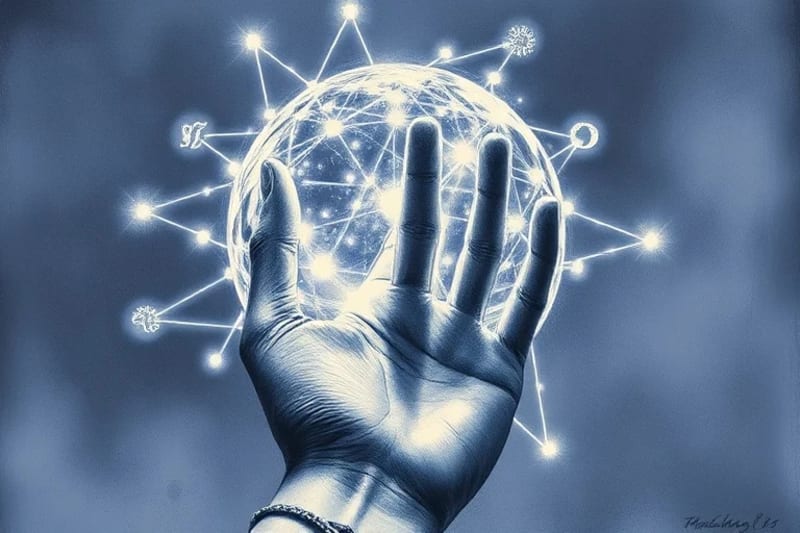 Exploring the intricate dance between human curiosity and the advanced computational processes that shape modern predictive insights.
This conceptual rendering, generated by AI, visualizes the complex interplay of data, algorithms, and human interaction in the realm of digital foresight, offered under a Creative Commons-like understanding.
The core mechanism of an algorithmic oracle involves feeding an AI model with extensive information related to a specific domain. For instance, in an astrological context, this could include planetary positions, historical events, and individual birth chart data. The AI then identifies correlations and causal relationships that might be too subtle or complex for human analysis, ultimately formulating a probabilistic outcome or a set of potential scenarios.
Early forms of AI have long been used in fields like financial forecasting, weather prediction, and even medical diagnostics. These applications demonstrate AI's capability to process complex variables and predict outcomes with a certain degree of accuracy. The leap to "divination" involves applying these same principles to more abstract or personal questions, attempting to quantify and predict aspects of human experience or destiny.
The appeal of algorithmic oracles lies in their potential for objectivity, speed, and the ability to process data on a scale impossible for human diviners. They promise to democratize access to predictive insights, making them available to anyone with an internet connection. However, this accessibility also raises critical questions about the nature of the information provided and its potential impact on users.
For a deeper understanding of how complex data points can influence individual paths, consider the insights offered by Dark Planets: Holistic Natal Chart Interpretation, which delves into the nuanced influences shaping one's destiny.
Ethical Frameworks for AI Divination
The ethical considerations surrounding AI in divination are multifaceted and require careful examination. As these tools become more prevalent, it is crucial to establish robust ethical frameworks to guide their development and deployment. These frameworks must address potential harms and ensure responsible use.
 A visual metaphor for the intricate and often opaque nature of algorithmic decision-making in predictive systems.
This digital artwork, a conceptual AI rendering, illustrates the complex internal workings of an algorithmic oracle, available for use under a permissive license.
One of the primary concerns is **bias in data**. AI models learn from the data they are fed. If this data reflects historical biases, prejudices, or inequalities, the AI's predictions will inevitably perpetuate and amplify these biases. For example, if an AI divination system is trained on historical records that favor certain demographics or exclude others, its "insights" could be inherently skewed, leading to unfair or discriminatory outcomes for users.
**Autonomy and free will** are also at stake. When individuals receive AI-generated predictions, there's a risk they might overly rely on these outputs, potentially undermining their own decision-making processes and sense of agency. The psychological impact of receiving a seemingly authoritative "prediction" from an advanced system could lead individuals to alter their life choices based on algorithmic suggestions, rather than personal intuition or critical thought.
The **transparency and explainability (XAI)** of these systems pose another significant challenge. Many advanced AI models, particularly deep neural networks, operate as "black boxes," meaning their internal decision-making processes are opaque and difficult for humans to understand. If an AI oracle delivers a prediction, users have a right to know how that conclusion was reached. Without transparency, trust erodes, and it becomes impossible to identify or correct errors and biases.
**Misinformation and manipulation** are ever-present dangers. Malicious actors could potentially exploit AI divination systems to spread false or harmful predictions, influencing public opinion, market behavior, or individual actions. The persuasive power of an AI-generated prophecy could be immense, making it a potent tool for manipulation if not properly regulated and secured.
Finally, the question of **responsibility and accountability** is paramount. If an AI oracle provides guidance that leads to negative consequences for a user, who is responsible? Is it the developer of the AI, the platform hosting it, or the user who chose to follow the advice? Clear lines of accountability must be established to ensure that harms can be addressed and justice can be sought.
Understanding the subtle energies and patterns that influence our well-being, as explored in Psychosomatic Astrology: Healing Body Planetary Patterns, can provide a contrasting perspective on how different systems approach personal insight.
The Human Element: Intuition vs. Algorithm
The advent of AI in divination forces us to re-evaluate the role of the human element in understanding the future. Traditional divinatory practices, from tarot reading to astrology, rely heavily on human intuition, symbolic interpretation, and the nuanced understanding of individual circumstances. These practices often involve a dialogue between the diviner and the querent, allowing for personalized insights that go beyond simple data points.
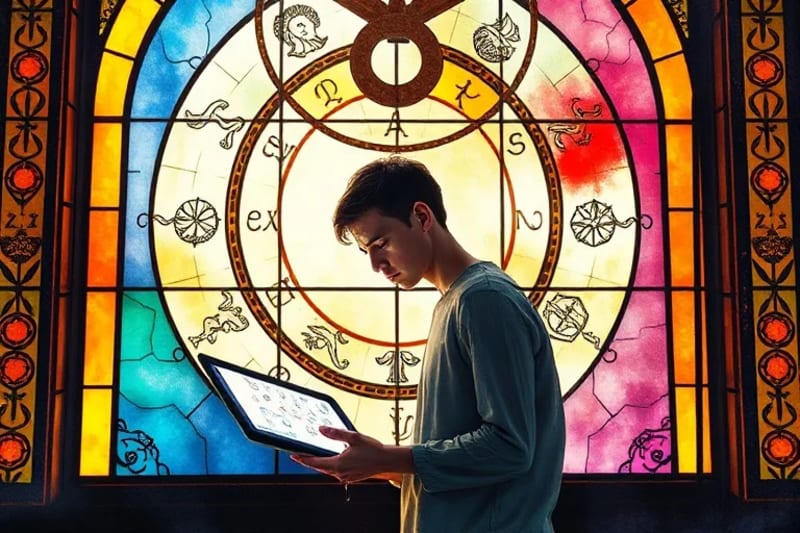 The quiet moment of reflection as an individual processes the insights offered by an advanced algorithmic system.
This watercolor interpretation, a product of AI's artistic rendering capabilities, captures the introspective aspect of engaging with predictive technologies, freely available for use.
AI, by contrast, operates on cold, hard data. While it can identify complex patterns and correlations, it lacks consciousness, empathy, and the capacity for subjective experience. Can an algorithm truly understand the symbolic meaning of a dream, the emotional weight of a relationship, or the spiritual significance of a life event? Or does it merely provide a statistical probability based on past occurrences?
The debate between intuition and algorithm highlights the fundamental differences in how knowledge is acquired and interpreted. Human intuition often involves subconscious processing, pattern recognition, and gut feelings that are difficult to quantify. AI, while mimicking some aspects of human cognition, does so through programmed logic and statistical models, not genuine understanding.
One perspective suggests that AI can serve as a powerful tool to augment human diviners, providing them with vast amounts of data and complex analyses that can inform their intuitive readings. In this scenario, AI acts as a sophisticated assistant, enhancing rather than replacing the human element. For example, an AI could quickly analyze thousands of astrological charts to identify common themes, which a human astrologer could then interpret with personal insight.
Another view posits that AI's data-driven approach fundamentally changes the nature of divination, transforming it from a spiritual practice into a form of advanced analytics. This shift could strip divination of its mystical essence, reducing complex human experiences to predictable algorithms. The challenge lies in finding a balance that respects both the scientific rigor of AI and the profound, often unquantifiable, aspects of human spirituality.
The power of words and their energetic resonance, as discussed in Astro-Linguistics Words Sigil Magic Manifestation, offers a contrasting perspective on how human intention and symbolism shape reality, a concept AI struggles to grasp.
Societal Implications and Future Outlook
The integration of AI into divination carries significant societal implications that extend beyond individual ethical concerns. As algorithmic oracles become more sophisticated and widely adopted, they have the potential to reshape belief systems, influence collective behavior, and even challenge existing legal and regulatory frameworks.
One major implication is the potential impact on **belief systems and spiritual practices**. If AI can offer seemingly accurate predictions, will traditional forms of divination lose their appeal? Will people begin to place more faith in algorithms than in spiritual leaders or personal intuition? This shift could lead to a secularization of mystical practices or, conversely, the emergence of new techno-spiritual belief systems centered around AI. The evolutionary journey of the soul, often explored through concepts like the North Node, presents a different kind of guidance, as detailed in Evolutionary Astrology North Node Aspects Chart Guide.
**Regulatory challenges** are also significant. Current laws are ill-equipped to handle the unique ethical dilemmas posed by AI divination. Questions arise regarding consumer protection, data privacy, and the potential for psychological harm. Governments and international bodies will need to develop new regulations that address the specific risks associated with algorithmic predictions, especially when they touch upon sensitive personal decisions or future life events.
On the positive side, AI divination could offer several **potential benefits**. It could make predictive insights more accessible to a broader audience, potentially empowering individuals with information that was once exclusive to a few. AI's ability to analyze vast datasets could also uncover previously unknown correlations, leading to new understandings of human behavior, collective consciousness, or even the underlying patterns of reality itself.
Moreover, AI could serve as a tool for **personal growth and self-reflection**. By presenting various probabilistic futures, it could encourage users to consider different paths and their potential outcomes, fostering a more proactive approach to life choices. The key here is to use AI as a guide, not a dictator, allowing individuals to maintain their agency and critical thinking skills.
The future outlook for AI in divination is likely one of continued evolution and adaptation. It is improbable that AI will entirely replace human diviners or traditional spiritual practices. Instead, we are more likely to see a hybrid approach, where AI tools complement human intuition and provide a new layer of data-driven insight. The critical factor will be the development of ethical guidelines that ensure these technologies are used responsibly, transparently, and with a deep respect for human autonomy and well-being.
Ultimately, navigating the ethical landscape of AI divination requires ongoing dialogue among technologists, ethicists, spiritual practitioners, and the public. It demands a commitment to understanding the profound implications of these tools and ensuring that their development serves humanity's highest good, rather than undermining it.
Discover More Esoteric Insights
Expand your knowledge of astrological and esoteric concepts with these related articles:
- Advanced Synastry: Deciphering Composite Charts Soul Contracts
- Emerald Tablet Hermetic Principles Manifestation Transformation
- Psychosomatic Astrology: Healing Body Planetary Patterns
- Lunar Astrology Emotional Well-being Moon Cycles Harmony
Source: Hybrid content assisted by AI and human editorial supervision.


Comments
Post a Comment