
hellenistic-astrologys-bridging-role-ancient-wisdom-modern-spirituality
Hellenistic astrology, a sophisticated system developed in the Greco-Roman world, represents a profound bridge between ancient cosmic understanding and modern spiritual exploration. Originating in Alexandria around the 1st century BCE, this intricate practice laid the foundational principles for much of Western astrology, influencing philosophical thought, medical practices, and personal divination for centuries. Its resurgence in contemporary times offers a unique lens through which individuals can connect with timeless wisdom, fostering self-awareness and guiding their spiritual journeys.
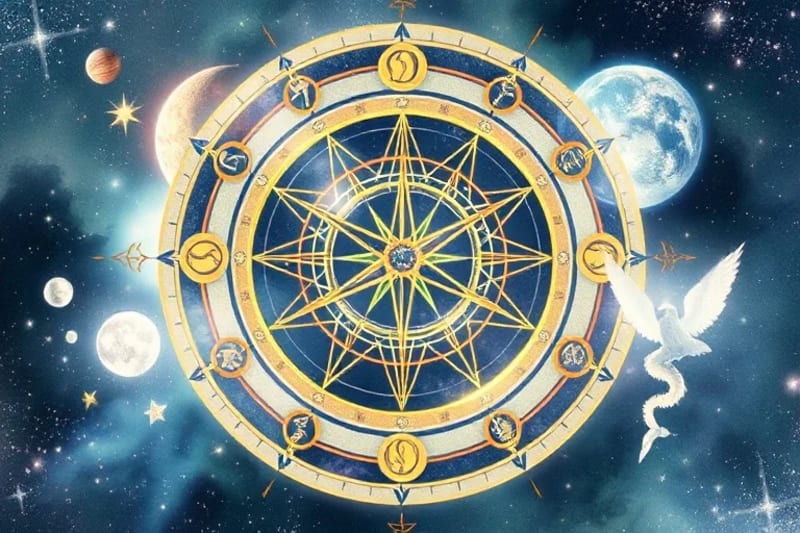
 Visualizing the profound confluence of historical astrological tools and contemporary spiritual practices, where ancient cosmic insights illuminate the path of modern self-discovery.
This conceptual rendering, crafted by AI, harmoniously blends the intricate designs of ancient observatories with the sleek interfaces of modern digital astrology, symbolizing a timeless quest for understanding.
Unlike some modern astrological approaches that focus heavily on psychological profiles, Hellenistic astrology often emphasizes a more deterministic view, exploring fate, destiny, and the inherent qualities imprinted at birth. However, this perspective is not about predestination without agency; rather, it provides a detailed map of potentials and challenges, empowering individuals to navigate their lives with greater understanding and purpose. By delving into its techniques, we uncover a rich tapestry of symbolism and methodology that can profoundly enhance our spiritual practices today.
Table of Contents
- Historical Roots and Core Principles
- Birth Chart Analysis: A Blueprint of the Soul
- Planetary Transits and Profections: Navigating Life's Cycles
- Synastry and Relationship Dynamics
- Esoteric Symbolism and Philosophical Underpinnings
- Celestial Mechanics and Observational Astrology
- Integrating Hellenistic Wisdom into Modern Spirituality
- Challenges and Opportunities in Revival
Historical Roots and Core Principles
Hellenistic astrology emerged from a vibrant intellectual melting pot in Alexandria, Egypt, synthesizing Babylonian astronomical observations with Egyptian decanic systems and Greek philosophical frameworks. This period saw the codification of many astrological concepts that are still used today, albeit often in modified forms. Key texts like those by Vettius Valens, Ptolemy, and Dorotheus of Sidon provide invaluable insights into the original practices and interpretations.
At its core, Hellenistic astrology operates on the principle of the cosmos as a living, interconnected entity, where celestial movements reflect and influence terrestrial events and individual lives. The planets, signs, and houses were not merely abstract symbols but divine expressions with specific temperaments and significations. This holistic worldview fostered a deep reverence for the heavens and a desire to understand humanity's place within the grand cosmic order.
Some fundamental principles that distinguish Hellenistic astrology include:
- Sect (Haeresis): The distinction between diurnal (day) and nocturnal (night) charts, which significantly impacts planetary interpretations. Planets in sect (e.g., Sun in a day chart) are considered stronger and more benevolent.
- Planetary Joy: Specific houses where planets are said to "rejoice," indicating a more favorable expression of their energies. For example, Mercury rejoices in the 1st house, signifying a strong intellect and communicative ability.
- Lots (or Parts): Arithmetically derived points in the chart that highlight specific areas of life, such as the Lot of Fortune, Lot of Spirit, and Lot of Eros. These lots provide nuanced insights into an individual's material well-being, purpose, and relationships.
- Fixed Stars: Greater emphasis on the influence of specific fixed stars, believed to confer powerful and often dramatic effects.
- Timing Techniques: A sophisticated array of predictive methods, including profections, zodiacal releasing, and primary directions, designed to pinpoint periods of activation and life events.
Understanding these foundational elements is crucial for anyone seeking to engage with Hellenistic astrology. They provide a robust framework for interpreting the birth chart and understanding life's unfolding narrative, offering a depth that can be profoundly enriching for modern spiritual seekers.
Birth Chart Analysis: A Blueprint of the Soul
In Hellenistic astrology, the birth chart is not merely a snapshot of planetary positions; it is considered a divine blueprint, a cosmic map detailing the soul's journey and its inherent predispositions. The analysis goes beyond simple sign interpretations, delving into complex interrelationships between planets, houses, and the zodiacal signs they occupy. This intricate methodology offers a comprehensive understanding of one's character, fate, and potential for growth.
 An abstract visualization of a birth chart, illustrating the dynamic interplay of planetary energies and the unfolding of life's cycles through transits.
This AI-generated digital painting captures the essence of a personal cosmic map, where ancient astrological symbols merge with a modern, flowing aesthetic.
Central to Hellenistic birth chart analysis are concepts such as the "Lord of the Geniture" (the most powerful planet in the chart), which often indicates a dominant theme or influence in a person's life. The condition of the Moon, particularly its phase and aspects, is also given significant weight, representing the native's body, soul, and general fortune. The Lots, especially the Lot of Fortune and Lot of Spirit, provide additional layers of insight into one's material success and spiritual drive, respectively.
Moreover, Hellenistic astrology employs a system of "temperaments" (choleric, sanguine, melancholic, phlegmatic) derived from the elemental balance in the chart, offering a deeper understanding of an individual's physical and psychological constitution. This contrasts with modern psychological astrology, which often focuses on archetypal expressions and personal development. While both approaches are valuable, the Hellenistic method provides a more structured and often predictive framework for understanding the inherent qualities and circumstances of a life.
For modern spiritual practitioners, a Hellenistic birth chart reading can be a powerful tool for self-discovery. It can illuminate innate talents, challenges, and life themes that might otherwise remain obscure. By understanding these cosmic predispositions, individuals can align their actions with their true nature, fostering a sense of purpose and spiritual harmony. This ancient wisdom helps in recognizing patterns and making conscious choices that resonate with one's unique cosmic blueprint.
Planetary Transits and Profections: Navigating Life's Cycles
One of the most compelling aspects of Hellenistic astrology is its sophisticated array of timing techniques, designed to predict and understand the unfolding of life events. While modern astrology often relies heavily on planetary transits, Hellenistic practice incorporates additional methods like profections and zodiacal releasing, offering a more nuanced and layered perspective on life's cycles. These techniques provide a roadmap for navigating periods of growth, challenge, and transformation.
Profections involve advancing the Ascendant and the Lord of the Year one sign per year, activating specific houses and their planetary rulers. This highlights particular areas of life that will be in focus during a given year, providing a thematic overview. For example, a 7th house profection might indicate a year focused on relationships, partnerships, or open enemies. This method helps individuals prepare for and make the most of the prevailing energies of their year.
Zodiacal Releasing is another powerful timing technique, derived from the Lot of Fortune or Lot of Spirit, which divides a person's life into distinct periods ruled by different zodiacal signs and planets. These periods can last for years, months, or even days, indicating when certain life areas will be activated or culminate. It's particularly useful for understanding peak periods of career, relationships, or significant life changes, offering a sense of cosmic rhythm to one's personal journey. This technique allows for a detailed understanding of the ebb and flow of fortune and spirit throughout a lifetime.
By combining these ancient timing techniques with contemporary spiritual practices, individuals can gain a profound sense of agency. Knowing when specific life areas are highlighted allows for intentional focus, ritual work, and self-reflection. For instance, a period indicated by zodiacal releasing as a "release from bonds" might be an ideal time for spiritual purification or letting go of old patterns. This integration helps transform passive understanding into active spiritual engagement.
Synastry and Relationship Dynamics
Hellenistic astrology offers a distinctive approach to understanding relationship dynamics through synastry, the comparison of two birth charts. While modern synastry often focuses on psychological compatibility and romantic attraction, Hellenistic methods delve into the deeper, fated connections and the practical implications of relationships, including marriage, friendships, and even adversarial interactions. This ancient perspective provides a more comprehensive view of how individuals are cosmically intertwined.
 A delicate watercolor rendering of esoteric symbols and celestial mechanisms, evoking the hidden wisdom and spiritual depth of ancient astrological traditions.
This AI-generated illustration beautifully captures the mystical essence of cosmic knowledge, blending ancient iconography with a soft, ethereal aesthetic.
Key to Hellenistic synastry is the concept of "planetary bonds" or "testimony," where planets in one chart interact with significant points or planets in another. For instance, the ruler of the 7th house (relationships) in one chart making a strong aspect to a planet in the other chart would indicate a powerful connection. The condition of the Lot of Marriage and the Lot of Friendship in both charts also provides crucial insights into the nature and longevity of various relationships.
Furthermore, Hellenistic astrology considers the "sect" of each chart (day or night) when assessing compatibility, as planets in sect tend to be more harmonious. The interplay of the "lights" (Sun and Moon) between charts is also paramount, indicating how two individuals' core essences and emotional needs align. This detailed analysis moves beyond superficial attractions to reveal the underlying cosmic architecture of a relationship, including its potential for support, challenge, and shared destiny.
For modern spiritual practitioners, Hellenistic synastry can be an invaluable tool for fostering deeper, more conscious relationships. By understanding the fated connections and inherent dynamics, individuals can approach their interactions with greater empathy and awareness. It helps in recognizing the spiritual lessons embedded within relationships and cultivating bonds that support mutual growth and understanding. This perspective encourages a view of relationships as part of a larger cosmic plan, offering opportunities for profound spiritual evolution. To dive deeper into how celestial mechanics influence global consciousness, consider exploring Cosmic Sociology Celestial Mechanics Global Consciousness.
Esoteric Symbolism and Philosophical Underpinnings
Hellenistic astrology is deeply interwoven with the esoteric and philosophical currents of its time, particularly Neoplatonism and Hermeticism. These philosophical underpinnings provide a rich symbolic language and a profound worldview that elevates astrology beyond mere prediction to a spiritual discipline. Understanding this context is essential for appreciating the full depth of Hellenistic wisdom and its relevance to modern spiritual practices.
Neoplatonism, with its emphasis on the emanation of the divine from a singular, transcendent source, viewed the cosmos as a hierarchical structure reflecting this divine order. Planets were seen as intermediaries between the divine and the terrestrial, each embodying specific divine qualities. This perspective encouraged a contemplative approach to astrology, where understanding planetary influences was a path to understanding the divine itself.
Hermeticism, a body of philosophical-religious beliefs based on the writings attributed to Hermes Trismegistus, further enriched Hellenistic astrology with concepts of "as above, so below." This principle suggests a direct correspondence between the macrocosm (the cosmos) and the microcosm (humanity), implying that by understanding the heavens, one could understand oneself and the divine. Hermetic texts also introduced ideas of planetary magic and theurgy, practices aimed at interacting with divine beings and energies for spiritual purification and ascent.
The esoteric symbolism embedded in Hellenistic astrology extends to the planetary deities, zodiacal animals, and even the geometric patterns of aspects. Each symbol carries layers of meaning, reflecting not only mundane influences but also spiritual archetypes and cosmic laws. For modern spiritual practitioners, engaging with this symbolism can deepen meditation, ritual work, and personal gnosis. It encourages a holistic view of existence, where the material and spiritual realms are inextricably linked. For those interested in how these symbols can be used for manifestation, consider exploring Sigils Power Creating Personal Symbols Manifestation Guide.
Celestial Mechanics and Observational Astrology
While Hellenistic astrology is rich in symbolism and philosophy, it is also grounded in a sophisticated understanding of celestial mechanics, albeit from a geocentric perspective. The meticulous observation of planetary movements, the cycles of the Moon, and the positions of fixed stars formed the empirical basis for astrological predictions and interpretations. This emphasis on observation and the practical application of astronomical knowledge highlights the scientific rigor that underpinned ancient astrological practice.
The geocentric model, which places Earth at the center of the universe, was not merely a scientific error but a philosophical construct that centered human experience within the cosmos. From this perspective, the movements of the planets around Earth were seen as directly influencing human life. Ancient astrologers developed precise methods for calculating planetary positions, ascendants, and house cusps, often relying on complex mathematical tables and instruments like the astrolabe.
The importance of observational astrology in the Hellenistic period cannot be overstated. Astrologers were often astronomers, meticulously tracking celestial phenomena to refine their predictive models. This practical engagement with the heavens fostered a deep connection to the natural world and the cosmic rhythms. It was a practice that required both intellectual acumen and a profound sense of wonder at the universe.
For modern spiritual practitioners, reconnecting with the observational aspects of astrology can be a powerful grounding practice. Spending time observing the night sky, tracking lunar phases, or noting planetary conjunctions can deepen one's appreciation for the cosmic forces at play. It transforms abstract astrological concepts into tangible experiences, fostering a more embodied and intuitive understanding of celestial influences. This blend of empirical observation and spiritual interpretation forms a critical component of Hellenistic wisdom. To understand how planetary positions influence career paths, one might look into Chinese Zodiac Career Aptitude: Finding Your Best Professional Fit, which, while different in origin, shares a similar focus on celestial influence on life paths.
Integrating Hellenistic Wisdom into Modern Spirituality
The revival of Hellenistic astrology offers a unique opportunity to integrate ancient wisdom into contemporary spiritual practices, creating a holistic and deeply meaningful path. This integration is not about abandoning modern approaches but rather enriching them with the depth, rigor, and philosophical grounding of Hellenistic thought. By combining these perspectives, individuals can cultivate a more profound connection to themselves, their destiny, and the cosmos.
One key area of integration is self-reflection and mindfulness. Understanding one's Hellenistic birth chart can provide a detailed map of inherent strengths, weaknesses, and life themes. This knowledge can then be used in mindfulness practices to observe how these cosmic predispositions manifest in daily life. For example, recognizing a challenging planetary placement can lead to targeted meditation or journaling practices aimed at transforming those energies into growth opportunities. This self-awareness is foundational to spiritual development.
Ritual and intentional living also benefit from Hellenistic insights. Knowing the specific planetary rulers of certain days, hours, or periods (as indicated by timing techniques) allows for the alignment of intentions with cosmic energies. A practitioner might choose to perform a ritual for abundance during a period ruled by Jupiter or focus on healing during a Venus-ruled time. This intentional alignment enhances the efficacy of spiritual practices and fosters a sense of being in harmony with the universe.
Furthermore, the philosophical underpinnings of Hellenistic astrology encourage a holistic worldview that sees the divine in all aspects of existence. This perspective can deepen one's spiritual connection by fostering a sense of reverence for the natural world, the celestial bodies, and the intricate web of life. It moves beyond anthropocentric views, embracing a cosmic spirituality that recognizes humanity as an integral part of a larger, living universe. This holistic approach can be seen in practices like Astro-Botany: Celestial Influences Plant Growth Energetics, which explores the cosmic connection with earthly life.
Challenges and Opportunities in Revival
The revival of Hellenistic astrology in the 21st century comes with both unique challenges and significant opportunities. While its complexity and the need to learn ancient techniques can be daunting for newcomers, the depth of insight it offers makes it an incredibly rewarding pursuit for those committed to serious study and spiritual growth.
One of the primary challenges is the learning curve. Hellenistic astrology requires a different mindset and a mastery of concepts that may be unfamiliar to those accustomed to modern psychological astrology. Terms like "sect," "lots," "profections," and "zodiacal releasing" demand dedicated study and practice. Access to accurate translations of ancient texts and reliable educational resources is crucial for navigating this complex system.
However, these challenges are outweighed by the immense opportunities presented by its revival. The meticulous and often predictive nature of Hellenistic techniques can provide a level of clarity and detail that is often missing in more generalized astrological readings. This precision can be incredibly empowering, helping individuals to understand the timing of life events and make informed decisions that align with their cosmic blueprint.
Moreover, the re-engagement with Hellenistic astrology fosters a deeper appreciation for the historical continuity of astrological thought. It connects modern practitioners to a lineage of wisdom that spans millennia, enriching their understanding of astrology as a profound philosophical and spiritual tradition. This connection to ancient roots can provide a sense of grounding and authenticity in an often-fragmented modern spiritual landscape. The renewed interest in such detailed astrological systems also ties into broader trends in Cosmic Sociology AI Global Consciousness Trends, reflecting a collective search for deeper meaning.
The accessibility of Hellenistic astrology has greatly improved with the advent of digital tools and online communities. Software that accurately calculates Hellenistic charts and timing techniques, coupled with dedicated forums and educational programs, has made this ancient wisdom more approachable than ever before. This digital renaissance is democratizing access to complex knowledge, allowing a new generation of spiritual seekers to explore its profound depths.
In conclusion, Hellenistic astrology stands as a powerful testament to the enduring human quest for meaning and connection to the cosmos. Its sophisticated techniques and rich philosophical underpinnings offer a robust framework for understanding oneself and navigating life's journey. By embracing its wisdom, modern spiritual practitioners can bridge the gap between ancient insights and contemporary needs, fostering a more integrated, purposeful, and cosmically aware existence. The journey into Hellenistic astrology is an invitation to explore the profound blueprint of the soul and to dance in harmony with the celestial spheres.
Explore More Cosmic Insights
- Astro-Genomics Karmic Imprints: Decoding DNA Past Lives
- Vertex & Anti-Vertex: Destiny Points in Your Birth Chart
- Chaos Magic Fundamentals: Liberating Beliefs, Radical Manifestation
- Gemini Zodiac Sign Traits Compatibility Life
- Spirit Guides: Your Celestial Support Team Explained
- Chiron Astrology Wounded Healer Journey Healing Path
- Numerology Karmic Debt Numbers Relationship Compatibility Guide
- Advanced Synastry Nodal Vertex Connections: Relationship Dynamics Guide
- Arquitectura Biosostenible: Diseñando Espacios Armónicos Cognición
- Júpiter Tránsitos: Expansión, Oportunidades, Abundancia
- Astrología Cábala Nostradamus: Claves Visión Profética
Source: Hybrid content assisted by AI and human editorial supervision.


Comments
Post a Comment