
Chaos Magic Fundamentals: Liberating Beliefs, Radical Manifestation | StarPluto
Chaos Magic, often considered a postmodern approach to magic, emerged in the late 20th century as a radical departure from traditional magical systems. Unlike older traditions that often rely on complex dogmas, specific deities, or rigid belief structures, Chaos Magic emphasizes the personal and pragmatic nature of belief itself. At its core, it posits that belief is a tool, a mutable state that can be consciously adopted and discarded to achieve desired magical outcomes. This liberating philosophy has attracted many seeking a more adaptable and results-oriented path to personal manifestation and spiritual exploration.
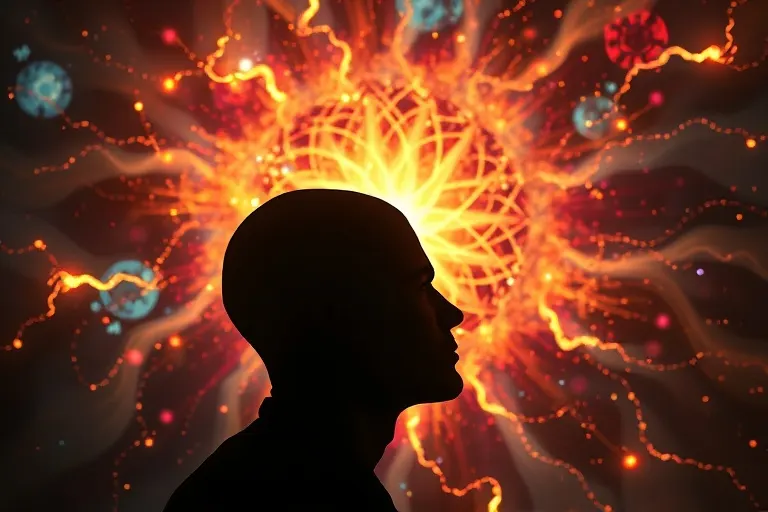
The dynamic interplay of thought and energy in the liberation of personal beliefs.
The practice of Chaos Magic encourages individuals to experiment with various magical paradigms, drawing from different cultures, mythologies, and even pop culture, without committing to any single system as absolute truth. This eclecticism allows practitioners to tailor their magical approach to their unique needs and goals, fostering a highly individualized and effective magical practice. The emphasis is on what works, rather than adherence to prescribed dogma, making it a highly empowering path for those who resonate with its principles.
Table of Contents
- Origins and Evolution of Chaos Magic
- Core Principles: Belief as a Tool
- Gnosis and Sigilization: The Heart of Practice
- Paradigms and Pantheons: A Flexible Approach
- Practical Applications for Radical Manifestation
- Ethics and Responsibility in Chaos Magic
- Common Misconceptions and Criticisms
- Integrating Chaos Magic into Modern Life
Origins and Evolution of Chaos Magic
Chaos Magic emerged from the esoteric currents of the 1970s and 1980s, primarily in the United Kingdom. Its foundational texts, such as Peter J. Carroll's "Liber Null & Psychonaut" and Ray Sherwin's "The Book of Results," laid the groundwork for a system that prioritized practical results over elaborate ceremonial structures. These early practitioners, often disillusioned with the rigidities of established occult orders, sought a more direct and experimental path to magical efficacy. They drew inspiration from diverse sources, including Austin Osman Spare's concept of "sigilization," Aleister Crowley's Thelema, and even modern psychology and quantum physics.
The movement rapidly gained traction due to its accessible nature and emphasis on individual experience. Unlike many traditional magical orders that required years of study and initiation, Chaos Magic offered techniques that could be immediately applied and tested. This democratic approach empowered practitioners to forge their own magical paths, leading to a diverse and evolving body of work. Over the decades, Chaos Magic has continued to adapt, incorporating new ideas and technologies, maintaining its core ethos of experimentation and personal truth.
Core Principles: Belief as a Tool
The cornerstone of Chaos Magic is the principle that belief is not a static truth but a dynamic tool. Practitioners are encouraged to adopt and discard belief systems as needed, much like a craftsman selects different tools for different tasks. This concept, often termed "belief shifting" or "paradigm shifting," allows for immense flexibility and power. By temporarily suspending disbelief and fully immersing oneself in a particular belief system, a magician can access the underlying magical currents associated with that system, regardless of their personal conviction outside of the magical act.
This instrumental view of belief stands in stark contrast to many religious and spiritual paths that demand unwavering faith. In Chaos Magic, faith is not an end in itself but a means to an end. This pragmatic approach can be incredibly potent, as it bypasses mental resistance and allows the subconscious mind to align with the desired outcome. The goal is to achieve a state of "gnosis," where the conscious mind's critical faculties are temporarily suspended, opening a direct channel to the subconscious and the 'magical' substratum of reality.
Gnosis and Sigilization: The Heart of Practice
Two central techniques in Chaos Magic are gnosis and sigilization. Gnosis refers to an altered state of consciousness, often described as a state of intense focus or trance, where the magician's conscious mind is bypassed. This can be achieved through various methods, including:
- Inhibitory Gnosis: Achieved through deep meditation, sensory deprivation, or monotonous chanting, leading to a calm, empty mind state.
- Excitory Gnosis: Achieved through intense physical exertion, dancing, drumming, sexual arousal, or emotional extremes, leading to a highly stimulated, focused mind state.
Sigilization is a powerful method of imbuing a magical intention into a symbolic representation. The process typically involves:
- Formulating an Intention: Clearly stating a desired outcome (e.g., "I easily attract abundance").
- Creating the Sigil: Condensing the intention into a visual symbol, often by removing repeating letters and combining the remaining ones into an abstract design.
- Charging the Sigil: Activating the sigil by focusing on it intensely during a state of gnosis.
- Forgetting the Sigil: Crucially, after charging, the conscious mind must forget the sigil's original meaning, allowing the subconscious to work on the intention without interference.

The intricate art of sigil creation, a core practice for manifesting intentions.
These techniques, when combined, create a potent magical circuit that bypasses the conscious mind's skepticism and directly impresses the desired outcome onto the subconscious, which then works to manifest it in reality. The effectiveness of sigilization lies in its ability to condense complex intentions into a single, potent symbol that can be charged and then released into the subconscious without conscious interference.
Paradigms and Pantheons: A Flexible Approach
One of the most distinctive features of Chaos Magic is its embrace of "paradigm shifting." This means that a Chaos magician can operate within any magical or religious framework they choose, temporarily adopting its beliefs, symbols, and rituals. For example, a practitioner might invoke a Greek deity for a specific purpose one day, then work with a voodoo loa the next, and later perform a ritual based on quantum physics concepts. The key is not to believe in the objective reality of these paradigms, but to believe in their efficacy as tools for a specific magical operation.
This flexibility allows Chaos magicians to draw upon the collective magical heritage of humanity without being bound by its dogmas. It enables them to experiment with different pantheons, elemental systems, planetary correspondences, and even fictional magical systems, extracting what is useful and discarding the rest. This approach not only broadens the magician's toolkit but also prevents stagnation and encourages continuous learning and adaptation. It is a truly liberating perspective that empowers the individual over any external authority.
Practical Applications for Radical Manifestation
The practical applications of Chaos Magic extend far beyond traditional spellcasting. Its focus on belief manipulation and subconscious programming makes it a powerful tool for radical personal manifestation in various aspects of life. Here are some examples:
- Goal Achievement: By creating sigils for specific goals (e.g., career advancement, financial success, improved health) and charging them during gnosis, practitioners aim to align their subconscious actions with their desired outcomes.
- Habit Formation and Breaking: Chaos Magic techniques can be used to install new beneficial habits or eradicate detrimental ones by programming the subconscious with new behavioral patterns.
- Emotional Regulation: By temporarily adopting belief systems that promote emotional resilience or detachment, individuals can navigate challenging emotional states more effectively.
- Creative Inspiration: Shifting paradigms can unlock new perspectives and creative flows, making it a valuable tool for artists, writers, and innovators.
- Self-Transformation: The continuous experimentation with beliefs fosters a dynamic sense of self, allowing for profound personal growth and the shedding of limiting self-concepts.
The emphasis on results means that practitioners are constantly evaluating the effectiveness of their methods, refining their approach based on what yields the best outcomes. This empirical feedback loop is crucial to the Chaos Magical process, ensuring that the practice remains dynamic and effective. For more on advanced techniques, consider exploring Tarot Quantum Mechanics Intersecting Divination Reality.
Ethics and Responsibility in Chaos Magic
While Chaos Magic offers immense freedom, it also demands a high degree of personal responsibility. Without fixed dogmas or moral codes, practitioners must develop their own ethical framework. The "do what thou wilt" principle, often associated with Aleister Crowley and sometimes adopted by Chaos magicians, is not a license for recklessness but an injunction to discover and follow one's true will, which often implies a deep understanding of self and consequence.
Many Chaos magicians adhere to a pragmatic ethic: actions that lead to positive, constructive outcomes are generally preferred, while those that cause harm or create negative repercussions are avoided, simply because they are counterproductive to one's overall magical and personal development. The concept of karma or energetic reciprocity is often acknowledged, not as a moral judgment, but as a natural law of cause and effect within the magical universe. This self-governed approach requires constant introspection and a mature understanding of one's impact on the world.

The conceptual rendering of profound personal evolution through the dismantling of old structures.
Common Misconceptions and Criticisms
Chaos Magic, due to its unconventional nature, often faces several misconceptions:
- It's "Black Magic": While Chaos Magic is morally neutral and can be used for any purpose, its lack of inherent moral strictures sometimes leads to this misperception. However, most practitioners focus on personal growth and positive manifestation.
- It's Disorganized: The name "Chaos" can imply disorder, but the practice is highly structured in its experimental methodology and focus on results. It is chaotic in its rejection of fixed dogma, not in its application.
- It's Just Psychology: While Chaos Magic acknowledges psychological principles and leverages them, practitioners often report experiences that transcend purely psychological explanations, suggesting a genuine interaction with subtle energies or a deeper reality.
- It's Easy: While accessible, true mastery requires significant discipline, self-awareness, and continuous experimentation. The freedom it offers can be overwhelming for some.
Critics sometimes argue that its eclecticism can lead to a superficial understanding of various magical traditions. However, proponents counter that the goal is not academic mastery of every system, but practical efficacy, and that deep understanding often emerges through direct experimentation and personal experience. To delve deeper into astrological aspects that influence personal paths, consider reading about Retrograde Planets: Karmic Lessons, Soul Growth.
Integrating Chaos Magic into Modern Life
Integrating Chaos Magic into modern life involves adopting a flexible, experimental mindset towards personal reality. It means viewing beliefs not as immutable truths but as tools to be wielded for specific purposes. This can manifest in daily practices such as:
- Conscious Belief Shifting: For a job interview, adopting the belief that "I am supremely confident and competent." For a creative project, believing "I am a channel for boundless inspiration."
- Daily Sigilization: Creating small, quick sigils for minor intentions (e.g., finding a parking spot, having a productive meeting) to reinforce the magical muscle.
- Mindfulness and Gnosis: Practicing meditation or other gnosis-inducing techniques to enhance focus and access the subconscious more readily.
- Personalized Rituals: Designing rituals that resonate personally, drawing from any source that feels effective, rather than adhering to prescribed forms.
Ultimately, Chaos Magic is about empowering the individual to become the architect of their own reality. By understanding and manipulating the mechanisms of belief, consciousness, and intention, practitioners can unlock radical personal manifestation and navigate life with greater agency and creativity. It is a continuous journey of self-discovery, experimentation, and the conscious creation of one's desired existence.
Fuente: Contenido híbrido asistido por IAs y supervisión editorial humana.


Comments
Post a Comment