
Ethics of AI in Dream Interpretation: Deciphering Algorithms
The realm of dreams has long been a mysterious frontier, a canvas for our deepest fears, desires, and subconscious processes. For centuries, humans have sought to decipher these nocturnal narratives, believing them to hold keys to self-understanding and future insights. With the advent of artificial intelligence (AI), a new paradigm is emerging, promising unprecedented capabilities in analyzing and interpreting dreams. However, this technological leap also ushers in a complex web of ethical considerations that demand careful scrutiny.
Índice de Contenidos
- Table of Contents
- The Promise of AI in Dream Interpretation
- Core Ethical Dilemmas: Privacy and Autonomy
- Bias and Misinterpretation: The Algorithm Trap
- Technical Challenges and the Nature of Subconsciousness
- Regulatory Frameworks and Best Practices
- The Future of Human-AI Collaboration in Dream Analysis
- Explore More Content
As AI algorithms become more sophisticated, their potential to "read" and categorize dream content raises profound questions about privacy, autonomy, and the very nature of human consciousness. This article delves into the burgeoning field of AI-driven dream interpretation, exploring its potential benefits, the ethical dilemmas it presents, and the path toward responsible development and implementation.
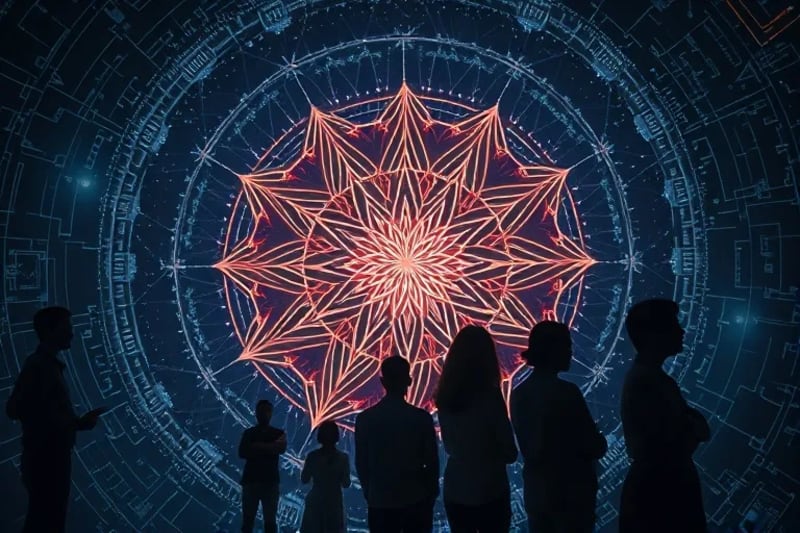 Representations of the intricate relationship between human thought, digital processing, and the abstract nature of dreams, reflecting the evolving landscape of AI-driven interpretation.
Conceptual rendering generated by advanced AI algorithms, exploring the confluence of mind and machine in understanding nocturnal experiences.
Table of Contents
- The Promise of AI in Dream Interpretation
- Core Ethical Dilemmas: Privacy and Autonomy
- Bias and Misinterpretation: The Algorithm Trap
- Technical Challenges and the Nature of Subconsciousness
- Regulatory Frameworks and Best Practices
- The Future of Human-AI Collaboration in Dream Analysis
The Promise of AI in Dream Interpretation
The human mind, particularly during sleep, generates vast amounts of data that traditional psychology has only begun to scratch the surface of. AI offers powerful tools to process this data, identifying patterns, symbols, and correlations that might be imperceptible to human analysis alone. This could revolutionize our understanding of mental health, personal development, and even collective consciousness.
For individuals, AI dream interpretation could provide personalized insights into their emotional states, stress levels, and unresolved psychological conflicts. Imagine an AI system that, over time, learns your unique dream language, offering tailored interpretations that evolve with your personal growth. Such technology could become a valuable adjunct to therapy, self-help, and even creative endeavors.
Beyond individual benefits, AI could also facilitate large-scale research into dream commonalities across cultures and demographics. By analyzing millions of dream reports, researchers might uncover universal archetypes or culturally specific dream motifs, deepening our understanding of the human psyche. This could open new avenues for psychological and anthropological studies, providing a data-driven approach to an ancient mystical practice. The potential for such insights is immense, offering a bridge between ancient wisdom and cutting-edge technology, much like how Astro-Archeology unearths ancient celestial narratives.
Core Ethical Dilemmas: Privacy and Autonomy
The most immediate ethical concern surrounding AI dream interpretation is the issue of privacy. Dreams are arguably the most intimate and unfiltered expressions of our subconscious. Allowing an AI to access and analyze this data means exposing the deepest parts of our minds to an external entity. Who owns this data? How will it be stored, secured, and used?
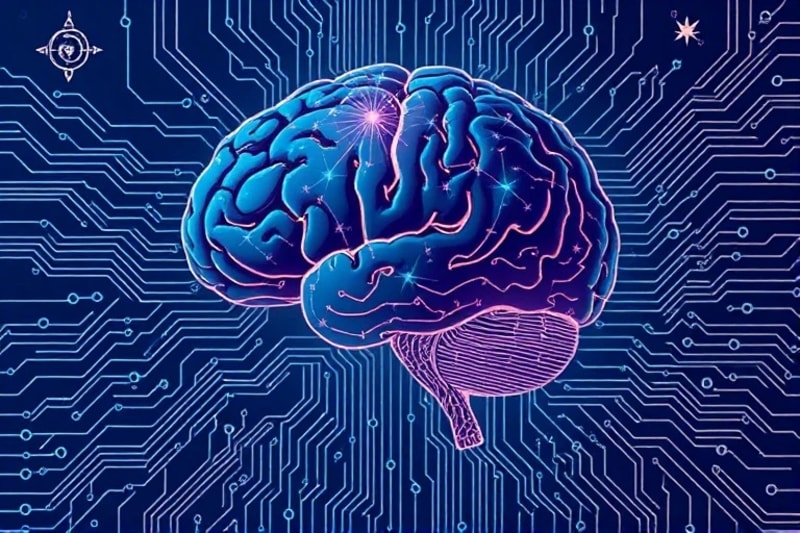 Conceptual artwork depicting the intricate connection between neural networks and digital processing, a metaphor for AI's engagement with the subconscious.
The potential for misuse is significant. Imagine insurance companies using dream data to assess mental health risks, or advertisers targeting individuals based on their subconscious desires. The implications for personal autonomy are equally daunting. If an AI can "know" our subconscious better than we do, how might this influence our decision-making, self-perception, and even our sense of free will? Protecting this highly sensitive information will require robust legal frameworks and ethical guidelines, similar to the discussions around crypto assets and future financial savings, where data security is paramount.
Bias and Misinterpretation: The Algorithm Trap
AI systems are only as unbiased as the data they are trained on. If dream databases are skewed towards certain demographics or cultural interpretations, the AI's output could perpetuate harmful biases. For instance, an AI trained predominantly on Western dream symbolism might misinterpret dreams from non-Western cultures, leading to inaccurate or culturally insensitive analyses. The subjective nature of dreams makes them particularly vulnerable to such algorithmic pitfalls.
Furthermore, dreams are inherently metaphorical and symbolic, often defying literal interpretation. An AI, operating on logical and statistical patterns, might struggle with the nuances of poetic language and personal symbolism. A dream about flying, for example, could signify freedom for one person and anxiety about falling for another. Over-reliance on AI without human oversight could lead to misinterpretations that are not only unhelpful but potentially damaging to an individual's psychological well-being. This echoes the challenges faced in understanding complex astrological phenomena like unpacking Yods, Grand Trines, and T-Squares, where context and individual charts are crucial.
Technical Challenges and the Nature of Subconsciousness
The very definition of a "dream" and its interpretation remains a subject of ongoing debate in psychology and neuroscience. The subconscious mind operates on principles that are not yet fully understood, making it a formidable challenge for AI to model accurately. Current AI models excel at pattern recognition in structured data, but dream narratives are often fragmented, illogical, and deeply personal.
Developing AI that can genuinely "understand" and contextualize the rich tapestry of human dreams requires breakthroughs in natural language processing, emotional intelligence, and perhaps even a new form of AI capable of symbolic reasoning. The fidelity of dream recall also poses a significant technical hurdle; most people remember only fragments of their dreams, and these recollections are often distorted or incomplete. This makes the input data inherently noisy and unreliable, challenging the accuracy of any AI interpretation.
Regulatory Frameworks and Best Practices
To navigate these ethical and technical complexities, robust regulatory frameworks and industry best practices are essential. These should focus on several key areas:
- Data Privacy and Security: Implementing end-to-end encryption, anonymization techniques, and strict access controls for dream data. Users must have full control over their data, including the right to access, modify, and delete it.
- Transparency and Explainability: AI systems should be transparent about how they arrive at interpretations, allowing users to understand the logic and identify potential biases. Explainable AI (XAI) is crucial here.
- Human Oversight: AI should function as a tool to augment human understanding, not replace it. Professional therapists and dream analysts should remain integral to the interpretive process, especially for sensitive cases.
- Ethical Design: Developers must proactively consider the ethical implications during the design phase, incorporating principles of fairness, accountability, and beneficence.
- Informed Consent: Users must be fully informed about how their dream data will be used, the limitations of AI interpretation, and the potential risks involved.
Establishing these guidelines will help build trust and ensure that AI dream interpretation serves as a beneficial tool for humanity, rather than a source of new ethical quandaries. The development of such technology requires a multidisciplinary approach, involving psychologists, ethicists, legal experts, and AI engineers.
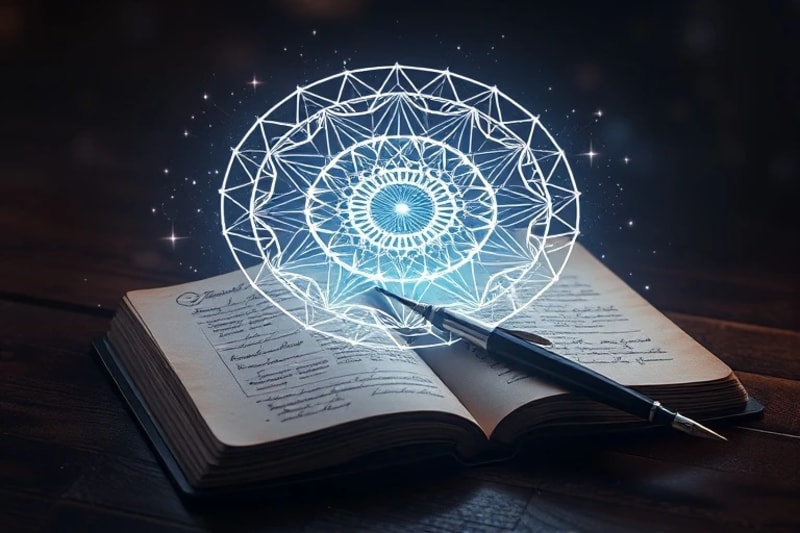 A thoughtful arrangement of historical dream analysis tools alongside futuristic holographic projections, representing the ongoing evolution of understanding the subconscious.
The Future of Human-AI Collaboration in Dream Analysis
The most promising path forward lies in a collaborative model where AI enhances, rather than replaces, human intuition and expertise. AI can handle the heavy lifting of data analysis, identifying broad patterns and potential correlations, while human experts provide the critical contextual understanding, emotional intelligence, and nuanced interpretation that machines currently lack. This synergy could lead to a more holistic and accurate understanding of dreams.
Future AI systems might act as sophisticated assistants, highlighting significant dream elements, suggesting possible interpretations based on psychological theories, and even cross-referencing personal histories. The ultimate goal should be to empower individuals with deeper self-knowledge, fostering personal growth and mental well-being, rather than creating a system that dictates meaning. This collaborative approach aligns with the broader trend of leveraging technology to augment human capabilities, much like how holographic constellations in RV combine astral realities with AI and geometry to enhance understanding.
The journey into AI-driven dream interpretation is just beginning. It presents both incredible opportunities and significant challenges. By prioritizing ethical considerations, fostering transparency, and emphasizing human-AI collaboration, we can ensure that this powerful technology is developed and used responsibly, unlocking the secrets of the subconscious in a way that truly benefits humanity.
Explore More Content
Nostradamus Artificial Intelligence: Predictions Singularity End Times
Bio-Acoustic Therapy Cellular Regeneration Sound Frequencies
Source: Hybrid content assisted by AI and human editorial supervision.
🌐 Descubre nuestro Ecosistema de Contenidos
Amplía tu perspectiva explorando estas guías recomendadas de nuestra red:
- Starpluto: Lilith Astrology: Primal Instincts, Shadow Feminine | StarPluto
- Starpluto: Dream Interpretation: Decoding Common Symbols A-Z | StarPluto
- Althox: Maritime Casualty: Colombian Commercial Code Section 1513 Analysis | Althox
- Astrofuturo: Noche Oscura del Alma: Tránsitos de Plutón y Karma | AstroFuturo
- Profecias: Reliquias Sagradas: Ciencia, Fe y Autenticidad Siglo XXI


Comments
Post a Comment