
Dream Interpretation: Decoding Common Symbols A-Z | StarPluto
Dreams have fascinated humanity for millennia, serving as a mysterious canvas for our subconscious thoughts, fears, desires, and unresolved issues. From ancient civilizations that viewed dreams as divine messages to modern psychology that sees them as a window into the psyche, the act of interpreting dreams remains a powerful tool for self-discovery and personal growth. Understanding the language of your dreams can provide profound insights, helping you navigate waking life with greater clarity and purpose.
This comprehensive guide delves into the intricate world of dream interpretation, offering a systematic approach to decoding common dream symbols from A-Z. We will explore the psychological underpinnings of dreams, provide practical methods for analysis, and offer a dictionary of symbols to help you begin your journey into the nocturnal realm. Prepare to unlock the hidden messages your mind sends you each night, transforming confusion into understanding and intuition into wisdom.
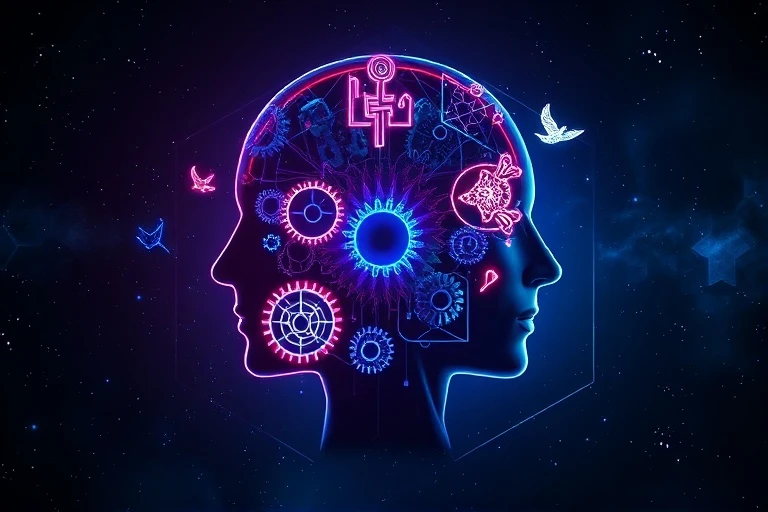
Exploring the intricate gears and symbols of the subconscious mind through dream interpretation.
Table of Contents
- Understanding Dream Interpretation: A Gateway to the Subconscious
- The Science and Psychology Behind Dreams
- How to Interpret Your Dreams: A Practical Guide
- Common Dream Symbols A-Z: Decoding Your Nightly Messages
- Context is Key: Personalizing Your Dream Meanings
- Tools and Techniques for Deeper Dream Analysis
Understanding Dream Interpretation: A Gateway to the Subconscious
Dream interpretation, also known as oneirology, is the process of assigning meaning to dreams. Throughout history, various cultures and belief systems have attributed significant importance to dreams, viewing them as omens, prophecies, or communications from spiritual entities. Ancient Egyptians, Greeks, and Romans meticulously recorded and analyzed dreams, believing they held keys to the future or divine will.
In modern times, the field of psychology, particularly through the pioneering work of Sigmund Freud and Carl Jung, brought dream analysis into the scientific discourse. Freud considered dreams the "royal road to the unconscious," a disguised fulfillment of repressed wishes. Jung, on the other hand, proposed that dreams are expressions of the collective unconscious, containing universal archetypes and symbols that transcend individual experience. Both perspectives highlight dreams as crucial for understanding our inner world and resolving psychological conflicts.
The practice of dream interpretation is not about finding a single, definitive answer but rather about exploring potential meanings that resonate with your personal experiences and current life circumstances. It's a highly subjective process that requires self-reflection, honesty, and an open mind. By engaging with your dreams, you can uncover hidden motivations, confront fears, and gain clarity on decisions, ultimately fostering greater self-awareness and emotional well-being.
The Science and Psychology Behind Dreams
While the exact purpose of dreams is still debated, scientific research offers several compelling theories. During REM (Rapid Eye Movement) sleep, when most vivid dreaming occurs, the brain is highly active, processing emotions, consolidating memories, and integrating new information. This period is crucial for cognitive function and emotional regulation.
Psychologically, dreams are thought to serve several functions:
- Emotional Processing: Dreams allow us to safely re-experience and process intense emotions from our waking lives, often in a symbolic or metaphorical way. This can help in reducing emotional distress and integrating difficult experiences.
- Problem-Solving: Many people report finding solutions to problems or gaining new perspectives on challenges through their dreams. The subconscious mind can work through issues without the constraints of conscious logic.
- Memory Consolidation: Dreams play a role in converting short-term memories into long-term ones, helping us learn and retain information. This is particularly evident in studies where subjects perform better on tasks after a period of REM sleep.
- Creative Inspiration: Artists, writers, and scientists have often credited dreams as sources of creative breakthroughs and innovative ideas. The non-linear nature of dreams can spark novel connections.
- Self-Reflection: Dreams can highlight aspects of our personality, hidden desires, or suppressed fears that we may not be consciously aware of, prompting self-reflection and personal growth.
Neuroscientific studies show that brain regions associated with emotion, memory, and visual processing are highly active during dreaming. The prefrontal cortex, responsible for logical thought and decision-making, is less active, which explains the often bizarre and illogical nature of dreams. This temporary suspension of critical judgment allows for a free flow of associations and symbols, making dream interpretation a unique form of Etnobotany Bio-innovación Plantas Medicinales Ancestrales.
How to Interpret Your Dreams: A Practical Guide
Effective dream interpretation begins with diligent dream recall and a systematic approach. Here's a step-by-step guide to help you start decoding your nocturnal narratives:
- Keep a Dream Journal: Place a notebook and pen by your bedside. As soon as you wake up, before daily distractions set in, write down everything you remember about your dream. Include details like colors, emotions, people, objects, and the overall narrative. Even fragments can be valuable.
- Identify Key Symbols: Read through your dream entry and highlight recurring elements, unusual objects, vivid imagery, or strong emotions. These are often the symbols that hold the most significant meaning.
- Consider Your Emotions: Your feelings within the dream are paramount. Were you scared, joyful, confused, or angry? The emotional tone often reveals the underlying message of the dream.
- Connect to Waking Life: Reflect on your current life situation. Are there any parallels between your dream symbols and your daily experiences, relationships, challenges, or aspirations? Dreams often comment on our waking reality.
- Explore Personal Associations: What does a particular symbol mean to YOU? While general interpretations exist, your personal history, culture, and experiences will heavily influence the meaning. For example, a snake might be frightening to one person but a symbol of healing to another.
- Look for Patterns: Over time, you might notice recurring symbols, themes, or dream types. These patterns can indicate ongoing issues or significant areas of personal development.
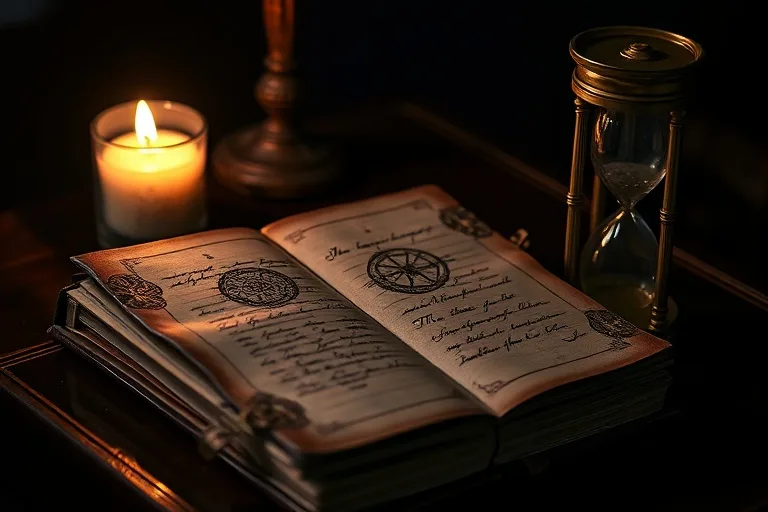
An antique dream journal, candle, and hourglass invite introspection into the world of dreams.
Remember that dream interpretation is an art, not an exact science. It's a continuous dialogue with your inner self. Be patient, be curious, and trust your intuition. The more you practice, the more fluent you will become in the unique language of your dreams. This process can significantly enhance your Tarot Quantum Mechanics Intersecting Divination Reality.
Common Dream Symbols A-Z: Decoding Your Nightly Messages
While personal associations are crucial, many symbols hold universal or archetypal meanings that can serve as a starting point for interpretation. Here's a selection of common dream symbols and their potential interpretations:
| Symbol | Potential Meanings |
|---|---|
| A - Animals | Often represent instinctual drives, aspects of your personality, or people in your life. The type of animal and its behavior are key. For example, a snake could symbolize transformation or fear, while a dog represents loyalty or protection. |
| A - Airplanes | Represent journeys, aspirations, or a desire for escape. Flying an airplane suggests control over your life path; being a passenger indicates reliance on others or a feeling of being carried along. |
| B - Babies | Symbolize new beginnings, potential, vulnerability, or a new project/idea. A crying baby might indicate neglected needs or unfulfilled potential. |
| C - Cars | Represent your drive, direction, and ability to navigate life. The condition of the car (new, old, broken) and whether you are driving or a passenger offer further clues about your sense of control or progress. |
| C - Children | Often symbolize innocence, playfulness, vulnerability, or your inner child. They can also represent new ideas or projects that need nurturing. |
| D - Death | Rarely literal. Symbolizes endings, transformation, change, or the cessation of an old habit/situation to make way for something new. It can also represent fear of the unknown. |
| D - Doors | Represent opportunities, transitions, choices, or new phases in life. An open door suggests new possibilities, while a closed or locked door might indicate missed chances or obstacles. |
| E - Exams | Commonly reflect feelings of being tested, anxiety about performance, self-judgment, or a fear of failure in waking life. |
| F - Falling | Suggests a loss of control, insecurity, fear of failure, or feeling overwhelmed. It can also signify letting go of old beliefs or situations. |
| H - Houses | Represent the self. Different rooms or parts of the house can symbolize different aspects of your personality or life. For example, the attic might be hidden thoughts, the basement repressed emotions. |
| K - Keys | Symbolize solutions, access, opportunities, or unlocking hidden knowledge. Finding a key suggests a new understanding or a way forward. |
| M - Mountains | Represent challenges, obstacles, aspirations, or significant achievements. Climbing a mountain suggests overcoming difficulties, while being stuck on one might indicate feeling overwhelmed. |
| N - Nudity | Often relates to vulnerability, authenticity, exposure, or a fear of being revealed. The context and your feelings about being nude are important. |
| P - Police | Can represent authority, rules, guilt, or your conscience. Being chased by police might indicate a feeling of being judged or needing to conform. |
| R - Rivers / Roads | Symbolize the journey of life, flow, change, or direction. The condition of the river/road (smooth, turbulent, blocked) reflects your perception of your life's path. |
| S - Snakes | Highly symbolic, representing transformation, healing, danger, sexuality, or hidden wisdom. The specific interaction with the snake is crucial for interpretation. |
| T - Teeth | Often associated with power, confidence, communication, or anxiety. Losing teeth can signify a loss of power, insecurity, or difficulty expressing yourself. |
| W - Water | Represents emotions, the unconscious, or the flow of life. Calm, clear water suggests emotional serenity, while turbulent or murky water indicates emotional turmoil. Drowning signifies feeling overwhelmed. |
| Z - Zombies | Symbolize feeling emotionally drained, overwhelmed by monotonous tasks, or dealing with people who lack vitality or independent thought. It can also reflect fears about conformity. |
This list is by no means exhaustive, but it provides a foundation for understanding the rich symbolism present in dreams. Remember to always cross-reference these general meanings with your unique life context and personal feelings within the dream. For deeper insights into specific animal symbolism, you might find articles on Chinese Zodiac animal meanings particularly helpful.
Context is Key: Personalizing Your Dream Meanings
The most critical aspect of dream interpretation is understanding that symbols are rarely universal in their precise meaning. While archetypes provide a useful framework, the true significance of a dream symbol lies in its personal relevance to the dreamer. A symbol that brings comfort to one person might evoke fear in another, depending on their individual experiences, cultural background, and emotional state.
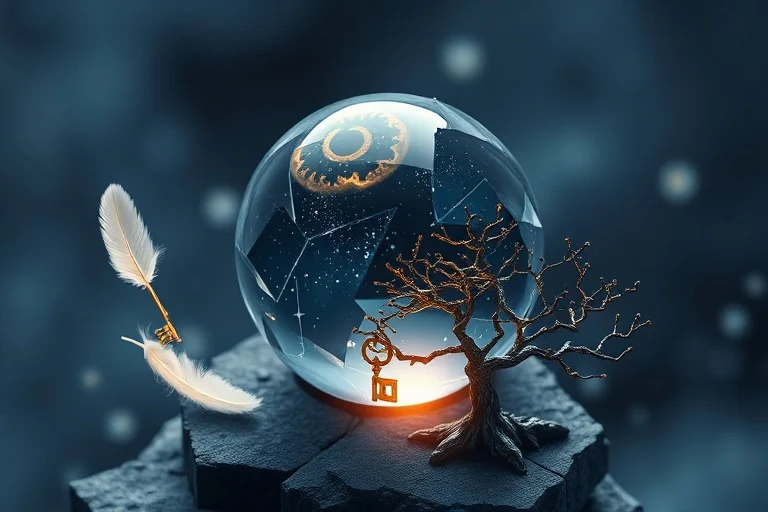
A fragmented sphere and symbolic objects illustrate the interconnected and fragile nature of dream meanings.
To personalize your dream interpretations, ask yourself the following questions:
- What is my immediate emotional reaction to this symbol?
- Have I encountered this symbol in my waking life recently? If so, what was the context?
- What are my personal memories or associations with this symbol?
- Does this symbol relate to any current challenges, desires, or unresolved feelings in my life?
- How does the symbol interact with other elements in the dream? What is the overall narrative or message?
By delving into these personal connections, you move beyond generic definitions and uncover the unique wisdom your subconscious is trying to impart. This process transforms dream interpretation from a mere curiosity into a powerful tool for Tarot Quantum Mechanics Intersecting Divination Reality.
Tools and Techniques for Deeper Dream Analysis
Beyond basic dream journaling and symbol decoding, several advanced techniques can deepen your understanding of your dreams:
- Active Imagination (Jungian): Engage with your dream symbols while awake. Imagine yourself re-entering the dream and interacting with the symbols or characters, asking them questions and observing their responses. This can bring forth new insights.
- Lucid Dreaming: The ability to become aware that you are dreaming while still in the dream state. Lucid dreamers can sometimes influence the dream narrative, explore symbols directly, or even ask dream characters for clarification. This requires practice and specific techniques.
- Dream Incubation: Before falling asleep, set an intention or ask a specific question you want your dreams to address. Focus on this question as you drift off. While not guaranteed, this can sometimes lead to dreams that offer guidance or solutions.
- Group Dream Sharing: Discussing your dreams with a trusted group can provide diverse perspectives and help you uncover meanings you might have overlooked. Others can offer fresh insights based on their own associations.
- Symbolic Art or Writing: Expressing your dream through art, poetry, or creative writing can help you process its emotional content and uncover hidden layers of meaning that words alone might not capture.
The journey of dream interpretation is a continuous exploration of the self. It's a powerful practice that bridges the conscious and unconscious worlds, offering guidance, healing, and profound self-awareness. By embracing the messages of your dreams, you empower yourself to live a more integrated and meaningful life. Regular engagement with your dream life can be as transformative as exploring your Astrología Horaria: Predicciones Clave Momentos Vitales.
Fuente: Contenido híbrido asistido por IAs y supervisión editorial humana.


Comments
Post a Comment