
Astrological Aspects: Unpacking Yods, Grand Trines, T-Squares | StarPluto
Astrology, a profound ancient science, extends far beyond simple sun sign interpretations. At its core lies the intricate study of planetary aspects, which are the angular relationships between celestial bodies in a natal chart. These geometric patterns reveal the dynamic interplay of energies within an individual's psyche and life path, offering deep insights into strengths, challenges, and potentials for growth.
Understanding these aspects is crucial for a comprehensive astrological analysis, moving beyond basic planetary placements to grasp the nuanced symphony of cosmic influences. While fundamental aspects like conjunctions, trines, and squares are widely recognized, advanced configurations such as Yods, Grand Trines, and T-Squares offer even deeper layers of meaning, often pointing to significant life themes and karmic lessons.
Table of Contents
- Introduction to Astrological Aspects
- The Yod: Finger of God
- Grand Trines: Harmonious Flow
- T-Squares: Dynamic Tension
- Other Significant Aspects
- Interpreting Aspects in a Natal Chart
- Conclusion: The Symphony of the Stars
Introduction to Astrological Aspects
Astrological aspects are angular relationships formed between planets and other significant points in a natal chart. Measured in degrees, these angles symbolize the energetic connections and interactions between different facets of an individual's personality and life experiences. Each aspect carries a unique quality, ranging from harmonious and supportive to challenging and transformative.
The concept of aspects dates back to ancient Babylonian and Hellenistic astrology, where specific angles were observed to correlate with particular life events and psychological traits. Ptolemy, a prominent astrologer of the 2nd century AD, codified many of the major aspects we still use today, including the conjunction, opposition, trine, square, and sextile. These aspects are categorized by their nature:
- Harmonious (Flowing) Aspects: Trine (120°), Sextile (60°). These indicate ease, talent, and natural flow of energy.
- Challenging (Dynamic) Aspects: Square (90°), Opposition (180°). These suggest tension, conflict, and areas requiring conscious effort and growth.
- Neutral/Intense Aspects: Conjunction (0°). This aspect merges the energies of the involved planets, amplifying their combined influence.
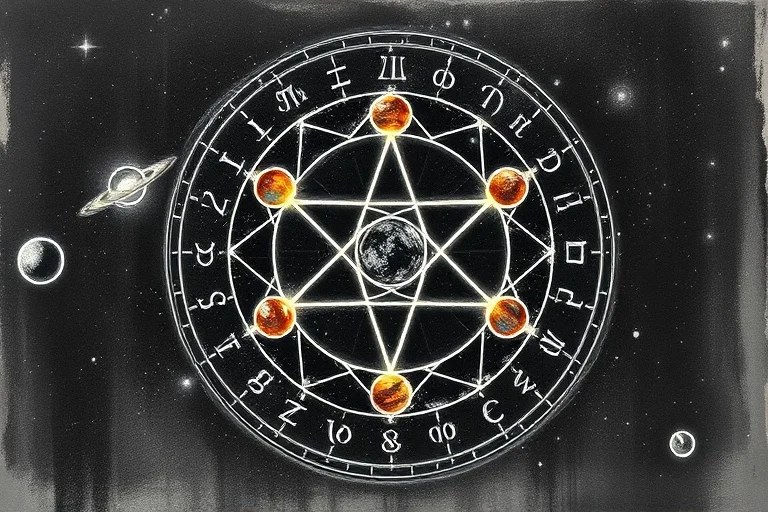
Beyond these fundamental aspects, more complex configurations, often involving three or more planets, form distinct patterns that hold significant interpretive weight. These advanced aspects, such as the Yod, Grand Trine, and T-Square, act as focal points in a chart, highlighting areas of intense energy, unique talents, or significant life lessons that an individual is destined to confront and integrate.
The Yod: Finger of God
The Yod, also known as the "Finger of God" or "Finger of Destiny," is a powerful and often challenging astrological configuration. It consists of two planets in a sextile (60°) aspect to each other, both of which form a quincunx (150°) aspect to a third planet. The third planet, known as the apex planet, is the focal point of the Yod's energy.
The quincunx aspect itself is characterized by a sense of awkwardness, adjustment, and a need for constant recalibration. It represents energies that are fundamentally incompatible yet forced to interact, often leading to a feeling of being "out of sync" or requiring a unique solution. When two quincunxes point to a single apex planet, this feeling is amplified, creating a powerful directional force.
- Interpretation: Individuals with a Yod in their chart often feel a strong sense of destiny or a unique mission. The apex planet represents a specific area of life or psychological function that is constantly being activated and challenged by the energies of the two sextile planets. This can lead to a feeling of being "called" to a particular path, but also a struggle to find the right method or expression.
- Challenges: The Yod demands constant adaptation and integration. There can be a sense of being driven by forces beyond one's control, leading to anxiety, indecision, or a feeling of being misunderstood. The native may repeatedly encounter situations that force them to adjust their approach or perspective, especially concerning the themes of the apex planet.
- Opportunities: Despite its challenges, the Yod is a configuration of immense potential. It can bestow unique talents and a profound ability to innovate, especially in areas related to the apex planet. Once the individual learns to consciously integrate and direct these energies, they can become highly specialized and effective, often contributing something truly original to the world. It pushes one towards mastery through constant refinement.
The Yod often points to a karmic lesson or a specific area where the individual must develop a unique skill set. It's not about easy solutions but about finding creative and unconventional ways to resolve inherent tensions. The house and sign of the apex planet are particularly significant, indicating where this intense focus and need for adjustment will manifest most prominently in life.
Grand Trines: Harmonious Flow
A Grand Trine is formed when three planets are in a trine (120°) aspect to each other, creating an equilateral triangle in the natal chart. This configuration is considered highly harmonious and represents a natural flow of energy and talent, often within a single element (fire, earth, air, or water).
The trine aspect itself signifies ease, good fortune, and natural abilities. When three planets form a Grand Trine, these qualities are amplified, creating a self-contained circuit of supportive energy. Individuals with a Grand Trine often possess innate talents and a sense of effortless competence in the areas represented by the involved planets and houses.
- Interpretation: A Grand Trine indicates areas of life where the individual experiences natural ease and support. It can represent innate gifts, protective influences, or a profound sense of inner harmony. For example, a Grand Trine in fire signs might indicate natural creativity and enthusiasm, while one in water signs could signify deep emotional intuition and empathy.
- Strengths: People with Grand Trines often find it easy to express the energies of the involved planets. They may possess remarkable talents that seem to come without much effort, or they might experience fortunate circumstances that smooth their path. This aspect can provide a strong sense of inner peace and resilience.
- Potential Pitfalls: While generally beneficial, a Grand Trine can sometimes lead to a lack of motivation or complacency. Because things come easily, the individual might not feel the need to push themselves or develop their talents further. This can result in untapped potential or a tendency to avoid challenges, leading to a comfortable but potentially unfulfilled existence. The "easy way out" can become a trap.
To fully utilize the potential of a Grand Trine, it is essential to consciously engage with its energies and apply them towards meaningful goals. Without external motivation or challenging aspects elsewhere in the chart, the Grand Trine's harmonious flow can become stagnant. It's a reservoir of talent that needs to be actively channeled and directed.
T-Squares: Dynamic Tension
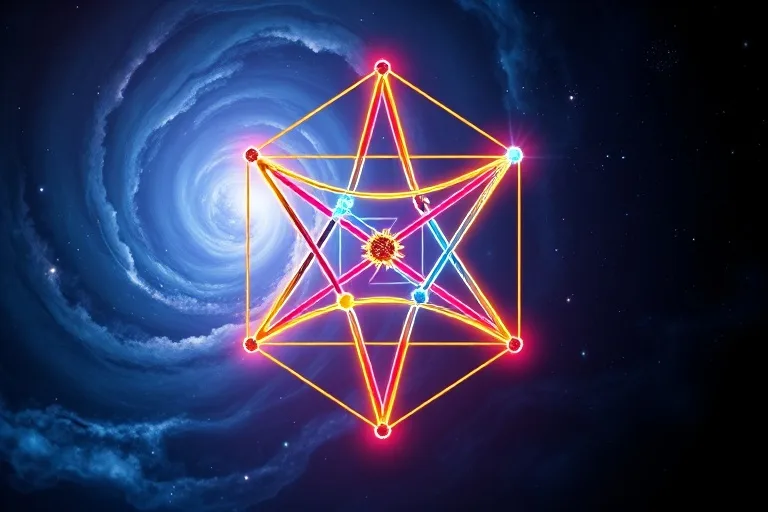
A T-Square is a highly dynamic and challenging aspect pattern formed by two planets in opposition (180°) to each other, both of which are square (90°) to a third planet. This third planet, positioned at the apex of the "T," is known as the focal planet and represents the outlet or resolution point for the tension generated by the opposition.
The opposition aspect signifies a polarity, a push-pull dynamic between two opposing forces. The square aspect, on the other hand, represents friction, obstacles, and the need for action and resolution. When these two challenging aspects combine in a T-Square, they create a concentrated area of tension and drive in the natal chart.
- Interpretation: A T-Square indicates a major area of conflict and dynamic energy in an individual's life. The opposition creates an internal or external dilemma, while the squares to the focal planet demand that this tension be addressed and resolved. This configuration often points to significant life lessons, challenges, and a powerful drive for achievement.
- Dynamic Energy: Unlike the Yod, which can feel fated and awkward, the T-Square is characterized by a more overt and often frustrating energy. The individual may feel constantly pushed and pulled between the two opposing planets, with the focal planet acting as a pressure cooker, demanding an outlet for this accumulated stress.
- Growth and Resolution: The T-Square is a powerful engine for growth. It forces the individual to confront challenges head-on, develop resilience, and find creative solutions to ongoing conflicts. The sign and house of the focal planet indicate where this energy is most likely to be expressed and where resolution can be found. Often, the empty leg of the T-Square (the sign opposite the focal planet) represents a point of release or balance, suggesting qualities that need to be cultivated.
Individuals with prominent T-Squares are often driven and ambitious, constantly seeking to overcome obstacles and prove themselves. While it can be a source of stress, it also bestows immense strength, determination, and the ability to achieve great things once the energies are consciously managed and directed. It is a configuration that demands action and transformation.
Other Significant Aspects
While Yods, Grand Trines, and T-Squares are considered major complex patterns, other aspects, both major and minor, contribute significantly to the overall chart interpretation. Understanding these nuances adds depth to any astrological reading.
| Aspect | Angle (Degrees) | Nature | Keywords |
|---|---|---|---|
| Conjunction | 0° | Fusion, Amplification | Merge, intensify, focus, new beginnings |
| Sextile | 60° | Opportunity, Harmony | Ease, talent, communication, flow |
| Square | 90° | Challenge, Tension | Obstacle, friction, action, growth |
| Trine | 120° | Ease, Talent, Flow | Harmony, creativity, natural ability, support |
| Quincunx (Inconjunct) | 150° | Adjustment, Awkwardness | Adaptation, health issues, service, unique solutions |
| Opposition | 180° | Polarity, Awareness | Balance, relationship, projection, conscious choice |
| Semisextile | 30° | Minor Adjustment, Growth | Subtle awareness, slight friction, gradual integration |
| Semisquare | 45° | Minor Irritation, Effort | Underlying tension, minor obstacles, need for effort |
| Sesquiquadrate | 135° | Frustration, Dynamic | Sudden upsets, energetic release, dynamic action |
| Quintile | 72° | Talent, Creativity | Unique gifts, artistic expression, specialized skills |
| Biquintile | 144° | Creative Flow, Genius | Exceptional talent, creative problem-solving, mastery |
Minor aspects, while less potent than the major ones, add subtle layers of meaning. They often represent unconscious patterns or underlying currents that influence how the major aspects are expressed. For instance, the quintile and biquintile are associated with creative genius and unique talents, often manifesting as a particular flair or specialized skill that sets an individual apart.
The semisextile and semisquare, though minor, can indicate areas of slight friction or gradual adjustment. They highlight subtle growth opportunities and areas where small, consistent efforts can lead to significant development over time. A comprehensive chart analysis considers all these aspects to paint a complete picture.
Interpreting Aspects in a Natal Chart
Interpreting astrological aspects requires a holistic approach, considering not just the aspect itself, but also the planets involved, their signs, and the houses they occupy. Each element adds a layer of specificity to the interpretation, painting a vivid picture of the individual's inner workings and external experiences.
- Planets Involved: The nature of the planets dictates the type of energy interacting. For example, a square between Mars (action, aggression) and Saturn (restriction, discipline) will manifest very differently from a square between Venus (love, values) and Neptune (idealism, illusion).
- Signs Involved: The signs modify how the planetary energies are expressed. A trine in fire signs will manifest differently from a trine in earth signs. The elemental and modal qualities of the signs provide context for the aspect's expression.
- Houses Involved: The houses indicate the areas of life where the aspect's energies will be most active. A T-Square involving the 1st, 7th, and 10th houses will manifest as challenges related to self-identity, relationships, and public career, respectively.
- Orbs: The exactness of an aspect, known as the orb, determines its strength. Tighter orbs (smaller degree difference) indicate more potent and noticeable effects.
Advanced interpretation often involves looking at aspect patterns as a whole. A chart dominated by challenging aspects (squares, oppositions, T-Squares) suggests a life path filled with dynamic growth, constant effort, and significant achievements born out of overcoming adversity. Conversely, a chart with many harmonious aspects (trines, sextiles, Grand Trines) indicates a life of ease, natural talent, and supportive circumstances, though it may require conscious effort to avoid complacency.
Understanding these complex configurations allows astrologers to provide more nuanced and personalized readings, helping individuals to harness their unique cosmic blueprint for personal development and fulfillment. It moves beyond simple predictions to offer a framework for self-awareness and conscious evolution.
Conclusion: The Symphony of the Stars
Astrological aspects are the backbone of natal chart interpretation, providing the dynamic context in which planetary energies unfold. From the fated challenges of a Yod to the effortless flow of a Grand Trine and the transformative tension of a T-Square, these patterns reveal the intricate tapestry of an individual's potential and purpose. They are not static indicators but rather active forces that shape our experiences and guide our evolution.
By delving into these advanced configurations, we gain a deeper appreciation for the complexity and precision of astrology. Each aspect, whether harmonious or challenging, offers a unique opportunity for self-discovery and growth. The journey of understanding one's natal chart is a journey into the self, illuminated by the timeless wisdom of the stars.
Fuente: Contenido híbrido asistido por IAs y supervisión editorial humana.


Comments
Post a Comment