
Quantum Consciousness: Bridging Physics, Metaphysics
The concept of "quantum consciousness" represents a fascinating and often controversial intersection between modern physics, ancient metaphysical traditions, and contemporary spiritual thought. It posits that consciousness is not merely an emergent property of the brain but might be a fundamental aspect of the universe, deeply intertwined with the very fabric of reality as described by quantum mechanics. This interdisciplinary approach seeks to bridge the gap between the objective, material world and subjective, conscious experience, offering new perspectives on human potential and the nature of existence.
Table of Contents
- Foundations of Quantum Consciousness
- Metaphysical Perspectives on Consciousness
- Spiritual Transformation and Quantum Principles
- Practical Applications and Personal Growth
- Challenges and Future Directions
- Conclusion: The Evolving Understanding of Consciousness
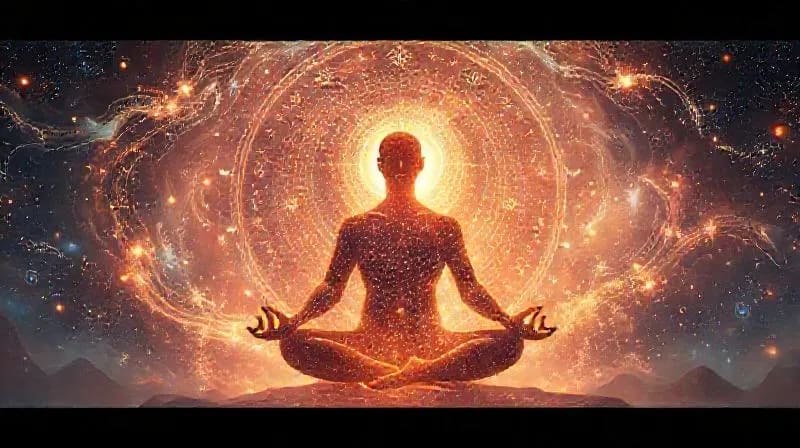 A conceptual rendering of the profound connection between human consciousness and the intricate, energetic fabric of the cosmos, illustrating the potential for deep insight and universal interconnectedness.
This vibrant, conceptual artwork is an AI-generated interpretation, exploring themes often found in spiritual and scientific discourse, and is shared under a free-to-use license.
Foundations of Quantum Consciousness
At its core, quantum consciousness draws upon key principles of quantum mechanics, the branch of physics that describes matter and energy at the most fundamental levels. Unlike classical physics, which deals with predictable outcomes, quantum mechanics introduces concepts that challenge our everyday intuition, such as superposition, entanglement, and the observer effect.
- Superposition: A quantum particle can exist in multiple states simultaneously until it is observed or measured. This raises questions about the role of consciousness in collapsing these possibilities into a single reality.
- Entanglement: Two or more particles can become linked in such a way that they share the same fate, regardless of the distance separating them. A measurement on one instantaneously influences the other, suggesting a non-local connection that defies classical understanding.
- Observer Effect: The act of observation itself can influence the outcome of a quantum experiment. This phenomenon has led some to speculate about consciousness playing a more active role in shaping reality than previously thought.
Pioneers like Eugene Wigner and later, Roger Penrose and Stuart Hameroff, have explored the idea that consciousness might be rooted in quantum processes within the brain, particularly in microtubules. While highly speculative and debated within the scientific community, these theories propose that the brain acts as a quantum computer, capable of processing information in ways that classical neuroscience cannot fully explain. The implications of such theories are vast, suggesting a universe where consciousness is not an accidental byproduct but an integral component.
Metaphysical Perspectives on Consciousness
Metaphysics, the branch of philosophy that explores the fundamental nature of reality, has long grappled with the concept of consciousness. Many ancient spiritual traditions and philosophical schools have posited that consciousness is primary, not secondary, to matter. They suggest that the universe itself is a manifestation of a universal consciousness, and individual consciousness is merely a localized expression of this greater whole.
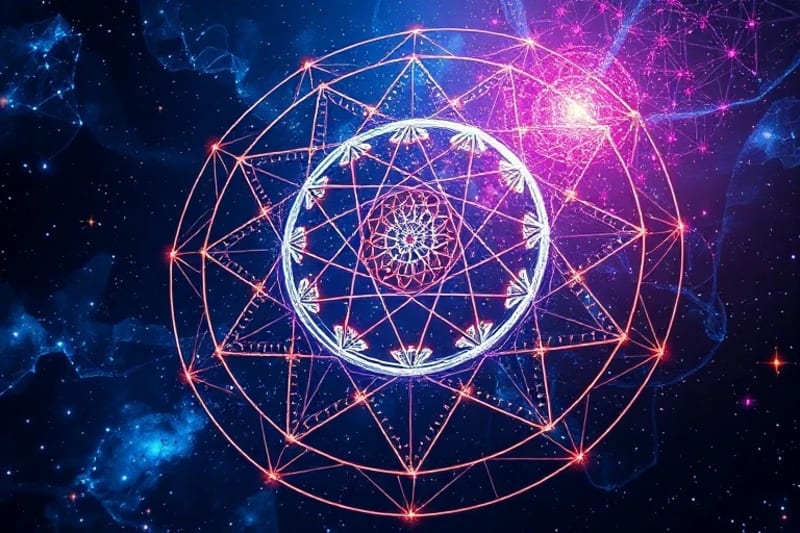 A visual representation of the intricate dance between neural networks and quantum phenomena, suggesting a deeper, interconnected layer of reality where consciousness emerges.
The concept of Quantum Metaphysics, for instance, delves into how the principles of quantum physics might provide a scientific framework for understanding phenomena traditionally considered metaphysical, such as the Akashic Records or universal entanglement. These perspectives often highlight the interconnectedness of all things, suggesting that our individual consciousness is not isolated but part of a vast, unified field of information and energy. This resonates with the idea of a collective unconscious or a universal mind, where thoughts and experiences are not confined to individual brains but are part of a larger cosmic tapestry.
Many spiritual teachings emphasize that true reality lies beyond the physical senses and is accessible through heightened states of awareness. Practices like meditation, contemplation, and mystical experiences aim to transcend the limitations of ordinary perception, allowing individuals to tap into these deeper layers of consciousness. From a metaphysical standpoint, the "quantum leap" in consciousness refers to a sudden, profound shift in awareness, often accompanied by a radical change in one's understanding of self and the universe.
Spiritual Transformation and Quantum Principles
The bridge between quantum physics and spiritual transformation lies in the idea that by understanding and aligning with these fundamental principles, individuals can consciously influence their reality and experience profound personal growth. If consciousness plays a role in shaping reality at the quantum level, then our thoughts, intentions, and beliefs might have a more significant impact on our lives than previously imagined.
Spiritual transformation, often described as an awakening or enlightenment, involves a shift from a limited, ego-centric view of self to an expansive, interconnected awareness. This process can be seen as a personal "quantum leap," where one's perception of reality undergoes a fundamental change. Key aspects of this transformation include:
- Expanded Awareness: Moving beyond the five senses to perceive subtle energies and deeper connections.
- Intentional Creation: Understanding the power of thought and emotion to manifest desired outcomes, akin to the observer effect.
- Non-Local Connection: Experiencing a sense of unity with all beings and the universe, reflecting quantum entanglement.
- Inner Harmony: Resolving internal conflicts and aligning with one's higher purpose, leading to a state of peace and well-being.
Practices such as Guided Meditation for Positive Energy are often employed to facilitate these shifts in consciousness. By focusing the mind and cultivating positive states, individuals can potentially influence their internal and external environments. This aligns with the idea that by changing our internal state, we can alter our vibrational frequency, attracting experiences that resonate with that new state.
Practical Applications and Personal Growth
While the theoretical underpinnings of quantum consciousness are complex, its practical implications for personal growth are increasingly explored. Many self-help and spiritual development methodologies incorporate principles that echo quantum concepts, even if not explicitly named as such. Here are some ways these ideas are applied:
 An artistic rendering depicting the journey of spiritual evolution, where an individual's consciousness expands to connect with the profound, interconnected wisdom of the universe.
- Mindfulness and Meditation: These practices train the mind to observe thoughts and feelings without judgment, fostering a state of detached awareness that can be likened to the observer in quantum mechanics. By consciously choosing what to focus on, individuals can potentially influence their internal states and external experiences.
- Visualization and Affirmations: By vividly imagining desired outcomes and repeating positive affirmations, individuals are engaging in a form of intentional creation. This acts as a 'collapse of the wave function' for their personal reality, focusing energy on specific possibilities.
- Energy Healing and Biofeedback: Some alternative healing modalities operate on the premise that the human body is an energy system that can be influenced by conscious intent. Techniques like reiki or biofeedback aim to restore balance by interacting with these subtle energy fields, which some connect to quantum biological processes.
- Shadow Work and Transformation: Understanding and integrating the unconscious aspects of the self, often referred to as Shadow Work, can lead to profound personal transformation. This process involves bringing unconscious patterns into conscious awareness, thereby changing their influence on one's life, much like observing a quantum state changes its outcome.
The integration of these practices into daily life can lead to a more empowered and fulfilling existence. By recognizing that consciousness is not passive but an active participant in shaping reality, individuals can take greater responsibility for their well-being and actively co-create their future. This shift in perspective encourages a proactive approach to life, moving beyond victimhood towards self-mastery.
Challenges and Future Directions
Despite the compelling nature of quantum consciousness theories, they face significant challenges and skepticism from mainstream science. Critics often point out the lack of direct empirical evidence, the difficulty in translating quantum phenomena from the subatomic to the macroscopic scale of the brain, and the potential for misinterpretation of scientific concepts for spiritual purposes. The "hard problem" of consciousness—how physical processes give rise to subjective experience—remains one of the greatest unsolved mysteries.
However, research continues to advance on several fronts. Neuroscientists are exploring the complex electrical and chemical activities of the brain, while physicists are pushing the boundaries of quantum mechanics to larger scales. Interdisciplinary fields like quantum biology are investigating whether quantum effects play a role in biological processes, which could eventually shed light on consciousness. The philosophical debate also continues, with new models and theories constantly emerging.
The future of understanding consciousness likely lies in a synthesis of scientific rigor, philosophical inquiry, and perhaps even a re-evaluation of ancient wisdom. As our technological capabilities grow, we may develop new ways to observe and measure phenomena that are currently beyond our grasp. The "quantum leap of consciousness" may not just be a personal transformation but also a collective evolution in how humanity understands itself and its place in the universe.
Conclusion: The Evolving Understanding of Consciousness
The exploration of quantum consciousness invites us to consider a reality far richer and more interconnected than our conventional understanding allows. By bridging the insights of quantum physics with metaphysical wisdom and spiritual practices, we open doors to new possibilities for personal growth and a deeper comprehension of the cosmos. While much remains unknown and debated, the journey itself is transformative, encouraging us to question, explore, and expand our own awareness.
Whether consciousness is a product of quantum entanglement in the brain, a fundamental property of the universe, or something entirely different, the inquiry itself pushes the boundaries of human knowledge. Embracing this interdisciplinary approach allows us to view ourselves not as isolated entities, but as integral parts of a vast, dynamic, and conscious universe, continually evolving and capable of profound leaps in understanding.
Explore More Insights
- Electional Astrology: Timing Life Events for Success
- I Ching & Western Astrology: Synchronicities & Deeper Guidance
- Astral Projection Safety: Advanced Techniques for Conscious OBEs
- Ethical Digital Divination: Online Tarot, Runes & Oracles
- History of Tea: Ancient Ritual, Global Beverage & Impact
Source: Hybrid content assisted by AI and human editorial supervision.


Comments
Post a Comment