
Electional Astrology Timing Life Events Success Guide
The Art of Electional Astrology: Timing Your Most Important Life Events for Success
Electional astrology is a specialized branch of astrological practice focused on identifying the most propitious moment to initiate an action or event. Unlike natal astrology, which analyzes the chart of birth, or horary astrology, which answers specific questions, electional astrology is proactive. Its primary objective is to select a precise moment in time when the planetary energies are most harmoniously aligned to support the desired outcome of an endeavor.
This ancient discipline operates on the principle that every moment in time carries a unique astrological signature, and by carefully choosing the inception point of an event, one can imbue it with the most favorable cosmic influences. From launching a business to getting married, signing a contract, or even scheduling a medical procedure, electional astrology seeks to maximize potential for success and minimize obstacles.
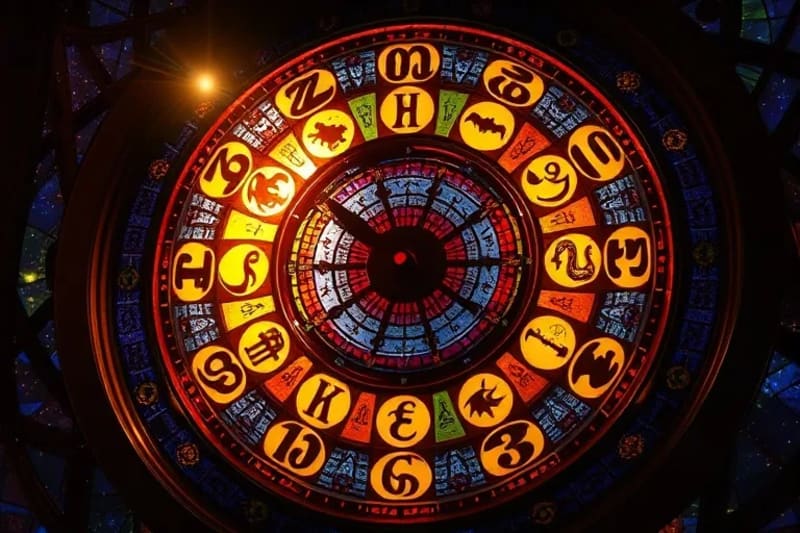 Celestial clock with intricate gears and glowing planetary symbols, set against a deep cosmic background, symbolizing the precise timing inherent in electional astrology.
The practice demands a profound understanding of astrological principles, including planetary dignities, aspects, house meanings, and the intricate interplay of celestial bodies. It is not merely about avoiding "bad" times but actively seeking out moments of amplified positive potential. This article delves into the technical aspects and methodologies required to master this intricate art, providing a framework for optimizing life events.
The historical roots of electional astrology are deeply embedded in ancient civilizations, where the timing of agricultural cycles, coronations, and military campaigns was often determined by celestial observations. Over millennia, these practices evolved into sophisticated systems, with texts from Babylonian, Egyptian, Hellenistic, and medieval Arabic traditions detailing complex rules and considerations for electing auspicious moments.
Table of Contents
Introduction to Electional Astrology
Core Principles and Foundations
Methodology: Steps to an Auspicious Election
Planetary Considerations and Dignities
Lunar Phases and the Void-of-Course Moon
Applying Electional Astrology to Life Events
Advanced Techniques and Nuances
Common Challenges and Ethical Considerations
Conclusion: Harmonizing with Cosmic Rhythms
Core Principles and Foundations
At its heart, electional astrology requires a thorough understanding of fundamental astrological concepts. The strength and placement of planets, their aspects to one another, the houses they occupy, and their essential dignities are all critical factors. Each element contributes to the overall energetic blueprint of a moment, dictating its suitability for a specific purpose.
The ruling planet of the event is paramount. For instance, for a marriage, Venus and Jupiter are key; for a business launch, Jupiter, Mercury, and the Sun might be more relevant. This ruling planet should be strong by essential dignity (in its domicile or exaltation) and placed in an angular or succedent house. It should also be well-aspected, ideally with benefics (Jupiter and Venus) and free from affliction by malefics (Mars and Saturn).
The Moon's condition is another cornerstone of electional work. As the fastest-moving body, the Moon acts as a significator of the unfolding of events and the general emotional tone. A strong Moon, free from malefic aspects, applying to a benefic, and not void-of-course, is highly desirable. Its placement in a fertile sign for beginnings or a fixed sign for stability can also be crucial, depending on the event's nature.
Methodology: Steps to an Auspicious Election
The process of electing a time is methodical and requires careful deliberation. It typically involves several iterative steps, often beginning with a broad temporal window and progressively narrowing down to the most precise moment. The astrologer must first clearly define the event's purpose and desired outcome.
 A vibrant, abstract representation of a life path, with intersecting lines and glowing nodes symbolizing critical decision points, subtly integrating astrological glyphs.
Next, the astrologer examines the condition of the Moon. A waxing Moon is generally preferred for beginnings, symbolizing growth and increase. The Moon should not be void-of-course, as this often indicates that efforts will come to nothing or fail to produce the desired results. Aspects to the Moon are also crucial; applying trines and sextiles to benefics are highly favorable, while squares and oppositions to malefics are to be avoided.
The Ascendant and its ruler are critical, representing the event itself and its immediate manifestation. The Ascendant should ideally be in a sign that supports the event's nature (e.g., a fixed sign for stability, a cardinal sign for initiation). The Ascendant ruler should be strong, well-aspected, and preferably in an angular house, signifying direct and powerful action. For insights into career and public image, the 10th House Astrology: Career, Public Image, Destiny can provide further context on its importance in electional charts.
Planetary Considerations and Dignities
The concept of Planetary Dignities Horary Astrology: Essential Fortitude Insights is fundamental to electional practice. A planet in its domicile or exaltation is said to be "dignified" and therefore strong and capable of delivering its promises effectively. Conversely, a planet in its detriment or fall is "debilitated" and may struggle to manifest its positive attributes, potentially introducing challenges or delays.
Beyond essential dignities, accidental dignities also play a significant role. A planet placed in an angular house (1st, 4th, 7th, 10th) gains strength, as does one that is direct in motion (not retrograde). Planets that are fast in motion or applying to a conjunction with a benefic also acquire accidental strength. These factors contribute to the overall "health" and efficacy of a planet in an electional chart.
Malefic planets (Mars and Saturn) should ideally be cadent (in the 3rd, 6th, 9th, 12th houses) and weakly aspected to the significators of the event. If they must be angular, they should at least be well-dignified or applying to a benefic planet. The goal is to mitigate their potential for harm and harness their energies constructively, if possible. Understanding the Origins of Planets in Mythology can also offer symbolic insights into their archetypal influences.
| Dignity Type | Description | Electional Impact |
|---|---|---|
| Domicile/Exaltation | Planet is in its ruling sign or sign of greatest power. | Strongest positive influence, planet acts effectively and beneficently. Highly sought after for significators. |
| Triplicity/Term/Face | Lesser dignities, providing moderate strength. | Supportive, can provide some resilience but not as powerful as domicile/exaltation. Useful for secondary significators. |
| Detriment/Fall | Planet is in the sign opposite its domicile or exaltation, making it weak. | Debilitated influence, planet struggles to express its positive qualities, may cause obstacles. Avoid for key significators. |
| Peregrine | Planet has no essential dignities in its sign. | Neutral, but can be influenced heavily by aspects. Not ideal for primary significators unless strongly aspected by benefics. |
Lunar Phases and the Void-of-Course Moon
The Moon's phase and its condition, particularly whether it is void-of-course, are paramount in electional astrology. A waxing Moon (from New Moon to Full Moon) is generally preferred for initiating events that are intended to grow, expand, or increase. This includes launching businesses, starting new relationships, or planting crops. A waning Moon (from Full Moon to New Moon) is more suitable for endings, release, or decrease, such as breaking habits, decluttering, or concluding projects.
The void-of-course Moon is a critical consideration. This occurs when the Moon makes its last major aspect to another planet before changing signs. During this period, the Moon is said to be "without direction," and any actions initiated are often believed to come to naught, fail to produce the intended results, or encounter unforeseen complications. Therefore, avoiding a void-of-course Moon for any significant undertaking is a cardinal rule in electional astrology.
However, there are nuances. A void-of-course Moon can be acceptable for routine tasks, rest, or activities where no specific outcome is desired. Some astrologers even suggest it's a good time for introspection or activities that don't require external results. For critical events, however, its avoidance is almost universal. The precise timing of these lunar phases and void periods requires accurate ephemeris data and careful calculation.
Applying Electional Astrology to Life Events
The practical application of electional astrology spans a wide array of life events, each requiring specific astrological considerations. The key is to align the chart's significators with the nature of the event.
- Marriage: Seek a strong Venus (love, partnership) and Jupiter (blessings, expansion) in favorable houses, ideally in mutual reception or strong trine/sextile. The Moon should be waxing, well-aspected, and in a fertile sign. Avoid Mars-Saturn aspects to Venus or the 7th house, which could signify conflict or delays.
- Business Launch: Focus on Mercury (communication, commerce), Jupiter (growth, prosperity), and the Sun (leadership, vitality). The 10th house (career, public image) and 2nd house (finances) should be strong. A well-placed Ascendant ruler in a fixed or cardinal sign can provide stability or dynamic initiation.
- Medical Procedures/Surgery: This is a highly sensitive area. The Ascendant should be free from affliction, especially by Mars (surgery, sharp objects) or Saturn (chronic issues). The 6th house (illness) and 8th house (surgery, transformation) should be carefully monitored. A strong Moon applying to a benefic is crucial for healing.
- Travel: Mercury (travel, communication) and Jupiter (long journeys, foreign lands) are key. The 3rd house (short trips) and 9th house (long journeys) should be well-disposed. Avoid Mercury retrograde for initiating travel plans, as it can lead to delays or miscommunications.
- Buying/Selling Property: The 4th house (home, property) and its ruler are central. Saturn (foundations, stability) should be well-placed. The Moon in a fixed sign can lend permanence to the transaction. Avoid Mercury retrograde for signing contracts.
 A meticulously crafted, ancient astrolabe resting on a velvet cushion, surrounded by antique scrolls and a quill, emphasizing wisdom and careful planning.
Advanced Techniques and Nuances
For advanced practitioners, electional astrology extends beyond basic dignities and aspects. Techniques like antiscion, contra-antiscion, fixed stars, and planetary joys can add layers of precision and insight. Consideration of the planetary hours and days, as well as the domicile lord of the day and hour, can further refine the election. These layers of analysis allow for a highly nuanced selection, addressing specific challenges or enhancing particular strengths.
The concept of "reception" is also crucial. When two planets are in each other's dignities (e.g., Mars in Aries and Venus in Libra, or Mars in Libra and Venus in Aries), they are said to be in mutual reception. This indicates a cooperative relationship, allowing them to work together effectively, even if their aspect is challenging. This can be a powerful mitigating factor for otherwise difficult configurations.
Furthermore, understanding complex astrological patterns, such as Yods & Grand Crosses: Decoding Complex Astrological Patterns, can be vital. While these are often discussed in natal astrology, their presence in an electional chart can signify inherent challenges or specific karmic lessons embedded within the chosen moment. An advanced astrologer would either avoid such configurations or carefully interpret their implications for the event's trajectory.
Common Challenges and Ethical Considerations
Despite its precision, electional astrology is not without its challenges. Real-world constraints often limit the available window for an election. A client may have a fixed date for a wedding or a legal deadline for a contract, forcing the astrologer to choose the "least bad" option rather than the ideal one. In such cases, the goal shifts from finding perfection to mitigating potential issues and identifying the strongest available moment.
Ethical considerations are also paramount. An astrologer must clearly communicate the limitations of electional astrology and avoid making absolute guarantees of success. While a well-chosen time can imbue an event with favorable energies, it does not negate the need for personal effort, skill, and favorable external circumstances. The astrologer's role is to provide guidance, not to dictate destiny.
Another challenge lies in the subjective interpretation of astrological principles. Different schools of thought or individual astrologers may prioritize certain rules over others, leading to varying recommendations. A rigorous, evidence-based approach, coupled with a deep understanding of traditional techniques, is essential for reliable electional practice.
Conclusion: Harmonizing with Cosmic Rhythms
Electional astrology is a powerful tool for those seeking to actively participate in shaping their destiny. By meticulously analyzing the cosmic clock, individuals can choose moments that are inherently supportive of their intentions, thereby increasing the likelihood of success and reducing potential friction. It is an art that combines scientific calculation with intuitive understanding, bridging the gap between celestial mechanics and human endeavor.
Mastering this discipline requires dedication, continuous study, and a deep respect for the intricate dance of the planets. For anyone embarking on significant life events, consulting an electional astrologer or delving into its principles can offer a profound advantage, ensuring that their efforts are launched under the most auspicious stars. It is a testament to the enduring human quest to harmonize personal will with the grand rhythms of the cosmos.
Related Searches & Further Reading
Explore more about astrological timing and its applications:
- Spirit Animal Astrology: Natal Chart Totem Guide
- Planetary Dignities: Accidental Mastery Electional Astrology
- Palmistry Introduction: Reading Your Life's Map
- Chinese Zodiac Elemental Compatibility: Advanced Analysis
- Spirit Guides: Building Your Spiritual Team
- Decans & Duads: Unveiling Zodiac's Hidden Layers
- Astrology Social Justice Collective Cycles: Understanding Planetary Influence
- Vedic vs. Western Astrology: Key Differences
- Thrones: Guardians of Divine Justice: Celestial Cosmic Order
- Celestial Hierarchy: Angels, Archangels, and Their Divine Order
Source: Hybrid content assisted by AI and human editorial supervision.


Comments
Post a Comment