
Zodiac Astrology Holistic Self-Discovery Bridging Systems
In the vast tapestry of self-understanding, two ancient systems, Western Astrology and the Chinese Zodiac, offer profound insights into human personality, destiny, and potential. While seemingly distinct, a holistic approach that bridges these traditions can unlock a deeper, more nuanced path to self-discovery. This article explores how combining these powerful frameworks provides a comprehensive lens through which to view one's life journey, enhancing personal growth and understanding.
Table of Contents
Foundations of Western Astrology
Western Astrology, rooted in Hellenistic traditions, is a complex system that maps the positions of celestial bodies at the exact moment of an individual's birth. This snapshot, known as the natal chart, is a unique cosmic blueprint. It comprises twelve zodiac signs, ten planets, twelve houses, and various angular relationships called aspects, each contributing to a person's psychological makeup and life experiences.
The twelve zodiac signs (Aries, Taurus, Gemini, Cancer, Leo, Virgo, Libra, Scorpio, Sagittarius, Capricorn, Aquarius, Pisces) represent archetypal energies and personality traits. Planets symbolize different drives and functions, such as communication (Mercury), love (Venus), or ambition (Mars). Houses delineate areas of life where these energies play out, from self-identity (1st House) to career (10th House).
Interpreting a natal chart involves synthesizing these elements to understand an individual's core motivations, strengths, challenges, and potential life paths. It offers a detailed psychological profile, revealing inner workings and external expressions. This system is often used for personal reflection, understanding relationships, and navigating life's complexities.
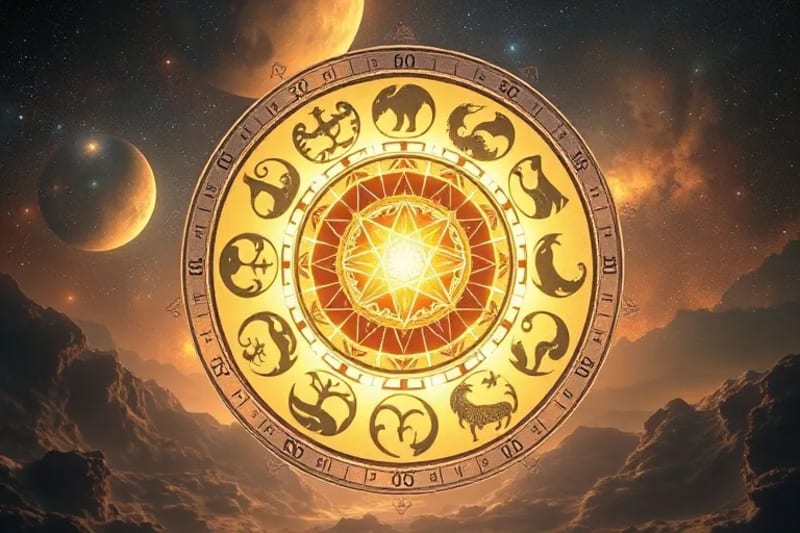 Precursors intellectuales, diagramas fundamentales y representaciones conceptuales que forjaron la visión de los sistemas astrológicos sobre la autodescubrimiento.
Fuente visual sujeta a disponibilidad del ecosistema: Wikimedia Commons bajo licencia CC BY-SA 4.0 o renderizado conceptual IA.
Principles of the Chinese Zodiac
The Chinese Zodiac, or Sheng Xiao, is a repeating cycle of twelve animal signs, each associated with a particular year. Unlike Western Astrology, which focuses on the moment of birth, the Chinese Zodiac primarily emphasizes the year of birth, assigning an animal that is believed to influence personality and destiny. These animals are Rat, Ox, Tiger, Rabbit, Dragon, Snake, Horse, Goat, Monkey, Rooster, Dog, and Pig.
Each animal sign possesses distinct characteristics, strengths, and weaknesses. For instance, the Dragon is often associated with power and charisma, while the Goat is known for its gentle and artistic nature. Beyond the animal signs, the Chinese Zodiac incorporates the Five Elements (Wood, Fire, Earth, Metal, Water) and the principles of Yin and Yang, which further refine the interpretation of each sign.
The elemental associations add another layer of complexity, influencing a person's behavior, health, and interactions with others. Understanding your Chinese Zodiac animal and its elemental attributes can provide valuable insights into your core personality traits and how they evolve throughout your personality development journey. This system is often used for understanding compatibility, predicting fortune, and guiding life decisions.
 An intricate tapestry weaving together the symbolic energies of Western astrological houses and the cyclical nature of Chinese elemental forces.
Key Differences and Complementarities
While both systems aim to illuminate human nature, their methodologies and focus differ significantly. Western Astrology is highly individualized, requiring precise birth data for a unique natal chart. It delves into psychological nuances, motivations, and potential life events. The Chinese Zodiac, on the other hand, offers a broader, more archetypal understanding based on birth year, focusing on general personality traits and social dynamics.
However, these differences are precisely what make them complementary. Western Astrology provides the "how" and "why" of your individual expression, while the Chinese Zodiac offers the "what" of your inherent character and how it interacts with the world. For example, a fiery Aries in Western Astrology might express their assertiveness differently if they are also a diplomatic Rabbit in the Chinese Zodiac, leading to a more nuanced understanding of their leadership style.
Understanding the Chinese Zodiac elements alongside Western planetary placements can provide a richer picture of one's energetic balance and potential imbalances. This dual perspective allows for a more comprehensive self-assessment, moving beyond the limitations of a single system to embrace a multidimensional view of the self.
| Feature | Western Astrology | Chinese Zodiac |
|---|---|---|
| Calculation Basis | Exact birth time, date, location | Year of birth (primarily) |
| Primary Focus | Individual psychological profile, life events, motivations | Archetypal personality traits, social dynamics, destiny |
| Key Components | 12 Zodiac Signs, Planets, Houses, Aspects | 12 Animal Signs, 5 Elements, Yin/Yang |
| Time Cycle | Annual solar cycle, planetary movements | 12-year animal cycle, 60-year elemental cycle |
| Origin | Mesopotamian, Hellenistic traditions | Ancient Chinese philosophy and cosmology |
The Integration Framework
Integrating these two systems involves more than simply knowing both your Western Sun sign and your Chinese animal sign. It requires a thoughtful synthesis, looking for patterns, reinforcing themes, and areas of contrast. For example, a person with a strong emphasis on communication in their Western chart (e.g., Gemini Sun, Mercury in 3rd House) might find their expression tempered or amplified by their Chinese animal sign's communicative style.
One approach is to analyze how the elements interact. Western Astrology uses four elements (Fire, Earth, Air, Water), while the Chinese Zodiac uses five (Wood, Fire, Earth, Metal, Water). Identifying your dominant elements in both systems can reveal powerful insights into your energetic constitution and how you interact with the world. This can help in understanding natural affinities or potential areas of conflict within yourself.
Consider how your Western planetary placements (e.g., Venus for love, Mars for drive) are influenced by the archetypal characteristics of your Chinese animal. A Leo Sun (Western) with a Dragon (Chinese) might exhibit an even more pronounced need for recognition and leadership, while a Cancer Sun with a Snake might navigate emotional depths with greater strategic cunning. This layered understanding offers a richer self-portrait.
 A conceptual render of a crystal ball encapsulating the vastness of a galaxy and the balanced duality of the Yin-Yang, symbolizing universal wisdom.
Holistic Self-Discovery Benefits
The primary benefit of bridging these two systems is a more holistic and comprehensive understanding of the self. Instead of relying on a single perspective, you gain multiple viewpoints that can confirm, contrast, or expand upon existing insights. This multi-faceted approach fosters greater self-awareness, allowing individuals to embrace their unique blend of cosmic and cultural influences.
This integrated knowledge can significantly enhance personal growth. By recognizing the interplay of your Western astrological blueprint and your Chinese Zodiac animal, you can better understand your innate talents and potential challenges. This awareness empowers you to leverage your strengths and work constructively on areas that need development, leading to more informed life choices and a clearer sense of purpose.
Furthermore, this dual lens can improve relationships by offering deeper insights into compatibility and communication styles. Understanding both your own and others' astrological and zodiacal profiles can foster empathy and reduce misunderstandings. It also provides a framework for Astro-Linguistics Sigil Magic Words Manifestation and cycles, offering guidance during periods of transition and transformation.
Beyond personal understanding, integrating these systems can inform career choices and creative pursuits. Knowing your natural inclinations from both perspectives can guide you towards environments and roles where you are most likely to thrive. It can also inspire new forms of self-expression and spiritual exploration, potentially even aiding in manifestation techniques by aligning intentions with your inherent energetic blueprint.
Overcoming Challenges and Misconceptions
One common challenge in integrating these systems is the potential for oversimplification or misinterpretation. It's crucial to remember that both Western Astrology and the Chinese Zodiac are complex and nuanced. Avoid reducing individuals to mere "Sun sign" or "animal sign" descriptions. True understanding comes from synthesizing the layers of information each system provides, rather than treating them as isolated labels.
Skepticism is another hurdle, as both practices are often dismissed as pseudoscience. However, approaching them as symbolic languages for self-reflection and personal development, rather than predictive certainties, can be more productive. The value lies in their ability to provide frameworks for understanding human experience, offering archetypes and patterns that resonate with our inner lives.
To overcome these challenges, engage with both systems with an open mind and a spirit of inquiry. Consult reputable sources, study the intricacies of each, and most importantly, reflect on how the insights resonate with your own experiences. The goal is not to find definitive answers but to gain tools for deeper introspection and a richer narrative of your personal journey.
Bridging the Chinese Zodiac and Western Astrology offers a powerful pathway to holistic self-discovery. By combining the individualized depth of Western astrological charts with the archetypal wisdom of the Chinese animal signs and their elemental influences, individuals can gain an unparalleled understanding of their personality, motivations, and life purpose. This integrated approach enriches self-awareness, enhances relationships, and provides a comprehensive framework for navigating the complexities of existence, ultimately fostering a more complete and harmonious self.
Explore Further: Related Insights & Tools
- Urban Shamanism: Connecting City Spirits
- Scrying Divination: Reflective Insights
- Urban Geomancy Lunar Mansions
- Palmistry Basics: Hand Lines
- Chinese Zodiac TCM Health Insights
- I Ching Chinese Zodiac: Harmonizing Energies
- Bio-Harmonic Healing: Vibrational Medicine
- Chakra Healing for Beginners
- Sigil Magic Advanced: Combining Symbols
Source: Hybrid content assisted by AI and human editorial supervision.


Comments
Post a Comment