
Cosmic Sociology: Global Consciousness Trends Celestial Mechanics
Cosmic Sociology stands as an emerging interdisciplinary field, venturing into the profound connections between celestial mechanics and the intricate tapestry of global consciousness trends. This discipline moves beyond traditional astrological interpretations to explore how planetary alignments, cycles, and positions might correlate with large-scale societal patterns, cultural shifts, and collective human psychological states. By adopting an introductory and educational tone, this exploration aims to demystify the core tenets of Cosmic Sociology, inviting a broader audience to consider the subtle yet pervasive influences of the cosmos on our shared human experience.
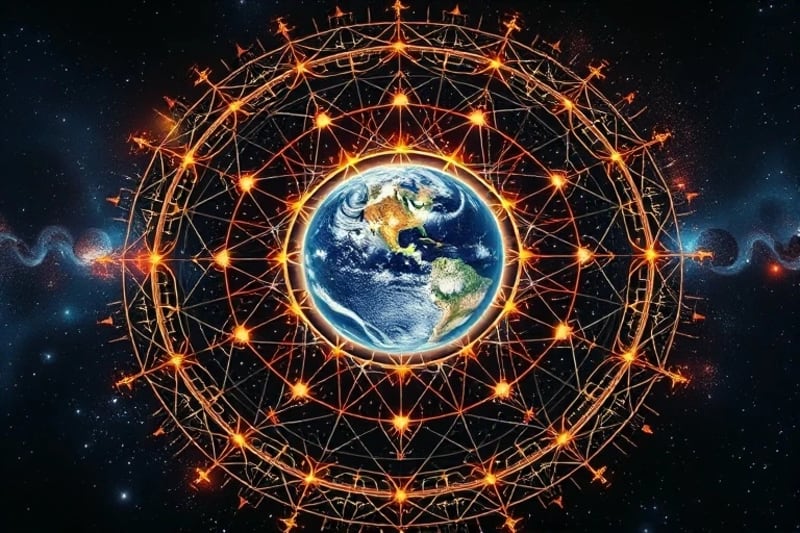
Precursors intellectuales, diagramas fundamentales y representaciones conceptuales que forjaron la visión de la interconexión cósmica sobre la conciencia colectiva.
Fuente visual sujeta a disponibilidad del ecosistema: Wikimedia Commons bajo licencia CC BY-SA 4.0 o renderizado conceptual IA.The premise of Cosmic Sociology is not to assert a deterministic influence of planets over human free will, but rather to investigate potential energetic or resonant correlations that might shape the collective unconscious and manifest as observable societal phenomena. This perspective suggests that just as the moon influences tides, the grander celestial dance might subtly orchestrate the ebbs and flows of human civilization. It seeks to bridge the gap between the macrocosm of the universe and the microcosm of human society, offering a unique lens through which to understand our collective journey.
Table of Contents
- What is Cosmic Sociology?
- The Foundations: Celestial Mechanics and Planetary Cycles
- Mapping Global Consciousness: Methodologies and Challenges
- Key Astrological Influences on Collective Trends
- Case Studies: Historical and Contemporary Examples
- The Future of Cosmic Sociology
- Ethical Considerations and Skepticism
What is Cosmic Sociology?
At its core, Cosmic Sociology is the systematic study of the potential correlations between planetary movements and the collective human experience. Unlike personal astrology, which focuses on individual birth charts, Cosmic Sociology investigates how broader celestial patterns might influence the zeitgeist, economic cycles, political climates, technological advancements, and shifts in cultural values across entire populations or generations. It seeks to identify recurring patterns and rhythms that transcend individual experience, suggesting a universal pulse that resonates with human societies.
The discipline draws inspiration from historical observations and modern data analysis, attempting to quantify and understand these macro-level relationships. It posits that just as seasonal changes impact agricultural cycles and human moods, the slower, grander cycles of planets like Jupiter, Saturn, Uranus, Neptune, and Pluto could be linked to multi-year or multi-decade trends in collective human behavior. This approach necessitates a rigorous, data-driven methodology, moving away from anecdotal evidence towards statistical correlation and pattern recognition.
The Foundations: Celestial Mechanics and Planetary Cycles
The bedrock of Cosmic Sociology lies in understanding celestial mechanics – the scientific study of the motions of celestial bodies. This includes the precise orbits, speeds, and gravitational interactions of planets within our solar system. From an astrological perspective, these movements create specific Astrological Aspect Patterns, such as conjunctions, squares, and oppositions, which are believed to signify different energetic dynamics. These aspects, formed by the angular relationships between planets, are central to the hypothesis of cosmic influence.
Planetary cycles, particularly those involving the slower-moving outer planets, are considered crucial. For instance, the approximately 20-year cycle of Jupiter and Saturn conjunctions (known as the Great Conjunctions) has historically been associated with significant shifts in political power, economic systems, and societal structures. The longer cycles of Uranus (84 years), Neptune (165 years), and Pluto (248 years) are thought to correspond with generational changes, technological revolutions, spiritual awakenings, and profound societal transformations, respectively. These cycles provide a chronological framework for mapping potential correlations with human history.
An abstract depiction of human collective consciousness, illustrating its dynamic interplay with the subtle energies of planetary orbits and astrological symbolism.
Mapping Global Consciousness: Methodologies and Challenges
The methodological approach in Cosmic Sociology involves extensive data collection and sophisticated statistical analysis. Researchers compile vast datasets of historical events, economic indicators (e.g., stock market trends, inflation rates), social movements (e.g., civil rights, environmentalism), artistic and scientific breakthroughs, and shifts in public sentiment. This historical data is then overlaid with precise astrological charts and planetary transits to identify statistically significant correlations.
One of the primary challenges lies in distinguishing correlation from causation. Cosmic Sociology does not claim that planets directly "cause" events, but rather that they may act as energetic triggers or synchronistic markers for collective psychological states that, in turn, influence human actions and societal developments. The field grapples with the inherent complexity of human systems, where countless variables interact. The use of advanced computational tools, including AI and big data analytics, is becoming increasingly vital to process and identify subtle patterns that might otherwise be overlooked in such complex datasets.
Furthermore, the discipline faces skepticism from mainstream science, which often categorizes astrology as pseudoscience. To overcome this, proponents of Cosmic Sociology emphasize rigorous, transparent methodologies and a commitment to empirical investigation, seeking to establish a new paradigm for understanding the cosmos-human connection. This includes developing new metrics for measuring "global consciousness" and its fluctuations, potentially drawing from fields like collective psychology and cultural studies.
Key Astrological Influences on Collective Trends
Different planets are associated with distinct types of collective influence. The outer planets (Uranus, Neptune, Pluto) are particularly significant for long-term, generational shifts due to their slow movement and profound archetypal associations. Uranus is linked to innovation, disruption, technological breakthroughs, and rebellion against established norms. Neptune governs collective dreams, spirituality, artistic movements, but also illusions, confusion, and dissolution of boundaries. Pluto symbolizes deep transformation, power dynamics, death, and rebirth of systems, often associated with major societal upheavals and shifts in collective power structures.
Jupiter and Saturn, while faster-moving, play crucial roles in shaping societal structure and growth. Jupiter is associated with expansion, optimism, philosophical shifts, and the growth of belief systems. Conversely, Saturn Astrology: Discipline, Structure, Karma, Life Lessons, represents contraction, discipline, limitations, and the establishment or breakdown of societal order. The interplay between these two giants often marks periods of societal restructuring and re-evaluation.
The Lunar Nodes, particularly the North Node, also offer insights into collective evolutionary paths. Psycho-Astrology Jungian Archetypes Natal Chart Integration, are believed to highlight areas of collective destiny and the lessons humanity is collectively learning or moving towards. Understanding these influences provides a framework for interpreting historical events and anticipating future trends in global consciousness.
| Planet | Associated Archetype | Collective Trends Influenced | Cycle Duration (Approx.) |
|---|---|---|---|
| Uranus | Innovation, Rebellion, Disruption | Technological revolutions, social uprisings, paradigm shifts, calls for freedom. | 84 years |
| Neptune | Spirituality, Illusion, Dissolution, Art | Spiritual movements, artistic renaissances, collective delusions, humanitarian crises. | 165 years |
| Pluto | Transformation, Power, Death & Rebirth | Major geopolitical shifts, economic collapses and rebuilds, deep societal restructuring. | 248 years |
| Jupiter | Expansion, Optimism, Belief Systems | Periods of economic growth, philosophical advancements, cultural flourishing, increased optimism. | 12 years |
| Saturn | Structure, Discipline, Limitation, Karma | Periods of consolidation, economic contraction, establishment of new laws, societal tests. | 29.5 years |
Case Studies: Historical and Contemporary Examples
Historical analysis offers compelling, albeit correlative, examples of cosmic sociology in action. The Renaissance, a period of immense artistic, scientific, and cultural rebirth, coincided with significant Jupiter-Neptune conjunctions, often associated with expansive idealism and spiritual awakening, alongside Pluto's transit through Capricorn, signaling a restructuring of societal power and traditional institutions. Similarly, the tumultuous 1960s counterculture movement, marked by widespread social and political upheaval, occurred during a powerful Uranus-Pluto conjunction, an astrological signature for revolutionary change and deep societal transformation.
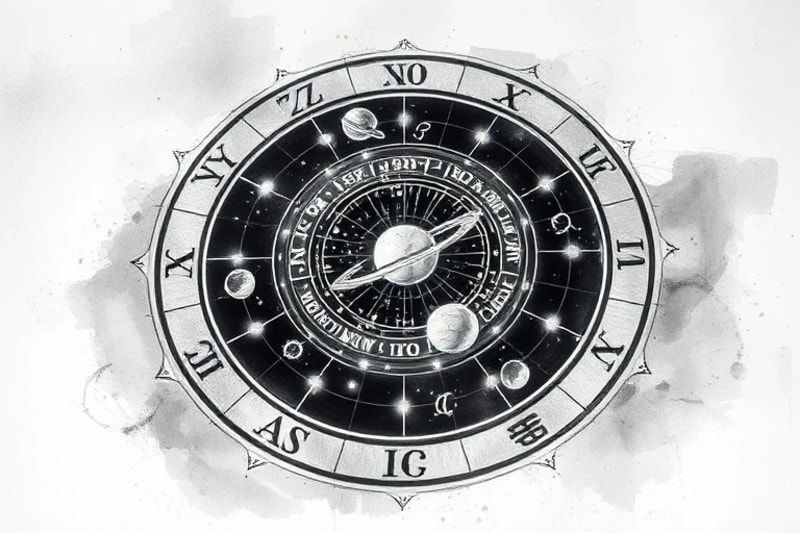
A sophisticated data visualization interface, illustrating the complex mapping of celestial mechanics onto global consciousness trends, using advanced holographic projections and statistical correlations.
More recently, the rapid acceleration of digitalization and global interconnectedness can be observed against the backdrop of ongoing Uranus cycles, which consistently trigger innovation and disruption. The current era, characterized by unprecedented technological advancement and evolving ethical debates around artificial intelligence, also aligns with significant planetary shifts that encourage a re-evaluation of our collective values and societal structures. This intersection of technology and consciousness highlights the relevance of fields like Ethics and Spirituality in AI, as humanity grapples with new frontiers.
The Future of Cosmic Sociology
The future of Cosmic Sociology holds immense potential, particularly with advancements in data science and computational power. As our ability to collect, process, and analyze vast amounts of historical and real-time data improves, so does the capacity to identify subtle, long-term correlations between celestial events and human collective behavior. This could lead to the development of sophisticated predictive models for social trends, offering insights into upcoming periods of innovation, conflict, spiritual awakening, or economic restructuring.
Interdisciplinary collaboration will be key to its evolution. By integrating insights from astrology, sociology, psychology, economics, and data science, Cosmic Sociology can build a more robust and credible framework. The goal is to move beyond mere observation to a deeper understanding of the underlying mechanisms, whether they are subtle energetic fields, gravitational resonances, or purely synchronistic phenomena. This holistic approach could provide a unique perspective on human evolution and our intrinsic connection to the cosmos.
Ethical Considerations and Skepticism
As with any emerging field that touches upon complex human behavior and cosmic influences, Cosmic Sociology must navigate significant ethical considerations and skepticism. It is crucial to avoid deterministic interpretations that could undermine individual agency or lead to fatalistic views. The aim is not to predict individual fates but to understand broad collective currents, allowing for informed awareness rather than passive acceptance.
Addressing criticisms from mainstream science requires a commitment to rigorous, peer-reviewed research and transparent methodologies. The field must clearly articulate its hypotheses, present its data, and invite critical examination. By focusing on statistical correlations and patterns rather than mystical pronouncements, Cosmic Sociology can gradually build a foundation of credibility. The responsible application of its insights, ensuring they empower rather than constrain, will be paramount for its acceptance and continued development.
In conclusion, Cosmic Sociology offers a fascinating and potentially transformative lens through which to view the human collective. By meticulously mapping global consciousness trends against the grand cycles of celestial mechanics, we may unlock deeper understandings of our shared history, present challenges, and future potentials. It invites us to consider humanity not as isolated entities, but as integral components of a vast, interconnected cosmic dance, forever influenced by the rhythms of the universe.
Explore Related Topics
- Astrological Aspect Patterns: Grand Cross, T-Square, Yod
- Planetary Crystal Grids Astrological Remediation Harmonizing Imbalances
- Tarot Quantum Mechanics Intersecting Divination Reality
- Saturn Astrology: Discipline, Structure, Karma, Life Lessons
- North Node Transits: Evolutionary Growth & Soul Contracts
- Astrological Squares Challenges Growth Dynamic Energy
Source: Hybrid content assisted by AI and human editorial supervision.


Comments
Post a Comment