
Modern Spirituality AI Ethics Divination Tools Future Readings
The convergence of modern spirituality and artificial intelligence represents a fascinating and complex frontier. As technology permeates every aspect of human existence, its application in areas traditionally reserved for intuition, mysticism, and inner wisdom raises profound questions. Modern spirituality, characterized by its eclectic nature and emphasis on personal experience, increasingly seeks tools and insights that resonate with contemporary life, often embracing new technologies. This exploration delves into the burgeoning field of AI-powered divination tools, examining the ethical considerations, potential benefits, and inherent challenges of integrating artificial intelligence into practices designed to offer guidance and insight into the future.
- Introduction to Modern Spirituality and AI
- The Rise of AI in Spiritual Practices
- Defining Ethical AI Divination Tools
- Benefits of AI in Spiritual Guidance
- Ethical Challenges and Considerations
- Guidelines for Responsible AI Divination
- The Future of AI and Spirituality
- Conclusion: Harmonizing Technology and Inner Wisdom
Introduction to Modern Spirituality and AI
Modern spirituality is a broad and inclusive term, encompassing a wide array of beliefs and practices that often prioritize personal growth, inner peace, and a connection to something greater than oneself, without necessarily adhering to traditional religious dogma. It is characterized by its adaptability, often drawing from various ancient traditions, New Age philosophies, and contemporary psychological insights. This fluidity makes it fertile ground for innovation, including the integration of advanced technologies like artificial intelligence.
 A human hand interacting with a holographic interface, symbolizing the fusion of technology and spiritual exploration in the modern era.
Artificial intelligence, on the other hand, refers to the simulation of human intelligence processes by machines, especially computer systems. These processes include learning, reasoning, problem-solving, perception, and language understanding. As AI capabilities expand, from complex data analysis to generating creative content, its potential applications extend beyond purely logical or scientific domains into the realm of human experience and personal insight. The intersection of these two fields presents both exciting opportunities and significant ethical dilemmas that warrant careful consideration.
The Rise of AI in Spiritual Practices
The digital age has already transformed how many engage with spiritual practices. Online communities, meditation apps, and digital libraries of sacred texts are commonplace. AI represents the next evolutionary step in this digital transformation. AI-powered tools are emerging in various spiritual contexts, from personalized meditation guides that adapt to user biofeedback to algorithms that interpret astrological charts or generate tarot readings based on vast datasets of historical interpretations.
These tools promise accessibility, customization, and a new dimension of insight. For instance, an AI might analyze a user's birth chart with unprecedented speed and detail, cross-referencing it with countless astrological texts and historical events to provide nuanced interpretations. Similarly, AI can be trained on extensive datasets of spiritual wisdom, offering personalized affirmations, journaling prompts, or even guided visualizations. This technological advancement opens doors to spiritual exploration for those who might not have access to traditional practitioners or resources, democratizing spiritual guidance.
Defining Ethical AI Divination Tools
An ethical AI divination tool is one that is designed, developed, and deployed with a conscious commitment to human well-being, transparency, fairness, and respect for individual autonomy. It goes beyond mere functionality to consider the profound impact it can have on a user's psychological and spiritual state. Such tools must prioritize user safety and avoid manipulation or the creation of dependency. They should serve as aids to self-discovery and personal reflection, rather than definitive or prescriptive authorities.
Key characteristics of ethical AI divination include:
- Transparency: Users should understand how the AI generates its insights, including the data sources and algorithms used.
- Non-Maleficence: The tool should not cause harm, distress, or promote unhealthy behaviors.
- Beneficence: It should actively contribute to the user's growth, understanding, and well-being.
- Privacy and Data Security: Personal spiritual data is highly sensitive and must be protected rigorously.
- Respect for Autonomy: The AI should empower users to make their own decisions, not dictate them.
- Cultural Sensitivity: If drawing from diverse spiritual traditions, the AI must do so respectfully and accurately.
Benefits of AI in Spiritual Guidance
The potential benefits of ethically designed AI divination tools are significant. They can offer unprecedented access to spiritual wisdom, personalized insights, and a supportive framework for personal development. One major advantage is the ability to process and synthesize vast amounts of information that would be impossible for a human practitioner to manage. This can lead to more comprehensive and nuanced readings, drawing connections across various spiritual disciplines. For example, an AI could combine astrological transits with numerological patterns and planetary magic rituals to offer a holistic perspective on a life event.
 Digital tarot cards integrated with circuit board patterns, alongside a glowing crystal ball, symbolizing the blend of ancient divination and modern AI.
Furthermore, AI can provide a judgment-free space for exploration. Some individuals may feel more comfortable confiding in an AI or exploring sensitive topics without the perceived social pressure or bias that might exist with a human guide. This can be particularly beneficial for those new to spiritual practices or those seeking anonymity. AI can also offer consistency and availability, providing guidance 24/7, which is a significant advantage over human practitioners with limited schedules.
Another benefit lies in its potential to act as a catalyst for self-reflection. By presenting information in new ways or highlighting patterns a user might not have noticed, AI can prompt deeper introspection and personal inquiry. This aligns well with the modern spiritual emphasis on self-empowerment and internal wisdom. Tools that incorporate elements of biofield tuning or sound healing, for instance, could be enhanced by AI's ability to analyze vocal patterns or energetic frequencies to suggest personalized interventions.
Ethical Challenges and Considerations
Despite the promising benefits, the integration of AI into spiritual practices is fraught with ethical challenges. One primary concern is the potential for misinformation or misinterpretation. AI models are only as good as the data they are trained on. If the data contains biases, inaccuracies, or incomplete information, the AI's output will reflect these flaws, potentially leading users astray or perpetuating harmful stereotypes.
Another significant challenge is the risk of over-reliance and the erosion of human intuition. Spirituality often emphasizes developing one's inner guidance and discernment. If users become overly dependent on AI for answers, it could hinder their ability to cultivate these essential inner resources. There's also the question of agency: to what extent does an AI's "reading" influence a user's free will, particularly if the AI presents its insights with an air of infallibility?
The commercial aspect also raises ethical flags. Developers might prioritize profit over well-being, creating addictive interfaces or using persuasive language to encourage continued engagement, potentially exploiting vulnerable individuals seeking guidance. The lack of emotional intelligence in AI is another critical point; while AI can process data, it cannot genuinely empathize or understand the nuanced emotional context of a human spiritual journey. This limitation means AI-generated advice, while logically sound, might lack the compassion or human touch essential for true spiritual support.
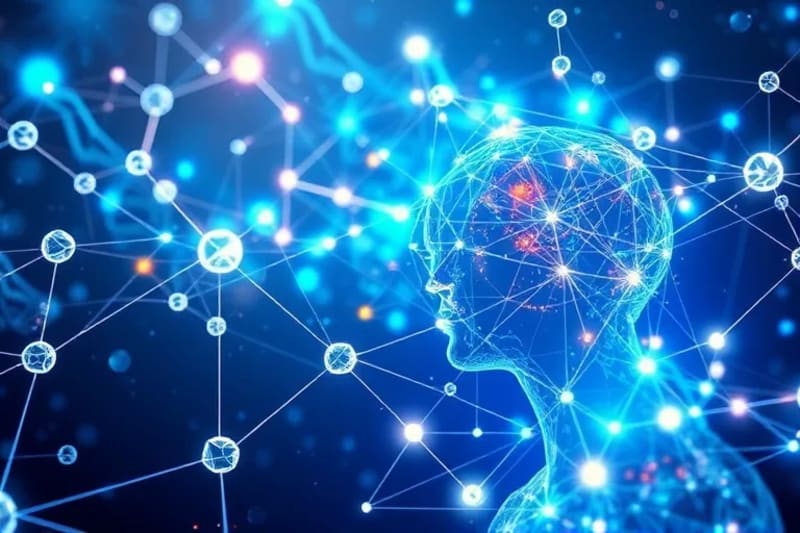 An abstract rendering of geometric shapes and data streams, symbolizing the complex, ethereal network where AI and human consciousness intersect.
Finally, the philosophical implications are profound. Can a machine truly provide spiritual guidance? Is spirituality an inherently human experience that cannot be replicated or fully understood by an algorithm? These questions challenge our fundamental understanding of consciousness, intuition, and the nature of spiritual wisdom itself. The rise of generative AI in art and other creative fields already blurs lines between human and machine creativity, and spirituality is no exception.
Guidelines for Responsible AI Divination
To navigate these challenges, a robust framework for responsible AI divination is necessary. This framework should involve developers, users, and spiritual communities. Developers must commit to ethical AI principles, ensuring their models are transparent, fair, and designed with user well-being as the paramount concern. This includes rigorous testing for biases and clear disclaimers about the nature and limitations of AI-generated insights. Furthermore, incorporating human oversight and feedback loops into the development process is crucial.
Users, on their part, must approach AI divination tools with a critical and discerning mind. It is essential to remember that AI provides data-driven interpretations, not divine pronouncements. Users should cross-reference insights, consult multiple sources (both human and AI), and ultimately trust their own intuition. Treating AI as a tool for reflection and exploration, rather than an oracle, is key to maintaining personal agency and avoiding over-reliance. Engaging with these tools can be akin to exploring new frontiers of consciousness, much like the concepts discussed in virtual reality and spiritual contemplation.
Spiritual communities and leaders also have a role to play in educating their members about the responsible use of AI in spiritual contexts. This includes fostering discussions about the ethical implications, developing best practices, and perhaps even creating certifications or guidelines for ethical AI spiritual tools. Collaboration between technologists and spiritual scholars can lead to the creation of tools that are both technologically advanced and spiritually resonant.
| Principle | Description | Application in Divination |
|---|---|---|
| Transparency | Clear understanding of how AI works and its limitations. | Disclose data sources, algorithms, and potential biases in readings. |
| Accountability | Responsibility for AI's impact and outcomes. | Developers are accountable for the ethical design and deployment. |
| Fairness | Avoidance of bias and discrimination. | Ensure AI models are trained on diverse, unbiased spiritual data. |
| Privacy | Protection of user data and personal information. | Strict encryption and anonymization of spiritual queries and personal details. |
| Human-Centricity | Design focused on augmenting human capabilities, not replacing them. | AI should assist and inspire, empowering user intuition and growth. |
| Safety & Security | Protection from harm, both physical and psychological. | Prevent AI from generating harmful, manipulative, or distressing content. |
The Future of AI and Spirituality
The future of AI in spirituality is likely to be a dynamic and evolving landscape. We can anticipate more sophisticated AI models capable of deeper contextual understanding and more personalized interactions. These tools might move beyond simple interpretations to interactive dialogues, offering users a virtual spiritual companion that learns and adapts to their unique journey. The development of quantum computing could also introduce new paradigms, potentially tapping into patterns and connections currently beyond our comprehension.
However, the human element will remain irreplaceable. AI can be a powerful amplifier for spiritual exploration, but it cannot replace the depth of human connection, the wisdom of lived experience, or the profound mystery of direct spiritual encounter. The most successful integration will likely see AI as a complementary tool, working in synergy with human practitioners and personal intuition, rather than a standalone solution. It will be about harmonizing the analytical power of AI with the intuitive wisdom of the human spirit.
Conclusion: Harmonizing Technology and Inner Wisdom
The journey into modern spirituality with AI is still in its early stages. While the allure of advanced divination tools promises new avenues for self-discovery and guidance, the ethical imperative to develop and use these tools responsibly cannot be overstated. By prioritizing transparency, fairness, privacy, and human autonomy, we can ensure that AI serves as a beneficial force in our spiritual evolution.
Ultimately, the goal is not for AI to define our spiritual paths, but to illuminate them, offering new perspectives and insights that empower us to connect more deeply with our inner wisdom and the vast tapestry of universal knowledge. The future of spiritual readings lies in a mindful integration, where technology enhances, rather than diminishes, the profound and personal nature of the spiritual quest.
Source: Hybrid content assisted by AI and human editorial supervision.


Comments
Post a Comment