
Astro-Archaeology Ancient Celestial Narratives Civilizations
Astro-archaeology is a fascinating interdisciplinary field that explores the relationship between ancient civilizations and the cosmos. It investigates how ancient cultures observed celestial phenomena and integrated this knowledge into their architecture, art, religion, and societal structures. By examining archaeological sites for astronomical alignments and interpretations, researchers can uncover profound insights into the worldview, scientific understanding, and spiritual beliefs of past societies.
This discipline bridges the gap between astronomy and archaeology, offering a unique lens through which to understand human history. It moves beyond mere observation, delving into the symbolic and practical implications of celestial events for ancient peoples. From the construction of monumental structures to the creation of intricate calendars, the sky served as a profound source of inspiration and information.
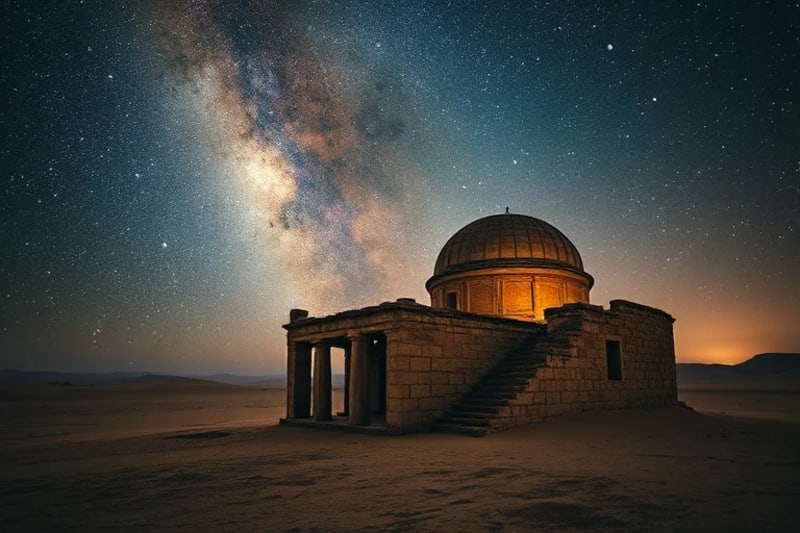
Ancient structures often reveal sophisticated astronomical alignments, reflecting deep celestial understanding.
The Genesis of Celestial Observation
Humanity's connection to the stars is as old as civilization itself. Early hunter-gatherer societies likely tracked lunar cycles for seasonal changes, crucial for survival and migration patterns. As agricultural practices emerged, the need for precise calendrical systems became paramount, driving more sophisticated astronomical observations and record-keeping.
The rising and setting of specific stars, the solstices, and the equinoxes provided reliable markers for planting, harvesting, and religious festivals. These celestial events were not merely practical indicators; they were often imbued with deep spiritual significance, influencing myths, rituals, and the very fabric of ancient societies. The visible cosmos was a living entity, dictating rhythms of life and death, and shaping cultural identity.
Iconic Sites and Their Astronomical Alignments
Numerous archaeological sites worldwide stand as testaments to ancient astronomical prowess. These structures often served multiple functions: temples, burial grounds, and sophisticated observatories. Their precise orientations reveal a deliberate effort to harmonize earthly constructions with the celestial sphere, demonstrating an advanced understanding of cosmic cycles.
One of the most famous examples is Stonehenge in England, whose megaliths align with the summer solstice sunrise and winter solstice sunset. This precise alignment suggests a deep understanding of solar cycles and their critical importance for seasonal reckoning, agricultural planning, and ceremonial purposes. The Heel Stone, in particular, marks the direction of the summer solstice sunrise, drawing thousands of visitors even today to witness this ancient spectacle.
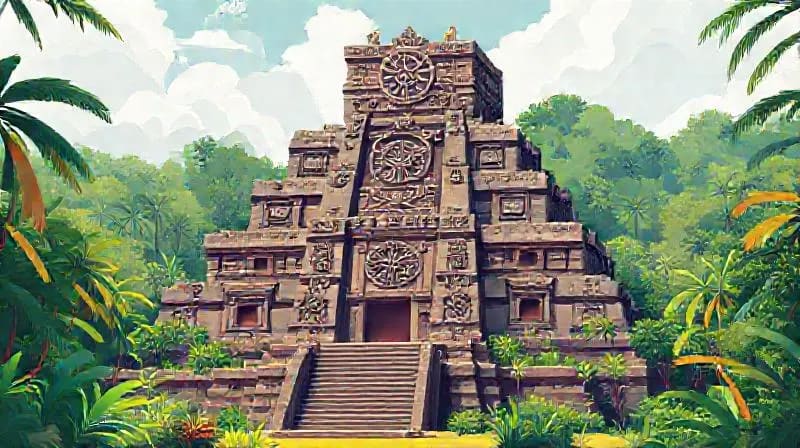
Mayan temples and stelae frequently depict astronomical events and deities, showcasing advanced calendrical systems.
Similarly, the Giza Pyramids in Egypt are believed to align with specific stars in Orion's Belt, particularly the three main stars representing Osiris in ancient Egyptian cosmology. This alignment, alongside their cardinal orientations, reflects the ancient Egyptians' complex cosmology, their beliefs about the afterlife, and the journey of the pharaoh's soul. The meticulous planning required for such monumental constructions speaks volumes about their engineering and astronomical capabilities.
In the Americas, Mayan civilization excelled in astronomical observation, developing highly accurate calendars like the Long Count, which tracked vast spans of time. Sites such as Chichen Itza feature structures like El Caracol, an ancient observatory with strategically placed windows and doorways aligned to significant celestial events, including the equinoxes, solstices, and the extreme positions of Venus. These alignments were critical for their agricultural cycles, religious ceremonies, and political legitimization, demonstrating a profound integration of astronomy into daily life and spiritual practice.
Another remarkable example is Newgrange, a Neolithic passage tomb in Ireland, which is precisely aligned to the sunrise of the winter solstice. On this shortest day of the year, a narrow beam of light penetrates the passage, illuminating the inner chamber. This event, occurring around 3200 BCE, predates Stonehenge and the Egyptian pyramids, highlighting the early and widespread human fascination with celestial cycles and their symbolic power.
The Nazca Lines in Peru, massive geoglyphs etched into the desert floor, also present intriguing astro-archaeological puzzles. While many theories exist regarding their purpose, some researchers propose that certain lines and figures correspond to astronomical phenomena, possibly serving as a vast celestial calendar or ritualistic landscape. The scale, precision, and enduring mystery of these ancient works continue to inspire awe and scientific inquiry, prompting ongoing research into their celestial connections.
Decoding Ancient Celestial Narratives
Beyond physical alignments, astro-archaeology seeks to decipher the 'celestial narratives' embedded within ancient cultures. These narratives are the stories, myths, and cosmologies that explain the universe and humanity's place within it, often drawing directly from celestial observations. For many ancient societies, the sky was a canvas for divine activity, a source of omens, and a guide for human destiny, influencing everything from daily decisions to grand dynastic successions.
The study of Midheaven aspects in astrology, for instance, reflects a modern echo of ancient beliefs about celestial influence on life path and purpose, particularly in vocational and public roles. Similarly, the concept of Yod aspect astrology, or the "Finger of God," suggests specific karmic or fated pathways and challenges, mirroring how ancient cultures often saw unique celestial configurations as powerful omens or divine messages that required careful interpretation and ritualistic response.
These narratives were not static; they evolved with new observations and changing cultural contexts. They provided meaning, social cohesion, and a comprehensive framework for understanding the world, explaining natural phenomena, the cycle of seasons, and the origins of life. The constellations themselves were often seen as divine beings or legendary heroes, their movements across the night sky enacting timeless dramas that mirrored human experience.
Understanding these narratives requires a truly multidisciplinary approach, combining archaeological evidence with textual analysis (where available), ethnographic studies of surviving indigenous traditions, and precise astronomical calculations. It involves reconstructing not just what ancient people saw in the sky, but what they believed it meant for their lives, their communities, and their cosmic understanding. This often reveals a sophisticated understanding of cycles, patterns, and the profound interconnectedness of all things, both earthly and celestial.
Astro-Archaeology and Lost Civilizations
For civilizations that left behind few written records, astro-archaeology can be a crucial tool for reconstructing their intellectual and spiritual lives. By identifying astronomical patterns in their ruins, researchers can infer their level of scientific knowledge, their religious practices, and even aspects of their social organization. This is particularly valuable for prehistoric cultures where direct historical accounts are absent, allowing us to piece together fragments of their cosmic worldview.
For example, the careful orientation of burial mounds or ceremonial circles in Neolithic Europe suggests a widespread reverence for celestial cycles, even without written explanations. These alignments often point to significant solar or lunar events, indicating a shared cosmological framework across diverse groups. The study of Elemental Triplicities in Astrology reflects a similar ancient attempt to categorize and understand fundamental cosmic forces, linking them to earthly phenomena and human temperament.

Abstract representations highlight the conceptual link between celestial mechanics and ancient architectural design.
The discovery of archaeoastronomical evidence can challenge existing historical narratives, revealing a more sophisticated understanding of the natural world among ancient peoples than previously assumed. It underscores the universal human impulse to look up at the sky and seek meaning in its movements, an impulse that has driven both scientific inquiry and spiritual development throughout history, connecting us to our distant ancestors.
Methodologies and Scientific Rigor
Astro-archaeology employs a rigorous scientific methodology to ensure its findings are robust and verifiable. This involves a combination of fieldwork, precise measurement, and computational analysis. Researchers often use specialized software to reconstruct ancient sky views, allowing them to determine what celestial events would have been visible from a particular site at a specific time in the past.
Key methodologies include:
- Site Survey and Excavation: Detailed mapping and excavation of archaeological sites to identify architectural features and their orientations. This process involves meticulous documentation of every artifact and structural element, crucial for understanding the original context and function of a site.
- Astronomical Software: Utilizing advanced computer programs to simulate ancient skies, accounting for phenomena like the precession of the equinoxes, changes in Earth's axial tilt, and other long-term astronomical shifts. This allows researchers to accurately determine the exact celestial configurations visible from a specific location thousands of years ago.
- Statistical Analysis: Applying sophisticated statistical tests to determine the probability that observed alignments are intentional rather than merely coincidental. This helps to differentiate between random orientations and deliberate astronomical design, strengthening the scientific validity of astro-archaeological claims.
- Ethnographic Parallels: Drawing insights from contemporary indigenous cultures that maintain traditional sky-watching practices and cosmologies. Studying living traditions can provide valuable analogical frameworks for interpreting the astronomical beliefs and practices of ancient societies.
- Iconographic Analysis: Interpreting symbols, carvings, rock art, and other artistic representations for celestial themes and representations. This involves deciphering ancient iconography to understand how celestial bodies and events were depicted and what cultural significance they held.
| Methodology | Primary Goal | Key Tools/Techniques |
|---|---|---|
| Archaeological Survey | Identify and map ancient structures and their orientations. | LiDAR, drone mapping, GPS, traditional excavation. |
| Archaeoastronomical Simulation | Reconstruct ancient sky views from specific locations and dates. | Specialized astronomical software, historical star catalogs. |
| Statistical Validation | Assess the probability of intentional astronomical alignments. | Monte Carlo simulations, probability distribution analysis. |
| Cultural Contextualization | Interpret astronomical findings within the broader cultural framework. | Ethnography, historical texts, mythological studies, comparative religion. |
| Iconographic Interpretation | Decipher celestial symbols and representations in ancient art. | Art historical analysis, semiotics, comparative mythology. |
The interdisciplinary nature of astro-archaeology demands collaboration between archaeologists, astronomers, anthropologists, and historians. This ensures a holistic approach, where archaeological data is interpreted within its broader cultural and scientific context. The integration of Psycho-Astrology, which combines Jungian psychology with natal chart analysis, offers a modern parallel to how ancient cultures sought to integrate cosmic patterns with human experience and inner meaning.
The Future of Astro-Archaeological Research
The field of astro-archaeology continues to evolve, driven by new discoveries and technological advancements. Satellite imagery, LiDAR scanning, and drone technology are revolutionizing how sites are identified and mapped, revealing previously hidden structures and alignments with unprecedented precision. These tools allow for non-invasive analysis of vast landscapes, opening new avenues for research into complex ancient settlements.
Furthermore, increased collaboration with indigenous communities is enriching the field, providing invaluable oral traditions and local knowledge that can shed light on ancient sky interpretations. This partnership helps to ensure that research is culturally sensitive and contributes to the preservation of both tangible and intangible heritage, fostering a deeper, more respectful understanding of ancient wisdom.
Future research will likely delve deeper into the global connections between ancient astronomical practices, exploring how different cultures independently or interactively developed their celestial understandings. The ongoing quest to uncover these ancient celestial narratives promises to deepen our appreciation for the intellectual achievements and spiritual depth of our ancestors, revealing the universal human drive to connect with the cosmos.
Conclusion
Astro-archaeology offers a compelling journey into the minds of ancient peoples, revealing their profound connection to the cosmos. By meticulously studying the astronomical alignments of ancient structures and decoding their celestial narratives, we gain a richer understanding of their scientific acumen, spiritual beliefs, and the intricate ways they organized their societies. This field not only illuminates the past but also reminds us of humanity's enduring fascination with the mysteries of the universe.
The stars above have always been more than just distant lights; they were guides, storytellers, and cosmic architects influencing life on Earth. Astro-archaeology continues to bridge the temporal divide, allowing us to listen to the echoes of ancient sky-watchers and appreciate the universal quest for meaning in the vast expanse of the cosmos.
Explore Further: Related Insights
- ◈ Astro-Psychology: Integrating Astrology with Modern Psychotherapy – Explore the synergy between ancient cosmic wisdom and contemporary psychological insights.
- ◈ Astro-Genomics: Unveiling Karmic Health DNA Blueprints – Delve into the cutting-edge intersection of astrology and genetic predispositions.
- ◈ North Node Transits Personal Planets: Evolutionary Growth – Examine the profound impact of North Node transits on personal development.
Source: Hybrid content assisted by AI and human editorial supervision.


Comments
Post a Comment