
Astro-Genomics Decoding Ancestral Karmic Blueprints Astrology
The burgeoning field of Astro-Genomics represents a fascinating interdisciplinary frontier, bridging the ancient wisdom of astrology with the cutting-edge insights of modern genetics. This innovative approach seeks to decode ancestral karmic blueprints, exploring how the cosmic alignments at our birth might correlate with inherited genetic predispositions and deep-seated familial patterns. It posits that our natal chart is not merely a map of personality traits, but a profound energetic signature reflecting karmic debts, ancestral gifts, and the evolutionary journey of our soul across generations.
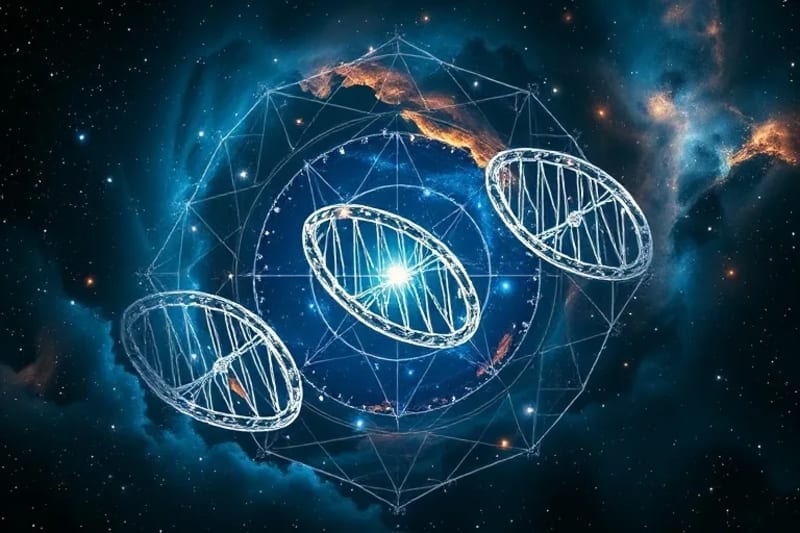
A cosmic tapestry where nebulae blend with DNA strands, illustrating the profound connection between astrological influences and genetic inheritance.
At its core, Astro-Genomics delves into the concept of a "karmic blueprint" – an energetic template believed to be imprinted upon our being at the moment of birth, influenced by planetary positions and aspects. This blueprint is thought to carry not only individual karmic lessons but also the accumulated experiences, traumas, and strengths of our ancestral lineage. By examining the intricate details of a natal chart alongside emerging genetic and epigenetic research, practitioners aim to uncover latent patterns that manifest in our lives, health, and relationships.
This exploration moves beyond deterministic views, instead offering a framework for understanding inherent tendencies and potentials. It suggests that while our genetic code provides the biological foundation, our astrological chart offers a symbolic narrative of how these predispositions might express themselves, and more importantly, how we can consciously engage with them for personal growth and healing. The synthesis of these two fields provides a holistic perspective on human existence, acknowledging both the material and the energetic dimensions of our being.
Understanding Astro-Genomics: The Interplay of Cosmos and Code
Astro-Genomics hypothesizes that the celestial mechanics at the precise moment of our birth create a unique energetic signature that resonates with our genetic makeup. This signature, encoded in the natal chart, is believed to reflect not only our individual soul's journey but also the inherited patterns passed down through our family lines. It's an intricate dance between cosmic influence and biological inheritance, suggesting that our predispositions for certain talents, challenges, or even health conditions might be mirrored in both our DNA and our astrological chart.
The term "ancestral karmic blueprint" refers to a theoretical energetic matrix that carries the unresolved issues, strengths, and lessons from previous generations. This concept aligns with psychological theories of intergenerational trauma and epigenetic findings, which demonstrate how environmental factors and experiences of ancestors can influence gene expression in descendants. Astro-Genomics seeks to identify these patterns within the birth chart, providing a symbolic language to interpret these deep-seated influences.
For example, specific planetary placements or challenging aspects involving the Moon (representing ancestral lineage and emotional foundations) or Saturn (karma, lessons, and inherited structures) might indicate areas where ancestral patterns are particularly strong. By understanding these astrological indicators, individuals can gain profound insights into their own life experiences, recognizing where they might be unconsciously repeating family cycles or carrying unaddressed burdens from the past. This awareness is the first step towards conscious transformation and healing.
Historical Echoes: Ancient Wisdom and Modern Science
The idea that celestial bodies influence human destiny and characteristics is as old as civilization itself, with roots in Babylonian, Egyptian, Greek, and Vedic traditions. Ancient astrologers observed correlations between planetary cycles and earthly events, including human temperament and fate. While they lacked the tools to understand genetics, their systems often incorporated concepts of inherited traits and familial destiny, suggesting an intuitive grasp of lineage-based patterns.
Modern science, particularly through the field of epigenetics, has begun to offer a biological basis for the transmission of acquired traits or experiences across generations, albeit not in a Lamarckian sense. Epigenetics studies how environmental and lifestyle factors can cause heritable changes in gene expression without altering the underlying DNA sequence. This scientific development provides a compelling parallel to the astrological concept of ancestral karmic inheritance, suggesting a mechanism through which patterns of behavior, resilience, or vulnerability could be passed down.
The convergence of these perspectives allows for a richer understanding of human development. Instead of viewing astrology and genetics as mutually exclusive, Astro-Genomics proposes a synergistic relationship where one provides the symbolic framework and the other, the biological substrate. This holistic view encourages a deeper inquiry into the multifaceted influences that shape our lives, moving beyond simplistic explanations to embrace complexity.
The Astrological Lens: Charting Karmic Inheritance
Within the natal chart, several key indicators are scrutinized for insights into ancestral karmic blueprints. The Fourth House, traditionally associated with roots, family, and heritage, is paramount. Planets within this house, or its ruling planet and its aspects, can reveal the nature of one's familial foundations, including strengths, challenges, and unresolved issues passed down through the lineage. Similarly, the Tenth House, representing public image and career, can show how ancestral expectations or achievements influence one's life path.
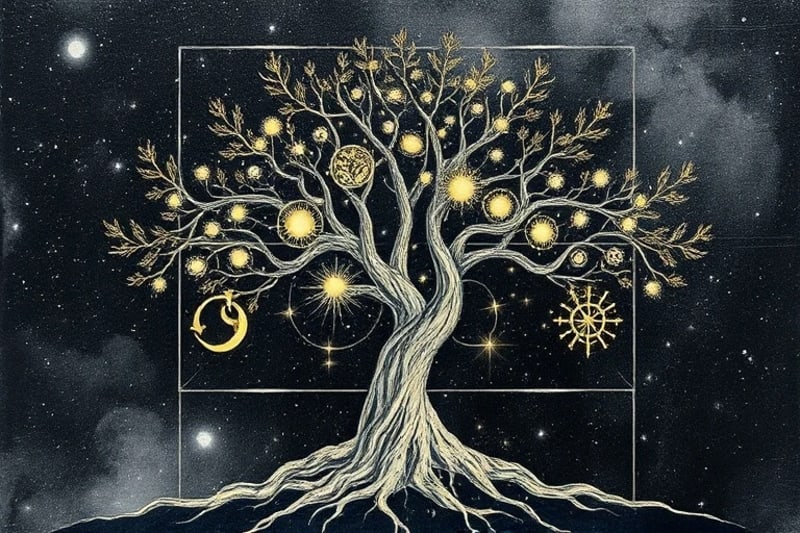
An abstract tree of life, its roots entwined with neural pathways and astrological symbols, representing ancestral memory and inherited patterns.
The Moon, as the ruler of the Fourth House and a symbol of the mother and emotional inheritance, plays a critical role. Its sign, house placement, and aspects can illuminate the emotional legacy received from one's maternal line and early family environment. Saturn, the planet of karma, responsibility, and structure, often highlights areas where karmic lessons, either personal or ancestral, need to be addressed. Challenging aspects to Saturn may point to inherited limitations or fears that require conscious effort to overcome.
Perhaps the most direct indicators of karmic patterns are the Lunar Nodes – the North Node (Rahu) and South Node (Ketu). The South Node represents past life experiences, inherited talents, and comfort zones that may have become stagnant. The North Node signifies the soul's evolutionary path in the current incarnation, pointing towards new lessons and growth areas. Their placement by sign and house, along with aspects to other planets, offers a profound narrative of the karmic journey and ancestral legacy. For more on these sensitive points, consider exploring Planets at Critical Degrees: Sensitive Chart Points.
Beyond individual planets, the overall chart pattern, including grand trines, T-squares, or stelliums, can also reveal significant ancestral themes. For instance, a prominent T-square involving the Moon, Saturn, and a generational planet like Pluto might suggest intense inherited power dynamics or unresolved family conflicts that continue to influence the native's life. Understanding these complex configurations allows for a nuanced interpretation of the ancestral karmic blueprint.
Genetic Correlates: Scientific Perspectives on Ancestral Patterns
While astrology provides a symbolic map, genetics offers a tangible, biological framework for understanding inheritance. The concept of ancestral karmic blueprints finds intriguing parallels in genetic and epigenetic research. Epigenetics, in particular, has revolutionized our understanding of heredity by demonstrating that environmental factors and life experiences can alter gene expression without changing the underlying DNA sequence. These epigenetic modifications can sometimes be passed down to subsequent generations, impacting health, behavior, and stress responses.
For example, studies have shown that descendants of Holocaust survivors or individuals who experienced severe famine can exhibit epigenetic markers that influence their stress resilience or metabolic health. This biological mechanism provides a scientific lens through which to view the "passing down" of ancestral trauma or resilience, mirroring the astrological idea of inherited karmic patterns. While the direct link between specific astrological placements and genetic markers is not yet scientifically established, the conceptual overlap is compelling.
Furthermore, the study of mitochondrial DNA (mtDNA), passed exclusively from mother to child, and the Y-chromosome, passed from father to son, offers insights into direct maternal and paternal lineages. These genetic markers can trace ancestry back thousands of years, providing a biological record of our deep roots. Astro-Genomics suggests that the energetic imprints associated with these lineages might be symbolically represented in the natal chart, offering a more complete picture of our inherited legacy.
Decoding Your Blueprint: Practical Applications and Insights
The primary goal of decoding ancestral karmic blueprints through Astro-Genomics is self-awareness and empowerment. By identifying recurring themes, challenges, or innate talents within the natal chart that resonate with family history, individuals can gain clarity on their life's purpose and potential obstacles. This process involves a meticulous interpretation of astrological placements, combined with an exploration of family dynamics, historical events, and psychological patterns.
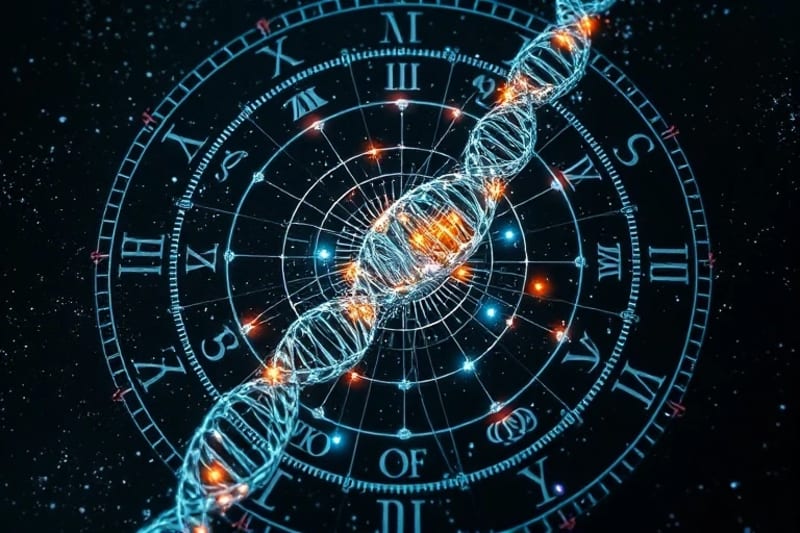
A holographic projection of a birth chart intricately connected to a 3D human genome model, visualizing the cosmic and genetic inheritance.
Practical applications include:
- Healing Ancestral Trauma: Identifying astrological indicators of inherited trauma (e.g., Pluto in the 4th house, challenging Moon aspects) can guide individuals towards therapeutic modalities focused on intergenerational healing.
- Leveraging Inherited Gifts: Recognizing strengths and talents indicated by harmonious aspects or well-placed planets (e.g., Jupiter in the 2nd house for financial abundance, Venus in the 5th for artistic expression) can help individuals cultivate these potentials.
- Breaking Karmic Cycles: Understanding repetitive patterns (e.g., relationship issues indicated by Venus or Descendant ruler aspects) allows for conscious choices to alter these cycles, preventing their transmission to future generations.
- Personalized Wellness: Insights into predispositions for certain health conditions (e.g., Saturn in the 6th house, challenging aspects to the Ascendant ruler) can inform proactive wellness strategies, combining astrological wisdom with genetic health data.
For those interested in the deeper energetic connections in relationships, exploring topics like Karmic Synastry Deep Dive Soul Contracts Relationships can provide further context on how these blueprints interact with others.
Ethical Considerations and Future Horizons
As with any emerging interdisciplinary field, Astro-Genomics presents important ethical considerations. It is crucial to avoid deterministic interpretations that might lead to fatalism or victimhood. The purpose of understanding ancestral karmic blueprints is not to assign blame or predict an unchangeable future, but to foster self-awareness and empower individuals to make conscious choices. The emphasis must always be on free will and the capacity for transformation.
Furthermore, the scientific community largely views astrology as a pseudoscience, and direct empirical evidence linking astrological configurations to specific genetic expressions is currently lacking. Therefore, Astro-Genomics operates primarily as a conceptual framework for personal growth and spiritual inquiry, rather than a scientific discipline in the conventional sense. Rigorous research and open-minded exploration are essential for its continued development, alongside a commitment to ethical practice and informed consent.
The future of Astro-Genomics lies in continued dialogue between astrologers, geneticists, psychologists, and spiritual practitioners. Advances in fields like epigenetics, consciousness studies, and quantum physics may eventually provide a more robust scientific foundation for understanding the subtle energetic influences proposed by astrology. For now, it offers a powerful metaphor and a profound tool for self-exploration, inviting individuals to embrace the rich tapestry of their cosmic and genetic inheritance. This journey of understanding can also be complemented by practices like Haptic Feedback Meditation: Enhancing Mindfulness Tactile Tech, which bridges modern technology with ancient wisdom for personal well-being.
Conclusion: Embracing Your Cosmic and Genetic Legacy
Astro-Genomics offers a compelling new paradigm for understanding the intricate forces that shape human existence. By integrating the symbolic language of astrology with the biological insights of genetics, it provides a unique lens through which to view our ancestral karmic blueprints. This interdisciplinary approach illuminates the deep connections between our cosmic origins and our inherited predispositions, offering a path towards greater self-awareness, healing, and personal empowerment.
While still in its nascent stages, the exploration of Astro-Genomics invites us to consider ourselves as complex beings, influenced by both the stars above and the genetic code within. It encourages a holistic perspective that honors the wisdom of the ancients while embracing the discoveries of modern science, ultimately guiding us towards a more integrated and purposeful life. Embracing this legacy means not being bound by it, but rather using its insights to consciously evolve and create a future aligned with our highest potential.
Explore Further: Related Insights
Source: Hybrid content assisted by AI and human editorial supervision.


Comments
Post a Comment