
Guided Meditation Chakra Alignment Harmonizing Energetic Blueprint
In the intricate tapestry of human existence, ancient wisdom traditions have long recognized the presence of vital energy centers within the body, known as chakras. These spinning wheels of energy, deeply rooted in Sanskrit texts and Eastern philosophies, are believed to govern our physical, emotional, mental, and spiritual well-being. When these centers are balanced and aligned, a profound sense of harmony, vitality, and inner peace can be experienced. Conversely, blockages or imbalances in the chakras can manifest as various forms of discomfort or dis-ease.
Guided meditation for chakra alignment offers a powerful and accessible pathway to restore equilibrium to these energetic blueprints. It involves a focused practice, often led by an instructor or audio recording, that systematically directs attention to each chakra, encouraging its activation, cleansing, and balancing. This holistic approach not only addresses symptoms but delves into the energetic root causes of imbalance, fostering deep healing and personal growth. Understanding the role of each chakra is the first step towards harnessing this transformative practice.
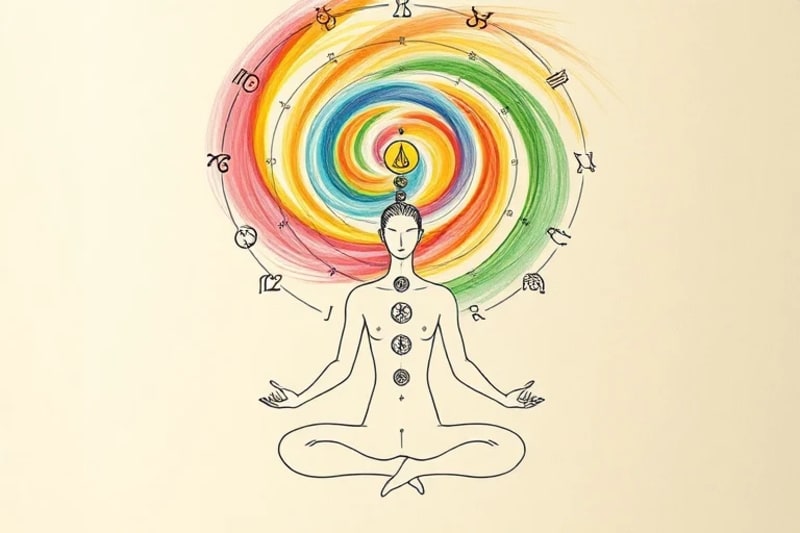
A serene individual engaging in guided meditation, surrounded by the vibrant, swirling energy of balanced chakras, illustrating the profound connection between inner peace and energetic alignment.
The concept of chakras originated in ancient India, with the earliest mentions found in the Vedas, sacred Hindu texts dating back to 1500-500 BCE. While various traditions describe different numbers and systems of chakras, the most commonly recognized system comprises seven primary chakras aligned along the spine, from the base to the crown of the head. Each chakra is associated with specific colors, elements, sounds, and psychological functions, creating a complex map of our inner landscape.
Guided meditation provides a structured framework for exploring and interacting with these energy centers. Through visualization, breathwork, and affirmations, practitioners can learn to identify areas of stagnation or overactivity and gently guide their energy towards a state of optimal flow. This practice is not merely about relaxation; it is an active engagement with one's subtle energy system, leading to profound insights and lasting shifts in well-being. The educational journey into chakra alignment begins with a foundational understanding of each center.
Table of Contents
- Understanding the Seven Primary Chakras
- The Root Chakra (Muladhara)
- The Sacral Chakra (Svadhisthana)
- The Solar Plexus Chakra (Manipura)
- The Heart Chakra (Anahata)
- The Throat Chakra (Vishuddha)
- The Third Eye Chakra (Ajna)
- The Crown Chakra (Sahasrara)
- Benefits of Chakra Alignment Meditation
- How to Practice Guided Chakra Meditation
- Integrating Chakra Work into Daily Life
Understanding the Seven Primary Chakras
The seven primary chakras are often depicted as a rainbow of colors, each corresponding to a specific vibrational frequency and a unique set of life aspects. From our fundamental sense of security to our highest spiritual connection, these energy centers form a complete system that influences every facet of our being. A balanced chakra system allows for a free flow of energy, promoting health, emotional stability, and spiritual awakening.
Learning about each chakra individually provides a roadmap for self-discovery and healing. By understanding their functions, associated emotions, and common signs of imbalance, individuals can pinpoint areas that require attention during their meditation practice. This knowledge empowers a more targeted and effective approach to energetic harmonization, moving beyond generic relaxation to specific energetic work.
| Chakra Name | Location | Color | Associated Aspects | Element |
|---|---|---|---|---|
| Root (Muladhara) | Base of spine | Red | Security, stability, grounding, survival | Earth |
| Sacral (Svadhisthana) | Below navel | Orange | Creativity, sexuality, emotions, pleasure | Water |
| Solar Plexus (Manipura) | Upper abdomen | Yellow | Personal power, self-esteem, will | Fire |
| Heart (Anahata) | Center of chest | Green/Pink | Love, compassion, empathy, healing | Air |
| Throat (Vishuddha) | Throat | Blue | Communication, self-expression, truth | Ether/Sound |
| Third Eye (Ajna) | Between eyebrows | Indigo | Intuition, insight, wisdom, perception | Light |
| Crown (Sahasrara) | Top of head | Violet/White | Spiritual connection, enlightenment, cosmic consciousness | Thought/Cosmic Energy |
The Root Chakra (Muladhara)
Located at the base of the spine, the Muladhara or Root Chakra is the foundation of our energetic system. It is associated with our sense of security, stability, and basic survival needs. This chakra grounds us to the earth and provides a feeling of being safe and supported in the physical world. Its vibrant red energy is crucial for our primal instincts and our connection to our physical body.
When the Root Chakra is balanced, individuals feel secure, confident, and rooted. They can easily meet their basic needs and feel a strong connection to their physical existence. An imbalance, however, can manifest as feelings of anxiety, fear, insecurity, financial instability, or issues with physical health related to the lower body, such as leg or foot problems. Guided meditations for this chakra often focus on visualizing roots extending into the earth, fostering a deep sense of belonging and safety.
The Sacral Chakra (Svadhisthana)
Just below the navel, the Svadhisthana or Sacral Chakra radiates with a warm, flowing orange energy. This center is the seat of our emotions, creativity, sexuality, and pleasure. It governs our ability to experience joy, passion, and connection with others. The Sacral Chakra is intimately linked to our capacity for emotional expression and our relationships, both with ourselves and the world around us.
A balanced Sacral Chakra allows for healthy emotional flow, creative expression, and a joyful approach to life. Individuals with an aligned sacral chakra embrace their sensuality and experience fulfilling relationships. Imbalances can lead to emotional volatility, creative blocks, issues with intimacy, addiction, or physical ailments related to the reproductive organs, kidneys, or bladder. Guided meditations for the Sacral Chakra often involve visualizing flowing water or a vibrant orange light, encouraging emotional release and creative inspiration.

An abstract watercolor rendering of the seven chakras, depicted as glowing orbs of light harmoniously interconnected by a delicate, flowing stream of energy, symbolizing balance and vitality.
The Solar Plexus Chakra (Manipura)
The Manipura or Solar Plexus Chakra is located in the upper abdomen, radiating a powerful yellow light. This chakra is the core of our personal power, self-esteem, and willpower. It governs our ability to manifest our desires, take action, and assert ourselves in the world. Often referred to as our inner sun, it fuels our drive and ambition, shaping our sense of identity and purpose.
When the Solar Plexus Chakra is balanced, individuals feel empowered, confident, and capable of achieving their goals. They have a strong sense of self and can assert their boundaries effectively. An imbalance can lead to feelings of low self-worth, indecisiveness, control issues, aggression, or physical problems related to digestion, metabolism, or the pancreas. Guided meditations for this chakra focus on visualizing a bright, warm yellow light expanding from the solar plexus, strengthening inner power and self-confidence.
The Heart Chakra (Anahata)
Situated in the center of the chest, the Anahata or Heart Chakra is the bridge between our lower and upper chakras, connecting our physical and spiritual selves. Its colors are green and pink, symbolizing love, compassion, and healing. This chakra governs our capacity for unconditional love, empathy, forgiveness, and connection with all beings. It is the center from which we give and receive love.
A balanced Heart Chakra allows for deep, meaningful relationships and a profound sense of interconnectedness. Individuals with an open heart chakra experience joy, peace, and a natural inclination towards kindness. Imbalances can manifest as loneliness, grief, jealousy, difficulty forgiving, or physical issues related to the heart, lungs, or circulatory system. Guided meditations for the Heart Chakra often involve visualizing a gentle green or pink light expanding from the chest, fostering love, healing, and compassion.
The Throat Chakra (Vishuddha)
The Vishuddha or Throat Chakra, located in the throat area, is associated with the color blue and governs our ability to communicate, express our truth, and listen effectively. It is the center of self-expression, creativity through voice, and authenticity. This chakra allows us to articulate our thoughts, feelings, and ideas clearly and confidently, bridging our inner world with the outer.
When the Throat Chakra is balanced, individuals can express themselves openly and honestly, setting clear boundaries and speaking their truth with integrity. They are also excellent listeners. An imbalance can lead to difficulty expressing oneself, fear of public speaking, excessive talking, gossip, or physical ailments such as sore throats, thyroid issues, or neck stiffness. Guided meditations for this chakra often focus on visualizing a clear blue light in the throat, encouraging honest communication and authentic self-expression.
The Third Eye Chakra (Ajna)
Positioned between the eyebrows, the Ajna or Third Eye Chakra is the center of intuition, insight, and inner wisdom. Its color is indigo, representing deep perception and spiritual awareness. This chakra governs our ability to see beyond the physical, access our inner guidance, and understand the deeper meanings of life. It is the gateway to higher consciousness and psychic abilities.
A balanced Third Eye Chakra allows for clear intuition, vivid dreams, and a strong connection to one's inner guidance. Individuals experience enhanced perception and clarity of thought. Imbalances can lead to confusion, lack of focus, poor decision-making, nightmares, or physical symptoms like headaches, eye strain, or sinus problems. Guided meditations for the Third Eye Chakra often involve visualizing a luminous indigo light, activating inner vision and intuitive faculties.
A futuristic 3D rendering of a human silhouette, highlighting the seven chakras as intricate geometric patterns of glowing energy, symbolizing the balanced and harmonized energetic blueprint.
The Crown Chakra (Sahasrara)
At the very top of the head, the Sahasrara or Crown Chakra shines with violet or white light, representing our connection to the divine, universal consciousness, and spiritual enlightenment. This chakra is our gateway to higher states of awareness, transcending the ego and experiencing oneness with the cosmos. It governs our spiritual growth, wisdom, and sense of purpose beyond the material world.
When the Crown Chakra is balanced, individuals experience profound spiritual connection, inner peace, and a deep understanding of their place in the universe. They feel connected to something larger than themselves. An imbalance can lead to feelings of isolation, cynicism, spiritual disconnection, lack of purpose, or physical issues such as neurological disorders, chronic fatigue, or sensitivity to light and sound. Guided meditations for the Crown Chakra often involve visualizing a brilliant violet or white light pouring into the crown, fostering spiritual awakening and cosmic connection.
Benefits of Chakra Alignment Meditation
Engaging in regular guided meditation for chakra alignment offers a myriad of benefits that extend across all aspects of life. These benefits are not merely anecdotal; a growing body of research supports the positive impact of meditation on mental and physical health. By systematically addressing energetic imbalances, this practice can lead to profound and lasting transformation.
One of the primary advantages is enhanced emotional regulation. When chakras are balanced, individuals often report a greater ability to manage stress, reduce anxiety, and experience more stable moods. The practice helps to release stored emotional blockages, allowing for a healthier processing of feelings. This emotional clarity contributes significantly to overall mental well-being and resilience in the face of life's challenges.
- Improved Physical Health: Balancing chakras can alleviate physical symptoms associated with specific energy centers, such as digestive issues (Solar Plexus) or circulatory problems (Heart).
- Increased Emotional Stability: Release of emotional blockages leads to reduced anxiety, stress, and greater emotional resilience.
- Enhanced Mental Clarity: A balanced Third Eye Chakra fosters better focus, intuition, and decision-making abilities.
- Boosted Creativity and Expression: Open Sacral and Throat Chakras encourage creative flow and authentic communication.
- Stronger Relationships: An open Heart Chakra promotes unconditional love, empathy, and healthier connections with others.
- Greater Sense of Security and Grounding: A balanced Root Chakra provides a foundational sense of safety and stability.
- Deeper Spiritual Connection: Aligning the Crown Chakra facilitates spiritual growth, wisdom, and a sense of universal belonging.
- Increased Vitality and Energy: Optimal energy flow throughout the system can lead to higher energy levels and reduced fatigue.
Beyond these individual benefits, consistent chakra alignment meditation can foster a holistic sense of well-being. It encourages a deeper connection to one's inner self, promoting self-awareness and self-acceptance. This journey of self-discovery is empowering, enabling individuals to live more authentically and purposefully. The practice cultivates a state of inner peace that radiates outwards, positively impacting interactions and experiences in daily life. This is why learning how to practice effectively is paramount.
How to Practice Guided Chakra Meditation
Practicing guided chakra meditation is a straightforward process that can be adapted to various schedules and preferences. The key is consistency and creating a conducive environment. While there are many guided meditations available, the core elements remain similar, focusing on breath, visualization, and intention. Starting with a beginner-friendly approach is often the most effective way to build a sustainable practice.
To begin, find a quiet space where you won't be disturbed. Sit or lie down in a comfortable position, ensuring your spine is straight but relaxed. You can choose to listen to a guided meditation audio track, which will typically lead you through each chakra, or you can follow a self-guided practice once you're familiar with the process. The duration can range from 10 minutes to an hour, depending on your availability and desired depth of practice.
- Set the Intention: Before starting, take a moment to set an intention for your meditation, such as "I intend to balance and align my chakras for optimal well-being."
- Deep Breathing: Begin with several deep, slow breaths to calm your nervous system and bring your awareness to the present moment. Inhale deeply through your nose, expanding your abdomen, and exhale slowly through your mouth.
- Root Chakra Focus: Direct your attention to the base of your spine. Visualize a vibrant red light or energy spinning at this location. Feel yourself becoming grounded and secure. Affirm silently or aloud: "I am safe. I am grounded."
- Sacral Chakra Focus: Move your awareness just below your navel. Visualize a warm, flowing orange light. Connect with your creativity and emotions. Affirm: "I am creative. I embrace pleasure."
- Solar Plexus Chakra Focus: Shift your attention to your upper abdomen. Visualize a bright yellow light, feeling your personal power. Affirm: "I am powerful. I am confident."
- Heart Chakra Focus: Center your awareness in your chest. Visualize a gentle green or pink light, opening to love and compassion. Affirm: "I am love. I am compassionate."
- Throat Chakra Focus: Bring your attention to your throat. Visualize a clear blue light, encouraging honest expression. Affirm: "I speak my truth. I communicate clearly."
- Third Eye Chakra Focus: Focus on the space between your eyebrows. Visualize a luminous indigo light, accessing your intuition. Affirm: "I see clearly. I trust my intuition."
- Crown Chakra Focus: Finally, direct your awareness to the top of your head. Visualize a brilliant violet or white light, connecting to universal wisdom. Affirm: "I am connected. I am divine."
- Integration: After focusing on all chakras, take a few moments to feel the integrated flow of energy throughout your entire being. Gently bring your awareness back to your surroundings.
Consistency is key to experiencing the full benefits of chakra alignment. Even short, daily practices can yield significant results over time. There are numerous resources available, including apps, YouTube channels, and meditation teachers, that offer guided chakra meditations tailored for different levels of experience. Experiment to find what resonates most with you, and remember that the journey of energetic harmonization is a personal and evolving one.
Integrating Chakra Work into Daily Life
While guided meditation is a powerful tool for chakra alignment, its effectiveness is amplified when integrated into daily life. Chakra work extends beyond the meditation cushion, influencing our choices, interactions, and overall lifestyle. By consciously applying chakra principles, individuals can maintain energetic balance and foster continuous growth. This integration transforms theoretical knowledge into lived experience, making the energetic blueprint a dynamic part of daily reality.
For instance, understanding the Root Chakra's connection to security can prompt mindful attention to financial stability, healthy boundaries, and a supportive home environment. If you notice feelings of insecurity, you might consciously engage in grounding activities like walking in nature or eating nourishing foods. Similarly, recognizing the Sacral Chakra's link to creativity might inspire you to pursue a new hobby or express your emotions through art, rather than suppressing them. This proactive approach helps to prevent imbalances from taking root.
Incorporating specific colors, sounds (mantras), and even foods associated with each chakra can further support alignment. For example, wearing blue or chanting "Ham" can support the Throat Chakra, while eating red foods can strengthen the Root Chakra. Journaling about your emotional states and identifying which chakra might be affected can also provide valuable insights. The goal is to cultivate an ongoing awareness of your energetic landscape, allowing you to make conscious choices that support your holistic well-being. This continuous practice reinforces the benefits gained from formal meditation sessions.
Fuente: Contenido híbrido asistido por IAs y supervisión editorial humana.


Comments
Post a Comment