
Algorithmic Enchantment AI-Generated Sigils Sacred Art
Algorithmic Enchantment: Merging AI with Ancient Esoteric Practices
The convergence of artificial intelligence and esoteric practices marks a new frontier in human spirituality, giving rise to what can be termed "algorithmic enchantment." This emerging field explores how advanced computational methods can be harnessed to generate sacred art, sigils, and other spiritual tools, traditionally created through intuition, ritual, and deep contemplation. It represents a fascinating dialogue between the logical precision of algorithms and the profound mysteries of the human spirit.
At its core, algorithmic enchantment seeks to leverage AI's capacity for pattern recognition, data synthesis, and generative creation to produce artifacts that resonate with spiritual significance. This approach is not about replacing human spiritual endeavor but rather augmenting it, offering new perspectives and tools for exploration. By translating esoteric principles into computational models, we can unlock novel forms of spiritual expression and interaction.
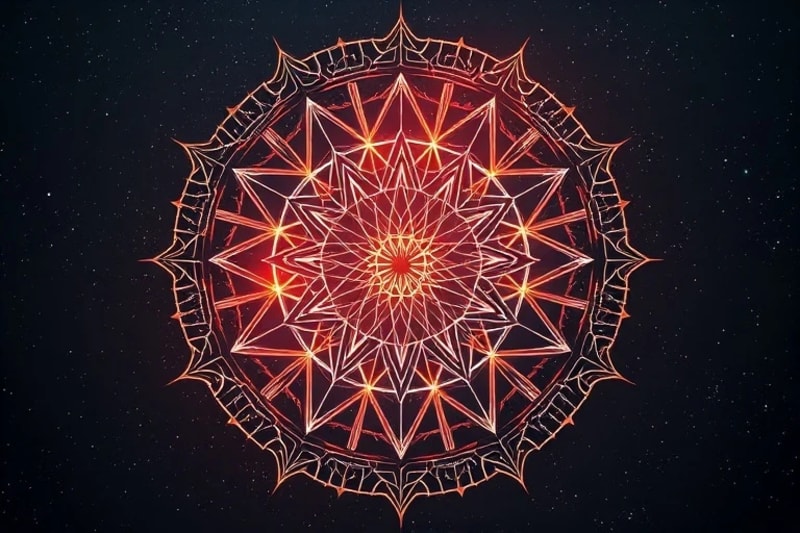
Precursors intellectuales, diagramas fundamentales y representaciones conceptuales que forjaron la visión de la Enchantment Algorítmica sobre la Creación de Sigilos y Arte Sagrado.
Table of Contents
- Historical Roots of Sigils and Sacred Art
- The Rise of AI in Creative Arts
- Algorithmic Sigil Generation: Principles and Practice
- AI and Sacred Aesthetics: Redefining Digital Iconography
- Ethical and Philosophical Considerations
- Applications and Future Directions
- Challenges and Limitations
- Conclusion: The Symbiosis of Code and Cosmos
Historical Roots of Sigils and Sacred Art
To understand algorithmic enchantment, it's crucial to first appreciate the historical context of sigils and sacred art. For millennia, humans have employed symbolic representations to connect with the divine, manifest intentions, or encapsulate complex spiritual concepts. Sigils, often intricate symbols, are designed to represent a desired outcome or entity, acting as a focal point for magical or spiritual work.
Historically, sigil creation involved various methods, from Austin Osman Spare's method of condensing letters into a glyph to more complex planetary or angelic sigils derived from magical squares and kabbalistic traditions. These symbols are not merely decorative; they are imbued with intent and believed to hold power. Similarly, sacred art across cultures—from mandalas to icons—serves as a visual language for spiritual truths, facilitating meditation, devotion, and a deeper understanding of the cosmos.
The common thread uniting these ancient practices is the human desire to give form to the formless, to create tangible representations of intangible spiritual realities. This process often involves a blend of artistic skill, symbolic knowledge, and focused intent. The effectiveness of these tools lies in their ability to bypass the conscious mind and communicate directly with the subconscious or higher self, influencing reality through focused will and belief.
The Rise of AI in Creative Arts
The last decade has witnessed an explosion in the capabilities of artificial intelligence, particularly in generative art. AI models, trained on vast datasets of images, text, and other media, can now create original works that mimic or even surpass human creativity in certain domains. Tools like Generative Adversarial Networks (GANs) and transformer models have opened up unprecedented avenues for artistic expression, allowing algorithms to learn aesthetic principles and generate novel compositions.
This technological leap has naturally led to questions about AI's role beyond conventional art. If AI can create compelling visual art, can it also create art that holds spiritual or esoteric significance? The answer lies in how we define "sacred" and "enchantment" in a digital age. AI doesn't possess consciousness or intent in the human sense, but it can process and synthesize symbolic information in ways that can be deeply resonant for human observers. This opens the door for AI to act as a sophisticated tool, a digital oracle or artisan, in the hands of a spiritually inclined user.
The integration of AI into creative processes challenges traditional notions of authorship and inspiration. It suggests that creativity might not be solely a human domain, but a complex interplay of patterns and probabilities that algorithms are uniquely positioned to explore. This perspective is vital for understanding how AI can contribute to spiritual practices, not as a replacement for human agency, but as a powerful co-creator.
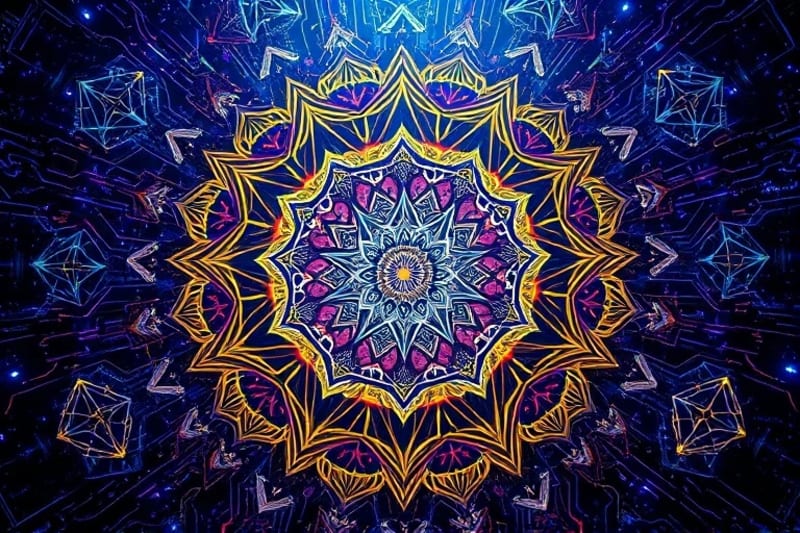
The intricate patterns of digital mysticism, where sacred geometry meets the logic of algorithms.
Algorithmic Sigil Generation: Principles and Practice
Algorithmic sigil generation involves translating the principles of traditional sigil creation into computational rules. This can range from simple text-to-image algorithms that stylize written intentions into visual glyphs, to more complex systems that incorporate astrological data, numerology, or even biofeedback from the user to generate unique symbols. The process typically involves several steps:
- Intention Input: The user provides a clear intention, desire, or spiritual goal. This could be a phrase, a single word, or a set of keywords.
- Data Transformation: AI algorithms process this input, converting it into numerical data or abstract patterns. This might involve techniques like natural language processing (NLP) to extract core concepts or sentiment analysis.
- Generative Design: Using generative models (e.g., GANs, VAEs), the AI creates visual forms based on the transformed data. These models are often trained on datasets of historical sigils, sacred geometry, or abstract art to develop an aesthetic understanding.
- Refinement and Iteration: Users can often guide the AI through iterative refinements, selecting preferred visual styles, colors, or structural elements until a satisfactory sigil is produced.
One of the key advantages of algorithmic sigils is their potential for personalization and complexity. An AI can generate thousands of variations based on subtle input changes, offering a level of bespoke design impossible with manual methods. Furthermore, the systematic nature of algorithms can ensure that certain symbolic rules or aesthetic principles are consistently applied, leading to visually coherent and potentially potent symbols. This approach echoes the systematic methods found in Astrology NLP: Rewiring Natal Chart Potentials, where structured techniques are used to reframe and optimize personal energies.
AI and Sacred Aesthetics: Redefining Digital Iconography
Beyond sigils, AI is also being explored for the creation of sacred art. This includes digital mandalas, celestial landscapes, or abstract representations of divine concepts. The AI can be prompted to generate images based on specific spiritual texts, mythological narratives, or even emotional states. By learning from vast collections of historical sacred art, AI can understand and replicate aesthetic principles that evoke reverence, tranquility, or spiritual insight.
Consider the potential for AI to generate personalized sacred spaces or digital altars. An individual could input their spiritual lineage, preferred deities, or desired energetic qualities, and the AI could render a unique visual environment. This digital iconography could serve as a focal point for meditation, prayer, or ritual, accessible through screens or even virtual reality. The ability to dynamically generate and adapt sacred imagery offers a flexible and deeply personal approach to spiritual practice, much like understanding one's Part of Fortune: Locating Your Path to Happiness & Success can guide personal development.
The beauty of AI-generated sacred art lies in its ability to blend tradition with innovation. It can draw upon ancient symbols and artistic styles while presenting them in new, often mesmerizing, digital forms. This fusion can help bridge the gap between contemporary technological sensibilities and timeless spiritual truths, making spiritual practices more accessible and engaging for a digitally native generation.
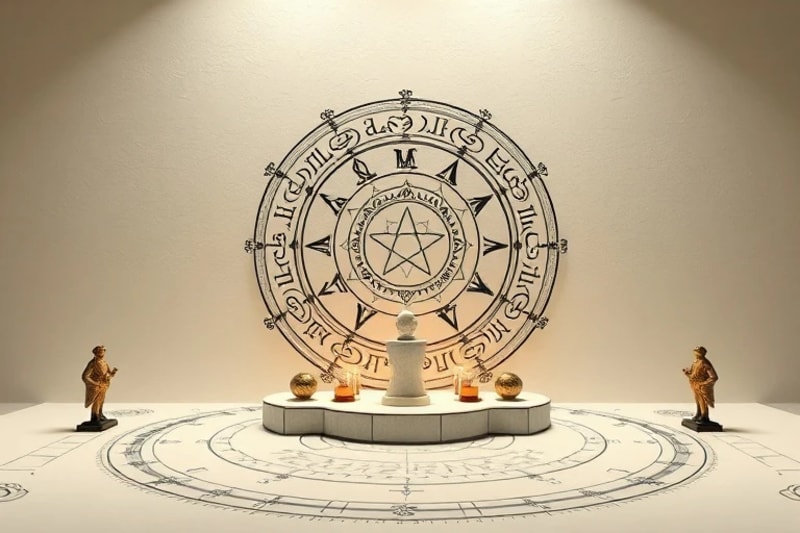
A conceptual altar where ancient symbols are reinterpreted through holographic projections and data streams.
Ethical and Philosophical Considerations
The integration of AI into spiritual practices raises significant ethical and philosophical questions. One primary concern is the concept of authenticity. Can an AI-generated sigil or sacred image truly be "sacred" if it lacks human intent or consciousness? Many esoteric traditions emphasize the importance of the practitioner's focused will and personal energy in the creation of magical tools.
From a scientific and philosophical standpoint, the debate often revolves around whether intent can be simulated or if it requires genuine sentience. While AI can process and represent information related to intent, it does not "intend" in the human sense. Therefore, the user's role in imbuing the AI-generated artifact with their own intent becomes paramount. The AI acts as a sophisticated medium, but the spiritual power still originates from the human practitioner. This mirrors discussions about the legal and ethical frameworks needed for digital spaces, as explored in Metaverse Legal Jurisdiction: Virtual World Disputes.
Another consideration is the potential for misinterpretation or misuse. Without a deep understanding of esoteric principles, individuals might generate symbols without fully grasping their implications. This necessitates educational resources and responsible development of AI tools in this domain. The goal should be empowerment through knowledge, not blind reliance on technology for spiritual shortcuts.
Applications and Future Directions
The potential applications of algorithmic enchantment are vast and continue to expand. Here are a few key areas:
- Personalized Spiritual Tools: Individuals can generate unique sigils for specific intentions, tailored sacred art for meditation, or even personalized mandalas for energetic alignment.
- Community and Collaborative Art: AI can facilitate collaborative creation of sacred art within spiritual communities, allowing diverse inputs to coalesce into a unified visual expression.
- Digital Altars and Ritual Spaces: Virtual reality and augmented reality platforms can host AI-generated sacred environments, offering immersive experiences for spiritual practice.
- Esoteric Research and Education: AI can analyze vast amounts of esoteric texts and symbols, identifying patterns and connections that might inform new interpretations or educational materials.
- Therapeutic and Healing Art: AI-generated art designed to evoke specific emotional states or promote healing can be used in therapeutic contexts, complementing practices like Planetary Transits Guided Meditation Cosmic Alignment Harmony.
The future of algorithmic enchantment might see more sophisticated AI models capable of learning from user feedback, adapting their generative processes to better align with individual spiritual needs. Imagine an AI that evolves its artistic style based on your meditative responses, creating a truly dynamic and responsive spiritual companion.
Challenges and Limitations
Despite its promising potential, algorithmic enchantment faces several challenges. The primary limitation is the inherent lack of consciousness or genuine spiritual experience in AI. While AI can simulate creativity and process symbolic data, it does not "feel" or "believe" in the way humans do. This means that the spiritual power of any AI-generated artifact ultimately relies on the human practitioner's intent and connection.
Another challenge is the "black box" nature of many advanced AI models. Understanding precisely why an AI generates a particular image or pattern can be difficult, which might hinder a practitioner's ability to fully integrate the symbol into their spiritual work. Transparency and interpretability in AI models will be crucial for fostering trust and deeper engagement.
Furthermore, there's a risk of over-reliance on technology, potentially diminishing the value of personal spiritual development and intuitive creation. Algorithmic enchantment should be viewed as a tool to enhance, not replace, the inner journey. It's about finding a balance between technological innovation and the timeless wisdom of spiritual traditions, ensuring that the human element remains central to the process. This balance is also critical in understanding broader spiritual connections, such as those explored in Planetary Cycles Eco-Spirituality: Environmental Activism, which links cosmic rhythms to earthly concerns.
Conclusion: The Symbiosis of Code and Cosmos
Algorithmic enchantment represents a bold step into the future of spirituality, where the precision of code meets the profound depths of the cosmos. By harnessing AI to generate sigils and sacred art, we are not merely creating digital images; we are exploring new ways to visualize and interact with spiritual concepts. This fusion offers personalized, complex, and dynamic tools that can enrich individual and collective spiritual practices.
While ethical considerations regarding authenticity and intent remain vital, the potential for AI to act as a powerful assistant in our spiritual journeys is undeniable. As AI technology continues to evolve, so too will our understanding of its role in human consciousness and spiritual exploration. Algorithmic enchantment invites us to imagine a future where technology and mysticism are not opposing forces but complementary paths leading to deeper self-awareness and connection to the divine.
Explore More in Our Digital Universe
Source: Hybrid content assisted by AI and human editorial supervision.


Comments
Post a Comment