
Minor Aspects Natal Chart: Unveiling Hidden Power
Minor Aspects Natal Chart: Unveiling Hidden Power
In the intricate tapestry of a natal chart, major aspects like conjunctions, oppositions, squares, and trines often command the spotlight, delineating the primary dynamics and life themes. These prominent geometric relationships between planets are understood to represent significant, overt energies and life challenges or flows, often felt consciously and forming the dominant themes in an individual's life. However, a deeper layer of understanding emerges when we delve into the realm of minor aspects, which are often overlooked but hold profound significance.
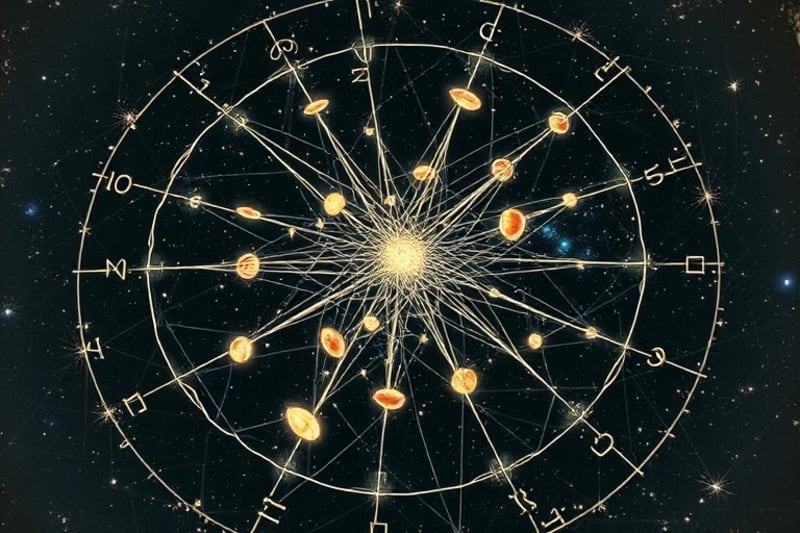
Conceptual representation of the subtle, interconnected energies and celestial mechanics that form the basis of astrological minor aspects.
Visual source subject to ecosystem availability: Wikimedia Commons under license CC BY-SA 4.0 or conceptual AI rendering.
These subtle yet potent geometric relationships between planets, though less conspicuous, weave a nuanced narrative, revealing hidden talents, subconscious patterns, and unique psychological predispositions that significantly shape an individual's journey. Ignoring these delicate connections is akin to appreciating a symphony solely for its loudest instruments, missing the intricate harmonies and counterpoints that give it true depth and character. This advanced exploration aims to shed light on the profound influence of minor aspects, moving beyond their often-overlooked status to demonstrate their critical role in a comprehensive astrological analysis.
Table of Contents
- Foundational Concepts of Astrological Aspects
- Semisextile and Quincunx: The Aspects of Adjustment
- Semisquare and Sesquiquadrate: Aspects of Irritation and Drive
- Quintile and Biquintile: The Aspects of Talent and Creativity
- Novile and Septile: Karmic and Spiritual Aspects
- Other Significant Minor Aspects
- Integrating Minor Aspects for Holistic Interpretation
- Advanced Considerations and Orb Allowances
- Conclusion: The Unseen Threads of Destiny
Foundational Concepts of Astrological Aspects
Astrological aspects are angular relationships between planets and other sensitive points in a natal chart, measured in degrees. These angles are derived from dividing the 360-degree zodiacal circle by various numbers, yielding specific geometric patterns. Major aspects, such as the conjunction (0°), opposition (180°), square (90°), and trine (120°), are formed by divisions of the circle by 1, 2, 3, 4, and 6. They represent the most prominent and often consciously experienced dynamics in a chart, highlighting areas of inherent strength, conflict, or ease.
Minor aspects, conversely, arise from further subdivisions of the circle, typically by numbers like 5, 7, 8, 9, 10, or 12. Their influence is often more subtle, operating on a subconscious or psychological level, and they may manifest as underlying talents, specific behavioral nuances, or karmic predispositions. While their impact might not be as immediately obvious as that of major aspects, they contribute significantly to the intricate details of personality and destiny. Understanding these delicate connections allows for a more profound and comprehensive astrological houses comprehensive guide, revealing layers of an individual's being that might otherwise remain unexplored. Ignoring these subtle energies can lead to an incomplete or superficial chart reading.
Semisextile and Quincunx: The Aspects of Adjustment
The semisextile (30°) and quincunx (150°), also known as inconjunct, are two of the most frequently encountered minor aspects. Both are considered "awkward" or "uncomfortable" aspects because the signs involved share no common modality or element, leading to a sense of disconnect or necessary adjustment. They represent areas where integration is not natural but requires conscious effort and adaptation, often highlighting a constant need for refinement.
- Semisextile (30°): This aspect connects signs that are adjacent to each other, such as Aries (fire, cardinal) and Taurus (earth, fixed). The planets involved often represent different agendas or modes of operation, requiring a gentle, continuous process of learning and fine-tuning. It suggests a subtle but persistent need for development and growth between the energies involved, often manifesting as a quiet inner drive to reconcile disparate parts of one's personality or life circumstances. The challenge here is to find common ground and facilitate a working relationship between distinct energies.
- Quincunx (150°): The quincunx is formed between signs that are five signs apart, like Aries and Virgo. This aspect signifies a constant need for adjustment, recalibration, and often, a feeling of being "out of sync." The energies involved are fundamentally incompatible, yet they are forced to interact. This can lead to health issues if not managed, as the body may manifest the internal stress of constant adaptation. Alternatively, it can foster incredible adaptability and problem-solving skills through continuous refinement, as the individual learns to creatively bridge the gap between conflicting drives. It often highlights areas of life where emotional foundations and inner needs are constantly being re-evaluated and adjusted.
A complex clockwork mechanism symbolizing the intricate and often hidden mechanics of astrological influences.
Semisquare and Sesquiquadrate: Aspects of Irritation and Drive
These aspects are derivatives of the square (90°) and carry a similar, albeit less overt, challenging energy. They represent areas of friction, tension, and internal conflict that can serve as powerful motivators for change and development. Unlike the direct confrontation of a square, their influence is more insidious, a persistent background noise that demands attention.
- Semisquare (45°): Formed by dividing the circle by 8, the semisquare indicates a minor irritation or friction. It's a constant, low-level hum of tension that can lead to nervous energy, restlessness, and a need to overcome obstacles. While not as dramatic or crisis-oriented as a square, it provides a consistent, underlying drive to resolve subtle issues or improve conditions. Individuals with prominent semisquares may feel a perpetual sense of unease or dissatisfaction that subtly pushes them towards action and self-improvement, often without a clear understanding of its source.
- Sesquiquadrate (135°): This aspect is a square plus a semisquare (90° + 45°), formed by three-eighths of the circle. Like the semisquare, it signifies internal tension and frustration, but often with a more pronounced sense of urgency or a feeling of being pushed to act. It can indicate areas where one feels compelled to assert themselves or address a persistent, nagging problem that has built up over time. This aspect often points to a need to release pent-up energy or confront a subtle but deeply ingrained conflict. Both semisquare and sesquiquadrate often highlight areas where individuals navigate planetary debilitations, navigating challenges and growth through persistent effort and the management of internal friction.
Quintile and Biquintile: The Aspects of Talent and Creativity
Derived from the division of the circle by 5, the quintile (72°) and biquintile (144°) are aspects associated with innate talent, creativity, and unique abilities. They often manifest as a natural flair or a special gift that an individual possesses, sometimes without conscious effort, representing a harmonious flow of energy that fosters originality and ingenuity.
- Quintile (72°): This aspect suggests a specific, often artistic, intellectual, or technical talent. It points to areas where an individual can express themselves creatively and ingeniously, often in an unconventional or highly skilled manner. The energy flows smoothly and naturally, indicating a capacity for original thought, unique solutions, and a distinctive personal style. For example, a quintile between Mercury and Neptune might suggest a talent for imaginative writing or intuitive communication.
- Biquintile (144°): Representing two quintiles, the biquintile amplifies the creative potential. It signifies a strong, often multifaceted, talent that can be developed and utilized in innovative ways. Individuals with prominent quintiles and biquintiles often possess a distinctive style or approach that sets them apart, allowing them to bring a unique perspective to their endeavors. This aspect can indicate a profound ability to synthesize ideas and express them in a truly original fashion, often leading to mastery in a specific creative field.
Novile and Septile: Karmic and Spiritual Aspects
These aspects delve into the deeper, often karmic and spiritual dimensions of the natal chart. They are less about conscious action and more about destiny, spiritual purpose, and underlying soul lessons, often manifesting as subtle pulls or inclinations that guide one's life path in profound ways.
- Novile (40°): Derived from dividing the circle by 9, the novile is associated with spiritual completion, initiation, and destiny. It suggests a karmic thread or a spiritual purpose that is unfolding, often in a gentle and unavoidable manner. It can highlight areas where an individual is fulfilling a soul contract, undergoing a spiritual transformation, or being guided towards a specific spiritual path. The energy of the novile is often subtle, operating beneath the surface, but it represents a powerful force of spiritual evolution and integration.
- Septile (51°26'): Formed by dividing the circle by 7, the septile is considered a mystical or fated aspect. It speaks to spiritual connections, intuitive insights, and events that seem to occur outside of rational explanation, often feeling preordained or synchronistic. It can indicate a profound spiritual path, a connection to higher realms of consciousness, or an innate psychic sensitivity. The septile series often points to experiences that defy logic, leading to deep spiritual understanding or a sense of being guided by an unseen hand. These aspects are particularly relevant when exploring Chiron Nodes healing karma and evolution, as they reveal the deeper, often unconscious, spiritual journey.
Other Significant Minor Aspects
Beyond the commonly discussed minor aspects, several others offer additional layers of insight, each contributing to the nuanced understanding of the natal chart. These include the semi-square (22.5°, a half-semisquare), bi-novile (80°), tri-novile (120°), and more complex divisions, each carrying its unique energetic signature. While perhaps less frequently analyzed, their presence can illuminate specific, subtle influences that shape an individual's psychological landscape and life experiences.
| Aspect Name | Degree | Division of Circle | Key Interpretation |
|---|---|---|---|
| Semisextile | 30° | 12 | Subtle adjustment, learning, gradual growth, bridging differences. |
| Quincunx (Inconjunct) | 150° | 12 | Constant adjustment, recalibration, health issues, creative problem-solving. |
| Semisquare | 45° | 8 | Minor irritation, nervous energy, persistent drive, subtle friction. |
| Sesquiquadrate | 135° | 8 | Internal tension, compelling action, frustration, need for release. |
| Quintile | 72° | 5 | Innate talent, creativity, unique abilities, artistic flair. |
| Biquintile | 144° | 5 | Amplified creative potential, distinctive style, innovative synthesis. |
| Novile | 40° | 9 | Spiritual completion, destiny, karmic purpose, initiation. |
| Septile | 51°26' | 7 | Mystical, fated, intuitive insights, spiritual path, synchronicity. |
| Undecile | 32°43' | 11 | Unconventional thinking, unexpected insights, humanitarian ideals. |
| Tridecile | 108° | 10/3 | Creative expression, unique perspective, innovative solutions. |
Integrating Minor Aspects for Holistic Interpretation
The true power of minor aspects lies in their ability to add nuance and depth to the broader picture painted by major aspects. While major aspects define the main themes and challenges, minor aspects reveal the subtle undercurrents, the unconscious drives, and the unique ways an individual navigates their life. For instance, a strong trine might indicate an area of natural ease, but a concurrent semisquare could point to a subtle, underlying tension that prevents full utilization of that ease without conscious effort, demanding a more conscious approach to integration.
In synastry, minor aspects can highlight subtle attractions, areas of friction, or unique ways two individuals connect on a subconscious level, often revealing the unspoken dynamics of a relationship. In predictive astrology, transiting minor aspects can trigger subtle shifts in awareness, creative impulses, or periods of necessary adjustment that might not be as dramatic as major transits but are nonetheless significant for personal growth. These subtle triggers can lead to profound internal changes or open doors to new creative expressions. The interplay of these subtle energies contributes to the overall Astro-Archeology Unearthing Ancient Celestial Narratives Civilizations that define our experiences, suggesting a deeper, unseen order to life events.
An ethereal depiction of the subtle, interconnected cosmic energies influencing individual destinies.
Advanced Considerations and Orb Allowances
When working with minor aspects, the concept of "orb" (the allowable deviation from the exact aspect degree) becomes particularly critical. Due to their subtle nature, minor aspects generally require much tighter orbs than major aspects. While a major aspect might have an orb of 6-10 degrees, a minor aspect typically uses an orb of 0-3 degrees, with some astrologers preferring even tighter ranges, especially for the more obscure aspects. A precise orb is essential to ensure that the subtle influence of a minor aspect is genuinely present and not merely a coincidental proximity.
Different schools of astrological thought also place varying emphasis on specific minor aspects. Cosmobiology, for instance, heavily utilizes the 45° and 135° aspects (semisquare and sesquiquadrate) alongside the major ones, often employing a 90° dial for interpretation. Harmonic astrology, on the other hand, explores the deeper spiritual and psychological meanings by analyzing charts based on various harmonic divisions, which inherently brings minor aspects into focus. The choice of which minor aspects to include in an analysis often depends on the astrologer's expertise, their chosen tradition, and the specific questions being addressed. A detailed understanding of Cosmic Sociology Digital Age: AI Consciousness Global Shifts can be significantly enhanced by considering these subtle planetary relationships, as they often reveal the underlying motivations and spiritual lessons associated with one's karmic path.
Conclusion: The Unseen Threads of Destiny
Minor aspects, though often relegated to the background, are indispensable for a truly comprehensive and nuanced astrological interpretation. They act as the unseen threads that weave together the grander patterns of the natal chart, adding layers of psychological depth, creative potential, and karmic purpose. By diligently studying and integrating these subtle planetary relationships, astrologers can unlock a more complete understanding of an individual's unique journey, revealing the hidden powers and delicate adjustments that shape their destiny. Embracing the complexity of minor aspects elevates astrological analysis from a broad overview to a finely detailed portrait of the soul, offering insights into the subtle mechanisms that drive personal evolution and spiritual growth.
Source: Hybrid content assisted by AI and human editorial supervision.


Comments
Post a Comment