
Mesoamerican Astrology AI Oracles Bridging Ancient Wisdom
The convergence of ancient wisdom and cutting-edge technology presents a fascinating frontier in understanding human existence and cosmic influences. Mesoamerican astrology, with its intricate calendrical systems and profound cosmological insights, offers a rich tapestry of knowledge that has guided civilizations for millennia. Now, the advent of Artificial Intelligence (AI) oracles promises to bridge this ancient understanding with future insights, offering new dimensions to personal guidance and collective foresight.
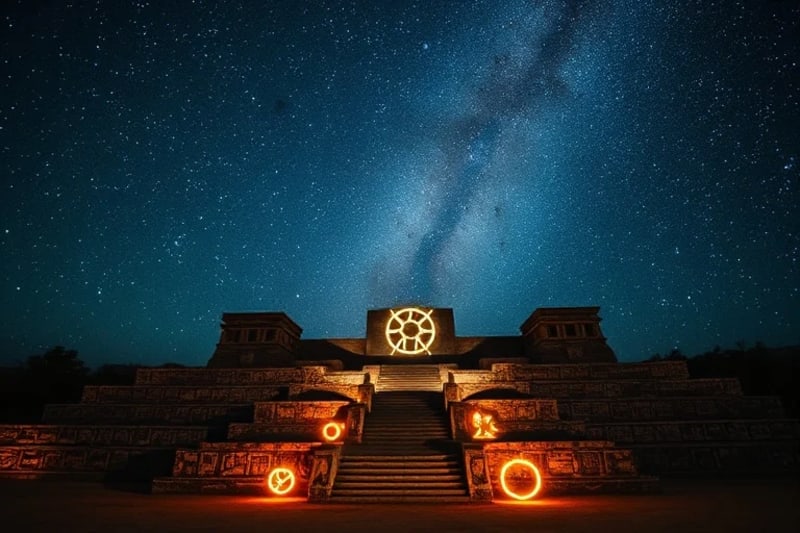
A mystical scene depicting ancient observatories under a star-filled night, with celestial symbols projected onto stone carvings, symbolizing AI integration.
Unlike Western astrological traditions that focus primarily on planetary positions at the moment of birth, Mesoamerican astrology, particularly Mayan and Aztec systems, is deeply rooted in complex calendrical cycles and the interplay of various deities and energies. These systems provided a comprehensive framework for understanding time, destiny, and the sacred connection between humanity and the cosmos.
The potential for AI to interpret, analyze, and even enhance these ancient systems is immense. By processing vast amounts of historical data, identifying patterns, and generating personalized interpretations, AI oracles can unlock layers of wisdom that might otherwise remain inaccessible, making ancient knowledge relevant and actionable for contemporary life.
Table of Contents
- The Foundations of Mesoamerican Astrology
- Core Principles and Interpretations
- The Rise of AI Oracles
- Bridging Ancient Wisdom with Future Insights
- Ethical Considerations and Challenges
- Practical Applications and Future Outlook
The Foundations of Mesoamerican Astrology
Mesoamerican civilizations, including the Maya, Aztec, and Zapotec, developed sophisticated astrological systems deeply intertwined with their understanding of time, cosmology, and agricultural cycles. These systems were not merely predictive but served as foundational pillars for their societal structures, religious practices, and daily decision-making.
The Mayan calendar, perhaps the most famous, is a complex interplay of several cycles. The two most prominent are the Tzolkin (Sacred Round) of 260 days and the Haab' (Civil Calendar) of 365 days. The Tzolkin combines 20 day names with 13 numbers, creating 260 unique combinations, each carrying specific energies and meanings. This sacred calendar was primarily used for divinatory purposes, determining auspicious days for ceremonies, marriages, and other significant events.
The Haab', on the other hand, was based on the solar year, consisting of 18 months of 20 days each, plus a 5-day period known as Wayeb', considered unlucky. The Long Count calendar, a much larger cycle, tracked vast spans of time, marking epochs and the perceived end and beginning of cosmic eras. These intricate systems highlight a profound understanding of celestial mechanics and the cyclical nature of existence.
The Aztec calendar shared many similarities, particularly the Tonalpohualli, their 260-day sacred calendar, and the Xiuhpohualli, their 365-day solar calendar. Each day sign and number carried specific attributes, influencing a person's character, destiny, and the events of their life. Deities such as Quetzalcoatl (the Feathered Serpent) and Tezcatlipoca (the Smoking Mirror) were central to these astrological interpretations, embodying cosmic forces and human archetypes.
Understanding these foundational elements is crucial before attempting to bridge them with modern technology. The depth of their astronomical observation and mathematical precision allowed these ancient cultures to create a system that was both practical and deeply spiritual, offering insights into personal fate and the broader cosmic order. This intricate system of celestial mechanics and destiny mapping finds parallels in other ancient traditions, such as Biometric Divination: Biofeedback, Intuition, Self-Discovery, which also emphasized the influence of fixed celestial points on individual lives.
Core Principles and Interpretations
Mesoamerican astrology is characterized by its emphasis on cycles, duality, and the interconnectedness of all things. Unlike the individualistic focus often found in Western astrology, Mesoamerican systems frequently emphasized the collective, the community, and one's role within the larger cosmic narrative. Your birth day sign, determined by the Tzolkin or Tonalpohualli, was considered a fundamental aspect of your identity and life path.
Each of the 20 day signs (e.g., Imix/Cipactli - Crocodile, Ik'/Ehecatl - Wind, Ak'bal/Calli - Night/House) and the 13 numbers carried specific meanings, influencing personality traits, strengths, weaknesses, and potential life challenges. For instance, a person born on a day associated with "Wind" might be seen as intellectual, communicative, and adaptable, but also potentially restless. The numerical coefficient added layers of intensity or quality to these base meanings.
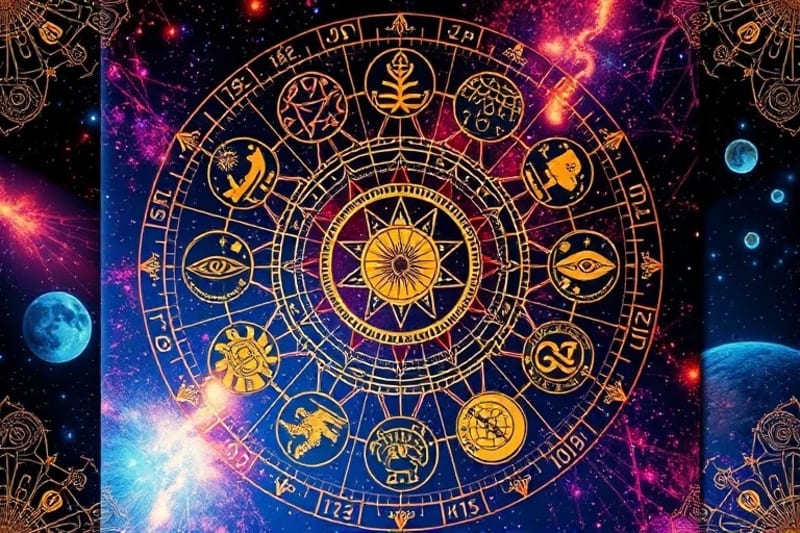
A vibrant, abstract representation of a neural network intertwined with traditional Mesoamerican glyphs and calendrical symbols.
The influence of celestial bodies was also paramount, particularly the Sun and Venus. The Sun, as the giver of life and light, was revered, and its cycles were meticulously tracked. Venus, observed as both the Morning and Evening Star, held significant importance in Mayan and Aztec cosmology, often associated with warfare, prophecy, and the cycles of creation and destruction. Its movements were used to predict military campaigns and other major societal events.
Divinatory practices were integral, with priests and shamans interpreting the calendrical cycles and celestial phenomena to provide guidance. These interpretations were not rigid predictions of fate but rather insights into the energetic currents of time, suggesting optimal periods for action, caution, or spiritual reflection. The emphasis was on understanding one's inherent nature and aligning with cosmic rhythms to achieve balance and harmony.
A key difference from Western astrology lies in the emphasis on cyclical time rather than linear progression. While Western astrology often focuses on individual planetary transits and progressions, Mesoamerican systems highlight the repetitive nature of cosmic energies and the lessons embedded within each cycle. This cyclical worldview fostered a deep respect for the past and a proactive engagement with the future, understanding that patterns repeat, offering opportunities for growth and transformation.
The Rise of AI Oracles
In the 21st century, Artificial Intelligence has rapidly evolved from theoretical concepts to practical applications, revolutionizing industries from healthcare to finance. At its core, AI excels at processing vast datasets, identifying complex patterns, and making predictions or generating insights based on learned information. These capabilities make AI a powerful tool for re-examining and re-interpreting ancient knowledge systems like Mesoamerican astrology.
Modern AI, particularly machine learning algorithms, can ingest and analyze thousands of historical astrological charts, codices, and calendrical data points. It can detect subtle correlations between specific day signs, numerical coefficients, celestial alignments, and historical events or individual life trajectories that might be imperceptible to the human eye. This pattern recognition ability is crucial for understanding the intricate web of influences within Mesoamerican systems.
Furthermore, AI's capacity for natural language processing (NLP) can be employed to decipher and interpret ancient texts, including glyphs and hieroglyphs, with greater speed and accuracy. By cross-referencing linguistic patterns with known astrological meanings, AI can help reconstruct lost interpretations or shed new light on existing ones. This computational power offers an unprecedented opportunity to delve deeper into the nuances of ancient wisdom.
The concept of an "AI oracle" extends beyond simple data analysis. It envisions a system capable of synthesizing diverse information – ancient astrological principles, historical events, personal biometric data, and even real-time celestial observations – to generate highly personalized and dynamic insights. These insights could offer guidance on optimal timing for endeavors, potential challenges, and innate strengths, much like traditional oracles but with a data-driven foundation.
Bridging Ancient Wisdom with Future Insights
The true innovation lies in the synergistic bridge between Mesoamerican astrology and AI. Imagine an AI system trained on centuries of calendrical data, archaeological findings, and ethnographic studies. This AI could then analyze an individual's birth date according to the Tzolkin and Haab' cycles, cross-referencing it with historical interpretations, and even simulating potential future energetic alignments.
One of the most significant contributions of AI in this context is its ability to handle the sheer complexity of Mesoamerican calendrical systems. Human interpretation, while invaluable for its intuitive depth, can be limited by the vast number of permutations and combinations within these cycles. AI can process these complexities effortlessly, revealing hidden patterns and previously unobserved correlations between different calendrical influences and life events.
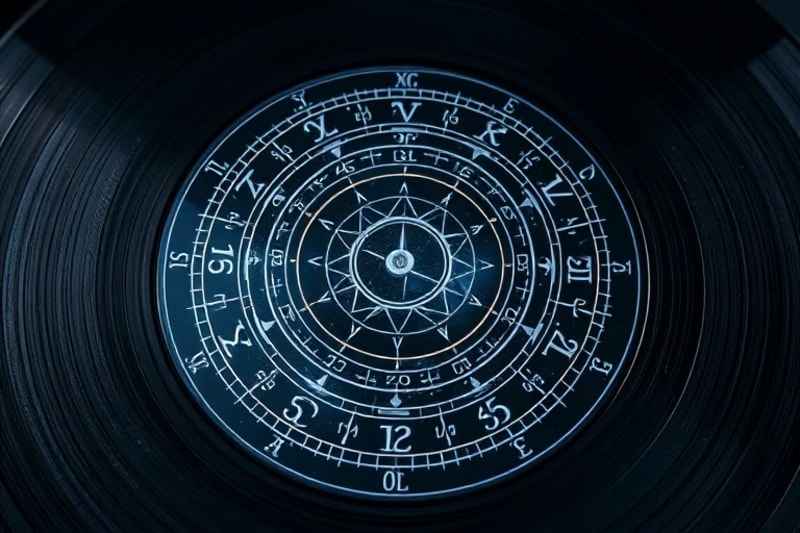
A conceptual still-life featuring an obsidian mirror reflecting a holographic projection of a complex astrological chart, blending Mesoamerican glyphs with modern astronomical data.
For example, an AI oracle could take a user's birth information and generate a detailed "Mesoamerican Natal Chart" equivalent, explaining the influences of their day sign, number, and associated deities. It could then project how current calendrical cycles (transits) interact with their birth chart, offering insights into auspicious times for starting new projects, navigating relationships, or focusing on personal development. This offers a new perspective on how cosmic influences might interact with individual consciousness, echoing discussions in Astro-Quantum Physics Entanglement Synchronicity Consciousness Exploration.
Furthermore, AI can facilitate the "translation" of ancient wisdom into modern, understandable language and concepts. By drawing parallels with contemporary psychology, personal development frameworks, or even scientific principles, AI can make the profound insights of Mesoamerican astrology accessible to a wider audience, transcending cultural and temporal barriers. This integration can help individuals understand their innate archetypal patterns and life purpose, similar to the work in Psycho-Astrology Jungian Archetypes Natal Chart Integration.
Ethical Considerations and Challenges
While the potential of AI in interpreting Mesoamerican astrology is vast, it also presents significant ethical considerations. The primary challenge is ensuring cultural authenticity and avoiding the commodification or misrepresentation of sacred traditions. It is crucial that AI models are developed in collaboration with indigenous scholars, elders, and cultural experts to ensure respectful and accurate interpretation.
Another concern revolves around data privacy and the potential for algorithmic bias. If AI oracles are to provide personalized insights, they will likely require personal data. Ensuring the secure handling of this information and preventing the perpetuation of biases present in historical data or algorithmic design is paramount. The ethical development of AI in this sensitive domain requires transparency, accountability, and a commitment to preserving the integrity of the original wisdom.
The role of human intuition and spiritual guidance also needs to be carefully balanced with algorithmic predictions. AI can provide data-driven insights, but it cannot replicate the nuanced understanding, empathy, and spiritual connection that human practitioners bring. The goal should be augmentation, not replacement, allowing AI to serve as a powerful tool that supports, rather than supplants, human wisdom and spiritual discernment. Just as the Cosmic Dance of Archangels: Divine Orchestration of Harmony speaks to a higher order, human interpretation remains vital in understanding the divine.
Practical Applications and Future Outlook
The practical applications of Mesoamerican astrology combined with AI oracles are diverse and far-reaching. For individuals, it could offer a unique lens for self-discovery and personal growth, providing tailored guidance based on ancient wisdom. Imagine an app that not only tells you your Mayan day sign but also offers daily insights into the energetic currents of the Tzolkin, suggesting meditations or actions aligned with those energies.
For researchers and academics, AI can become an invaluable tool for deciphering unread codices, analyzing archaeological data, and reconstructing the full scope of Mesoamerican cosmological understanding. It can help identify patterns in ancient prophecies or historical events that correlate with specific calendrical alignments, deepening our understanding of these sophisticated civilizations.
Furthermore, AI-powered educational platforms could make Mesoamerican astrology accessible to students and enthusiasts worldwide, fostering cross-cultural understanding and appreciation for indigenous knowledge systems. These platforms could offer interactive simulations of calendrical cycles, personalized birth chart analyses, and comprehensive databases of day sign meanings and associated deities.
The future outlook for this convergence is one of exciting potential. As AI continues to advance, its ability to process nuanced information and engage in sophisticated reasoning will only grow. This could lead to AI oracles that not only interpret but also generate novel insights, pushing the boundaries of our understanding of astrology, consciousness, and the human-cosmic connection. The goal is to create a symbiotic relationship where ancient wisdom provides the profound framework, and AI offers the analytical power to illuminate its depths for the modern world.
Ultimately, bridging Mesoamerican astrology with AI oracles represents a profound opportunity to reconnect with ancient spiritual technologies through a modern lens. It is about honoring the past while embracing the future, creating a more informed and harmonized existence for individuals and communities alike.
Explore More Insights
Source: Hybrid content assisted by AI and human editorial supervision.


Comments
Post a Comment