
Advanced Planetary Dignities Electional Astrology Timing
Advanced Planetary Dignities in Electional Astrology: Timing for Optimal Outcomes
Electional astrology is a specialized branch of astrological practice focused on identifying the most auspicious moment to initiate an endeavor. Unlike natal astrology, which interprets the chart of birth, electional astrology proactively seeks out a favorable celestial configuration to ensure the best possible outcome for a specific event. This ancient technique has been employed for centuries to time weddings, business launches, medical procedures, and even significant journeys, aiming to align human actions with cosmic rhythms.
While basic electional astrology considers planetary aspects and house placements, advanced practitioners delve into the intricate layers of planetary dignities. These dignities describe a planet's strength, comfort, and ability to express its nature within a particular zodiac sign or degree. Understanding these nuanced strengths and weaknesses is paramount for selecting a moment when the planetary energies supporting your venture are at their peak, thereby maximizing the potential for success and mitigating potential challenges.

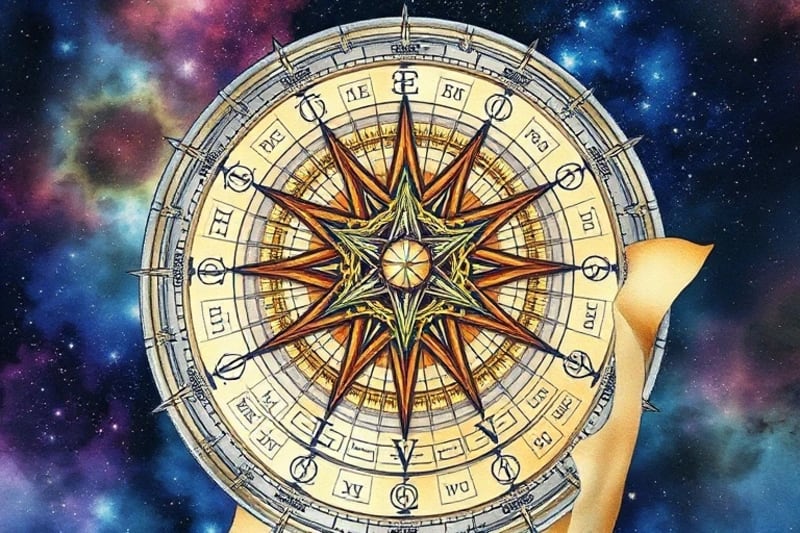
A celestial mechanism illustrating the complex interplay of planetary positions and their influence on optimal timing in electional astrology.
The concept of planetary dignities originates from Hellenistic and Medieval astrological traditions, forming the bedrock of interpretive practice. A planet that is "dignified" is considered strong, capable, and able to act effectively in its own sphere, whereas a "debilitated" planet struggles to express its energies constructively. These states are not merely symbolic; they are believed to manifest tangibly in the quality and ease of the elected event.
This guide explores the advanced application of these dignities, moving beyond basic definitions to integrate them into a sophisticated electional strategy. By understanding how to assess a planet's essential and accidental dignities, you can unlock a deeper level of precision in timing your most important life events, ensuring they are launched under the most favorable celestial auspices.
Table of Contents
- Understanding Essential Dignities
- Debilities: The Weaknesses to Avoid
- Accidental Dignities and Their Impact
- Applying Dignities in Electional Charts
- Step-by-Step Electional Timing with Dignities
- Common Pitfalls and Advanced Considerations
Understanding Essential Dignities
Essential dignities refer to a planet's inherent strength based on its zodiacal position. These are fundamental to understanding how a planet operates and are categorized into several levels of influence. The primary essential dignities are domicile, exaltation, triplicity, term, and face.
- Domicile (Rulership): This is the strongest dignity. A planet in its domicile (the sign it rules) is like a king in its own kingdom – it is powerful, comfortable, and can fully express its nature without hindrance. For example, Mars rules Aries and Scorpio, so Mars in Aries is exceptionally strong.
- Exaltation: The second strongest dignity. A planet in its sign of exaltation is like a respected guest of honor; it is celebrated and has a particular strength and prominence, though not as sovereign as in its domicile. The Sun is exalted in Aries, where its pioneering spirit shines brightest.
- Triplicity: A less potent but still significant dignity. Each element (fire, earth, air, water) has three ruling planets for day and night charts. A planet in its triplicity sign has a supportive environment, offering a moderate level of strength and ease. For instance, the Sun, Jupiter, and Saturn rule the Fire triplicity (Aries, Leo, Sagittarius) by day.
- Term (Bounds): These are specific degrees within a sign where a particular planet has a minor dignity. Terms provide a subtle layer of support, giving the planet a small "boost" within its assigned degrees. They are often used as a tie-breaker in complex electional judgments.
- Face (Decan): The weakest of the essential dignities, where each sign is divided into three 10-degree segments, each ruled by a planet. A planet in its face has minimal dignity, offering a slight familiarity but not substantial power. While useful for fine-tuning, it's rarely a deciding factor on its own.
When evaluating an electional chart, astrologers prioritize planets in domicile or exaltation for the significators of the event. For instance, if electing a marriage, Venus (significator of relationships) and the Moon (significator of emotions and new beginnings) should ideally be in strong essential dignities. This ensures that the core energies supporting the union are robust and harmonious.
Debilities: The Weaknesses to Avoid
Just as planets can be strong, they can also be weak or "debilitated." These conditions indicate that a planet is struggling to express its nature effectively, often leading to challenges, frustrations, or poor outcomes in the elected event. The primary essential debilities are detriment and fall.
- Detriment: A planet is in detriment when it is in the sign opposite its domicile. Here, the planet is in a "foreign land" where its energies are misunderstood or actively opposed. For example, Mars in Libra (opposite Aries) or Taurus (opposite Scorpio) is in detriment, making its assertive energy difficult to apply constructively.
- Fall: A planet is in its fall when it is in the sign opposite its exaltation. This position signifies a place where the planet feels uncomfortable, disrespected, or unable to perform at its best. The Sun in Libra (opposite Aries, its exaltation) is in its fall, struggling to assert individual will in a sign focused on balance and partnership.
In electional astrology, it is a critical rule to avoid having the primary significators of the event in detriment or fall. A planet in detriment may cause the event to face constant opposition or misdirection, while a planet in fall might lead to a sense of inadequacy or a lack of proper recognition for the effort invested. For example, electing a financial venture with Jupiter (significator of wealth and expansion) in detriment or fall would be highly ill-advised, as it suggests financial struggles or poor returns.
Historical astrological instruments, symbolizing the deep roots and meticulous calculations involved in understanding planetary dignities.
Beyond these, a planet can also be "peregrine," meaning it has no essential dignities or debilities in a sign. While not inherently bad, a peregrine planet lacks inherent strength and relies heavily on its accidental dignities (aspects, house placement) to function effectively. For critical elections, astrologers prefer planets with at least some essential dignity.
Understanding these fundamental strengths and weaknesses is the first step. For a deeper dive into how planetary positions influence personal growth, consider exploring the topic of Planetary Transits Personal Growth Cosmic Transformation, which examines how celestial movements impact our individual journeys.
Accidental Dignities and Their Impact
While essential dignities describe a planet's inherent nature, accidental dignities refer to its strength or weakness based on its position within the chart, including house placement, aspects, and other circumstantial factors. These dignities provide additional layers of information, influencing how a planet's essential strength is expressed in the material world.
- House Placement: Planets in angular houses (1st, 4th, 7th, 10th) are generally considered stronger and more active, as they are "on display" and have a direct impact on the event. Planets in succedent houses (2nd, 5th, 8th, 11th) have moderate strength, while those in cadent houses (3rd, 6th, 9th, 12th) are generally weaker and less effective.
- Aspects: Favorable aspects (trines and sextiles) to benefics (Jupiter and Venus) or the Ascendant ruler can significantly boost a planet's accidental dignity. Conversely, challenging aspects (squares and oppositions) to malefics (Mars and Saturn) or the significator can weaken it. Conjunctions can be either beneficial or challenging depending on the planets involved.
- Speed and Direction: A planet moving direct and at its average speed is stronger than one that is retrograde or moving slowly. Retrograde planets are generally avoided in electional astrology, as they suggest delays, reversals, or re-dos.
- Combustion and Cazimi: A planet too close to the Sun (combust) is severely weakened, its energies "burned up" by the Sun's rays. However, if it is precisely conjunct the Sun (within 17 minutes of arc), it is in "cazimi" (in the heart of the Sun), a highly dignified and powerful position.
- Joy: A planet is said to be in its "joy" when it is placed in a specific house where it feels comfortable and can express its nature most effectively. For example, Mercury joys in the 1st house, Venus in the 5th, Mars in the 6th, Jupiter in the 11th, Saturn in the 12th, the Sun in the 9th, and the Moon in the 3rd.
When combining essential and accidental dignities, an astrologer seeks a planet that is both inherently strong (e.g., in domicile) and well-placed (e.g., in an angular house, making favorable aspects). This combination creates a powerful significator that can effectively drive the elected event towards success. For instance, a Venus in Libra (domicile) in the 7th house (angular, ruling relationships) making a trine to Jupiter would be an exceptionally strong placement for a marriage election.
Applying Dignities in Electional Charts
The practical application of planetary dignities in electional astrology involves a systematic approach to chart analysis. The goal is to identify a moment when the planets associated with the specific endeavor are robust and well-supported, while avoiding those that are debilitated or afflicted.
The first step is to clearly define the purpose of the election. For example, if you are electing a business launch, you would focus on Mercury (commerce, communication), Jupiter (growth, prosperity), and the ruler of the 10th house (career, public image). If it's a real estate purchase, the Moon (home), Venus (comfort), and the ruler of the 4th house (property) would be key.
- Identify Significators: Determine which planets and houses are most relevant to your event.
- Assess Essential Dignities: Check the zodiacal position of each significator. Are they in domicile, exaltation, detriment, or fall? Prioritize those in dignity.
- Evaluate Accidental Dignities: Look at house placement, aspects, speed, and direction. Are the significators in angular houses? Do they receive favorable aspects from benefics? Are they direct and swift?
- Avoid Malefics: Ensure that Mars and Saturn are not afflicting the significators or the Ascendant by square or opposition. Ideally, they should be in weak positions themselves or making harmonious aspects.
- Moon's Role: The Moon is crucial in all electional charts, representing the flow of events and emotional tone. It should be strong by dignity, free from affliction, and ideally applying to a benefic or the significator of the event. Avoid void-of-course Moon periods.
A well-elected chart will feature strong significators, a well-placed Moon, and minimal affliction from malefics. This meticulous process ensures that the chosen moment carries the maximum potential for a smooth and successful outcome. For those interested in deeper astrological insights, understanding Vertex Astrology: Fated Encounters, Destiny Points can offer additional layers of meaning regarding destiny and significant meetings.
Step-by-Step Electional Timing with Dignities
To effectively apply advanced planetary dignities in electional astrology, follow a structured approach. This ensures all critical factors are considered, leading to the selection of the most propitious moment.
- Define the Event and its Significators: Clearly state what you are electing for. For example, for a new website launch, the Ascendant and its ruler, Mercury (communication, technology), and possibly the Moon (public reception) are key.
- Set the Timeframe: Determine a realistic window for the event. This could be a specific week or month.
- Filter for Obvious Afflictions:
- Avoid Mercury, Venus, or Mars retrograde.
- Avoid the Moon void-of-course.
- Avoid eclipses or significant planetary ingresses (e.g., Saturn changing signs).
- Avoid the Moon in detriment or fall.
- Select a Strong Ascendant and its Ruler:
- Choose an Ascendant sign that is suitable for the event (e.g., fixed signs for stability, mutable for adaptability).
- Ensure the Ascendant ruler is in a strong essential dignity (domicile or exaltation).
- The Ascendant ruler should be in an angular or succedent house and making favorable aspects, especially to the significators.
- Empower the Event's Significators:
- Ensure the primary significators (e.g., Mercury for communication, Venus for relationships) are in strong essential dignities.
- They should be well-placed by house (angular preferred) and making harmonious aspects, especially to the Ascendant ruler or benefics.
- Avoid them being combust, in detriment, or fall.
- Check the Moon's Condition:
- The Moon should be strong by sign (e.g., in Cancer or Taurus).
- It should be applying to a benefic planet or the significator of the event.
- Avoid the Moon applying to malefics by square or opposition.
- Mitigate Malefics:
- Ideally, Mars and Saturn should be in cadent houses or in their own dignities, making them less harmful.
- Avoid them aspecting the Ascendant, its ruler, or the primary significators negatively.
- Final Review: Once a potential chart is found, review all factors to ensure no critical afflictions were missed.
This systematic approach, deeply rooted in the principles of planetary dignities, allows for the selection of a moment that inherently supports the desired outcome, minimizing obstacles and maximizing potential. For further understanding of lunar influences, delve into Moon Astrology: Emotions, Instincts, Inner World Guide, which provides comprehensive insights into the Moon's profound impact.

An abstract visualization of celestial energies aligning perfectly, representing the ideal conditions sought in advanced electional astrology.
Common Pitfalls and Advanced Considerations
Even with a solid understanding of dignities, electional astrology presents complexities. Several common pitfalls can undermine an otherwise well-chosen chart, and advanced practitioners consider additional layers of analysis.
- Overlooking Minor Debilities: While domicile and exaltation are paramount, ignoring detriment and fall for secondary significators can still introduce subtle weaknesses. Even peregrine planets, though not actively debilitated, lack inherent strength and require strong accidental dignities to compensate.
- Ignoring Retrograde Planets: A common mistake is to overlook the impact of retrograde planets on the elected event. While Mercury retrograde is famously associated with communication issues, any personal planet (Mercury, Venus, Mars) retrograde in an electional chart can lead to delays, reversals, or the need to revisit the event later.
- Combustion and Cazimi Misinterpretation: Not all conjunctions with the Sun are equal. Combustion is highly debilitating, but a precise cazimi can be incredibly powerful. Distinguishing between the two requires precise timing and understanding.
- Antiscia and Contra-antiscia: These are points of equal declination or oblique ascension, representing hidden connections or reflections. A planet's antiscium or contra-antiscium falling on a critical degree or aspecting a significator can add a layer of hidden support or challenge.
- Fixed Stars: The influence of fixed stars, especially those conjunct the Ascendant, Midheaven, or significant planets, can dramatically alter the outcome of an election. Certain stars are highly auspicious (e.g., Regulus, Spica), while others can be malefic.
- Planetary Sect and Domicile Lords: In Hellenistic astrology, planets are stronger when they are in their preferred sect (day planets stronger in day charts, night planets in night charts). Also, considering the domicile lord of the Ascendant and its condition is always a priority.
Furthermore, advanced electional astrology often involves comparing the electional chart to the natal chart of the individual or entity for whom the election is being made. This ensures that the chosen moment is not only universally auspicious but also personally harmonious, avoiding any strong afflictions to natal placements. This integration of personal timing with cosmic cycles is a hallmark of sophisticated astrological practice. For a comparative perspective on timekeeping, consider reading about Lunar vs. Solar Calendar: Chinese New Year Traditions, which highlights different cultural approaches to tracking celestial rhythms.
Mastering advanced planetary dignities in electional astrology is a journey of continuous learning and refinement. It requires not only a deep theoretical understanding but also practical experience in interpreting the subtle nuances of planetary conditions. By diligently applying these principles, you can significantly enhance your ability to choose optimal moments, thereby fostering greater success and fulfillment in your endeavors.
The art of electional astrology, with its intricate dance of planetary dignities, offers a profound method for aligning human will with cosmic flow. It is a testament to the ancient belief that timing is not merely a matter of chance, but a deliberate act of co-creation with the universe.
By meticulously observing the strengths and weaknesses of celestial bodies, practitioners aim to harness propitious moments, transforming ordinary actions into endeavors imbued with enhanced potential and destiny.
The pursuit of optimal timing through electional astrology is not about controlling fate, but rather about working intelligently with the energetic currents of the cosmos. It empowers individuals to make informed decisions, ensuring that their actions are supported by the most favorable celestial configurations available. This ancient wisdom, when applied with precision and insight, remains a powerful tool for navigating life's significant milestones.
Explore More Astrological Insights
- ★ Zodiac Archetypes for Character Development
- ★ Unveiling Hidden Messages Through Esoteric Scrying
- ★ Understanding the Wood Snake in Chinese Zodiac
- ★ Advanced Predictive Astrology: Transits and Progressions
- ★ Psychomagia: Esoteric Rituals for Karmic Transformation
- ★ Advanced Synastry Guide: Aquarius Soulmate Compatibility
- ★ Astro-Botany: Herbal Remedies and Planetary Rulerships
- ★ Decoding Personal Timing with Planetary Cycles Numerology
- ★ MC and IC Axis: Unraveling the Soul's Calling
- ★ Mars Astrology: Drive, Desire, Action in the Birth Chart
- Runas Nórdicas Magia Lunar Rituales Abundancia Cósmica
- ★ Astrología Moda: Estilo Personal Según tu Signo Zodiacal
- ★ Astrología Celta: Descubre tu Árbol Guardián y su Simbolismo
Source: Hybrid content assisted by AI and human editorial supervision.


Comments
Post a Comment