
Lunar vs. Solar Calendar: Chinese New Year Traditions | StarPluto
The intricate tapestry of timekeeping has woven itself into the very fabric of human civilization, shaping cultures, traditions, and daily life across millennia. Among the most fascinating examples is the distinction between lunar and solar calendars, particularly when observing their influence on one of the world's most significant cultural events: the Chinese New Year. This annual celebration, rich in symbolism and ancient customs, serves as a prime illustration of how a lunisolar calendar system dictates not only festive dates but also a profound connection to astronomical cycles and cultural identity.
Understanding the nuances between these calendar types is crucial for appreciating the depth of Chinese traditions. While many Western societies predominantly follow the Gregorian solar calendar, the Chinese system integrates both lunar and solar observations, creating a unique rhythm for its agricultural, social, and spiritual practices. This article will delve into the fundamental differences between lunar and solar calendars, explore the specific characteristics of the Chinese lunisolar calendar, and illuminate how these distinctions underpin the vibrant and enduring traditions of the Chinese New Year.
Table of Contents
- What is a Lunar Calendar?
- What is a Solar Calendar?
- The Chinese Lunisolar System
- Chinese New Year: Dates and Determination
- Cultural Significance and Traditions
- Key Differences: Lunar vs. Solar Calendar
- Impact on Chinese Zodiac and Astrology
- Modern Usage and Global Context
- Conclusion
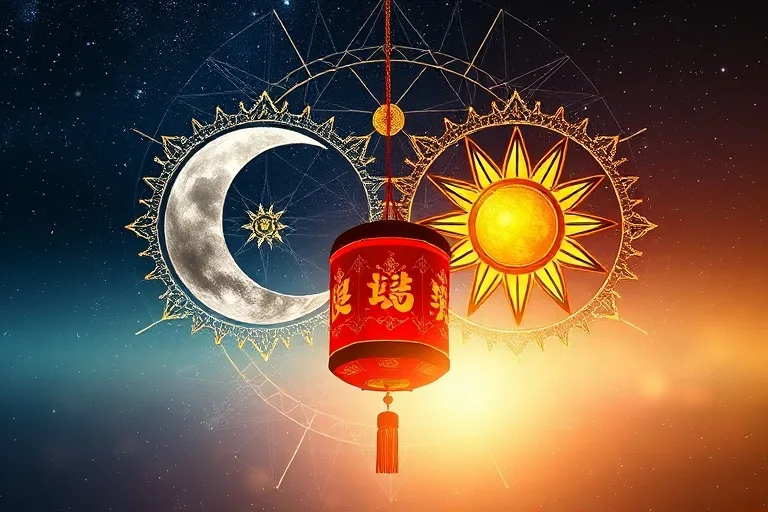
A visual representation of the intricate relationship between lunar and solar cycles, symbolizing their combined influence on Chinese cultural practices, particularly the New Year celebrations.
What is a Lunar Calendar?
A lunar calendar is a calendar system that is based on the cycles of the Moon's phases. The fundamental unit of time in a purely lunar calendar is the lunar month, also known as a synodic month, which is the time it takes for the Moon to complete one full cycle of phases from new moon to new moon. This period averages about 29.5 days.
Because a lunar month is approximately 29.5 days, a lunar year consisting of 12 lunar months totals about 354 days. This is roughly 11 days shorter than a solar year (the time it takes for the Earth to orbit the Sun, approximately 365.25 days). Consequently, purely lunar calendars drift with respect to the solar year and the seasons. Over time, a particular lunar month will occur in different seasons.
Historically, many cultures have used lunar calendars, often for religious observances or agricultural planning. The start of a new month is typically marked by the sighting of the new crescent moon. This reliance on direct observation can lead to slight variations in month length and year start dates depending on geographical location and atmospheric conditions.
- Key Characteristics:
- Based on lunar cycles (new moon to new moon).
- A lunar month is approximately 29.5 days.
- A lunar year (12 months) is about 354 days.
- Drifts relative to the solar year and seasons.
- Often used for religious or ceremonial purposes.
- Examples of Lunar Calendars:
- Islamic Calendar (Hijri): A purely lunar calendar used for religious purposes by Muslims worldwide. Its holidays, such as Eid al-Fitr and Eid al-Adha, shift through the solar year.
- Traditional Hindu Calendars: Many regional Hindu calendars are primarily lunar, though some incorporate solar elements.
- Jewish Calendar: While lunisolar, its months are strictly lunar, with intercalation to keep it aligned with the solar year.
What is a Solar Calendar?
In contrast, a solar calendar is based on the Earth's movement around the Sun. The primary unit of time is the solar year, which is the time it takes for the Earth to complete one orbit around the Sun, approximately 365.25 days. This period is directly linked to the cycle of seasons, making solar calendars ideal for agricultural societies that rely on seasonal changes for planting and harvesting.
The most widely adopted solar calendar today is the Gregorian calendar, which is the de facto international standard. It consists of 12 months, with lengths of 30 or 31 days, except for February, which has 28 days in a common year and 29 days in a leap year. The inclusion of leap years every four years helps to synchronize the calendar with the actual length of the tropical year, preventing significant drift over time.
- Key Characteristics:
- Based on the Earth's orbit around the Sun.
- A solar year is approximately 365.25 days.
- Synchronized with the seasons.
- Uses leap years to maintain accuracy.
- Widely adopted for civil and secular purposes.
- Examples of Solar Calendars:
- Gregorian Calendar: The most common civil calendar globally.
- Julian Calendar: Predecessor to the Gregorian calendar, also solar-based.
- Ancient Egyptian Calendar: One of the earliest solar calendars, crucial for predicting the annual flooding of the Nile.
The Chinese Lunisolar System
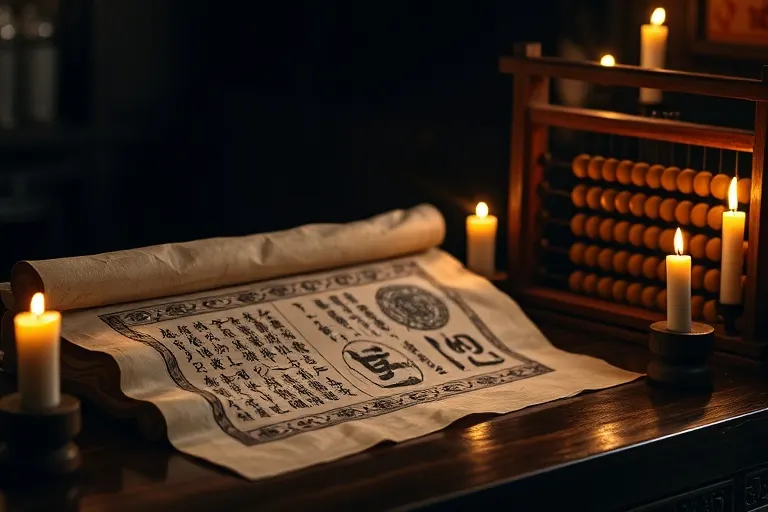
Ancient Chinese tools like scrolls and an abacus symbolize the sophisticated methods used for timekeeping and calculation in historical calendar systems.
The Chinese calendar is a lunisolar calendar, meaning it incorporates elements of both lunar and solar calendars. Its months are determined by the cycles of the Moon, while its years are aligned with the solar year. This dual approach ensures that the calendar stays synchronized with both the lunar phases and the Earth's seasons, which was historically vital for agricultural planning.
A standard Chinese year has 12 lunar months, each beginning on the day of the new moon. However, to prevent the calendar from drifting too far from the solar year, an extra intercalary month (or "leap month") is added approximately every three years. This addition ensures that the Chinese New Year always falls within a specific period relative to the winter solstice and that seasonal markers remain consistent.
The determination of these leap months is based on the 24 solar terms (二十四节气, Èrshísì Jiéqì), which divide the solar year into 24 segments, each corresponding to a specific astronomical event or seasonal change. A lunar month that contains no principal solar term (which marks the Sun's entry into a zodiac sign) becomes the intercalary month. This sophisticated system highlights the deep astronomical knowledge of ancient Chinese scholars.
The calendar is not merely a tool for marking time; it is deeply interwoven with Chinese philosophy, astrology, and cultural practices. Each year is associated with one of the twelve animal signs of the Chinese zodiac and one of the five elements (Wood, Fire, Earth, Metal, Water), creating a 60-year cycle that influences personality traits and destiny predictions. This complex system offers a rich framework for understanding individual and collective experiences.
Chinese New Year: Dates and Determination
The Chinese New Year, also known as the Spring Festival (春节, Chūn Jié), is the most important traditional Chinese holiday. Its date is determined by the Chinese lunisolar calendar, falling on the second new moon after the winter solstice. This means it typically occurs between January 21st and February 20th of the Gregorian calendar.
Unlike the fixed date of January 1st in the Gregorian calendar, the fluctuating date of the Chinese New Year emphasizes its connection to natural cycles and agricultural rhythms. The festival marks the end of winter and the beginning of spring, symbolizing new beginnings, renewal, and hope. It is a time for family reunions, feasting, honoring ancestors, and ushering in good fortune for the coming year.
The precise calculation of the Chinese New Year date involves complex astronomical observations and mathematical formulas, traditionally performed by imperial astronomers. Today, these calculations are standardized, but the underlying principles remain rooted in ancient practices. The celebration lasts for about 15 days, culminating in the Lantern Festival.
- Key Determinants of Chinese New Year Date:
- Second new moon after the winter solstice.
- Falls between January 21st and February 20th in the Gregorian calendar.
- Influenced by the 24 solar terms and intercalary months.
- Symbolizes the arrival of spring and new beginnings.
Cultural Significance and Traditions
The Chinese New Year is more than just a date; it's a period steeped in cultural significance and rich traditions that have been passed down through generations. The lunisolar calendar's influence extends to every aspect of the celebration, from the timing of specific rituals to the symbolism embedded in festive foods and decorations.
The emphasis on family reunions, for instance, is partly tied to the agricultural cycle, where the end of the harvest season allowed families to gather. The symbolism of renewal and prosperity is also deeply connected to the natural progression of seasons dictated by the lunisolar system. Red decorations, firecrackers, and lion dances are all meant to ward off evil spirits and attract good luck, a practice often rooted in ancient folklore associated with specific times of the year.
Food plays a central role, with dishes like dumplings (symbolizing wealth) and glutinous rice cakes (Nian Gao, symbolizing progress) prepared and shared. These culinary traditions are often seasonal, utilizing ingredients available during the lunar new year period. The giving of red envelopes (hóngbāo) filled with money symbolizes the transfer of good fortune from elders to younger generations.
According to Article 2 of the "Law of the People's Republic of China on National Holidays," the Spring Festival (Chinese New Year) is a national holiday, typically observed with a seven-day public holiday period. This legal recognition underscores its paramount importance in Chinese society and its role in fostering national unity and cultural heritage.
The calendar also dictates the animal sign for each birth year, influencing personal horoscopes and compatibility readings within Chinese astrology. This connection to the zodiac adds another layer of personal and collective meaning to the annual cycle, making the New Year a time for reflection on one's destiny and future prospects.
Key Differences: Lunar vs. Solar Calendar
To further clarify the distinctions, let's compare the fundamental characteristics of purely lunar, solar, and lunisolar calendars:
| Feature | Lunar Calendar (e.g., Islamic) | Solar Calendar (e.g., Gregorian) | Lunisolar Calendar (e.g., Chinese) |
|---|---|---|---|
| Primary Basis | Moon's phases | Earth's orbit around the Sun | Both Moon's phases and Earth's orbit |
| Month Length | 29 or 30 days (based on moon sighting/calculation) | 28, 29, 30, or 31 days (fixed) | 29 or 30 days (based on new moon) |
| Year Length (approx.) | 354 days (12 lunar months) | 365 or 366 days (12 solar months) | 354, 355, 383, or 384 days (12 or 13 lunar months) |
| Alignment with Seasons | Drifts over time | Maintained through leap days | Maintained through intercalary (leap) months |
| Leap Mechanism | None (purely lunar) | Leap day (February 29th) | Leap month (intercalary month) |
| Primary Usage | Religious observances | Civil, secular, international commerce | Traditional festivals, agriculture, astrology |
Impact on Chinese Zodiac and Astrology
An artistic representation of the celestial mechanics and zodiac animals that form the foundation of Chinese astrological beliefs and calendar systems.
The Chinese lunisolar calendar is inextricably linked to the Chinese zodiac, a system that assigns an animal and its reputed attributes to each year in a repeating 12-year cycle. Unlike Western astrology, which is based on the month of birth, Chinese astrology is primarily determined by the year of birth, specifically the year according to the Chinese calendar.
Because the Chinese New Year falls on a different Gregorian date each year, the zodiac animal associated with a person's birth year also depends on whether their birthday falls before or after the Chinese New Year. For example, someone born in January 1990 would still be considered a Snake (the animal of 1989) if their birthday was before the Chinese New Year of 1990, which was January 27th.
This annual shift of the zodiac animal, dictated by the lunisolar calendar, adds a layer of dynamic complexity to Chinese astrological readings. Each animal sign, combined with one of the five elements (Wood, Fire, Earth, Metal, Water), creates a unique energetic profile for each year and individual, influencing personality, career, relationships, and health. This intricate system provides guidance and insight into life's journey.
The deep integration of the lunisolar calendar with the zodiac ensures that Chinese astrology remains a living tradition, constantly adapting to the cosmic rhythms of the Moon and the Sun. It is a testament to how ancient astronomical observations continue to shape contemporary beliefs and practices, offering a holistic view of human existence within the natural world.
Modern Usage and Global Context
While the Gregorian calendar is widely used in China for civil and business purposes, the traditional Chinese lunisolar calendar retains immense cultural and social importance. It continues to dictate the dates of major festivals, including the Chinese New Year, the Mid-Autumn Festival, and the Dragon Boat Festival, ensuring the continuity of cultural heritage.
Globally, the Chinese New Year is celebrated by Chinese communities around the world, making it a truly international event. Its traditions, once confined to East Asia, have spread and been embraced by diverse populations, showcasing the universal appeal of renewal, family, and good fortune. This global reach highlights the enduring power of a calendar system that blends astronomical precision with profound cultural meaning.
The coexistence of both calendar systems in modern China reflects a pragmatic approach to timekeeping—using the solar calendar for international affairs and the lunisolar calendar for preserving cultural identity. This duality underscores the flexibility and resilience of Chinese culture, which skillfully navigates between ancient traditions and contemporary global realities.
Conclusion
The distinction between lunar and solar calendars, and particularly the sophisticated integration found in the Chinese lunisolar system, offers a profound insight into how different cultures perceive and organize time. The Chinese New Year, as a cornerstone of this system, is not merely a holiday; it is a vibrant annual testament to astronomical observation, agricultural wisdom, and a rich cultural heritage that continues to thrive.
By understanding the interplay of lunar cycles and solar years, we gain a deeper appreciation for the traditions that define the Spring Festival. It reminds us that time is not just a linear progression but a cyclical dance between celestial bodies, deeply influencing human endeavors and celebrations across the globe. The Chinese calendar stands as a powerful symbol of humanity's enduring quest to harmonize with the rhythms of the cosmos.
Fuente: Contenido híbrido asistido por IAs y supervisión editorial humana.


Comments
Post a Comment