
Astro-Archaeology Unearthing Ancient Celestial Narratives Civilizations
Astro-archaeology stands as a captivating interdisciplinary field, bridging the rigorous methodologies of archaeology with the profound insights of astronomy and cultural studies. It delves into how ancient civilizations perceived, understood, and integrated celestial phenomena into their daily lives, spiritual beliefs, and monumental constructions. Far beyond mere observation, this discipline seeks to unearth the intricate narratives that ancient peoples wove around the cosmos, revealing a sophisticated understanding of the heavens that profoundly shaped their worldviews and societal structures.
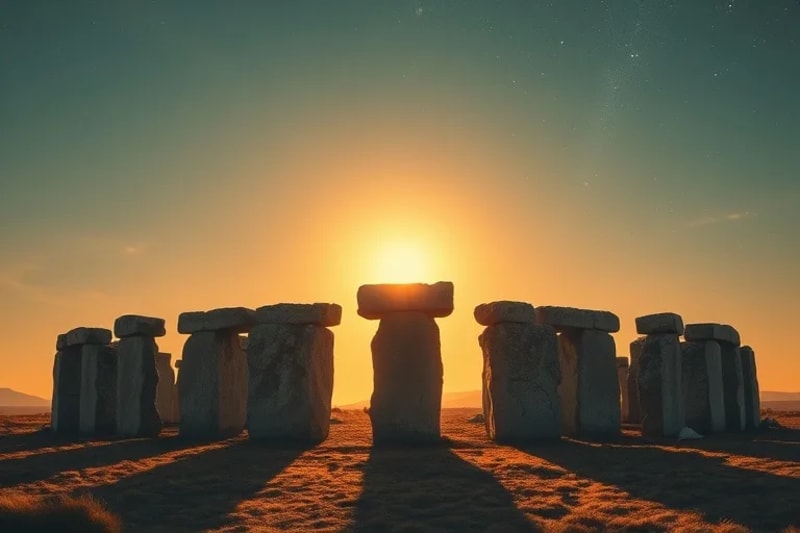
Precursors, diagrams, and conceptual representations that shaped humanity's vision of the cosmos and its influence on ancient civilizations.
Fuente visual sujeta a disponibilidad del ecosistema: Wikimedia Commons bajo licencia CC BY-SA 4.0 o renderizado conceptual IA.
The practice of astro-archaeology goes beyond simply identifying astronomical alignments in ancient structures. It endeavors to reconstruct the entire cosmological framework of a past society, understanding how celestial cycles influenced their agriculture, religious rituals, political power, and even their concept of time and destiny. This holistic approach allows researchers to interpret the symbolic language embedded in ruins, artifacts, and oral traditions, offering a unique window into the minds of our ancestors.
Table of Contents
- Introduction to Astro-Archaeology
- Historical Foundations and Ancient Observatories
- Celestial Alignments and Cosmological Worldviews
- Notable Sites and Their Astronomical Significance
- Methodologies in Astro-Archaeological Research
- Challenges and Future Directions
- The Enduring Legacy of Celestial Narratives
Introduction to Astro-Archaeology
Astro-archaeology, sometimes used interchangeably with archaeoastronomy, is the study of how people in the past have "done" astronomy. It examines the astronomical practices, celestial knowledge, and cosmological beliefs of ancient cultures through the archaeological record. This includes analyzing the orientation of ancient buildings, the layout of settlements, rock art, artifacts, and written or oral traditions that reflect astronomical observations.
The field operates on the premise that the sky was a fundamental aspect of life for ancient societies, influencing everything from agricultural cycles and navigation to religious ceremonies and social hierarchies. By meticulously analyzing archaeological data through an astronomical lens, researchers can uncover layers of meaning that would otherwise remain hidden, revealing the sophisticated intellectual achievements of our ancestors.
Historical Foundations and Ancient Observatories
The roots of celestial observation are as old as humanity itself. Early humans looked to the sky to understand the changing seasons, predict weather patterns, and navigate vast distances. Over millennia, these observations evolved into complex systems of knowledge, leading to the construction of dedicated observatories and the development of sophisticated calendars.
From the earliest megalithic structures to the grand temples of classical civilizations, architectural marvels often doubled as astronomical instruments. These ancient observatories were not just places of scientific inquiry but also sacred spaces where the earthly realm connected with the divine. They served as focal points for rituals, celebrations, and the reaffirmation of cosmological order, demonstrating a deep integration of celestial understanding into the fabric of society.
The study of these historical foundations helps us appreciate the universal human drive to understand our place in the cosmos. It highlights how different cultures, across continents and time periods, independently developed intricate systems for tracking celestial movements, each reflecting their unique cultural and environmental contexts. This shared pursuit of celestial knowledge forms a compelling narrative of human ingenuity and spiritual quest.
Celestial Alignments and Cosmological Worldviews
A cornerstone of astro-archaeology is the identification and interpretation of celestial alignments. Many ancient structures, from humble dwellings to monumental temples, were deliberately oriented to significant astronomical events, such as solstices, equinoxes, or the rising and setting of specific stars or planets. These alignments often marked crucial points in the agricultural calendar, signaled the beginning of ceremonial cycles, or symbolized a connection to specific deities.
Beyond practical applications, these alignments were deeply intertwined with the cosmological worldviews of ancient peoples. The sky was often seen as a living entity, a celestial map reflecting earthly events, or a realm inhabited by gods and ancestors. Understanding these intricate belief systems is crucial for interpreting the full significance of astro-archaeological sites. For instance, the concept of Astrological Decanates, though developed later, builds upon ancient divisions of the zodiac, reflecting a long history of celestial categorization.
The study of cosmological worldviews also involves examining the myths, legends, and iconography associated with celestial bodies. These narratives often provide invaluable clues about how ancient societies conceptualized the universe, their place within it, and the moral or spiritual lessons derived from observing the heavens. The interpretation of Cosmic Omens was a widespread practice, guiding decisions and shaping cultural narratives.
Notable Sites and Their Astronomical Significance
Numerous sites across the globe bear testament to the astronomical prowess of ancient civilizations. Each offers a unique perspective on how different cultures engaged with the cosmos.
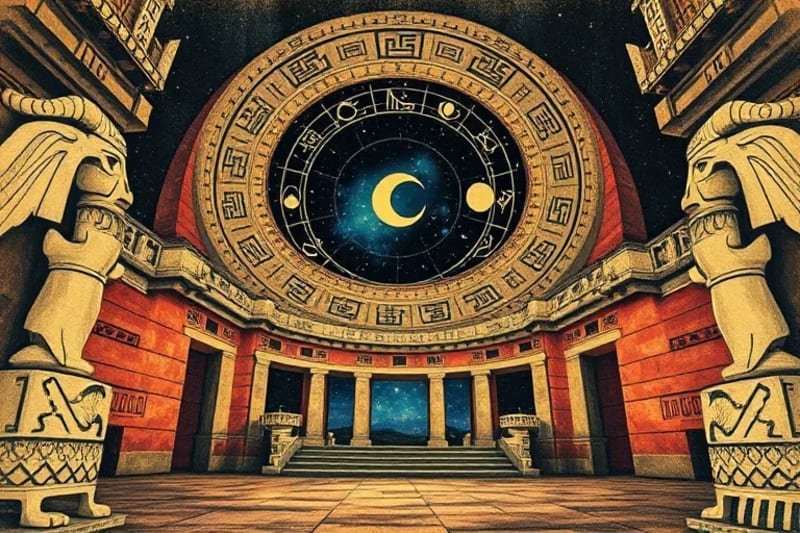
Mayan architectural precision designed for celestial observation and calendar keeping.
- Stonehenge, England: Perhaps the most famous example, this Neolithic monument is precisely aligned with the sunrise on the summer solstice and the sunset on the winter solstice. Its intricate design suggests a deep understanding of solar and possibly lunar cycles, serving as both a calendar and a ceremonial site.
- El Caracol, Chichen Itza, Mexico: This Mayan observatory is renowned for its multiple alignments with the movements of Venus, a planet of immense importance in Mayan cosmology. The building's circular tower and windows were strategically placed to track the planet's extreme northern and southern settings on the horizon, crucial for their complex calendar systems.
- Egyptian Temples and Pyramids: Many ancient Egyptian structures, including the Great Pyramids of Giza and various temples, exhibit alignments with specific stars like Sirius (Sopdet) and constellations such as Orion. These alignments often had profound religious significance, linking the pharaohs and the afterlife to the celestial realm.
- Chaco Canyon, New Mexico, USA: The Ancestral Puebloans constructed sophisticated structures like Fajada Butte, where the "Sun Dagger" petroglyph marks the solstices and equinoxes with precise light and shadow patterns. Other great houses in the canyon also show astronomical orientations, indicating a communal and ritualistic engagement with the sky.
- Gobekli Tepe, Turkey: This ancient site, dating back to the Pre-Pottery Neolithic period, features massive T-shaped pillars carved with animal reliefs. While its primary function is still debated, some researchers suggest that the arrangement of these pillars and their iconography may represent early celestial maps or astronomical markers, pushing back the timeline of sophisticated astronomical observation.
- Nazca Lines, Peru: The enigmatic geoglyphs of Nazca, depicting animals, plants, and geometric shapes, have long been debated for their purpose. While some theories suggest astronomical alignments, particularly with constellations or celestial events, others propose more terrestrial or ritualistic functions. The debate highlights the complexity of interpreting ancient intentions.
The careful planning and construction of these sites underscore the advanced knowledge possessed by ancient engineers and astronomers. They also reveal how architectural design was often dictated by celestial considerations, influencing even the Lunar Mansions Geomancy and urban planning of entire cities.
Methodologies in Astro-Archaeological Research
Astro-archaeology employs a diverse set of methodologies, drawing from both archaeological and astronomical sciences. The interdisciplinary nature of the field requires a rigorous approach to data collection and interpretation to avoid misattributions and ensure scientific validity.
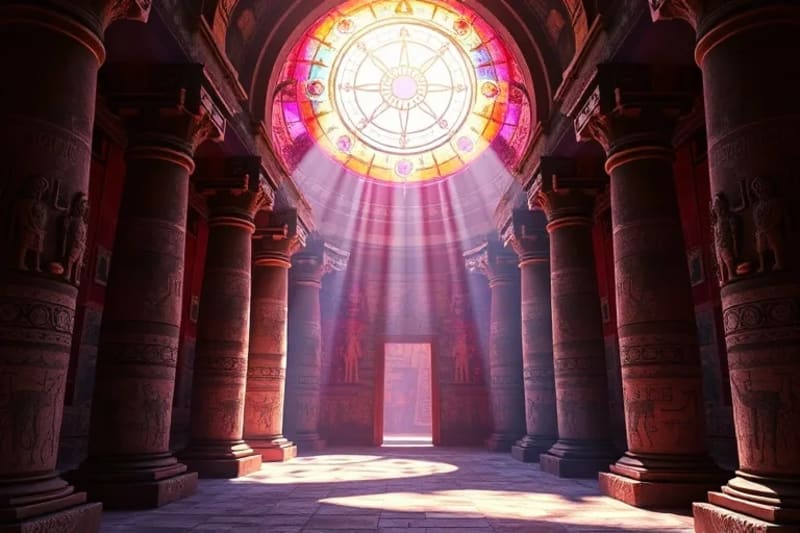
Ancient Egyptian temple interiors revealing cosmic symbols and astronomical wisdom.
Key methodologies include:
- Archaeological Excavation and Survey: Standard archaeological techniques are used to uncover and document ancient structures, artifacts, and settlement patterns. This provides the physical evidence upon which astronomical interpretations are built.
- Astronomical Calculation: Researchers use specialized software and historical astronomical data to calculate the precise positions of celestial bodies (sun, moon, stars, planets) at specific dates and times in the past, corresponding to the period of the ancient site's use. This allows for the accurate determination of potential alignments.
- Orientation Studies: Measuring the precise orientation of architectural features (walls, doorways, windows, megaliths) and comparing them to calculated astronomical events. This often involves using high-precision GPS and surveying equipment.
- Ethnographic and Ethnohistorical Research: Studying the astronomical knowledge and cosmological beliefs of contemporary indigenous cultures or historical records (e.g., Mayan codices, Egyptian texts) to gain insights into the possible meanings behind ancient alignments and symbols. This helps in understanding the Power of Arcane Symbols in ancient contexts.
- Digital Modeling and Visualization: Creating 3D models of ancient sites allows researchers to simulate celestial events from the perspective of the ancients, testing various alignment hypotheses and visualizing the interplay of light and shadow.
- Statistical Analysis: Employing statistical methods to differentiate between intentional astronomical alignments and random coincidences, thereby strengthening the validity of findings.
The combination of these methods ensures a comprehensive and robust investigation into the astronomical dimensions of ancient cultures, moving beyond speculative claims to empirically supported conclusions.
Challenges and Future Directions
Despite its illuminating potential, astro-archaeology faces several challenges. One significant hurdle is distinguishing intentional astronomical alignments from coincidental orientations. The sheer number of possible alignments means that statistical rigor is paramount to avoid attributing cosmic significance where none existed. Another challenge lies in the interpretation of ancient motivations; while an alignment might be demonstrable, understanding its precise cultural, religious, or practical purpose requires careful contextualization and often relies on fragmentary evidence.
The field also grapples with the issue of pseudo-archaeology, where unsubstantiated claims and sensational interpretations can undermine legitimate scientific research. Maintaining academic integrity and adhering to strict methodological standards are crucial for the continued growth and acceptance of astro-archaeology within the broader scientific community. Preservation of sites, often exposed to environmental degradation and human impact, also remains a constant concern.
Looking to the future, astro-archaeology is poised for exciting advancements. New technologies, such as LiDAR (Light Detection and Ranging) for mapping landscapes, advanced satellite imagery, and artificial intelligence for pattern recognition, are revolutionizing data collection and analysis. Increased interdisciplinary collaboration, bringing together archaeologists, astronomers, anthropologists, historians, and indigenous knowledge holders, will foster a more nuanced and comprehensive understanding of ancient celestial narratives. The integration of virtual reality and augmented reality can also offer immersive ways to experience and study these ancient sites and their astronomical phenomena.
The Enduring Legacy of Celestial Narratives
Astro-archaeology offers profound insights into the human condition, revealing a universal fascination with the night sky that transcends cultural and temporal boundaries. It demonstrates that our ancestors were not merely primitive observers but sophisticated thinkers who meticulously tracked celestial movements, encoded this knowledge in their monumental architecture, and integrated it into their spiritual and societal frameworks. The celestial narratives they left behind are not just historical curiosities; they are testaments to human ingenuity, our innate desire for meaning, and our enduring connection to the cosmos.
By studying these ancient celestial narratives, we gain a deeper appreciation for the scientific and philosophical achievements of past civilizations. We learn about their calendars, their navigation techniques, their religious practices, and their understanding of the universe. This knowledge enriches our own modern perspective, reminding us of the timeless human quest to comprehend the vastness above and our place within it. Astro-archaeology thus serves as a vital bridge, connecting us to the cosmic wisdom of our distant past and illuminating the enduring legacy of humanity's celestial journey.
Explore More Celestial Insights
-
Karmic Astrology: North Node and South Node Explained
Delve into the karmic lessons and soul's path revealed by the North and South Nodes in your astrological birth chart.
-
Precognitive Dreaming Techniques Interpret Future Guidance
Learn methods to interpret precognitive dreams and gain future guidance, tapping into subconscious wisdom.
-
Astro-Economics Financial Markets: Predicting Planetary Cycles
Explore the intriguing connection between planetary cycles and financial market trends in the field of astro-economics.
-
Psycho-Astrology: Jungian Archetypes, Natal Chart Integration for Self-Discovery
Integrate Jungian archetypes with natal chart analysis for profound self-discovery and psychological insight.
-
Chiron Lunar Nodes Healing Ancestral Karmic Wounds Chart
Explore the interplay of Chiron and Lunar Nodes in healing ancestral karmic wounds revealed in your birth chart.
-
Cancer Zodiac Sign: Traits, Emotional Depths
Dive deep into the emotional world and key traits of the Cancer zodiac sign, understanding its unique characteristics.
-
Ogham Divination Celtic Tree Astrology Ancient Wisdom
Unearth the ancient wisdom of Ogham divination and Celtic tree astrology for personal guidance and insight.
-
Snake 2014 Horoscope: Cycle of Change Forecast
Review the 2014 forecast for the Chinese Zodiac Snake, focusing on its cycle of change and transformations.
-
Karmic Healing Planetary Gem Elixirs Natal Chart Imbalances
Discover how planetary gem elixirs can aid in karmic healing and balance natal chart imbalances.
-
Career Astrology: Vocational Aptitudes Birth Chart
Uncover your vocational aptitudes and ideal career paths through the insights of your astrological birth chart.
-
Snake Pig Compatibility: Chinese Zodiac Guide
Explore the compatibility between the Snake and Pig signs in the Chinese Zodiac, understanding their relationship dynamics.
-
Moon Phases Birth Chart: Emotional Blueprint
Understand your emotional blueprint and subconscious patterns through the Moon Phases in your birth chart.
Source: Hybrid content assisted by AI and human editorial supervision.


Comments
Post a Comment